

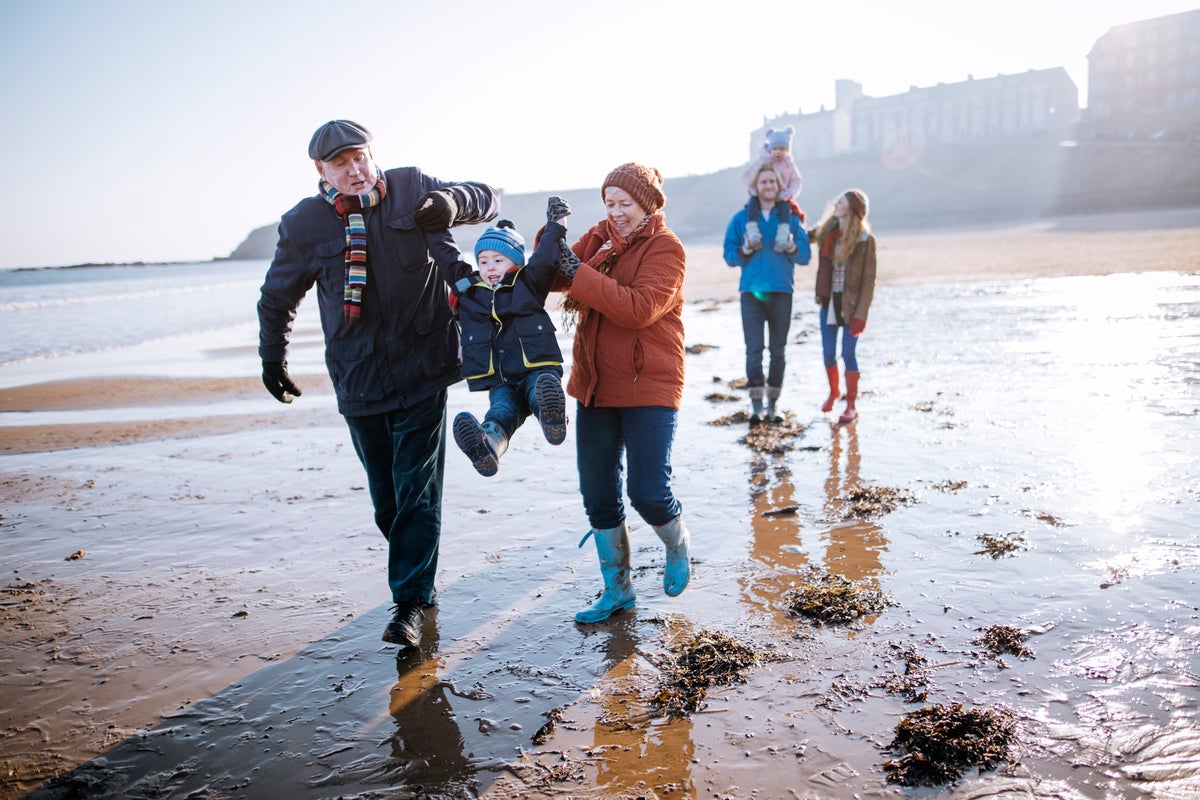
Parents across Britain are set to spend an average of £117 per child on winter clothing, a new survey indicates.
As the weather turns colder, 89 per cent of parents will buy new coats, 86 per cent will invest in new jumpers, and 80 per cent will purchase replacement wellington boots, according to the buy now, pay later provider Clearpay.
Beyond practical needs, nearly a third (32 per cent) of parents surveyed said they buy their children new clothes to keep them on trend.
Clearpay’s own internal sales data indicates increased sales for children’s wide-leg joggers, teddy coats, ballet pumps and plaid jumpers.
The most popular reasons for buying new children’s clothes are because old items have been outgrown (80 per cent), worn out (58 per cent) or been damaged (40 per cent).
However, nearly a third (32 per cent) of parents are also buying new clothes this season because their children’s style tastes have changed, the survey indicated.
Four-fifths (80 per cent) of parents surveyed believe children’s clothing is more expensive than last year.
But parents are not alone in paying for children’s outfits this winter, as the research also indicated that 16 per cent of grandparents will be contributing to the bill.
To make their money go further, two-fifths (40 per cent) of parents buy clothes one size up, and 44 per cent pass outgrown items on to others. The top priorities for people when buying children’s clothes are quality (74 per cent) and comfort (65 per cent), the survey found.
Shakaila Forbes-Bell, a consumer insights psychologist, said: “Parents’ clothing decisions are influenced by both practical needs and subtle psychological cues.
“For example, parents respond to signals about social belonging and their child’s identity – what peers are wearing, what children perceive as ‘cool’ and how clothing supports confidence in different settings.
“Children’s desires and interests are also constantly changing as they develop and become more attuned to their identity.
“Yesterday’s favourite colour could be detested tomorrow. Understanding these underlying motivations and fluctuations can help parents make choices that balance satisfaction, longevity and cost, rather than buying reactively or purely out of habit.”
She suggested that parents look for patterns in what their children wear and feel comfortable and confident in, and that they consider how new purchases could be mixed and matched with their child’s existing clothes, to prevent overspending.
The survey of 2,000 parents of children aged 17 or younger across the UK was carried out by OnePoll in October.
Parents estimated they spend, on average, £117 on children’s clothes in winter, £106 in summer, £99 in spring and £98 in the autumn.