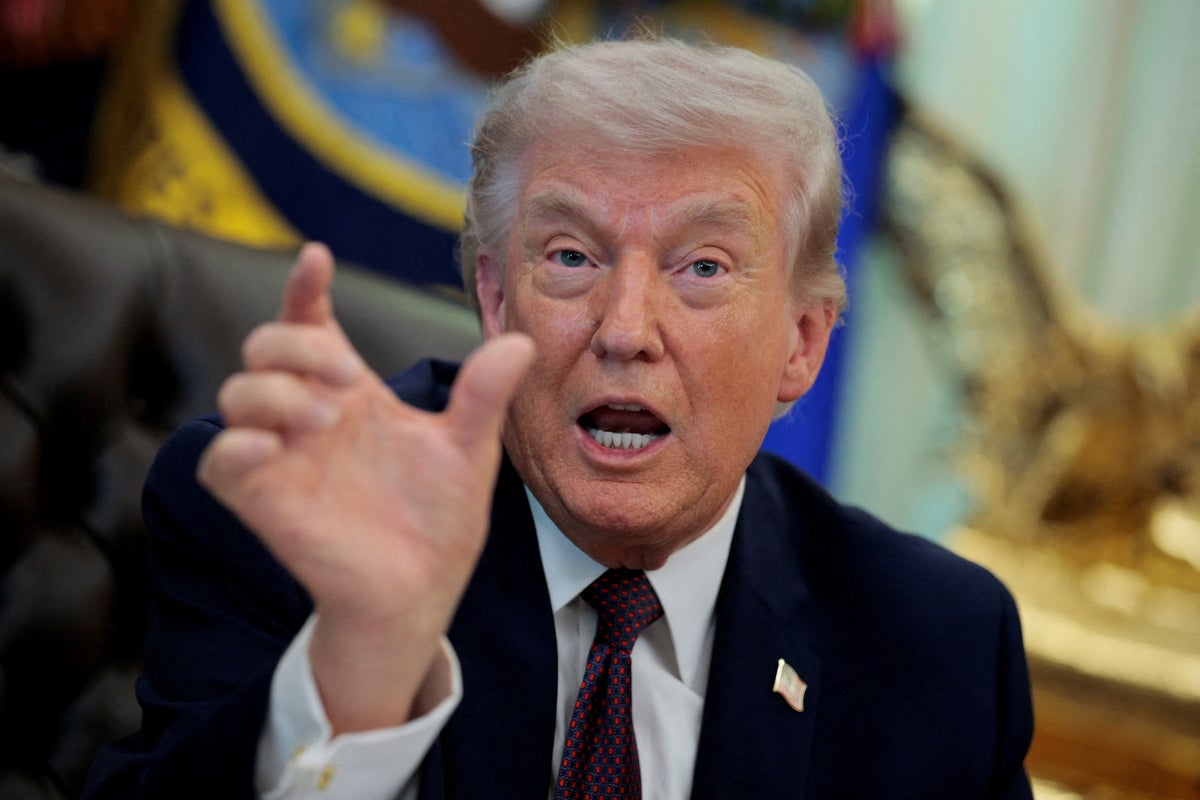

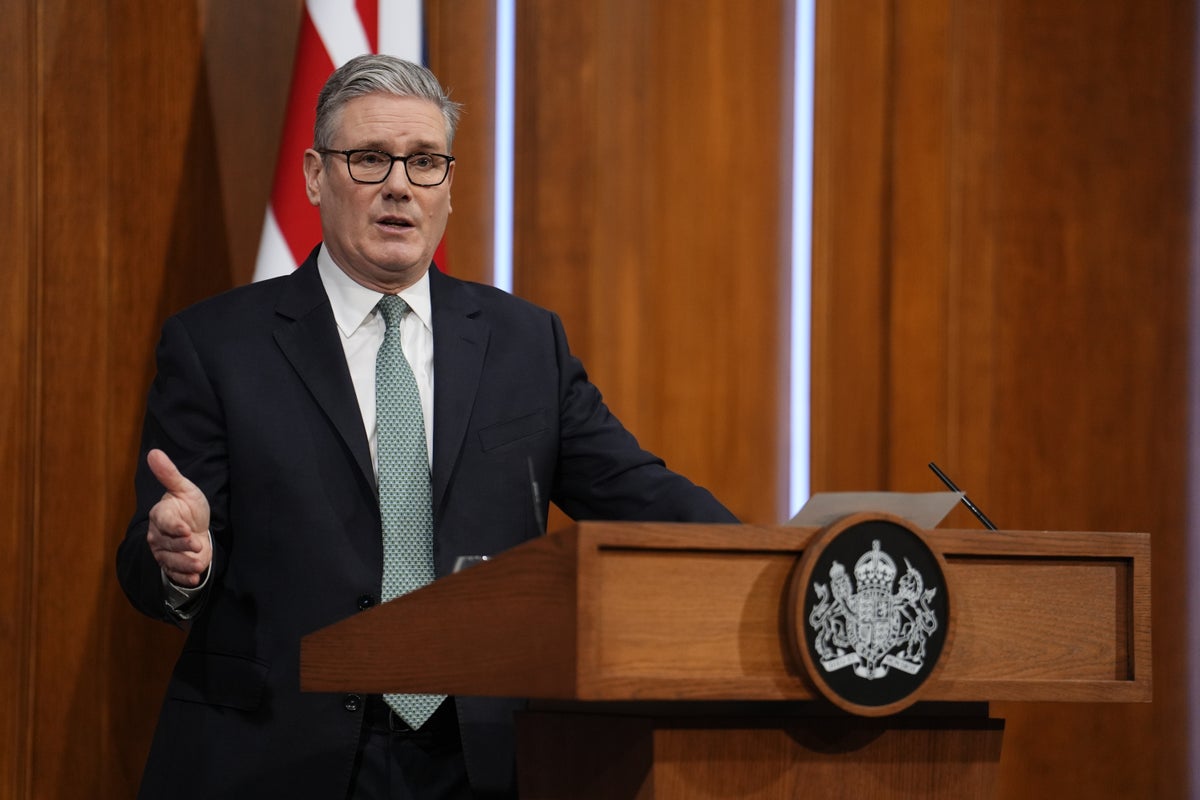
How should a loyal ally react to an increasingly erratic and angry Donald Trump? The answer offered by the prime minister, Sir Keir Starmer, in what amounted to an emergency press conference, is with “steady diplomacy”.
As things stand – with a tariff war scheduled by the US, but crucially not yet launched – that actually seems like an eminently sensible stance.
It’s also wise to avoid a head-on collision with the US president right now. Resistance to Mr Trump is, in some respects, growing within the other arms of the US government. Republican voices in Congress are starting to speak out against the idea of the US attacking Greenland, the territory of a Nato ally, and the Supreme Court will soon deliver its verdict on the constitutionality of President Trump’s proposed use of tariffs as a foreign policy weapon during a non-existent national emergency.
The rest of the world shouldn’t expect too much from a body politic still infected by Maga extremism, but, with the midterm elections also looming this year, it is at least possible that “peak Trump” is being reached. It is therefore a moment for nerves to be held. Greenland may yet survive.
For now, therefore, President Trump must be managed by Sir Keir in the national interest. It might, as Sir Keir derisively points out, make some performative politicians “feel good” to sound off on social media, but it is not serious diplomacy.
Ensconced in No 10 for some 18 months now, Sir Keir understands better than most the unequal power dynamic between the US and post-Brexit Britain, and just how much the UK depends on America for trade, investment, intelligence and national security, up to and including the nuclear deterrent.
He is right to say out loud that the future of Greenland is a matter for Greenlanders and Danes, and that a trade war is in nobody’s interests. He has said as much to the president. It is a judicious approach, guided by experience.
This is not the first time that Downing Street has been confronted with such a dilemma. Indeed, it has emerged time and again since the Second World War. It certainly happened a good deal in President Trump’s first term, and successive British prime ministers, and their counterparts across what we still think of as “the West”, have had to cope as best they can.
Standing up to Mr Trump usually tends to make him more aggressive. Appeasing him only invites more bullying. Most such storms, including last year’s trade wars and the bizarre plan to turn Gaza into a beach resort, for example, have tended to blow themselves out, albeit with lasting damage to trust in the reliability of the United States as a partner. The president’s current fixation with gaining what he calls “Complete and Total Control of Greenland” is in a different league, certainly, but it demands the same cautious approach.
The Greenland initiative is an extremely toxic product of President Trump’s habit of connecting disparate areas of policy – in this case, national security, trade, commercial opportunities in Greenland, and the Nobel Peace Prize.
It’s a cocktail laced with his own uniquely poisonous vanity, and it is proving deeply corrosive. Despite the harsh language – his talk of European nations facing “civilisational erasure” – and despite the personal insults, never before has Mr Trump threatened war against an ally.
Strictly speaking, when the president of the United States wrote to the prime minister of Norway that he “no longer feel[s] an obligation to think purely of peace”, he wasn’t saying anything new – at least, not in relation to his proposed acquisition of Greenland. The US president, along with the Trump administration more widely, has seldom ruled out the use of military force in any aspect of foreign policy (Canada being a rare exception).
The prospect of a superpower unleashing its vast arsenal in its own interests is negotiating leverage. That much is understood, but the president’s tone, along with his threats against US allies, is anything but conventional.
Although this extraordinary, and puerile, note was addressed to the Norwegian premier, in part as a protest against the (entirely independent) Nobel committee deciding not to award Mr Trump their peace prize, it was directed at a number of European governments that have recently sent modest forces to Greenland, including Britain.
Rather than be encouraged by this gesture of solidarity against supposed Chinese and Russian incursions into the Arctic, President Trump seems to have taken umbrage at the move, calling it “anti-US”. By all accounts, Sir Keir spent most of his phone call to the White House trying to convince Mr Trump that it wasn’t intended as a hostile act.
The lesson of this particular incident is that it is best to involve President Trump in any action in “his” hemisphere that he might find remotely problematic. The wider lesson, relating to his irascible style of diplomacy, is much the same: there is no need to overreact to his own overreactions, and to thus escalate conflicts, when the obvious solution is to calm things down and buy time.
As the prime minister put it: “Our job is to find a way forward.” It might be more time-consuming and exhausting than tapping out a rude post on social media, but it’s how a British prime minister should behave. For his role as the unofficial “Trump whisperer”, Sir Keir deserves some sort of peace prize of his own. As the old slogan goes, “Keep calm and carry on.”