Food calorie labels on restaurant menus could help people with binge eating disorders and even aid their recovery, a survey has suggested.
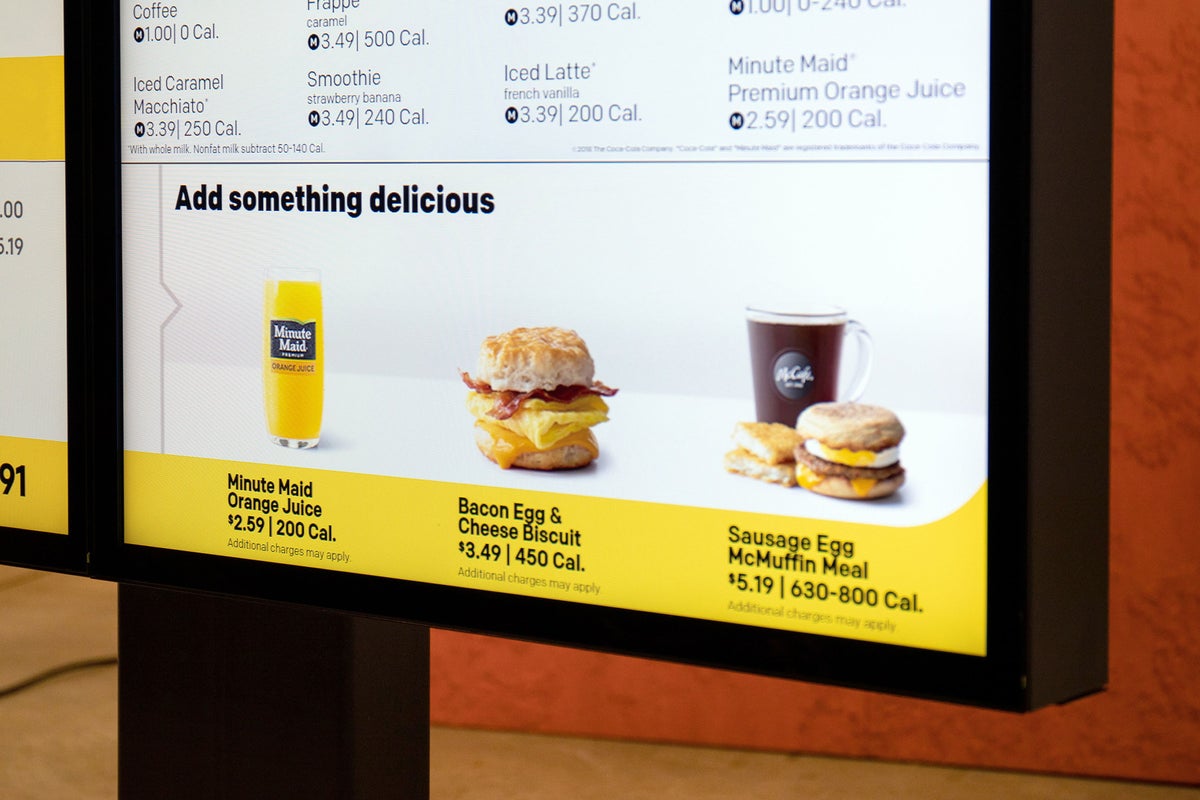
Putting calories on menus in restaurants, takeaways and cafes with more than 250 staff came into force in England in 2022 in a bid to tackle obesity levels.
While it can encourage healthier eating, evidence has shown that people with eating disorders opt for lower-calorie dishes when presented with calorie-labelled menus.
But researchers at University College London (UCL) and King’s College London found it could be beneficial for people with binge eating disorders.
“People with eating disorders have a variety of views about calorie labels, but people with binge eating [disorder] are more likely to find them helpful,” said Dr Nora Trompeter at UCL Great Ormond Street Institute of Child Health.
For the study, published in BMJ Public Health, 1,001 people aged 16 and over who lived in England and had experienced disordered eating were surveyed.
Half said calorie labels made their eating disorder symptoms worse, a quarter (24 per cent) had a neutral attitude towards them and the remaining quarter (26 per cent) viewed them positively.
Participants who binge ate regularly, which involves regularly eating a lot of food over a short period of time, were more likely to have positive views and said they felt reassured by seeing calorie labels because it gave them a sense of control.
Positive comments from participants included: “For the first time since developing my eating disorder, I am able to go out and eat at restaurants without fear and anxiety.”
But people with restrictive eating disorders, such as anorexia nervosa, which is one of the deadliest forms of mental illness where people try to keep their weight as low as possible, were more likely to have negative views.
The government is due to publish a review of the effectiveness of the policy in England by April 2027. Researchers say optional calorie labels, such as a QR code, could minimise negative impacts.
Calorie labelling should be optional rather than compulsory, Umairah Malik from eating disorder charity Beat stressed.
“Restaurants could have a calorie-labelled menu which people could request, rather than it being the norm,” he said.
“Public health campaigns need to consider people’s mental health as well as their physical health, and encourage developing an approach to eating that’s healthy for each individual.”
Nutritionist Rob Hobson explained calorie labels may help some individuals who binge, but he believes it’s not a “treatment tool”.
“It may just provide a sense of control in the moment rather than addressing the underlying drivers of that behaviour,” he told The Independent.
Kim Pearson, a nutritionist who specialises in weight loss, also believes calorie labels should not be a “primary strategy for improving the nation’s diets”.
“Weight management is about far more than calories alone. Factors such as food quality, satiety, habits, environment and emotional drivers all play an important role,” she told The Independent.
For anyone struggling with the issues raised in this article, eating disorder charity Beat’s helpline is available 365 days a year on 0808 801 0677.
NCFED offers information, resources and counselling for those suffering from eating disorders, as well as their support networks. Visit eating-disorders.org.uk or call 0845 838 2040.