
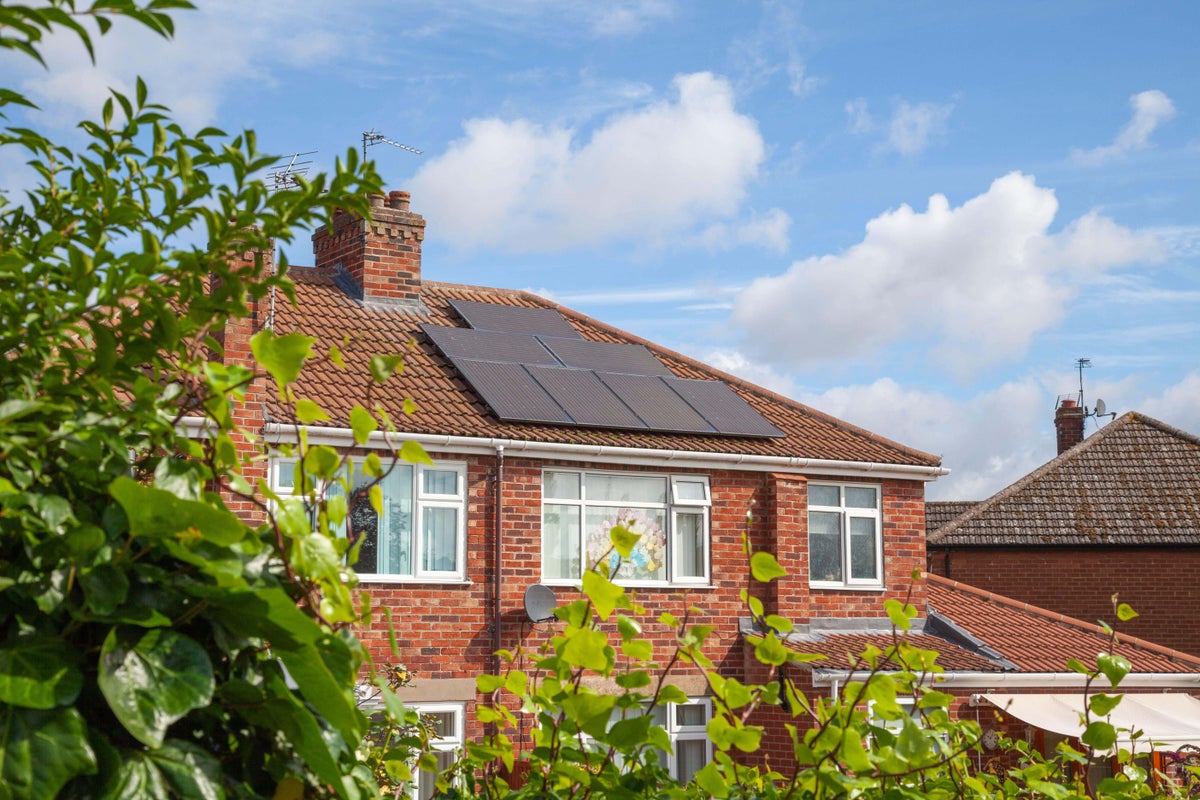
War in the Middle East is prompting Britons to turn away from fossil fuel-driven power, as E.On revealed a spike in solar panel sales over recent weeks.
The electricity supplier said solar sales were up by 62% this month, compared with the previous month, while website visits to the solar page soared by a similar amount over the first week of March.
E.On UK’s chief executive Chris Norbury told the Press Association: “There’s probably never been a more important time to bring products to market that have the potential to make a significant difference to residential customers’ energy bills.
“Ultimately, what all of our customers tell us very clearly is they want solutions that help bring energy prices down for them not just temporarily, but sustainably and on an enduring basis.”
It comes as E.On, which is one of the UK’s biggest electricity suppliers, announced the launch of a new service that uses automation to reduce bills for homes with solar panels and batteries.
The tool, named Next Optimise, connects to wholesale prices and uses automation to charge batteries when wholesale prices are low, and use or export stored energy when prices rise.
The technology has been used in 80,000 Australian homes, where sunnier weather has helped it get ahead of the uptake of solar power relative to other countries, including the UK.
Dan Adams, the chief executive of Amber Electric, which has partnered with E.On to provide the technology, said he thinks the shift has made Australia “less exposed to some of these big shocks because of that increased uptake” of solar.
E.On’s Mr Norbury said: “As a country, we are in a better position than we were in 2022, but there’s still a hell of a lot more work to do.
“We have the opportunity to do that work quickly, to continue the decarbonisation of our energy system, which is ultimately what will insulate us from fossil fuel-driven events such as this.”
Electrifying home energy, such as battery and solar, needs to be done quickly and will benefit households who are more vulnerable to price volatility, he argued.
It comes as the prices of crude oil and natural gas have rocketed in recent weeks in response to the effective closure of the Strait of Hormuz and damage to energy infrastructure in the Middle East.
Martin McCluskey, minister for energy consumers, said: “Events in the Middle East remind us that our mission for clean, homegrown power is essential for our energy security.
“Solar power will play a crucial part in that mission, and it’s clear that the British people are recognising that, too.
“That’s why we’re also making it possible for consumers to buy plug-in solar in shops within months – helping people to save money on their bills and protecting them from volatile fossil fuel markets.”