



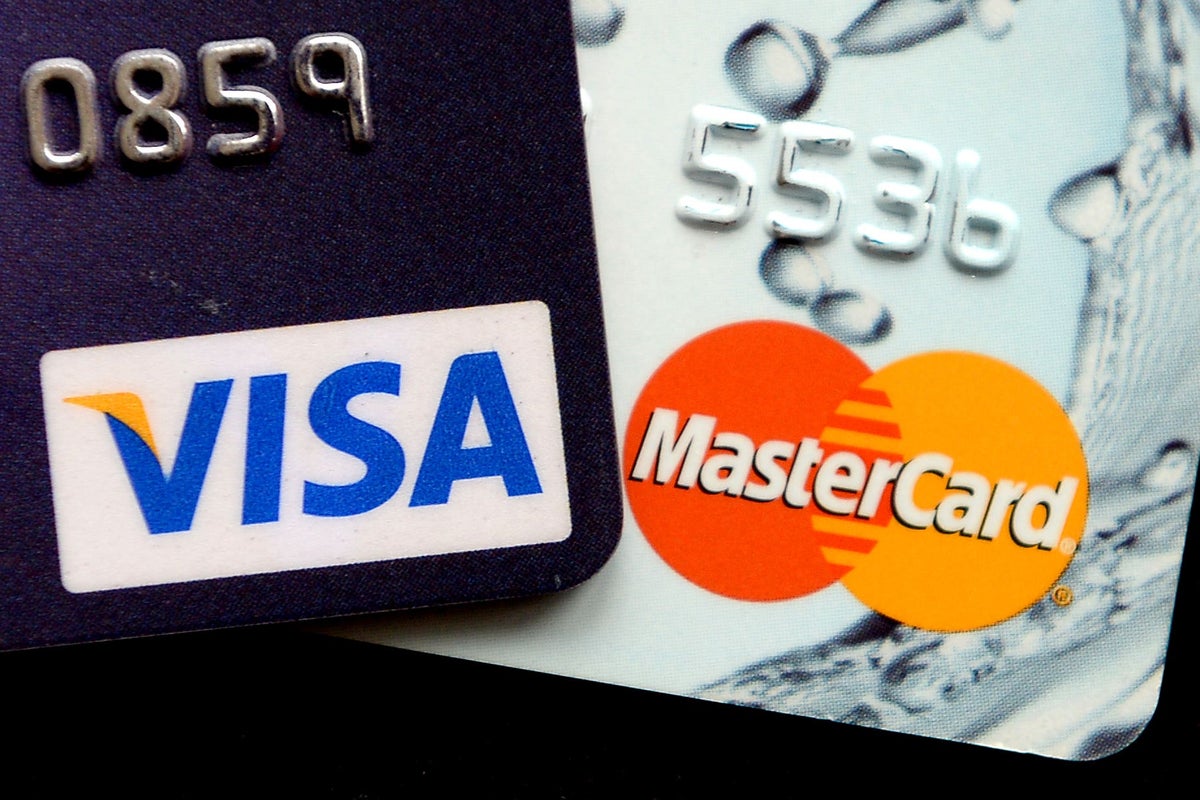
The UK’s largest banks are set to meet this week to discuss the development of a national payments system, aimed at reducing the reliance on US networks amid concern over Donald Trump’s capacity to switch them off.
Up to 95 per cent of card transactions made in the UK use systems owned by Mastercard or Visa, a report from the UK Payment Systems Regulator showed last year.
The plans have been under discussion for years, but the recent deterioration in the transatlantic relationship after President Trump’s threat to take over Greenland has accelerated concerns about the UK’s over-reliance on US companies that could impact the UK economy.
One executive involved in the project told The Guardian that if Mastercard or Visa were turned off, it would “send the UK back to the 1950s”.
US sanctions on Russia, where businesses are reliant on Visa and Mastercard for 60 per cent of payments, left ordinary people without access to funds and unable to buy goods.
Barclays UK chief executive Vim Maru will chair the meeting, according to reports, and executives from Lloyds Banking Group, Nationwide, NatWest, Santander and more will also be involved, as well as UK Finance, which represents other industry voices including the likes of American Express.

While the new payments system is set to be funded by the City, it has government backing, and the Bank of England will also be involved in the development of infrastructure around a new network. The Treasury showcased plans for a new generation of retail payments infrastructure last year.
Mastercard and Visa are not being sidelined, either, with both taking a stake in the project and remaining committed to their presence in the UK.
It has been suggested toThe Independent by those familiar with the matter that the plans could be more about upgrading existing networks rather than creating an entirely new payments system, mitigating any service errors rather than as a direct and potential response to a US-based killswitch.

Get a free fractional share worth up to £100.
Capital at risk.
Terms and conditions apply.
Go to website
ADVERTISEMENT
Get a free fractional share worth up to £100.
Capital at risk.
Terms and conditions apply.
Go to website
ADVERTISEMENT
Sarah Breeden, the Bank of England deputy governor, recently pointed out that amid “challenging and changing cyber and operational risk environment, [a domestic-based system] could provide a degree of extra resilience in the UK payments landscape, as an additional payment rail on the rare occasion of operational disruption to existing rails”.
In Europe, plans for a similar project to reduce reliance on US firms was spoken about recently, as reported by the FT, with the chief executive of the European Payments Initiative, Martina Weimert, saying that “independence is so crucial” and calling for “urgent” action amid a lack of cross-border options.
The expectation is for the new system to be in place by 2030.