

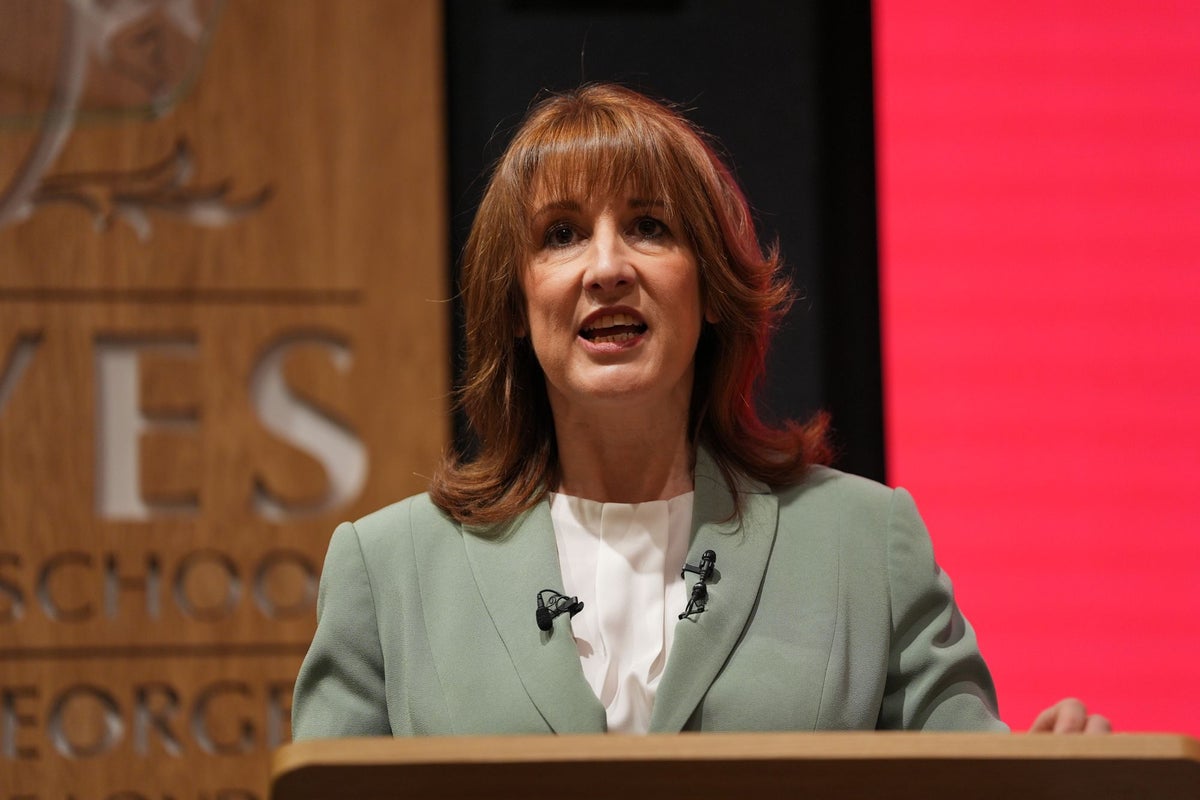
Rachel Reeves claimed to be making “three big choices” on growth on Tuesday. These are, first, to promote growth “in every part of Britain”; second, to champion innovation, especially artificial intelligence; and third, to foster “a deeper relationship with the European Union”.
The first two choices are, to be blunt, padding. Every government since the slow deindustrialisation of Britain began has been committed rhetorically to spreading the benefits of growth from the most prosperous parts of the country. Regional policy has never worked, and this government’s attempts are unlikely to be an exception.
The second choice is more realistic largely thanks to the efforts of Rishi Sunak as prime minister, who saw the importance of the enabling power of the state in AI. It is better that the instinct of ministers is to “make Britain the place where the industries of the future are created”, as the chancellor put it in her speech, than if their instinct is to limit, control and regulate. As the slogan on Ms Reeves’s backdrop had it, the ambition should be “the active and strategic state”.
But the important choice in Ms Reeves’s speech, included in the annual Mais lecture in the City of London, is her desire to align Britain more closely with the EU.
She is absolutely right in her analysis – which is that one of the most serious obstacles to economic growth in Britain is the friction of our trading relationship with the vast continental market on our doorstep. “Brexit did deep damage,” she said in her speech, one of the most pro-European given by a cabinet minister since the referendum.
“It has meant higher costs for businesses, and therefore higher costs in our shops. It has meant shrinking markets for UK exporters and our strategic industries exposed as protectionist barriers rise worldwide.”
She can say that again, and she probably will. But what matters is what she and Sir Keir Starmer intend to do about it. As Professor Anand Menon comments in our pages, “having a government that is willing to be honest about the impact of such a significant policy decision marks real progress”. The problem is, as he also says, that the government’s position “seems to consist of emphasising the significant costs that have been incurred thanks to our decision to leave the EU, while being equally forceful in ruling out the steps that would be needed to reduce these”.
It’s also to be welcomed that Nick Thomas-Symonds, minister for the Cabinet Office (constitution and European Union relations), will be leading the surge towards closer integration with the EU. One of the things he will be targeting is the fees which Europe unfairly charges, as well as concentrating on youth employment, food and drink, and showing that growth can come from less European red tape while accelerating the British market.
The prime minister, the chancellor and Mr Thomas-Symonds have done their best within the self-laced straitjacket of refusing to contemplate rejoining the EU, or rejoining its single market, or negotiating a customs union.
Their answer is “alignment”, on the deceptively simple premise that, if British companies abide by EU rules, barriers to trade can be reduced to the barest minimum. “Where it is in our national interest to align with further EU regulation we should be prepared to do so,” Ms Reeves said.
While this makes sense in that British public opinion has never minded the UK being a “rule-taker” if it is in our economic interest, we can understand why the EU might object to our trying to obtain the benefits of the single market without assuming the responsibilities that come with EU membership.
Free movement of people is the most obvious problem. Although free movement benefits the countries of the EU, the dangers of allowing a country to be part of the single market without being part of free movement should be obvious at a time of anti-immigrant rabble-rousing.
The way forward is for Ms Reeves and Sir Keir to show that they share the ideal of European unity with our continental friends, extending beyond narrow economics. The unity of purpose in supporting the Ukrainian people in their struggle against Vladimir Putin’s aggression is a good place to start. Europe has come together to try to make up for the erratic deficiencies of Donald Trump’s foreign policy, both in deliberately withdrawing support from Ukraine and in accidentally strengthening the Russian leader by raising oil prices because of the strikes on Iran.
Ms Reeves’s Mais lecture spoke of alignment with the EU in the “mutual interest” of Europe and the UK. Economically, such an alignment is indeed in the interest of both sides, just as it is in security and defence. But the chancellor needs to be bolder in making that argument with EU leaders, just as the prime minister needs to make a more forceful case for defence cooperation and why it should reinforce economic cooperation.
Britain’s future lies in Europe. It is time Ms Reeves and Sir Keir came out and said so.