Your questions on natural and eco-friendly cleaning products answered
What is the best eco-friendly cleaning product?
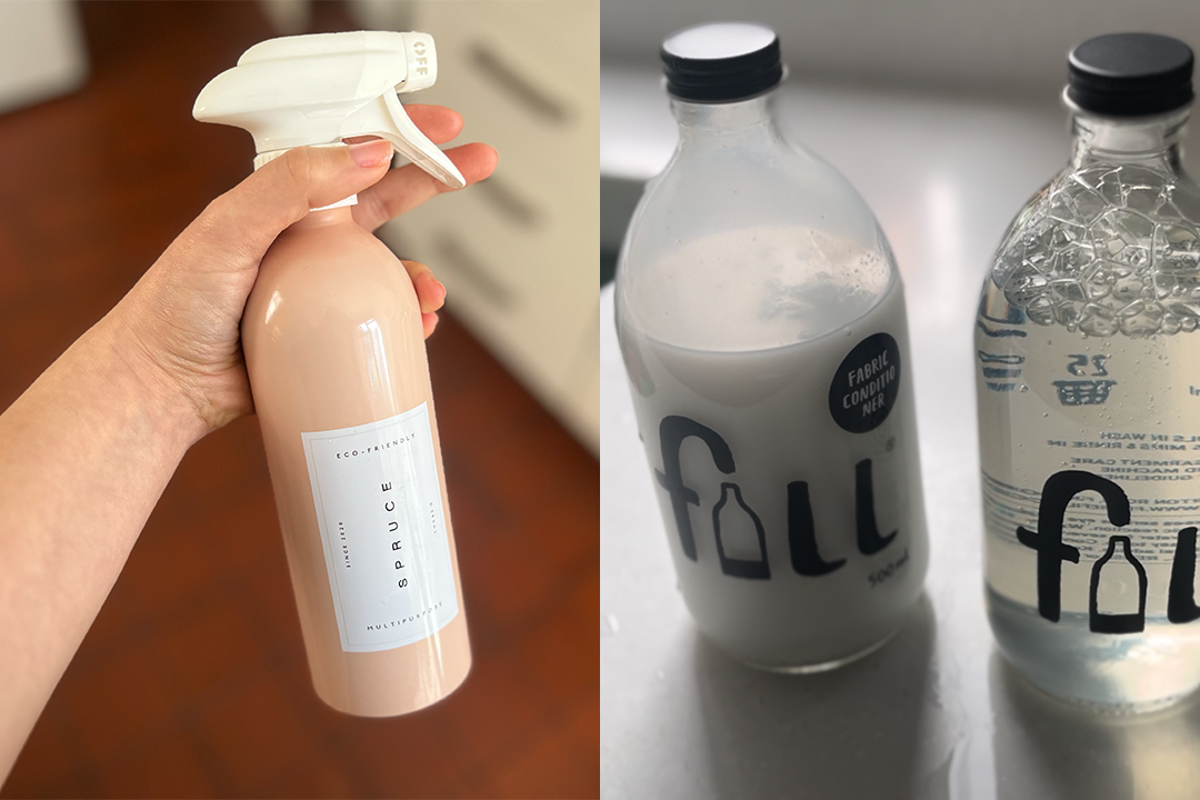
If you’re looking for an everyday surface cleaner, I’d recommend Spruce’s multi-purpose cleaner. The non-toxic formula freshens up surfaces, while the packaging is low-waste, and the product comes in powder form (so it will be lighter and less energy-intensive to transport). While £8 for the starter kit isn’t cheap, the refills from therein will be less than £3. For laundry detergent, Strip Wash’s laundry detergent sheets are effective, plastic-free, and offer good value for money, with a £6.99 pack lasting up to 48 washes.
I don’t see the need to go back to Fairy Liquid after using Greenscents’ organic washing-up liquid, while the grease-busting power of Delphis Eco’s kitchen cleaner and degreaser also impressed me.
How we test and select natural and eco-friendly cleaning products
Over the course of several months, I used a host of cleaning products as per the brand’s instructions and assessed their results. These were my testing criteria:
- Environmental impact: I looked for any information available on the ingredients and the product as a whole, and noted any certifications supporting the brand’s eco-friendly marketing. Packaging was also important here. I was looking for low- and no-plastic where possible. Some brands use concentrated formulas to reduce the carbon footprint of transporting them.
- Ease of use: I noted how much effort and time it took to use and re-stock the products.
- Results: I wanted to keep my home clean, with minimal elbow grease. These products needed to do what they claimed, whether that was to cut through grease and grime, remove limescale, or get rid of spill stains on clothing. I also compared their performance to typical everyday products.
- Value for money: Products marketed as environmentally-friendly or natural tend to be a little pricier, so I thought about whether the cost of the products seemed worth it, given their eco impact and performance.
What makes a cleaning product natural or eco-friendly?
Transparency around ingredients is crucial here. In her book, Go Toxic Free, Turns notes for instance that some “kitchen cleaners show the words ‘100 per cent natural’ in huge type, but that might only actually relate to one ingredient”. It’s important to look at the whole picture. Fewer ingredients are usually better, as “fewer ingredients need to be produced”.
“As a simple rule of thumb, I recommend avoiding any cleaning products with a hazard warning on the back – caution, danger, warning about risk to aquatic life or humans through inhalation”, says Turns. “Refill options and concentrated pods help reduce overall environmental impacts of a product”.
A lot of the products tested for this review contain plant-based ingredients, and Turns says they “tend to biodegrade more quickly than synthetic ingredients” (under certain conditions). She also recommends fragrance-free products, as synthetic fragrances “can contain hundreds of different chemical ingredients, but legally brands don’t have to list them”. This doesn’t mean you can’t have a nice-smelling product, though. Essential oils for scent are generally fine, though she notes “some cause allergies, especially in concentrated form”.
It’s worth being wary of misleading marketing, too. ‘Natural’ is not legally protected when it comes to cleaning products, says Ginley. And it can mean a number of things, as Turns tells me the definition is broad, with the spectrum including naturally derived but chemically-processed ingredients as well as raw natural ingredients.
What are the benefits of eco-friendly cleaning products?
Swapping to products with fewer toxic ingredients is better for the plant and for our health. Cleaning sprays create indoor air pollution that “can exacerbate respiratory health conditions such as asthma”, says Turns. Some ingredients in cleaning products can be endocrine disruptors, which “disrupt normal function of hormone systems”, and this can affect fertility, brain development and behaviour. “Minimising the number of chemicals we’re exposed to will minimise the risk of complex health effects in the long term”, but, she says, “if you’re particularly sensitive or allergic, or working with cleaning products for hours a day, I’d find ways to avoid potentially toxic cleaning products as much as possible”.
It’s also worth noting that ‘natural’ isn’t necessarily better for us or the environment. It’s about context. “Some botanicals can cause allergic reactions, and some synthetic preservatives make a product healthier and safer and less likely to spoil”, Turns says. “Anything can be toxic – it depends on the dose, so context is key really.”
Why you can trust IndyBest reviews
IndyBest reviews are based on the result of rigorous, real-world testing. All of the cleaning products in this review have been put to the test in a real household, on real messes. Lois Borny is a writer and production journalist who has written about and reviewed the likes of vegan skincare, plastic-free haircare, 1% for the Planet brands to know, and more.
Read more: 9 best floor mops, reviewed for sparkling results