


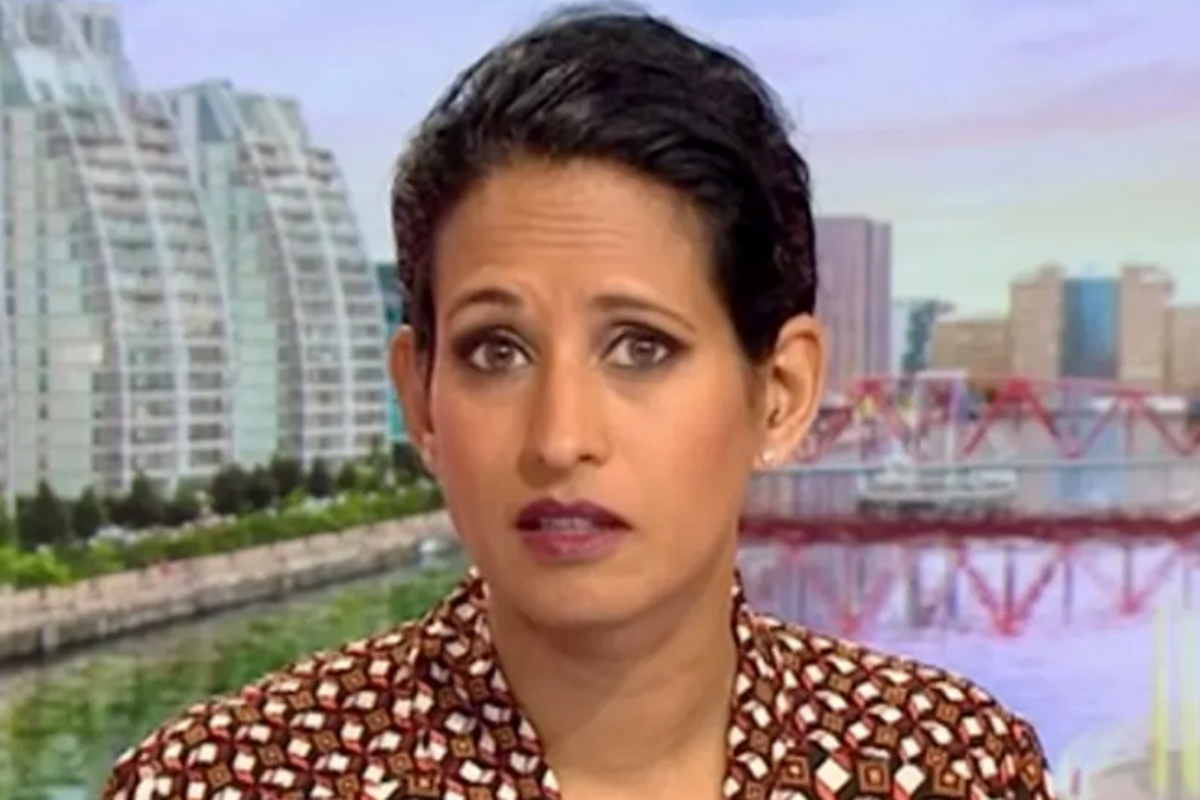
Naga Munchetty has opened up about a health condition that leaves her in extreme amounts of pain – sometimes while presenting.
The BBC Breakfast host, 51, has adenomyosis, which affects the womb and causes her uterus to enlarge. Known as “the evil twin sister of endometriosis”, it’s believed to affect one in 10 women, although studies have found it could be undiagnosed in lots of women.
Symptoms include cramps, abdominal bloating and heavy menstrual bleeding.
Munchetty said that she has “become conditioned to accept” the severe pain she experiences as a consequence of the condition. She said in a new interview on Monday (13 April): “If you’re curled up on the floor screaming, sweating, flooding, passing out, vomiting, that is debilitating. But you end up normalising that pain.”
The presenter told The Times: “It can come at any time, but you put it in a box and you get on with your job — that’s what most women do when they’re in pain.” She added that she also “probably” has endometriosis.
Despite going to the doctors several times, she was not diagnosed until 32 years later as she was led to believe the pain she was experiencing was “normal”. Munchetty previously said of the condition: “I’ve had to come off set to throw up because I thought I was passing out while presenting BBC Breakfast.
“I went to the toilet, threw up, cleaned it up. I managed to get a 10-minute break, got makeup redone covered in sweat, sat down and did the next hour and a half.”
There are key differences between endometriosis and adenomyosis. With the former, the rogue tissue invades areas outside of the uterus. While the extent of the growth varies from patient to patient, it can affect areas such as the bladder, bowel, ovaries, and even the lungs.
Meanwhile, adenomyosis causes the rogue tissue to bury inside the muscular wall of the uterus. It’s more common in women between the ages of 40-50, and those who have been pregnant before. While the cause of the condition is not known, University College Hospital says that “genetics and some hormones may play a role”.
Treatment options are limited, but for those seeking relief from symptoms, medication is recommended to reduce pain and bleeding, as well as hormonal interventions such as the contraceptive pill.
The condition is typically diagnosed using MRI and ultrasound scans, but the NHS says that adenomyosis can take “a long time, even years, to diagnose” because “symptoms and severity can vary between women”.

The frequent dismissal of women’s gynaecological symptoms means that signs of adenomyosis may be conflated with ‘normal’ menstruation, or even other conditions such as endometriosis.
While awareness of endometriosis is on the rise, there is less knowledge surrounding adenomyosis, with the charity Tommy’s claiming that the condition might be “underdiagnosed” after a review of existing studies found that “mild” cases could be missed by clinicians using current diagnostic methods.
Another celebrity who has been vocal about having the condition is actor Gabrielle Union, who said it went undiagnosed when she was in her twenties.