



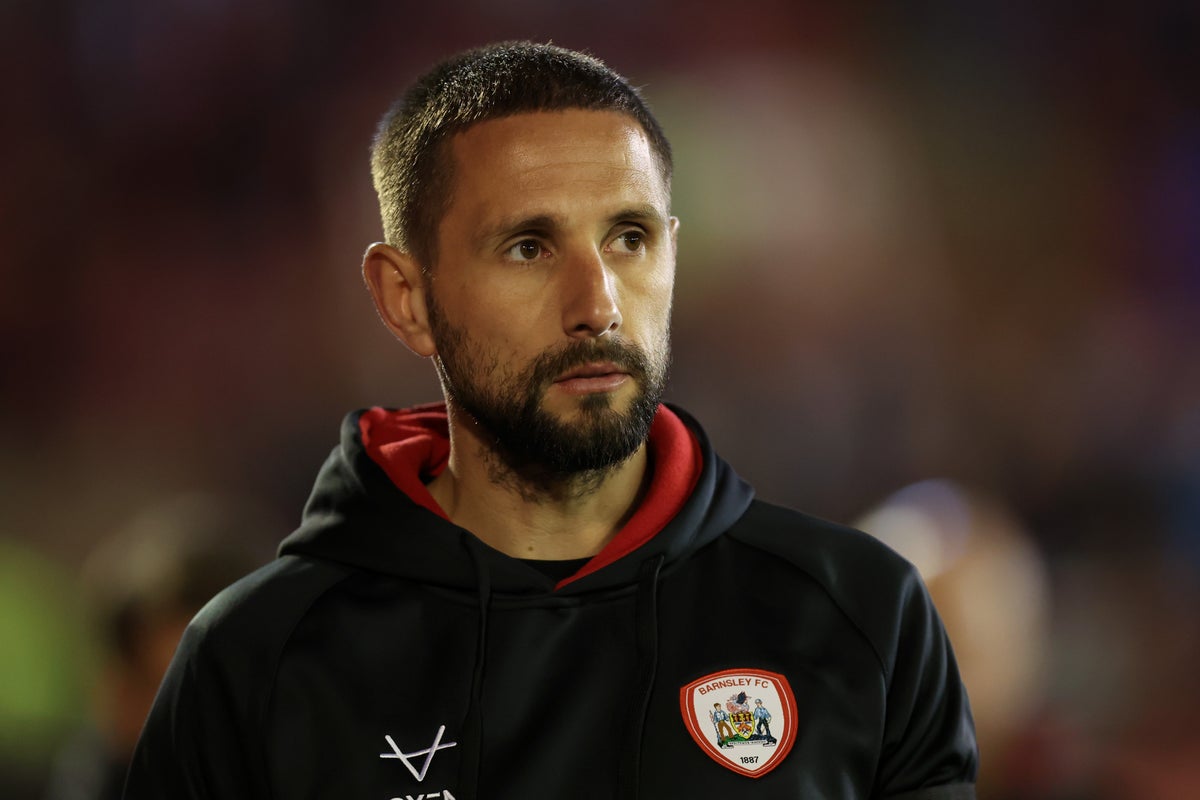
For a young manager who’s already enjoyed an impressive majority of wins in testing circumstances at Barnsley, Conor Hourihane is finding one aspect of the new career more challenging than others.
“It’s dealing with losing,” the 34-year-old says. “The feeling is difficult. Hopefully, the more experience I get, I’ll be able to cope a little bit better.”
Hourihane explains it isn’t just the sting of defeat, or the loss of points. It’s everything it represents, which points to how all-consuming management already is for the former midfielder.
“It’s all that prep that goes into it. You want the game to look a certain way and then it doesn’t look anything like you planned for. You’re second-guessing things. It’s an interesting process, and I’m probably trying to figure out what’s the best thing for me, really.”
As Hourihane speaks, you can really sense the passion for the job. “The fire”, as he puts it.
“It’s relentless, you’re analysing yourself day after day, or looking back at a game you’ve just played – an amazing, amazing job.”
He started to feel that fire even a few years before his playing career was winding down.
“We’d be going through pre-game or post-game, how we played, how we would set up and I’d start to think whether it was right or wrong,” Hourihane said. “Would I do this formation? Where would I build up? Where would I look to exploit the opposition?
“I probably started looking at meetings a little differently, which engaged me in one way.
“But for my actual football performance, was it the right thing?!”
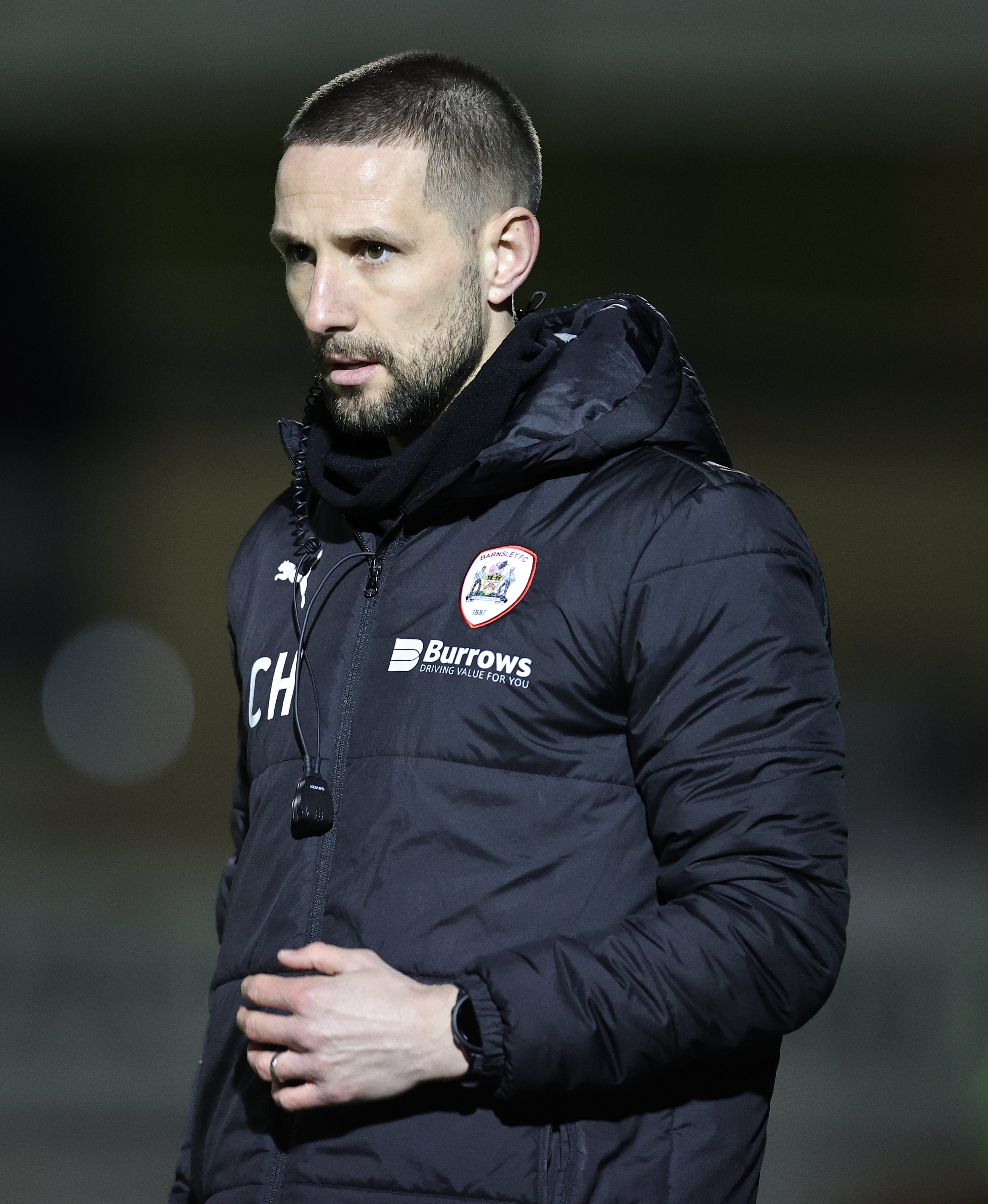
It has so far served his managerial career, as Hourihane has Barnsley showing promise in League One and with hopes of reaching the play-off places. And as he reels off the list of thoughts from a team meeting as a player, you can start to see how his mind works as a coach now.
He also has an earthier understanding of the game than most, from a remarkable step in his journey. While Hourihane was still a player with Derby County, and a recent Irish international, he began to help out with Stourbridge in the Southern League.
“I was getting to an age in my career where my body was struggling a little bit, my fire was going a little bit, coaching was bringing that fire back to me,” he remembers.
“I had the opportunity to go down to Stourbridge when I was doing my A licence, through a friend who was an analyst at Aston Villa, and the assistant manager at Stourbridge. I ended up staying there for the season. I loved it, learned on the job. I’d have about six or seven balls and I’d have organised a session for 14 players… and then two can’t get out of work because it’s part-time football so you suddenly have to change it.
“I learned how to adapt sessions and handle players with maybe lesser ability. So I was developing as a coach more than anything.
“Then I’d come home at night and analyse my session and jot things down. I wouldn’t just come home and forget about it. It would be another process to see how the session went and how I could improve it next time.
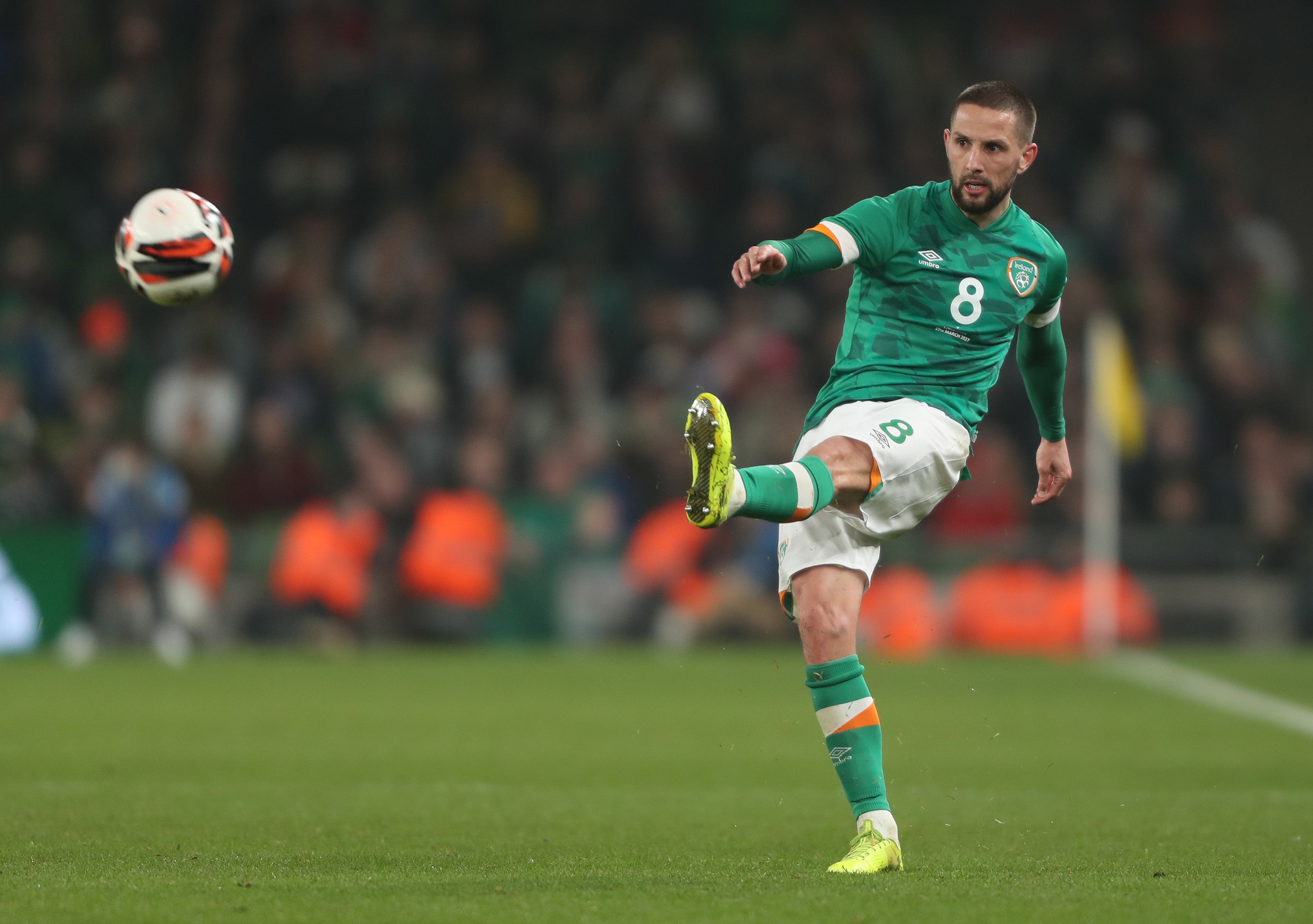
“At the end of my time at Derby [County], I was 33 and I thought if an opportunity comes to coach, I’d jump into it. If not, I’ll keep playing.”
That opportunity came at Barnsley, who he already had an affinity with, having spent three of the best years of his playing career there between 2014 and 2017. Initially rejoining as a player-coach, Hourihane retired as a player to become an assistant in December 2024, before being appointed head coach earlier this year.
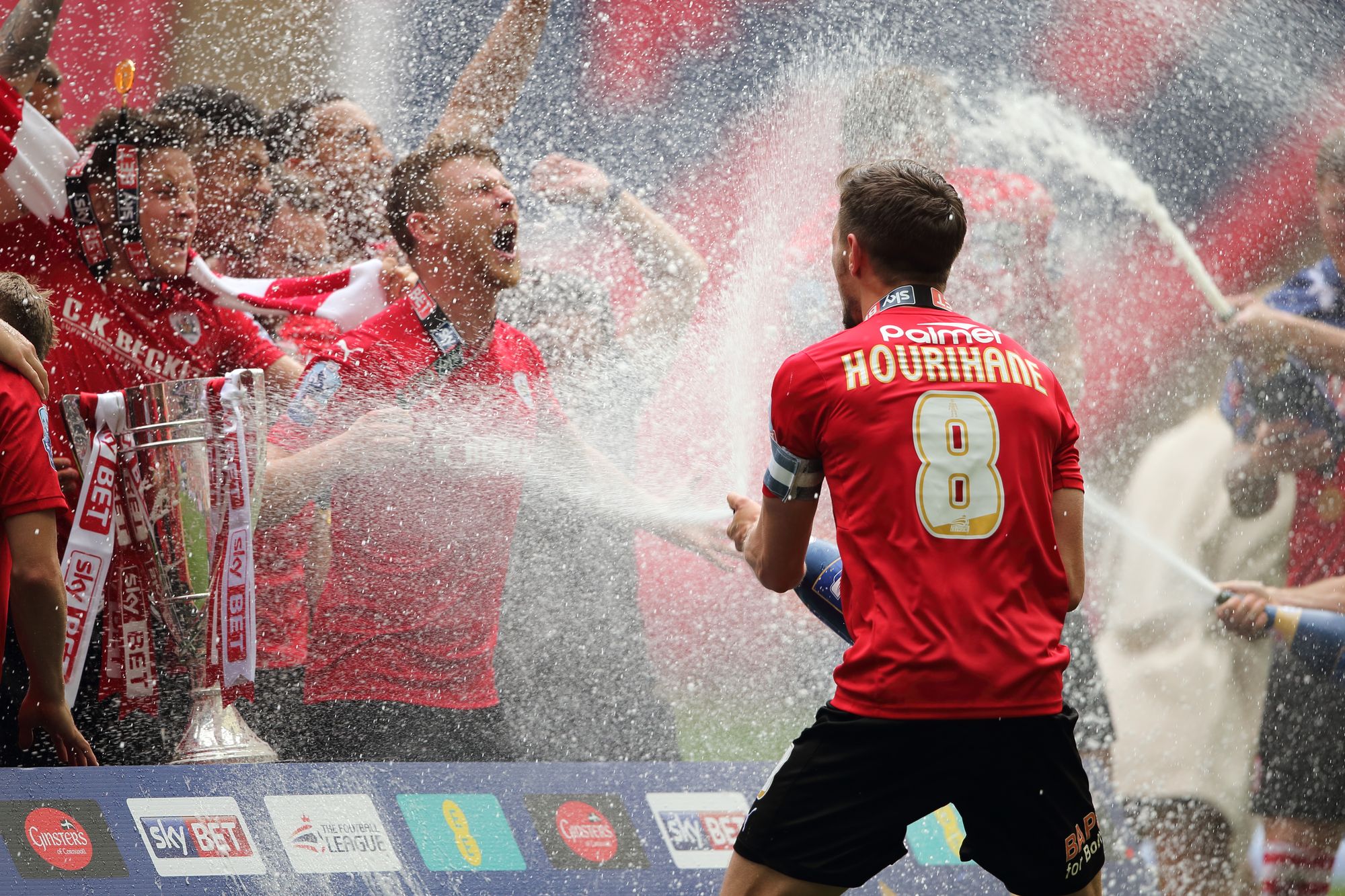
“It was three years that became a seven-year stretch where I just kept going in the right direction,” he says of his playing career at Oakwell. “I was captain, got promoted from League One, won the Football League Trophy, then four years at Aston Villa, got to the Premier League.
“Those two clubs were kind of my clubs. You know, you want to feel the fans and the connection and everything that comes with it.”
That deeper link has probably helped a situation where Hourihane has had to lean on a young squad, who are showing their own spark.
“There five or six really talented players in the first team who are 22 and under,” he notes. “Developing them is really important.
“We know that there’s going to be a little bit of inconsistency within that, of course, because it comes with age. But it’s exciting to see them flourish and develop. It’s finding that balance, really.”
Hourihane applies a similar approach to his actual football. He is coming through as a coach at a tactically interesting time, given that the Pep Guardiola positional game that has dominated for a decade is starting to fracture, and a greater variability is returning. Dogmatism is ceding ground to flexibility.
“It’s definitely changing,” he says. “From the last two years of analysing teams, I’ve seen there are definitely a lot more going direct, all a bit different to the possession-based game.
“I’m a big believer that there’s no right or wrong way to play.
“It’s like, ‘what can you do with your crop to win a game’, whether that’s possession, direct, low block, high pressing, a little bit of both. Obviously you want to have control, but do you want to be a transitional team? It’s about what players you have at your disposal.
“That’s probably what I believe in, tactical flexibility, rather than having a set way.”
Hourihane explains how tactics have evolved in line with how pressing has become more sophisticated. Teams have no choice but to incorporate how the opposition press them.
“That again comes down to what you believe in – do you touch on the opposition a lot, or do you focus more on bringing out the best of your strengths and touch on the opposition less?”
Again, it’s balance. And being able to respond.
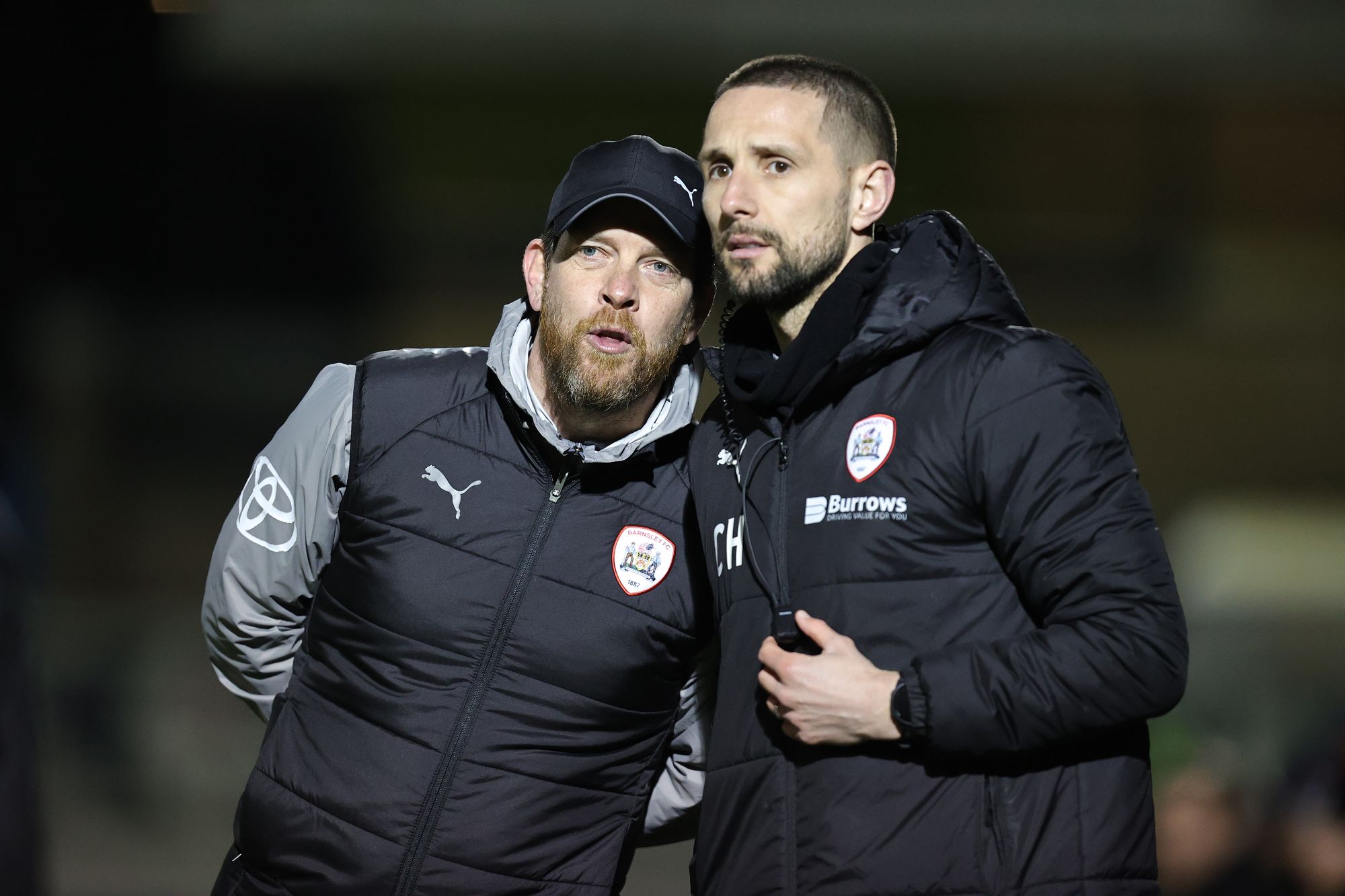
Hourihane laughs as he points to the example of his very first game: Mansfield away in March.
“It was a really proud moment. I got the role on Wednesday night, then Thursday and Friday were two really good days training, felt really good going in… then we end up losing 2-1 and the game looked pretty ugly. It didn’t look anything like I thought it would.
“It was a quick reminder that you might feel good on the training ground, but so might the opposition. That was a quick learning curve.”
You can again sense that “fire” as Hourihane talks about how much he puts into preparation.
In that sense, he doesn’t sound like he misses playing at all.
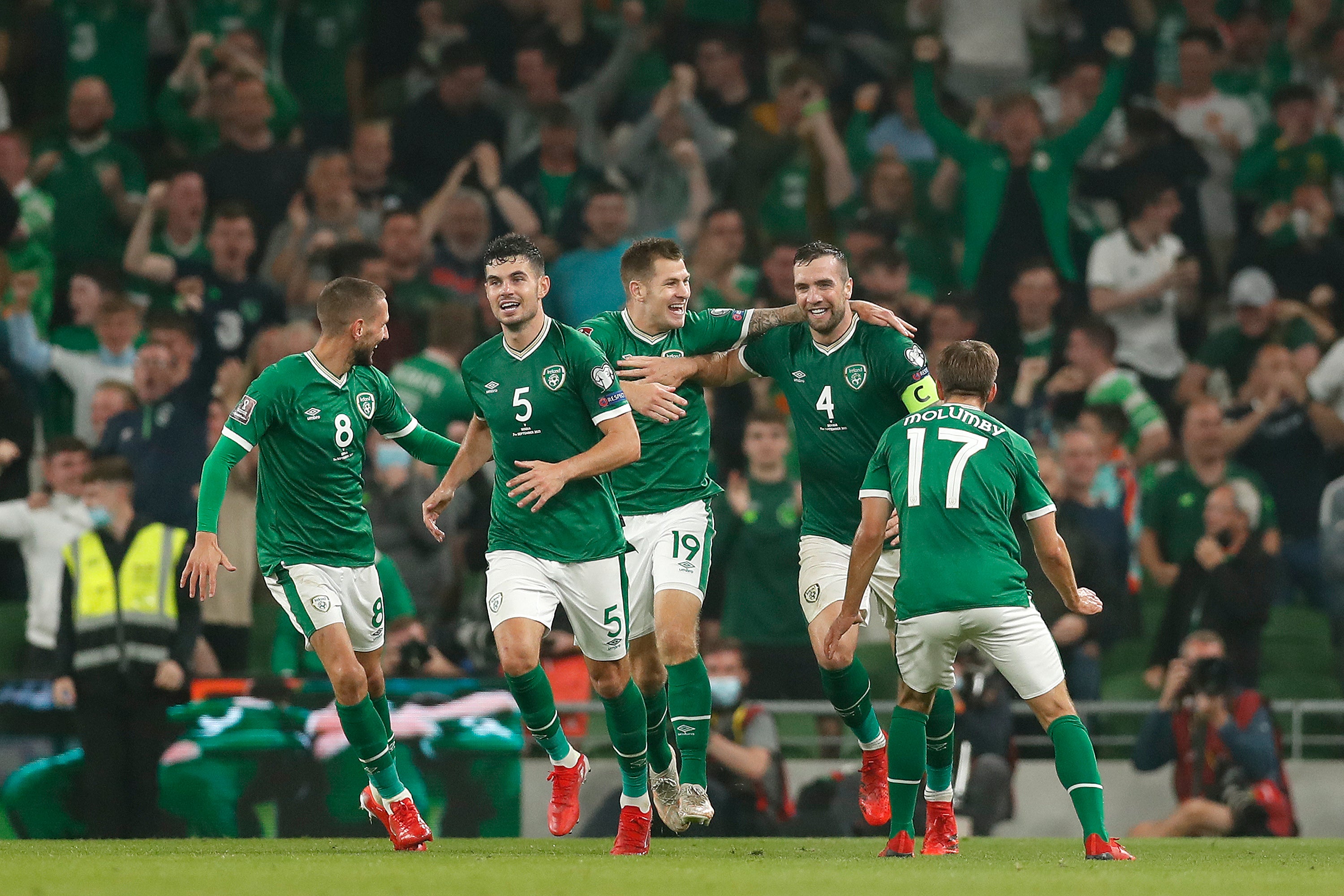
“I don’t, to be honest,” he says. “Funnily enough, the only time I’ve missed it was Ireland’s last World Cup qualifiers. It’s the only time where I’ve watched a game and gone ‘God, that would be amazing’! But any club game or Super Sunday, I haven’t missed. I’ve been that busy I’ve not been able to!”
Hourihane played with Irish hero Troy Parrott, and is thrilled that the AZ Alkmaar forward is making good on his potential.
“He’s gone away from the English scene and it’s come together nicely for him,” Hourihane notes. “He was always a talent, and a really good lad. It’s just clicking at the right time.”
From that, there’s an obvious question. Does Hourihane harbour ambitions of coaching his country? He is part of a new group of Irish coaches that include Keith Andrews at Brentford and Cardiff City’s Brian Barry-Murphy.
“Brian’s doing really well, another Cork man! I had Keith as a coach at Ireland under Stephen Kenny and he was really good. He’s thriving,” Hourihane adds. “I don’t think there’s been a big crop for a while. There was also Noel Hunt at Reading and Alan Sheehan at Swansea City. No doubt they’ll get new roles.
“I’m not sure how my journey will go but I’m an ambitious head coach that wants to be a success.”
So, given he’s spoken about how he feels when he loses, what about victory?
“Amazing feeling for a couple of hours, and you enjoy it, but you’re suddenly thinking about the next game; what can drive you closer to winning? It’s relentless.”
And, as he puts it, “that fire is burning”.
