




A measles outbreak in Bangladesh due to low vaccination rates has prompted authorities to launch an emergency nationwide immunisation campaign to contain the spread of the disease.
At least 38 children have died of measles and related complications this year, with cases mostly reported from the capital Dhaka, Mymensingh, Chapainawabganj, Pabna, Natore and Rajshahi areas. The health ministry this week confirmed that at least 674 measles cases have been reported across the country this year.
The government on Wednesday said the measles outbreak has killed 15 children, without elaborating on the time frame. Health Services Division secretary Kamruzzaman Chowdhury said the deaths were confirmed after laboratory testing of 33 samples, conducted with support from the World Health Organisation. he said.
Measles, among the most infectious of pathogens, requires that 95 per cent of the population be vaccinated in order to prevent its spread.
Measles is a viral infection that spreads with alarming ease among those not fully protected. Initial symptoms often mimic a common cold, followed a few days later by a distinctive rash. This rash typically begins on the face and behind the ears before spreading across the body, presenting as raised, blotchy patches that are usually not itchy.
The virus spreads through respiratory droplets when an infected person breathes, coughs, or sneezes.
It has been breaking out across the world as vaccination rates have fallen, although now many parents are rushing to get their children immunised and in some places, paediatric hospital wards are overwhelmed.
The Bangladeshi government has brought down the vaccination age to six months instead of nine and planned to launch a nationwide immunisation drive from Sunday, beginning with high-risk areas, mostly in densely-packed urban areas. The outbreak has hit hardest in the northwestern Rajshahi region, where health authorities have stepped up surveillance and case-tracking.
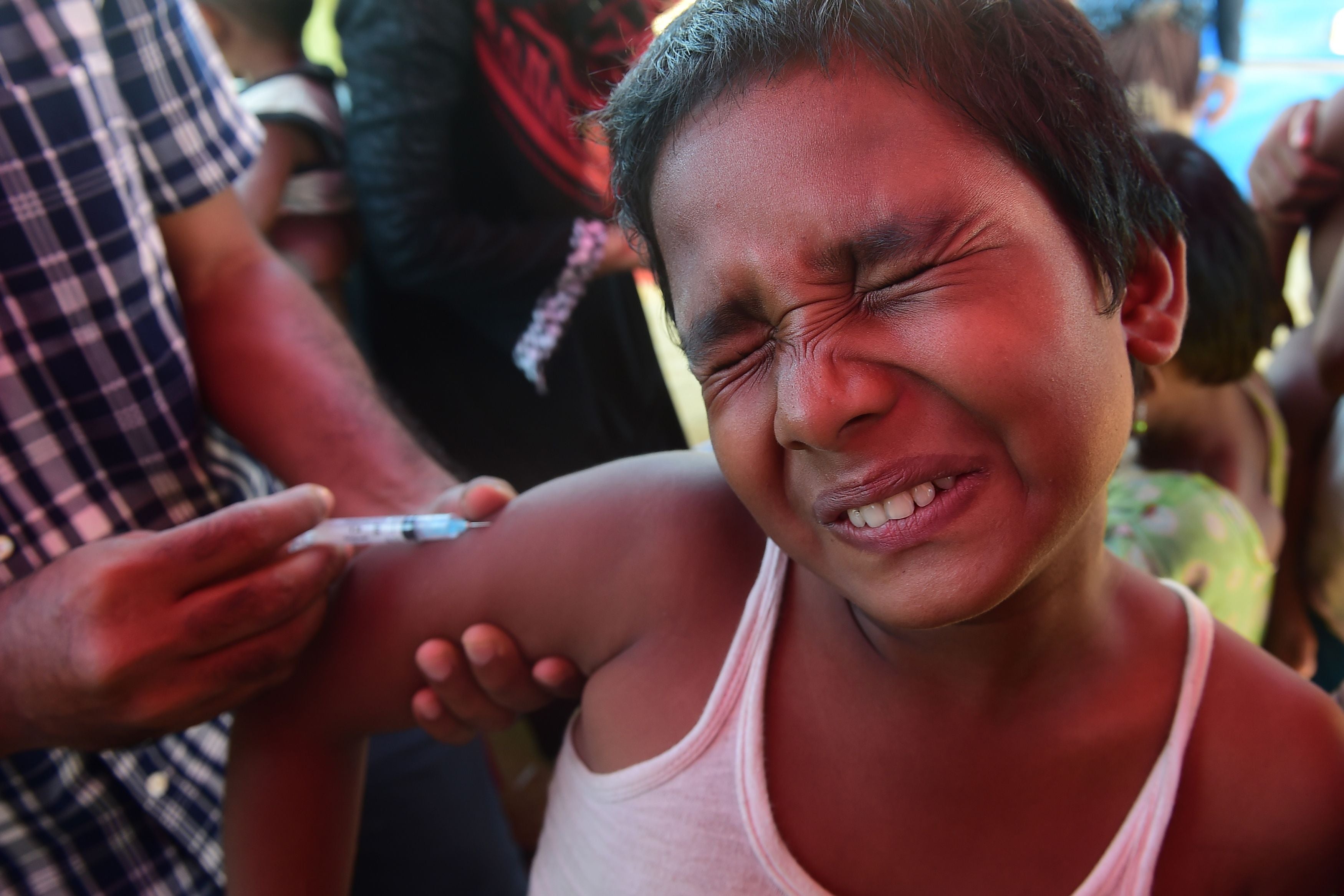
“At present, children receive the first dose of the measles vaccine at nine months and the second dose at 15 months. However, under this campaign, children aged between six months and 10 years will be vaccinated,” said Halimur Rashid, director of the Disease Control Unit at the Directorate General of Health Services.
The move to reduce the vaccination age was made after the National Immunisation Technical Advisory Group flagged that more than a third of confirmed cases were in infants under nine months.
The Directorate General of Health Services said unvaccinated children or those who have not completed the two-dose measles schedule face the greatest risk and malnourished children are particularly prone to severe complications such as pneumonia and encephalitis. Babies and individuals with compromised immune systems are particularly vulnerable to the disease. For pregnant people, the illness carries additional risks, potentially causing miscarriage, stillbirth, premature birth, or a baby with a low birthweight.
They have urged parents to keep children’s routine vaccinations up to date and to seek medical care quickly if symptoms such as fever, cough, red eyes or a rash appear. In unvaccinated patients, measles can cause complications including pneumonia, ear infections, high fever, a red rash, and encephalitis.
Health experts have blamed the rise in cases to gaps in immunisation, which included long intervals between special vaccination drives. Bangladesh held its last nationwide measles vaccination campaign in 2020, but a planned follow-up in 2024 was shelved amid political unrest.
Bangladesh weathered months of socio-political turmoil following a bloody anti-government protest in 2024, which forced the then-prime minister Sheikh Hasina to flee to India. About 18 months later, the South Asian country of 175 million people elected Tarique Rahman as the prime minister in the landmark general elections held in February this year.
Shahriar Sajjad, director of the Expanded Programme on Immunisation, told the Daily Star that special vaccination campaigns are carried out every four years. Besides, the regular vaccination programme was disrupted at least three times last year due to strikes by health assistants who administer vaccinations in rural areas, he said.
A funding crunch following the suspension of the sector programme that finances vaccination efforts also disrupted services.
The vaccination rate, which included measles, declined to 86.6 per cent in 2024, Prothom Alo reported, citing the government’s Expanded Programme on Immunisation. Last year, it dropped significantly to 59.6 per cent.
Heath minister Sardar Md Sakhawat Hossain said routine immunisation activities under the Expanded Programme on Immunisation will continue alongside the campaign.
He said vaccines and syringes would be collected and dispatched nationwide between Thursday and Friday, adding that leave for field-level health workers had been cancelled to ensure the drive is carried out effectively.