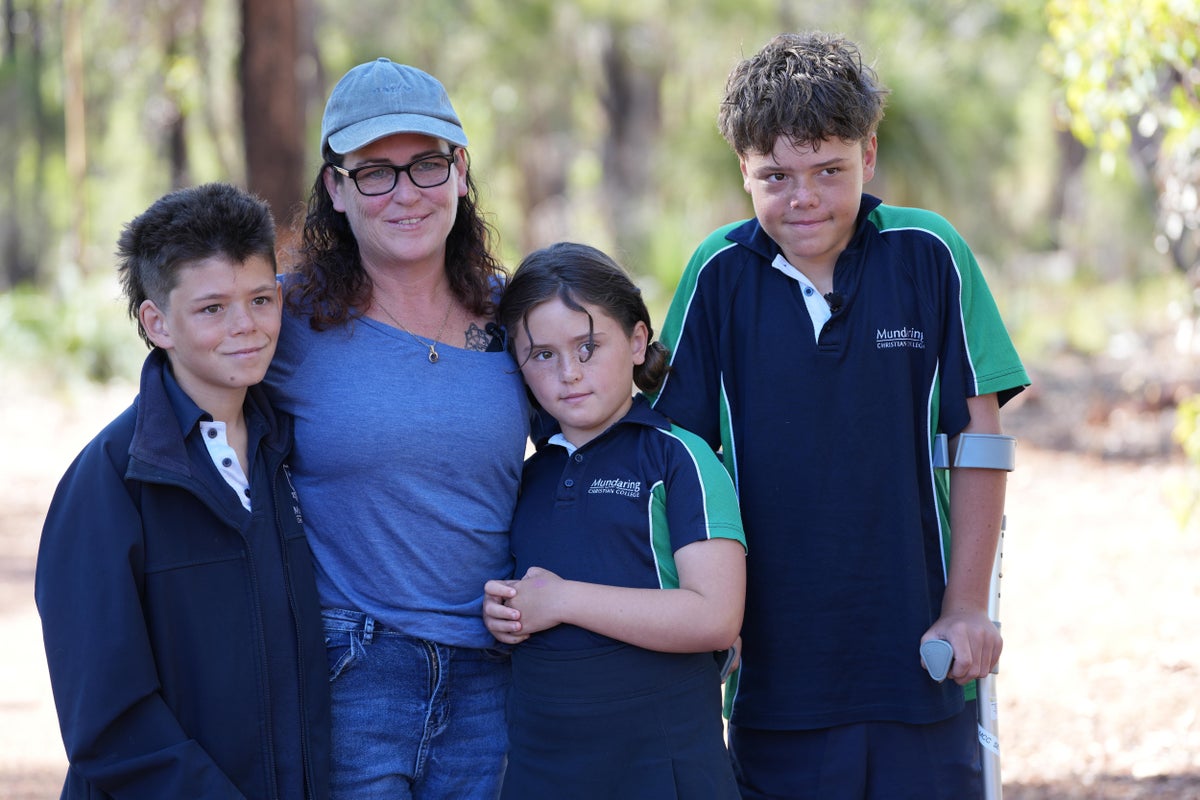
A 13-year-old boy who swam for hours to get help after his family was swept out to sea admitted he feared the worst while recovering in hospital, saying: “I thought they were dead.”
Austin Appelbee’s marathon swim began when a kayaking and paddleboarding outing in Geographe Bay near Quindalup in southwestern Australia turned dangerous as the winds strengthened and the waves surged.
The family from Perth – Austin, his mother Joanne, 47, and siblings Beau, 12, and Grace, eight – were pushed further from shore and eventually drifted about 14km out.
The extraordinary tale of how the family survived thanks to Austin’s four-hour swim to shore has received huge media attention in a whirlwind few days since the incident on Friday, with local leaders hailing him as a “true hero”.
In a series of interviews, Austin and his mother have recalled their ordeal in blow-by-blow detail, with Ms Appelbee describing the choice to send the 13-year-old to get help as “one of the hardest decisions I ever had to make”.
Ms Appelbee recalled watching her son disappear towards the horizon. “I knew he was the strongest and he could do it,” she told ABC.
“I would have never went because I wouldn’t have left the kids at sea, so I had to send somebody.”
Officials have said Austin set off back to shore in the family’s kayak, then swam for around two hours in a life jacket and ditched it for the last two hours.
Austin explained why he abandoned first the kayak, and then his life jacket, telling The West Australian: “I knew it would be a long way, but the kayak kept taking on water. I was fighting rough seas, the kayak dumped me a million times, I thought I saw something in the water and I was really scared but I was just thinking I was going to make it.”
He said the life jacket was making it difficult for him to swim, so he decided he’d be better off without it. “The waves are massive and I’ve no life jacket on,” he recalled.
“I just said, ‘All right, not today, not today, not today.’ I have to keep on going,” he said. “I was very puffed out but I couldn’t feel how tired I was.”
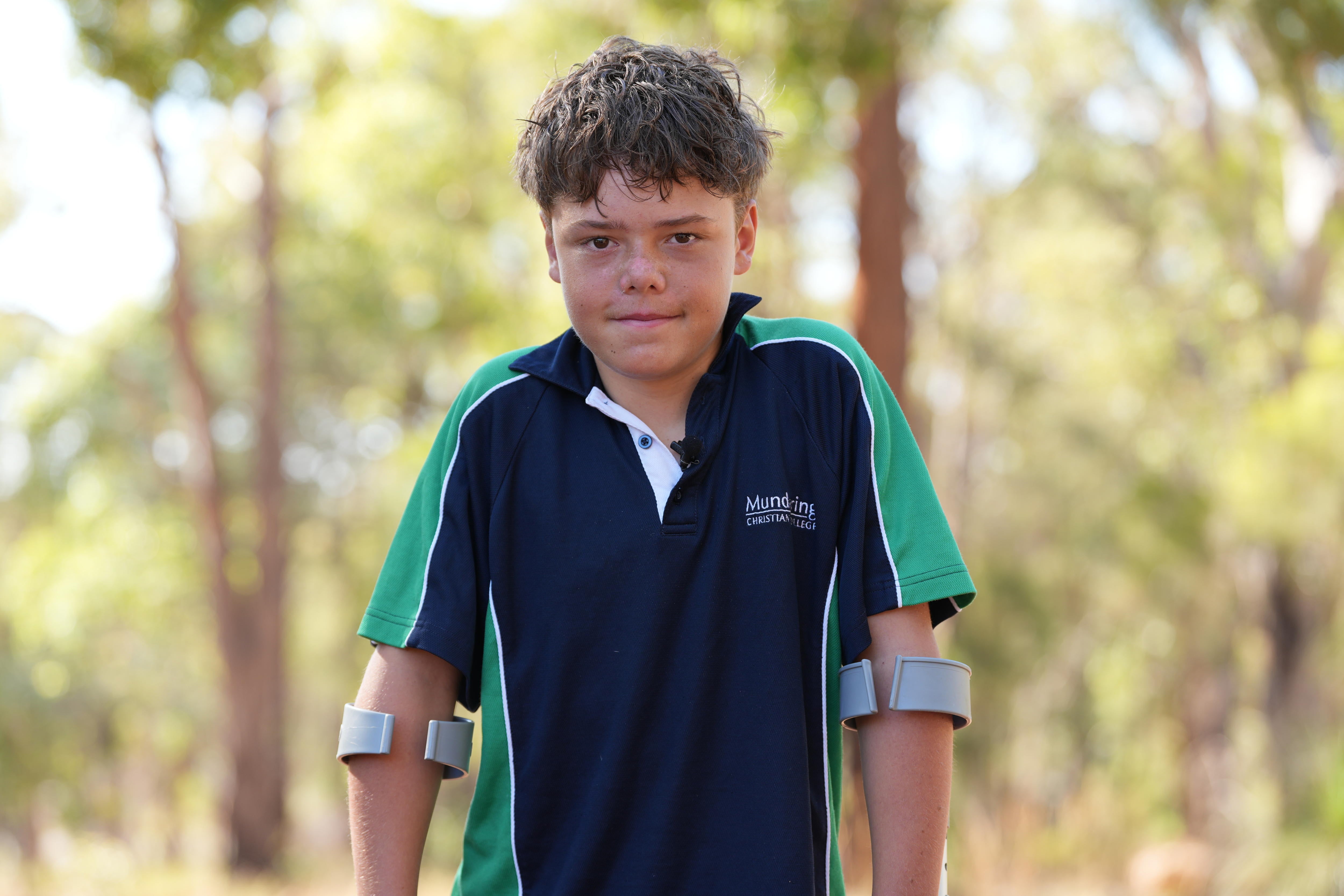
“I just kept thinking, just keep swimming, just keep swimming. And then I finally made it to shore and I hit the bottom of the beach and I just collapsed.”
“I was thinking about Mum, Beau and Grace,” he told The Guardian. “When I hit the floor I thought, how am I on land right now, is this a dream?”
After reaching land, the exhausted teenager ran about 2km to their accommodation to get his mother’s phone and call emergency services.
“I said, ‘I need helicopters, I need planes, I need boats, my family’s out at sea.’ I was very calm about it,” he recalled of his exchange with the emergency services operators on the phone.
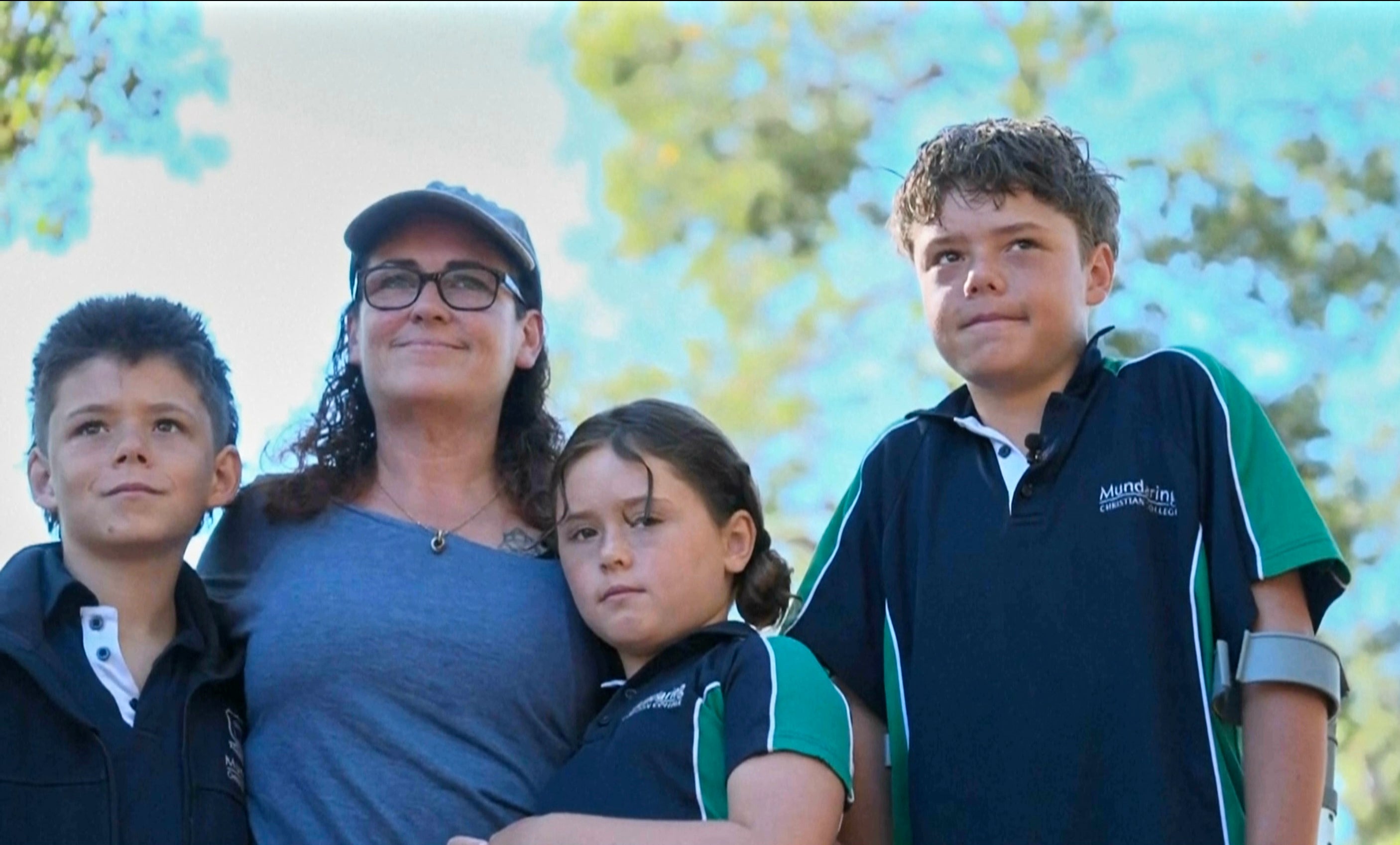
His call triggered a large-scale rescue effort involving Western Australia Water Police, volunteer crews, and aerial search teams.
The police confirmed they received an emergency call at around 6pm on Friday reporting that a woman and her two children had been swept out to sea in rough conditions.
Soon after the search began, it turned dark.
“We kept positive, we were singing, and we were joking,” Joanne said. “We were treating it as a bit of a game until the sun started to go down, and that’s when it was getting very choppy with very big waves.”
“As the sun went down, I thought something’s gone terribly wrong here and my fear was that he didn’t make it,” she added, referring to Austin.
“Then, as it got darker, yeah, I thought there was no one coming to save us. We were cold, we were shaking, and Beau had lost feeling in his legs.”
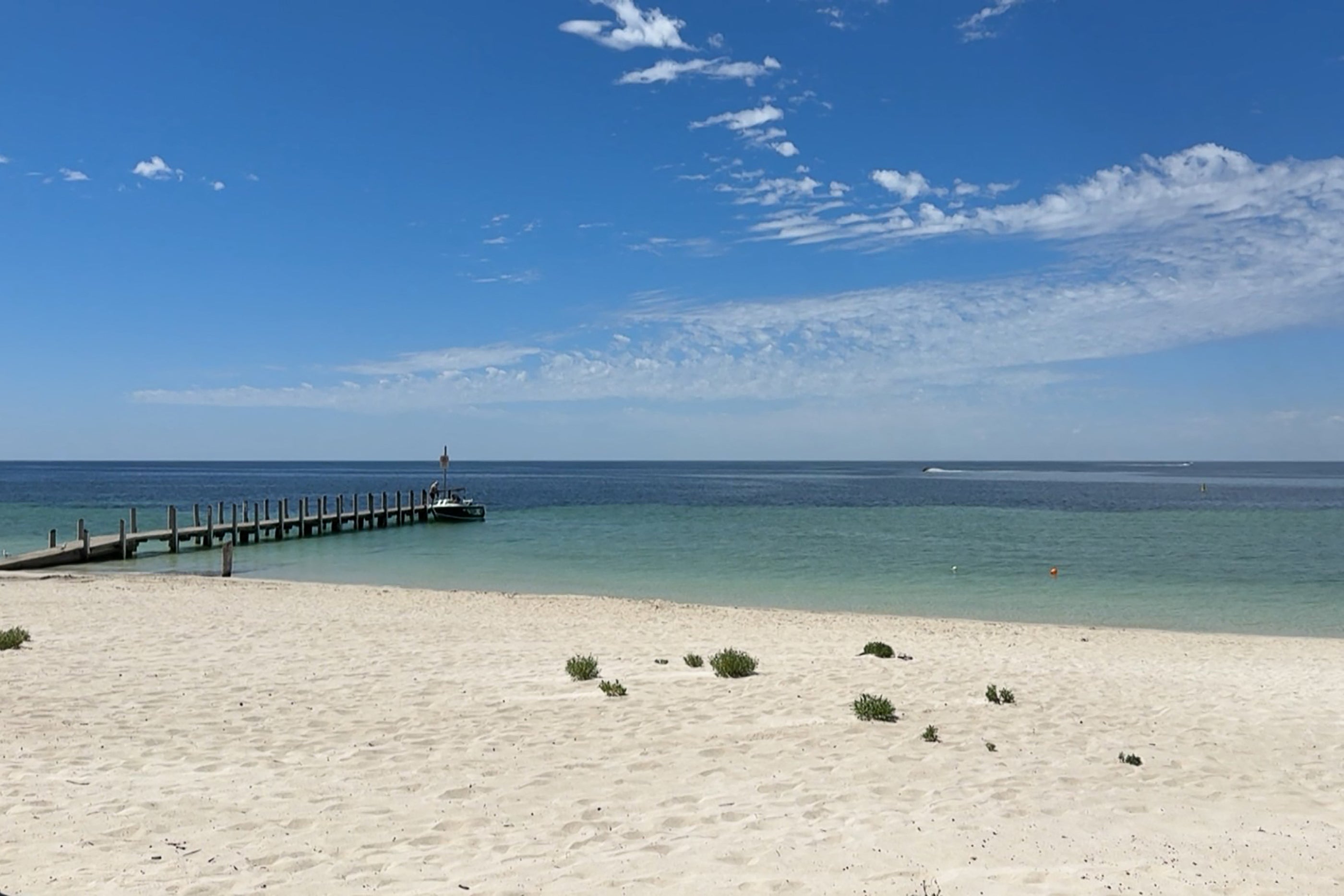
Joanne said she began to brace herself for the possibility that none of them would survive. “It was the end, it was definitely the end,” she recalled thinking to herself.
Rescuers eventually located the family clinging to paddleboards and brought them ashore. Joanne said the three were stranded at sea for eight to 10 hours.
“The actions of the 13-year-old boy cannot be praised highly enough – his determination and courage ultimately saved the lives of his mother and siblings,” police inspector James Bradley said in a statement on Monday.
“This incident is a reminder that ocean conditions can change rapidly. Thankfully, all three people were wearing life jackets, which contributed to their survival.”
Western Australia premier Roger Cook called Austin “a true West Aussie hero” and his feat of endurance an “extraordinary act of courage”.
“Austin’s bravery is beyond his years, showing remarkable courage, resilience and determination in the face of real danger. Well done, Austin – we’re so proud of what you’ve done,” he said.
Austin has rejected the hero label. “I didn’t think I was a hero – I just did what I did,” he told the BBC.
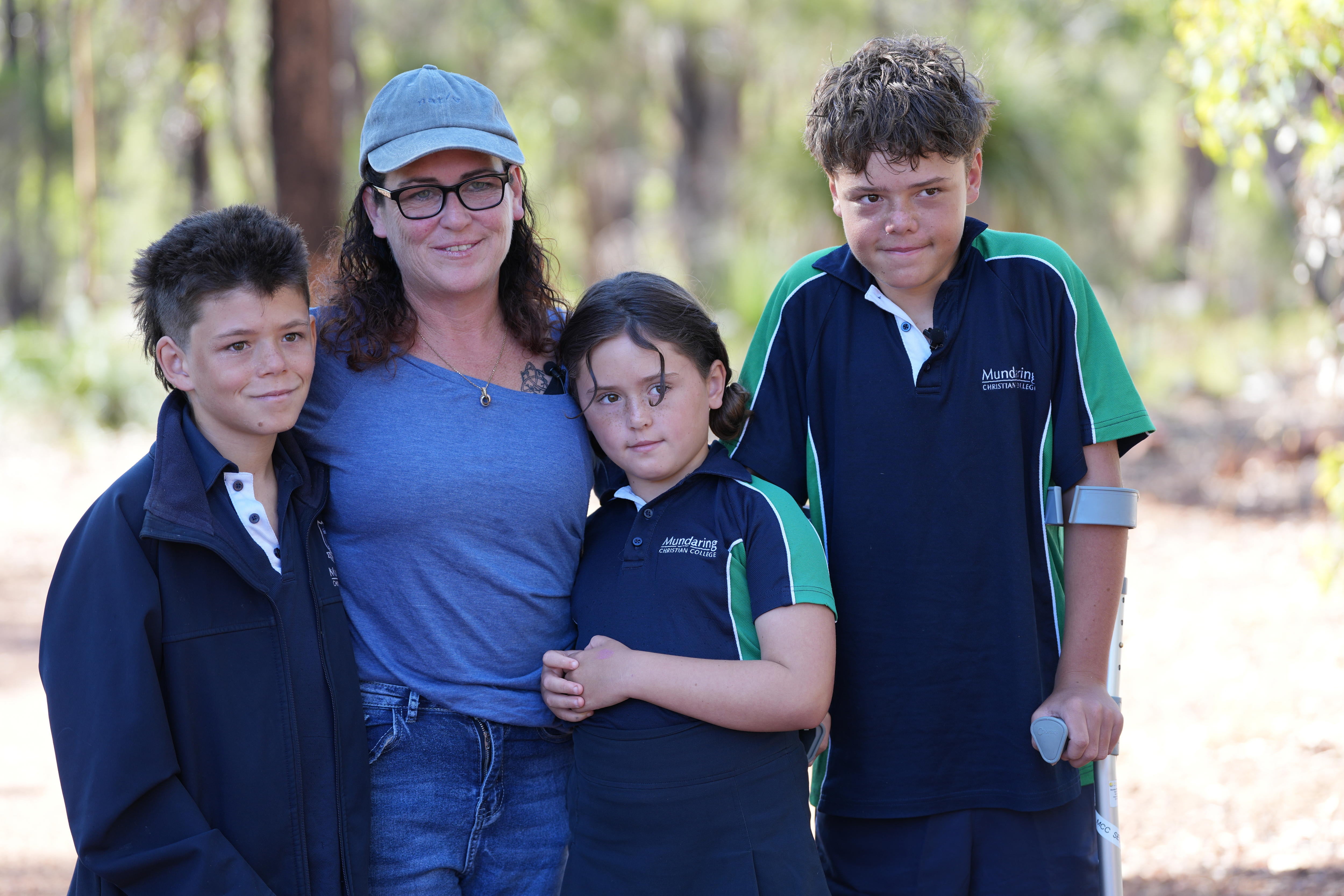
A survival expert, Mike Tipton, told The Washington Post that Austin’s swim to shore was a “remarkable achievement” driven by the powerful motivation to save his family.
“He must be an accomplished swimmer, but even then, the water was cold enough to incapacitate him without unrelenting effort. He was clearly driven on by the desire to save his family – this is a common and critical factor in such survival scenarios,” he said.
Austin said after he had called emergency services, some “nice ladies on the beach” gave him food before he “just passed out”.
He was taken to the Busselton Health Campus, where he woke up not knowing what had happened to his family.
“I realised they were gone, I thought they were dead,” he said. “I had a lot of guilt in my heart. I thought, ‘Oh man, I wasn’t fast enough.’”
Not long afterwards, Austin was told the search had ended and his family were safe.
Doctors later told Austin that the strain on his body was comparable to running two marathons, and gave him crutches to help his legs recover.
Joanne, Beau and Grace were treated for swollen legs, blisters, bruising and a rash caused by repeated contact with the paddleboard during the ordeal.
Recalling the moment they were saved, Joanne said: “I said to everybody, we made it, we’re alive, and that’s the most important thing.”
She told ABC: “I have three babies. All three of them made it. That was all that mattered.”