


UK TimesUK Times
  • Home
  • News
  • TV & Showbiz
  • Money
  • Health
  • Science
  • Sports
  • Travel
  • More
    • Web Stories
    • Trending
    • Press Release
What's Hot

A19 northbound between A182 near Easington and A182 near Murton | Northbound | Broken down vehicle

20 January 2026

Politician kicked out of Senedd Tories for talking to Reform | UK News

20 January 2026
Girlfriend vs mother-in-law – can you ever really win the oldest fight in the book? – UK Times

Girlfriend vs mother-in-law – can you ever really win the oldest fight in the book? – UK Times

20 January 2026
Facebook X (Twitter) Instagram
UK TimesUK Times
Subscribe
  • Home
  • News
  • TV & Showbiz
  • Money
  • Health
  • Science
  • Sports
  • Travel
  • More
    • Web Stories
    • Trending
    • Press Release
UK TimesUK Times
Home » Aurora borealis lights up UK night skies with dazzling displays – UK Times
News

Aurora borealis lights up UK night skies with dazzling displays – UK Times

By uk-times.com20 January 2026No Comments3 Mins Read
Facebook Twitter LinkedIn Telegram Pinterest Tumblr Reddit WhatsApp Email
Aurora borealis lights up UK night skies with dazzling displays – UK Times
Share
Facebook Twitter LinkedIn Pinterest Email

Get the free Morning Headlines email for news from our reporters across the world

Sign up to our free Morning Headlines email

Sign up to our free Morning Headlines email

Morning Headlines

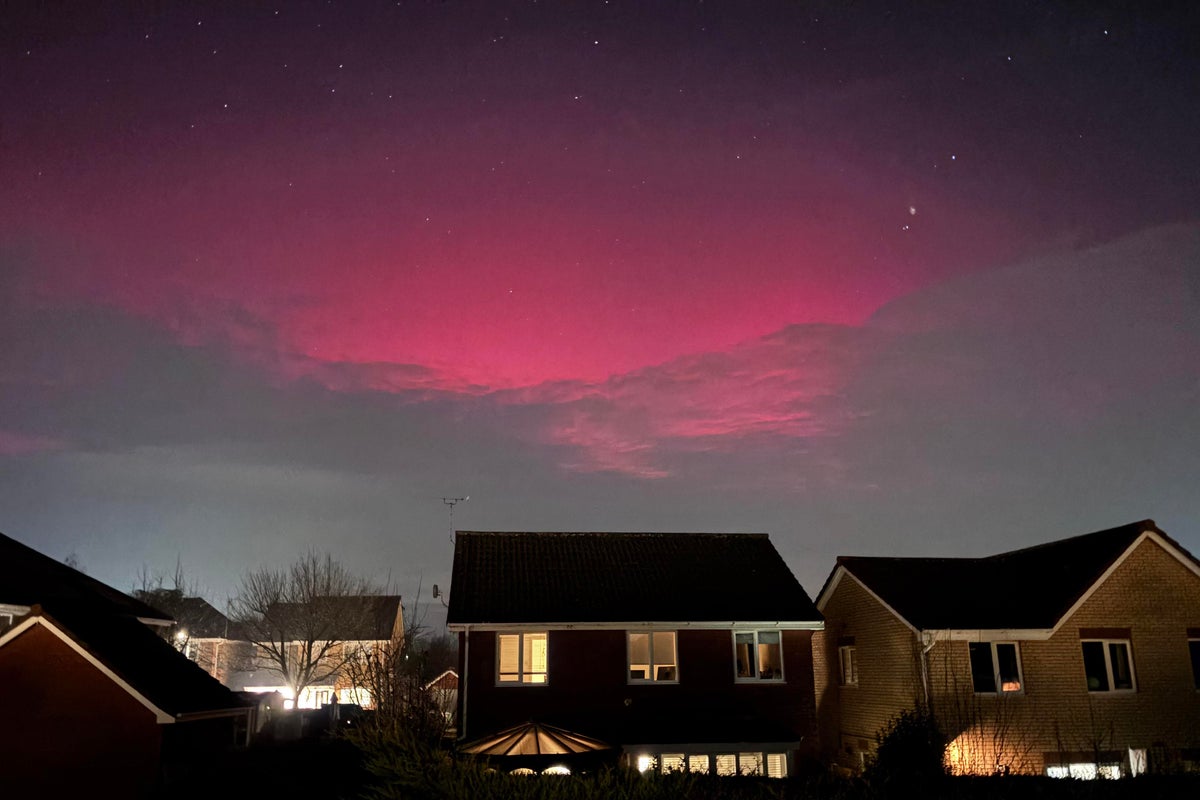
The UK’s night skies were transformed into a breathtaking canvas of green and pink on Monday evening, as the Aurora Borealis, commonly known as the Northern Lights, put on a spectacular display.

This natural phenomenon, usually confined to regions near the Arctic Circle, was visible across vast swathes of the country due to heightened solar activity.

Dazzling images captured on Monday showcased the celestial spectacle across Scotland, Northern Ireland, and Wales, extending as far south as parts of south-west, southern, eastern, and northern England. The dazzling displays will potentially continue in some areas on Tuesday.

The Met Office confirmed “severe geomagnetic storms” were responsible, producing “widespread auroras visible across the UK, with reports extending as far south as northern Italy.”
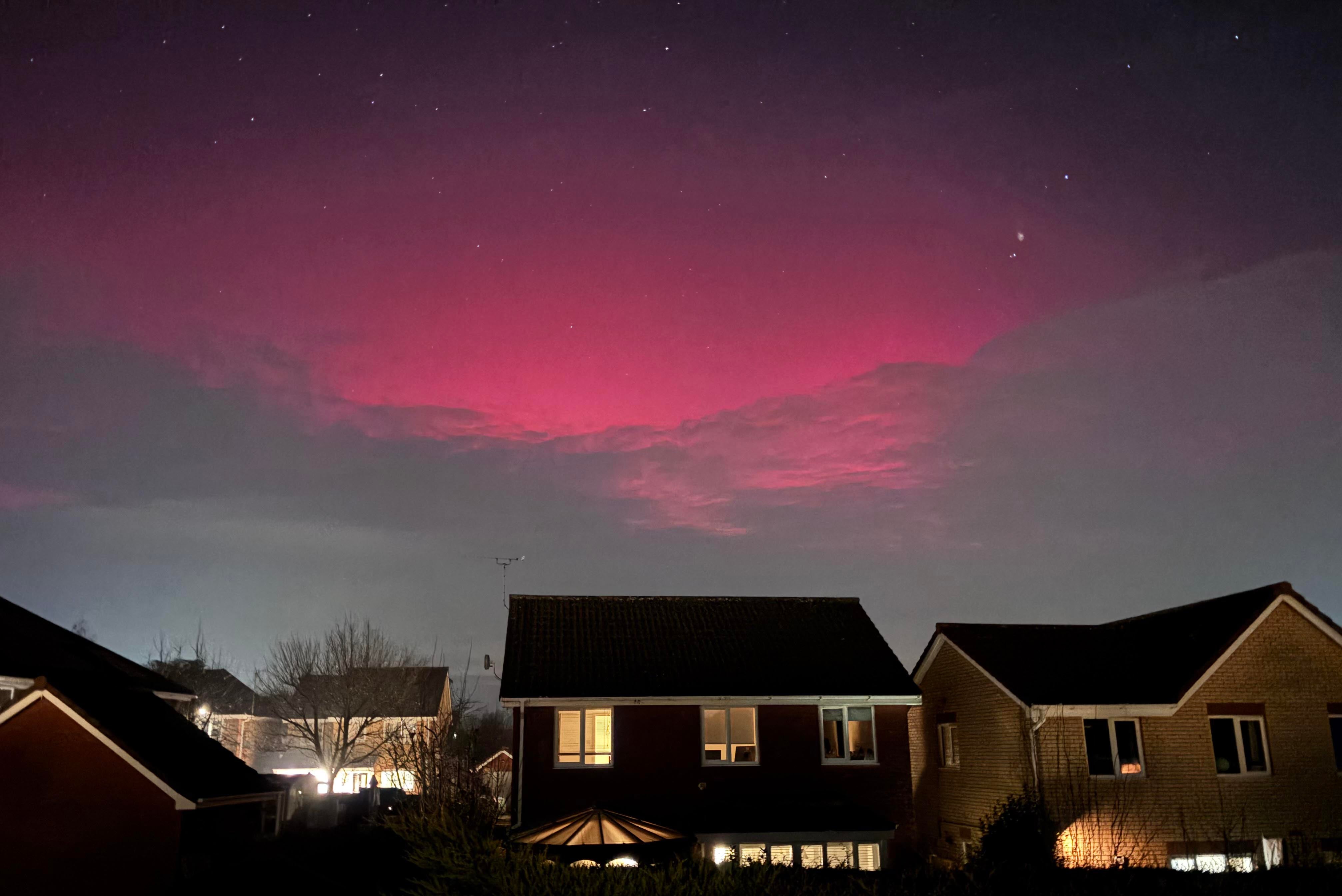
Northern lights illuminate the cloud cover over Rushmere St. Andrew, Ipswich, Suffolk

Northern lights illuminate the cloud cover over Rushmere St. Andrew, Ipswich, Suffolk (Joe Pickover/PA Wire)

The Met Office attributed the vibrant light show to a Coronal Mass Ejection (CME), where the Sun expels immense clouds of particles.

The best way to see auroras is to get away from areas with any light pollution and allow time for your eyes to adjust to the darkness.

Krista Hammond, Met Office Space Weather Manager, said in a statement: “There is still some uncertainty around the exact timing of the CME’s arrival, but it is expected overnight tonight or tomorrow morning. The CME is likely to result in geomagnetic storming, giving the potential to view the aurora.

“However, sightings are dependent on the CME arriving during hours of darkness and clear skies. Unfortunately, cloud and rain on Tuesday evening may make viewing difficult, even if the timing is favourable.

“The effects of the CME may linger into Tuesday night, with aurora sightings possible across Scotland, perhaps also Northern Ireland and northern England, where skies are clear. This is likely to wane further by Wednesday night, perhaps with some glimpses possible from the far north of Scotland.”

According to the US National Oceanic and Atmospheric Administration (NOAA) Space Weather Prediction Centre, the best time to view them is usually within an hour or two of midnight.
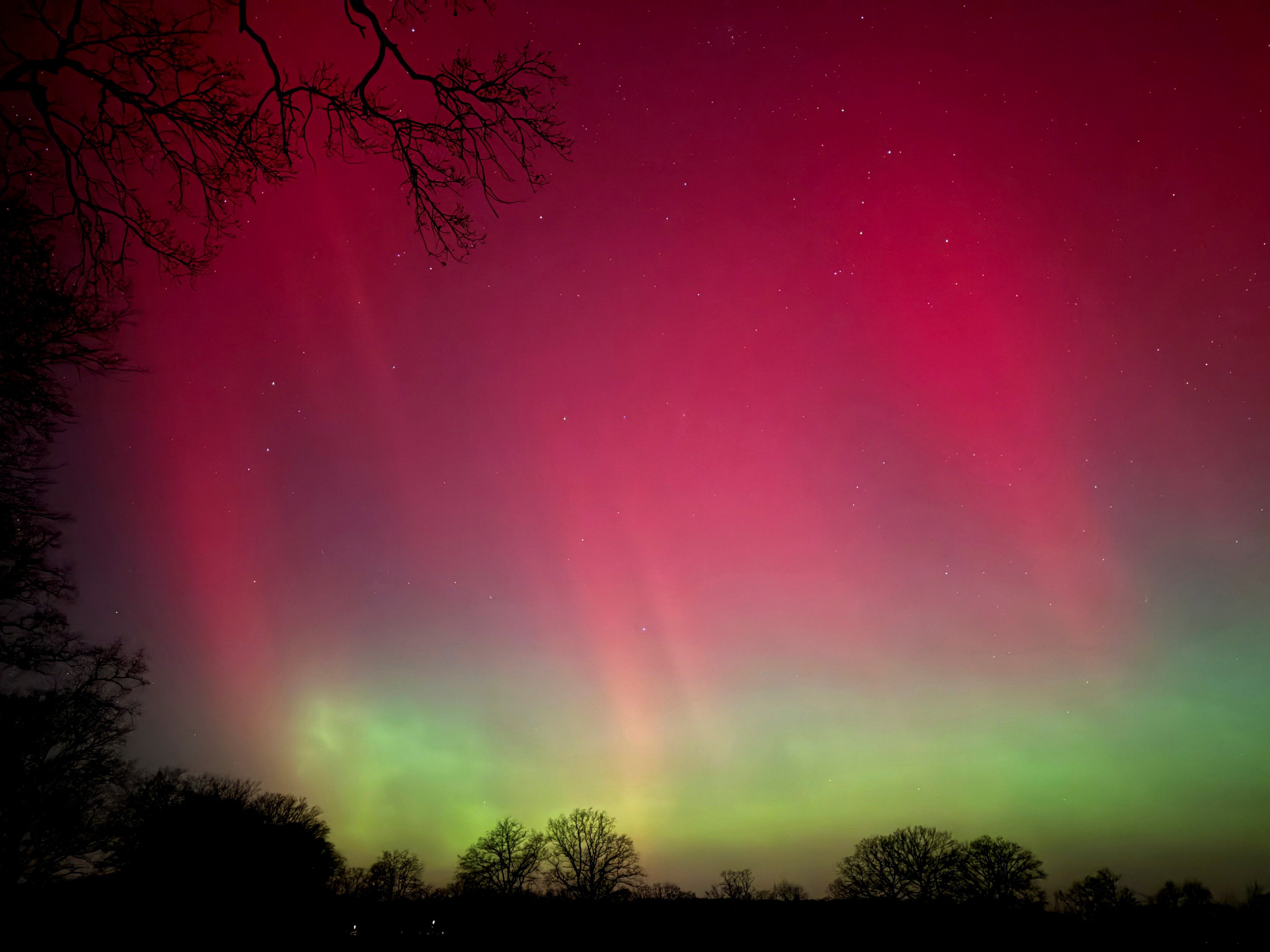
The aurora borealis also illuminated the sky over Quickborn, northern Germany on Monday

The aurora borealis also illuminated the sky over Quickborn, northern Germany on Monday (REUTERS)

“These hours of active aurora expand towards evening and morning as the level of geomagnetic activity increases,” NOAA notes on its website.

“There may be aurora in the evening and morning but it is usually not as active and therefore, not as visually appealing.”

These particles, upon interacting with oxygen and nitrogen gases in Earth’s atmosphere, create the distinct colours. Oxygen atoms typically glow green, the most common hue, while nitrogen atoms produce purple, blue, and pink. While activity is expected to wane, glimpses may still be possible in parts of Scotland and Northern Ireland on Tuesday.

Share. Facebook Twitter Pinterest LinkedIn Tumblr Telegram Email

Related News

A19 northbound between A182 near Easington and A182 near Murton | Northbound | Broken down vehicle

20 January 2026

Politician kicked out of Senedd Tories for talking to Reform | UK News

20 January 2026
Girlfriend vs mother-in-law – can you ever really win the oldest fight in the book? – UK Times

Girlfriend vs mother-in-law – can you ever really win the oldest fight in the book? – UK Times

20 January 2026

M56 westbound between J5 and J6 | Westbound | Road Works

20 January 2026

M62 westbound at the Hartshead Moor services between J26 and J25 | Westbound | Congestion

20 January 2026

The teenage cousins living with inoperable brain tumours | UK News

20 January 2026
Top News

A19 northbound between A182 near Easington and A182 near Murton | Northbound | Broken down vehicle

20 January 2026

Politician kicked out of Senedd Tories for talking to Reform | UK News

20 January 2026
Girlfriend vs mother-in-law – can you ever really win the oldest fight in the book? – UK Times

Girlfriend vs mother-in-law – can you ever really win the oldest fight in the book? – UK Times

20 January 2026

Subscribe to Updates

Get the latest UK news and updates directly to your inbox.

© 2026 UK Times. All Rights Reserved.
  • Privacy Policy
  • Terms of use
  • Advertise
  • Contact Us

Type above and press Enter to search. Press Esc to cancel.

Go to mobile version