




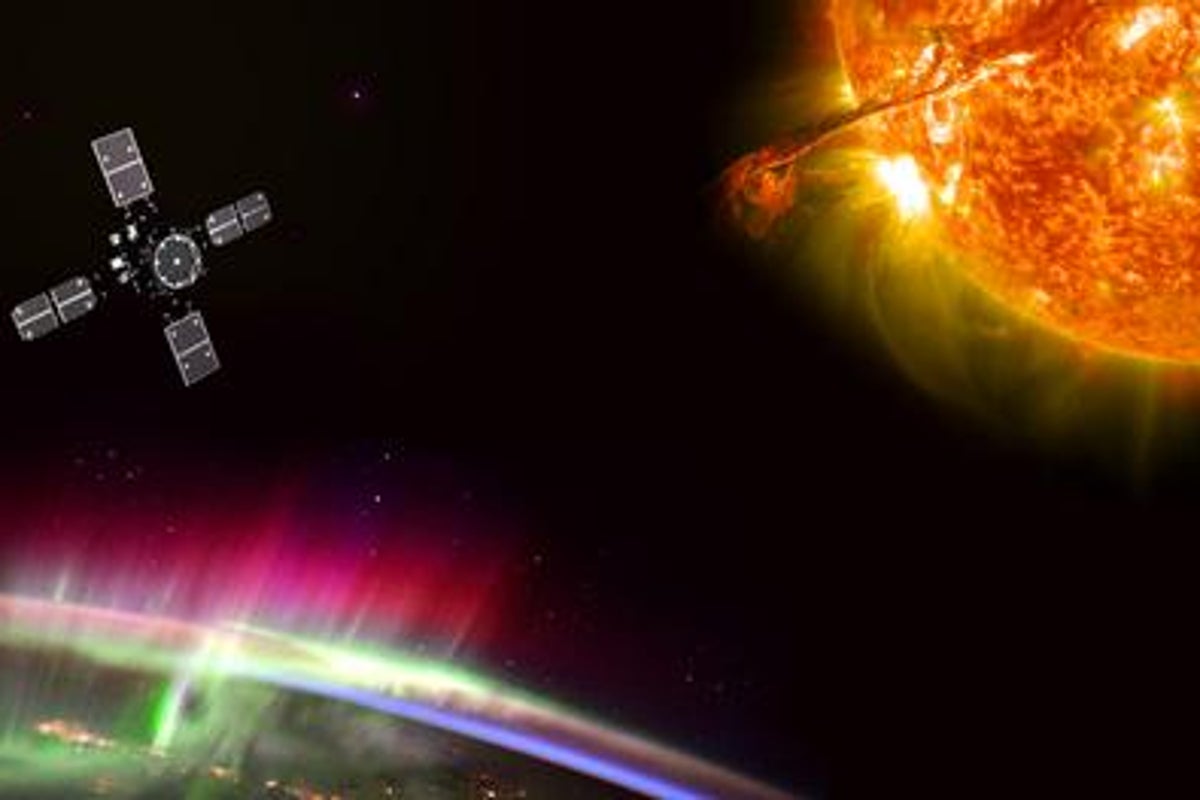
Chemicals fired from satellites at the edge of the Earth’s magnetic field can act as “airbags” to shield the planet from devastating solar flares, a new study suggests.
Solar flares are streams of high-energy particles ejected from the Sun that can disrupt radio communications and fry satellite electronics.
Fluctuations in the Earth’s magnetic field caused by solar storms can mess with GPS signals and even spark current surges that can overload power grids.
Although scientists are getting better at predicting the release of destructive streams of energy from the Sun, there is little we can do to protect ourselves from them.
Now, researchers propose building a spacecraft system to fire chemicals at the edge of the planet’s magnetic field to temporarily fortify our defences and deflect potentially damaging space storms.
They estimate such a system could cut the intensity of a major geomagnetic storm in half, enough to save critical infrastructure like satellites and power grids.

“It’s as if you could install an airbag in the magnetosphere,” astronomer Daniel Welling, author of the study from the University of Michigan, told Science.
“We came up with a model that could flip the paradigm. It is like people in a village who see a river flooding – maybe they can predict when that will happen but probably what’s even better is if they could build a storm wall. That’s what we’re proposing here,” said Brian Walsh, another author of the study published in the journal Space Weather.
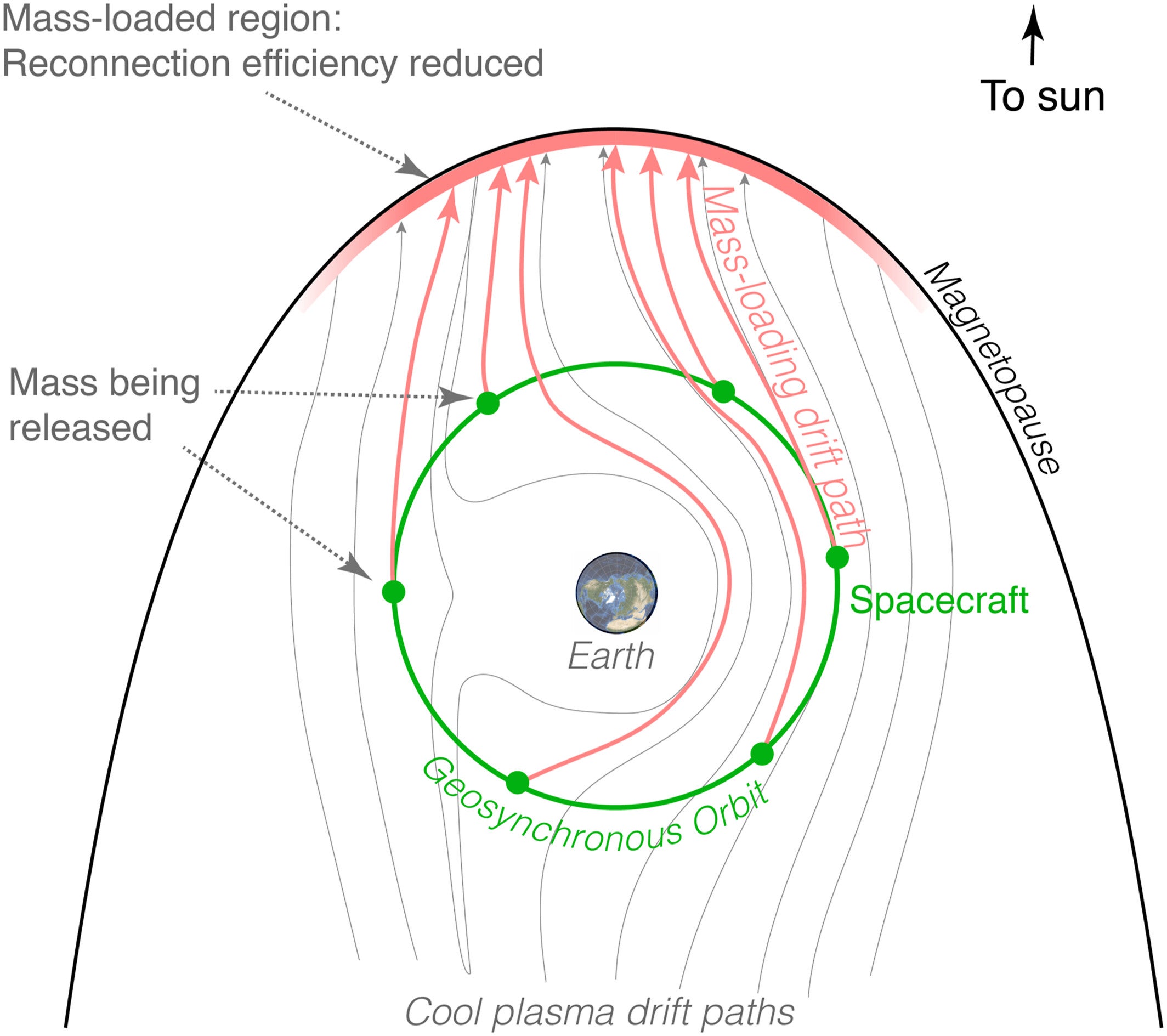
The proposed system, which the team have in fact named “Storm Wall”, would use six spacecraft launched into a geosynchronous orbit to sync their rotation with the Earth’s.
Each satellite would carry a canister of an alkaline element like barium or lithium to induce an electrical charge and seed the atmosphere with plasma. This plasma, scientists predict, would disrupt the flow of energy between any solar storm and the magnetosphere, enough to bounce the space weather around and past our planet.

However, researchers caution that there could be cost barriers in implementing the system.
They estimate the proposed system would require launching six spacecraft carrying the equivalent of about a dozen oil trucks’ worth of material.
In future studies, scientists hope to find ways to halve the amount of material used.
“The proposed approach uses existing technology and materials, making it a practical future defence against space weather risks,” they wrote.
“If you built it, if it was deployed, it would help all people on the planet. You couldn’t make it in a way that helped only one country, one group of satellites,” Dr Walsh said.

