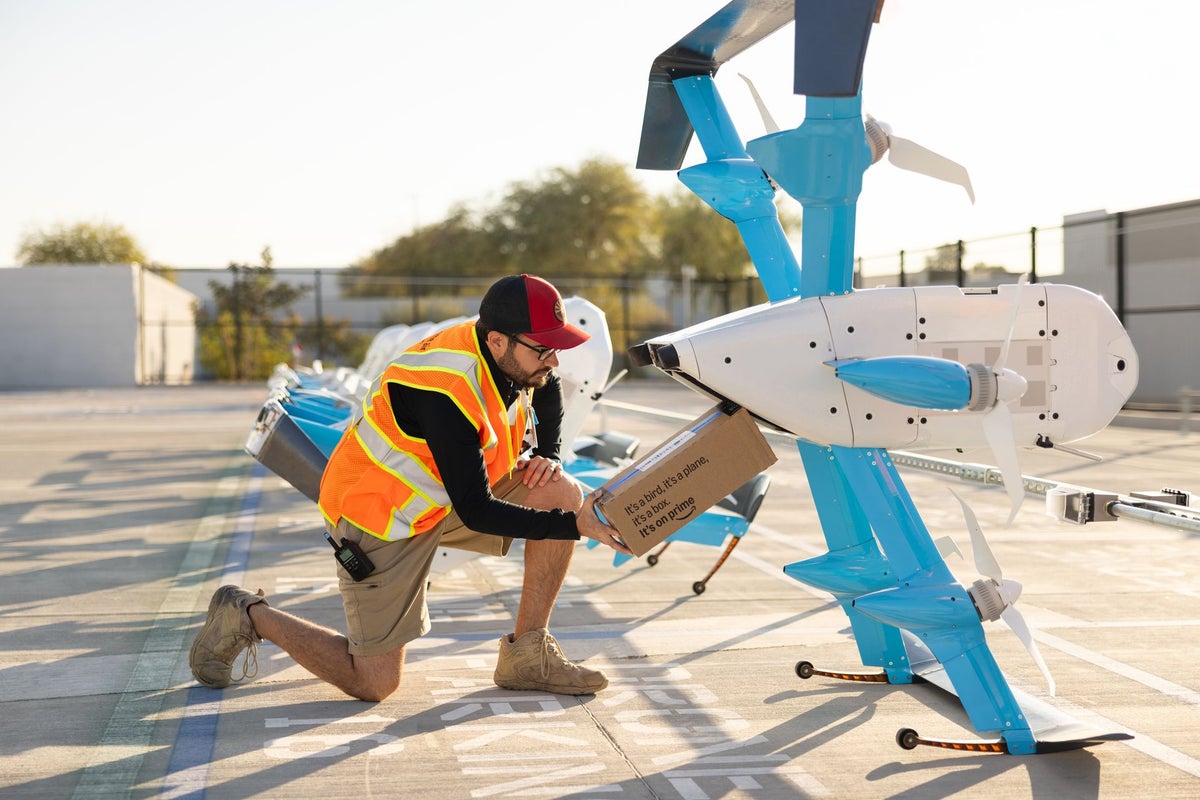
Amazon has become the first retailer in the UK to roll out a local drone-based delivery service, launching some deliveries to addresses within a 7.5-mile area of its warehouse in Darlington, County Durham.
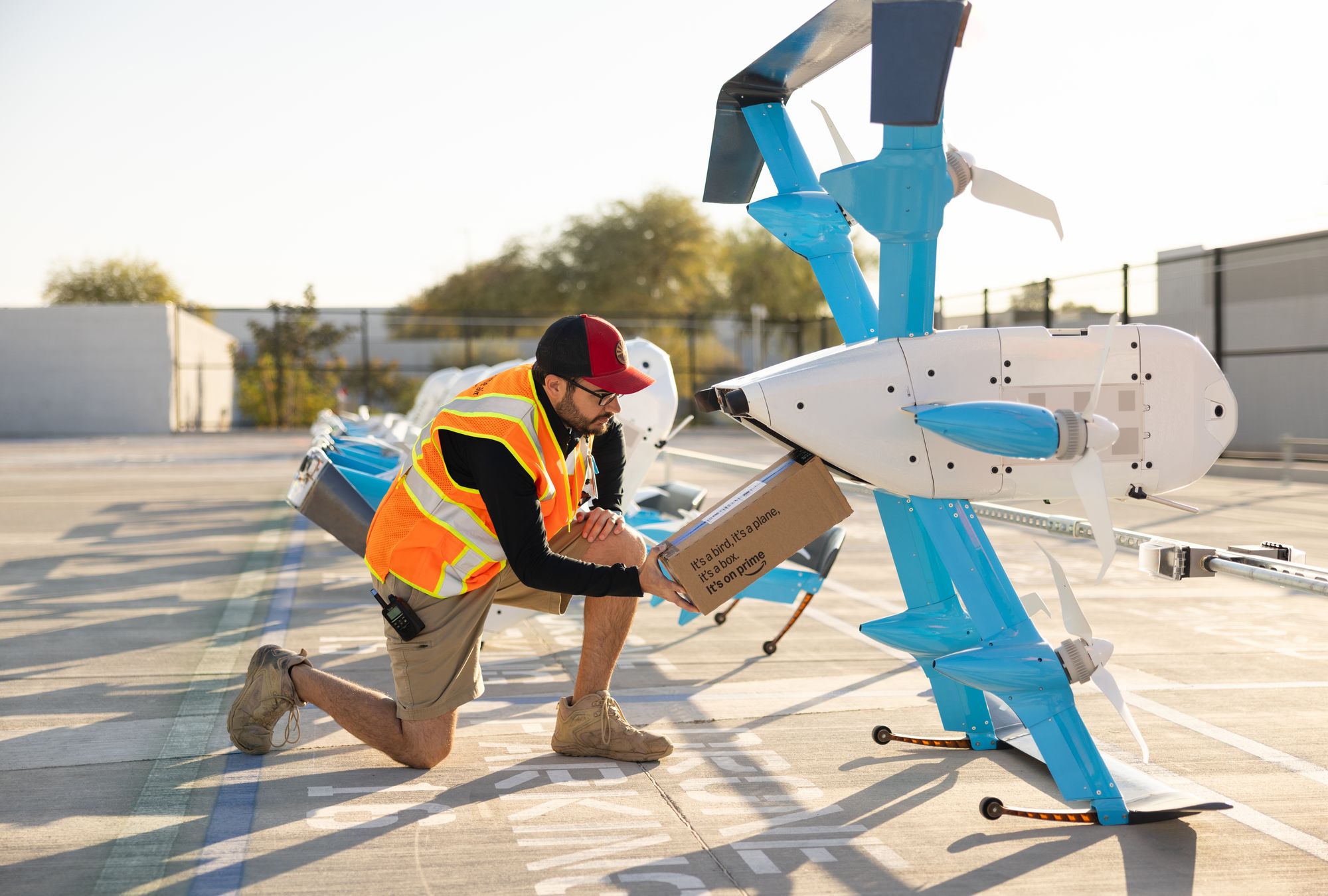
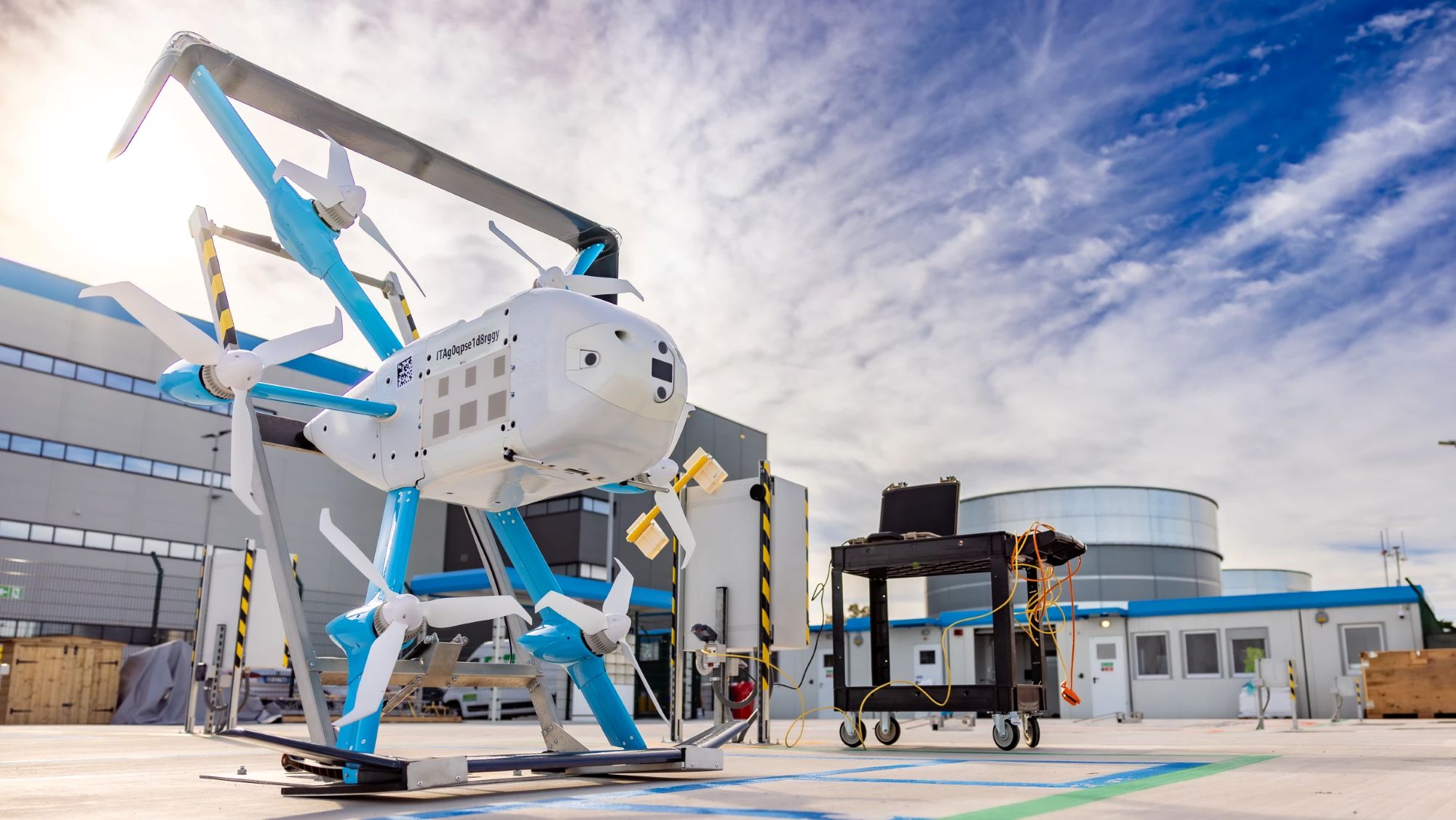
The MK30 drones, which Amazon described as its “most advanced yet” have been buzzing across the countryside to deliver packages weighing no more than 5lb (2.2kg) and containing a range of domestic products including batteries, household cleaning items, cables and beauty products.
It said the Prime Air delivery system can get products “into customers’ hands quickly, in less than two hours” – a service for which they believe there is considerable demand – and it is aiming to expand across the country.
A farmer in County Durham who let the company test the technology ordered some rubber gloves to demonstrate the delivery for reporters.
“Initially it was a novelty, so we were ordering everything under the sun,” Rob Shield told the BBC. “Pens, paper, chocolates – anything to make it keep coming.”
The orders arrive in boxes which are dropped from a height of 12 feet (3.6m) into the garden, ruling out receiving anything breakable.
After the initial deliveries, Mr Shield said he has begun to get used to the rapid arrival of goods. “You obviously start realising ‘I actually need something today’ like tape measures and stuff like that you’re always losing – we just order it and it comes,” he said.
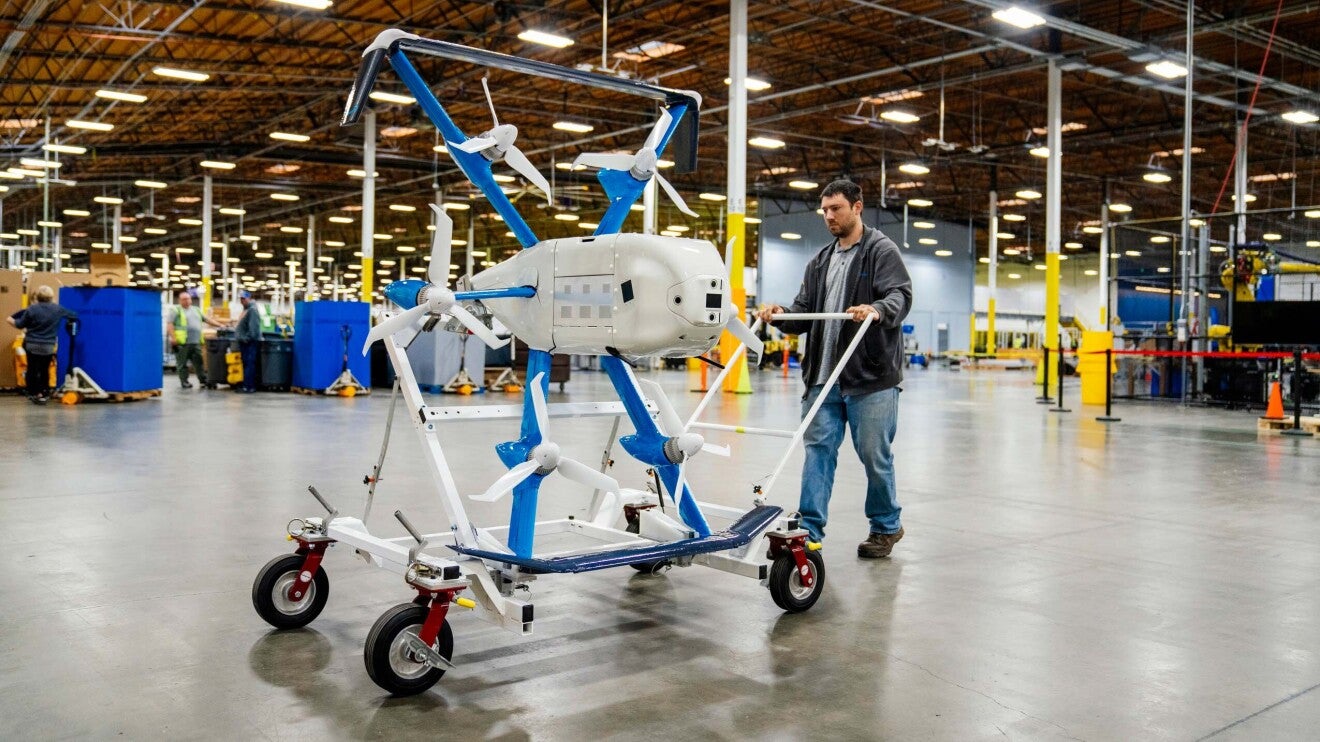
Amazon says the large MK30 drone used for the deliveries is about “as quiet as an average van delivery” – but one local resident reportedly described the idea of drone deliveries as “nutty as a fruitcake”.
Expanding Amazon’s drone service further afield may prove to be a headache, experts have said. While the NHS is conducting drone trials to deliver blood in London, and Royal Mail is already using them to send packages to remote islands in Orkney, many specific conditions have to be in place.
For example, customers must have a garden to be eligible for drone delivery, and that does not include any roof gardens. In February, an Amazon delivery drone crashed into an apartment building in Dallas and fell to the ground, resulting in the company halting deliveries to certain types of buildings.
Professor James Scanlan, an expert in aerospace and drone technology at the University of Southampton, told The Independent that expanding the service means Amazon will have to overcome a number of remaining issues.
“I think there are some situations where drone deliveries might make sense such as remote, islands [and] rural communities,” he said. “However current drone technology is probably inadequate to deal with weather. In particular wind and turbulence.”
He said: “The drones are noisy. I would not want routine drone flights to operate over my property. A solution to the noise problem is to fly higher but the drones then present a hazard to crewed aircraft and helicopters. This is another unsolved problem.”
Amazon said: “Safety is Amazon’s top priority and Prime Air systems are built with multiple safety features. The MK30 has received Civil Aviation Authority approval to conduct operations.
“As the MK30 descends for delivery, its onboard systems identify and steer clear of obstacles such as clotheslines or trampolines – items that might not appear in satellite maps. These same cameras continuously monitor the surrounding airspace during flight, determining whether evasive action is needed to avoid other aircraft entering the drone’s flight path. The perception technology relies on sophisticated machine learning models trained to recognise various objects, including people, animals, physical barriers, and other airborne vehicles.”