



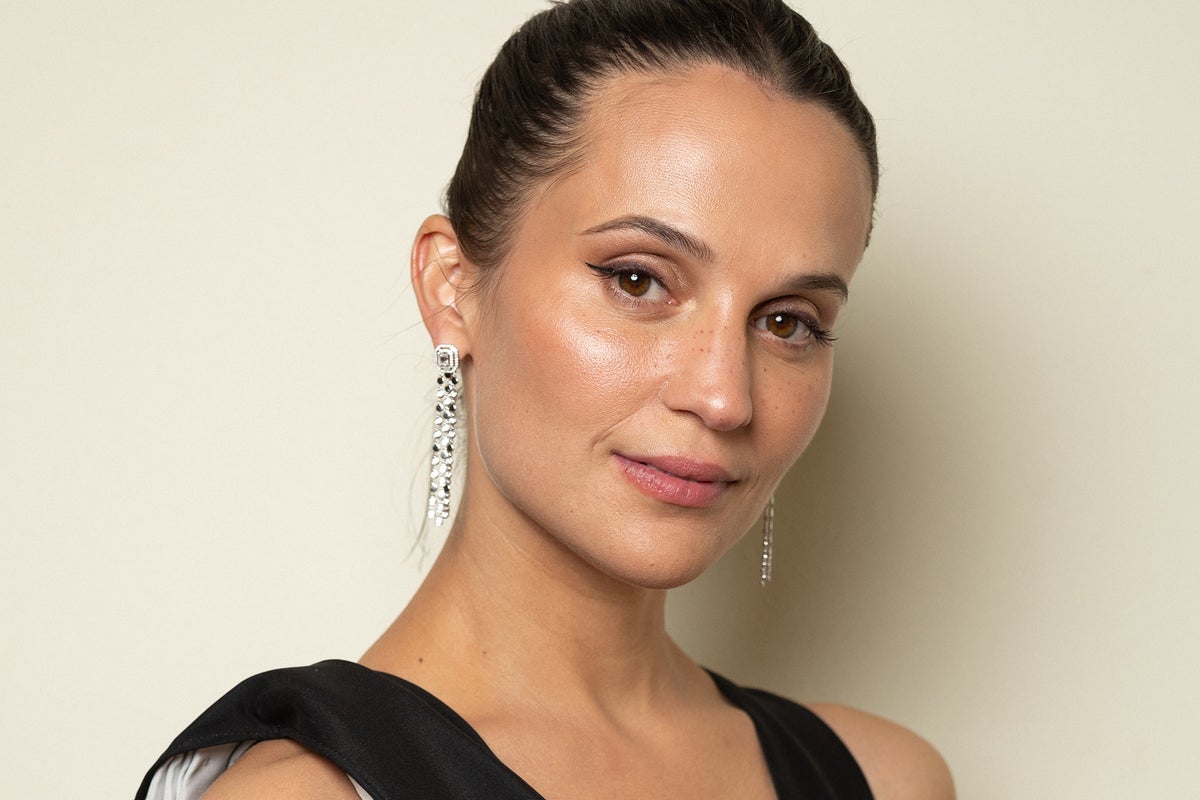
It’s no wonder Alicia Vikander said yes to starring in The Wizard of the Kremlin – Olivier Assayas’s new political thriller about the turbulent beginnings of the Russian Federation. By the end of her first 10 minutes on screen, the Swedish actor has performed a punk rock song at a house party while holding a naked man on a leash, and been lowered from the rafters as some kind of metallic deity in a stage adaptation of Yevgeny Zamyatin’s We. “It’s a supporting role, but I get to have some very distinct moments,” she agrees, flashing a grin.
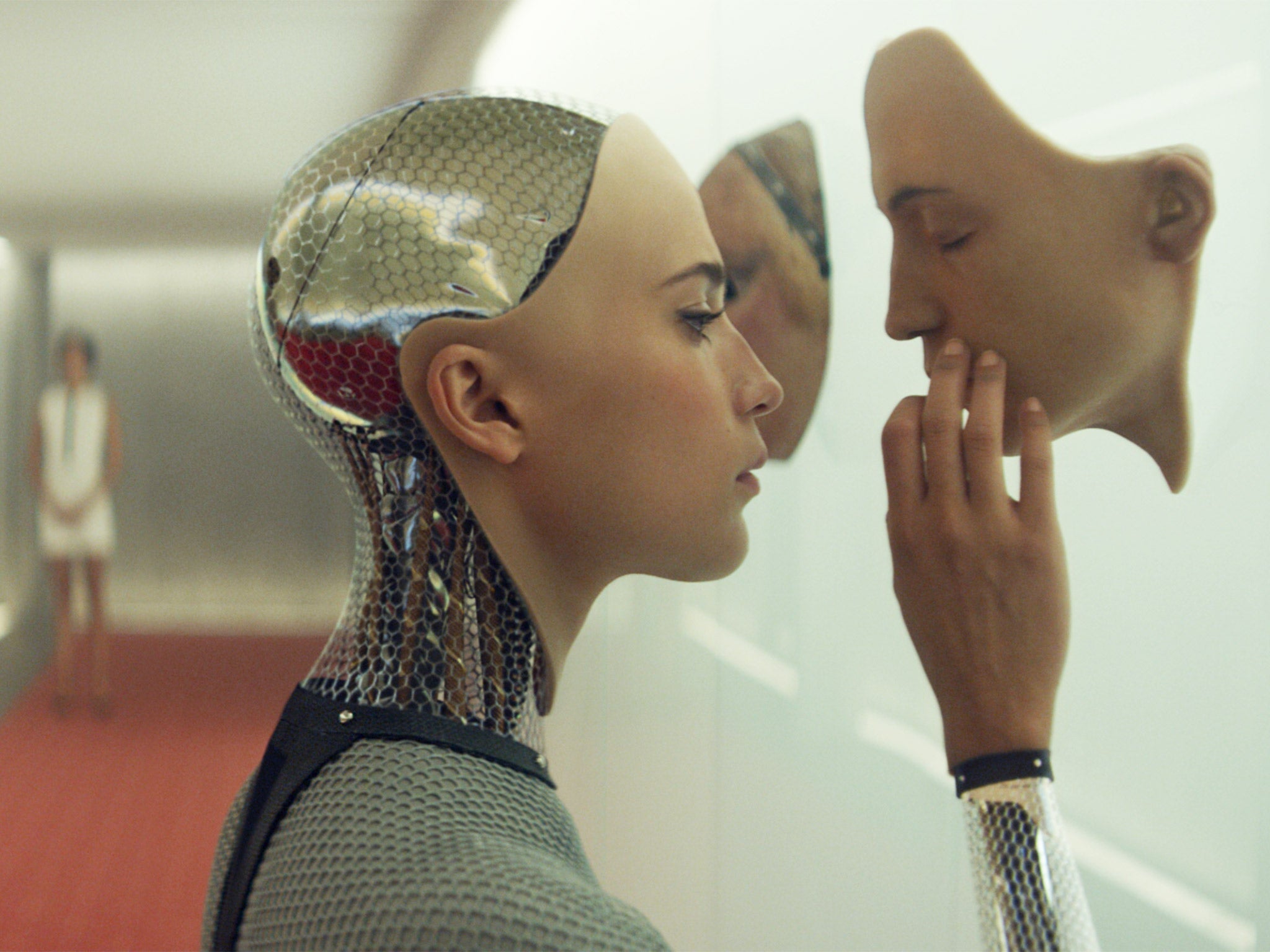
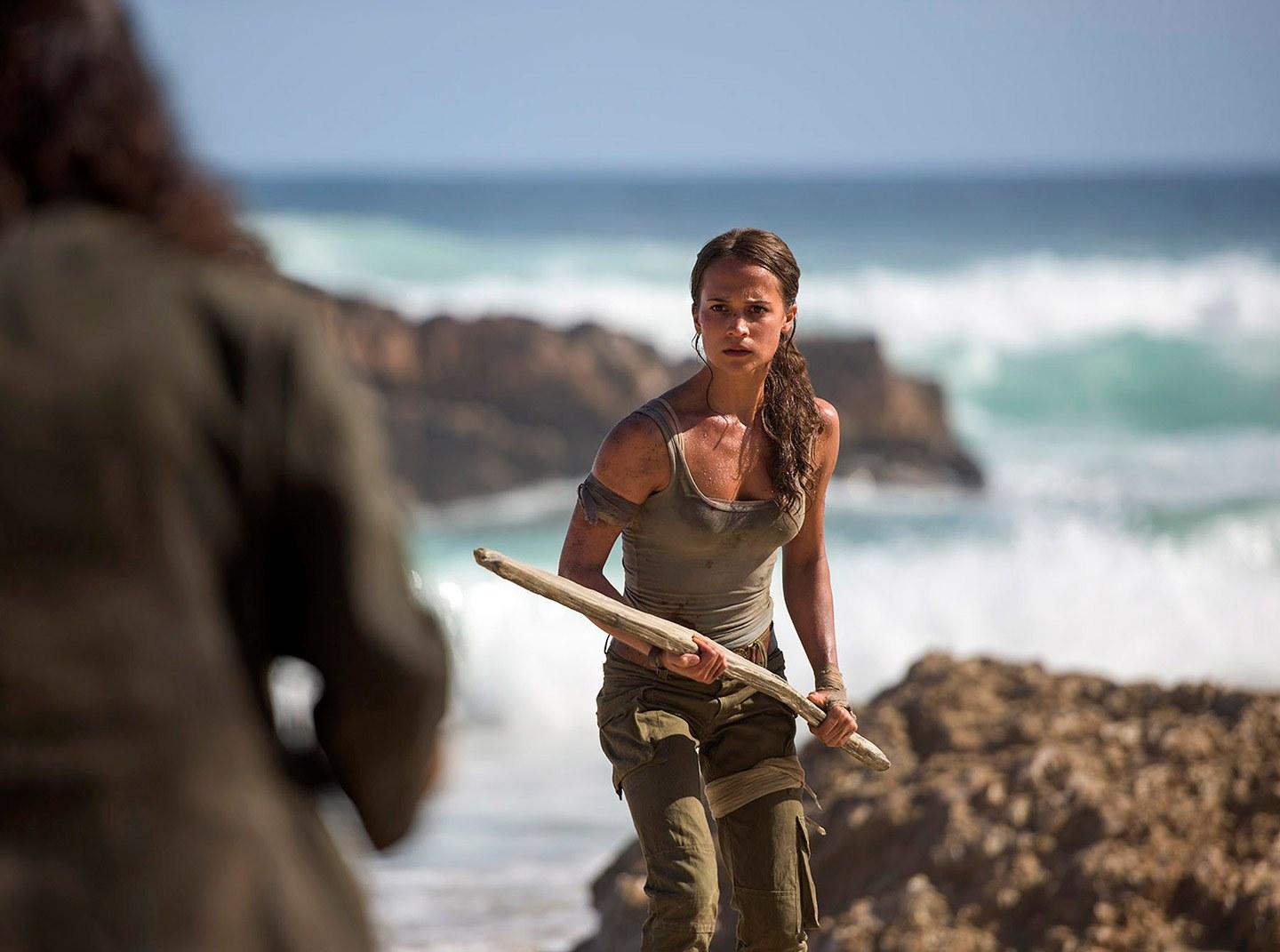
Neither background nor the subject, hers is the kind of tricky, underwritten character that Vikander is able to make deftly three-dimensional with her mix of edge and subtle vulnerability. For years now, directors have sought her for exactly that kind of nuance. Now 37, Vikander has spent much of her career playing women defined by restraint – androids, wives, muses, figures bound by decorum or circumstance. She won an Oscar in her mid-twenties for her quietly devastating turn as the partner of a trans woman in The Danish Girl (2015), having already outshone Keira Knightley in Joe Wright’s Anna Karenina (2012) and brought eerie interiority to a humanoid robot in Ex Machina (2014). Hollywood quickly moved to scale her up: a CIA hacker in Jason Bourne (2016); the inheritor of a billion-dollar franchise in Tomb Raider.
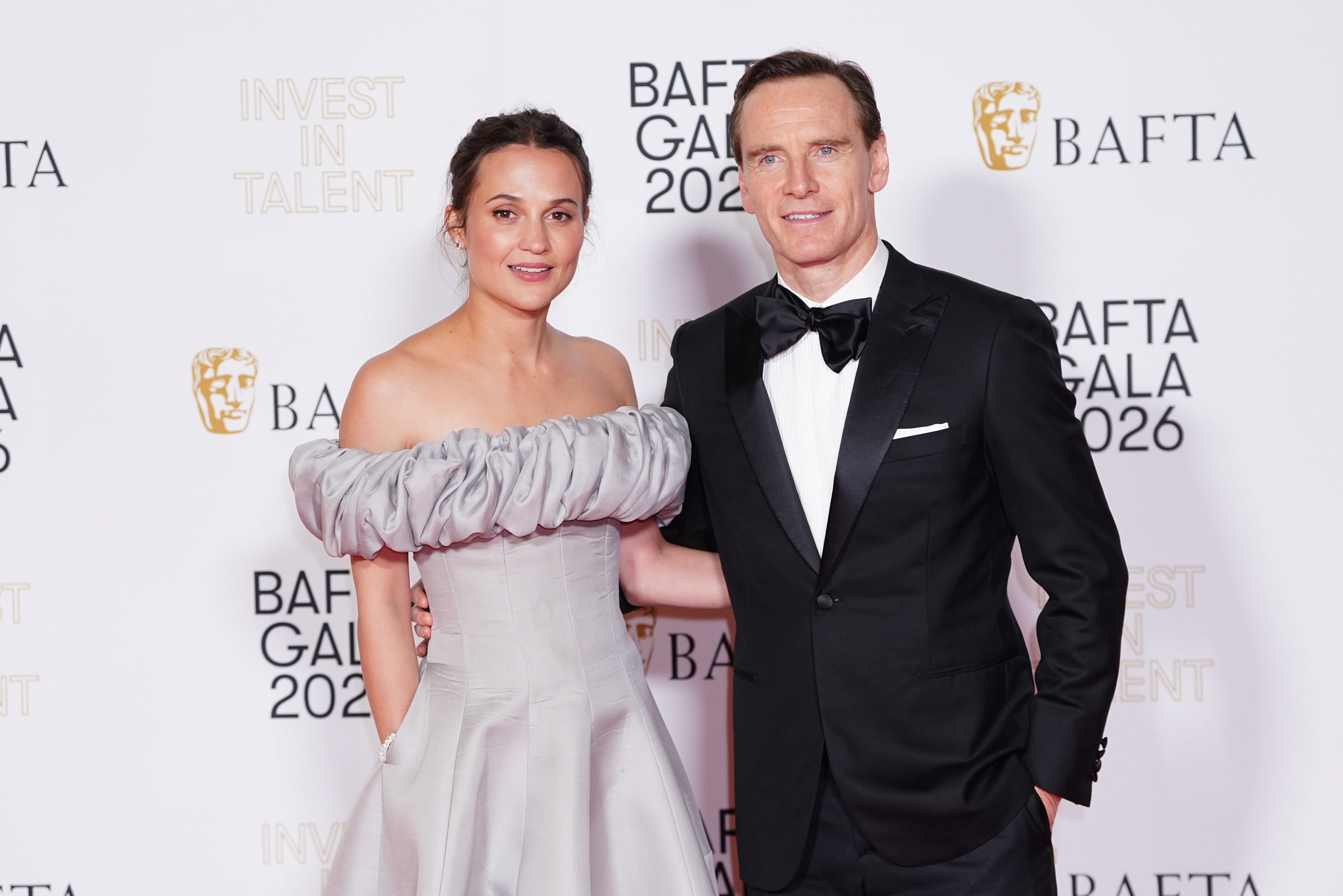
But in recent years, she has edged away from that centre of gravity. Projects like HBO’s meta-fictional industry satire, Irma Vep; A24’s chivalric fantasy The Green Knight (2021), and the dystopian thriller The Assessment (2024), have seen her lean into something stranger, more elusive – characters that resist easy definition. Speaking to me over Zoom from her home in London – which she shares with her husband, the actor Michael Fassbender, and their two children – Vikander is tough to pin down too. She’s in mum mode, running late after the school run, hair pulled into a loose bun, dressed in a soft cream jumper. Twice, mid-answer, she disappears from the frame to answer the door, apologising as she goes. “Sorry,” she says, returning, slightly breathless. “Deliveries.”
It makes for a slightly disjointed conversation – stopping, starting and stopping again; squeezed into the gaps of a busy morning. At times, it’s a revealing one. Speaking about the time demands of filmmaking, she gestures vaguely off-screen, as if to the life continuing just out of view. “You spend months doing something… it takes you away from friends, loved ones, family.” Another pause. Another doorbell.
I’m curious about her apparent shift – less ass-kicking action heroes, more curiosities (she is credited simply as “Extraterrestrial” in Na Hong-jin’s forthcoming movie, Hope). It wasn’t a conscious decision, she tells me. “I probably have that itch now. I would love to do some action again.” It’s more about clarity of instinct. “It’s very much me being like, I really want to work with these people or that person. I’ve become quite good at choosing projects [where] I know exactly why I want to do them, and I’m really excited about them,” she says. “Over the past few years, I’ve just had a really good time.”
.jpeg)
Vikander and Fassbender take turns being at home with their sons – who are around five and two – while the other is off filming. I read that they live primarily in Lisbon so that he can surf every day, but she corrects me. “We’ve been in Lisbon; we’ve been in London a lot, and we spend a lot of time in Italy and France. We’re nomads,” she laughs half-heartedly. I get a subtle sense she’s not entirely satisfied with the situation. “That’s the hard part with work,” she says. “We can’t plan far ahead.”
Based on the 2022 novel of the same name by Giuliano da Empoli, The Wizard of the Kremlin traces Vladimir Putin’s rise from KGB agent to modern-day tsar through the eyes of his fictional spin doctor, Vadim Baranov, played by Paul Dano. A pasty, blonde Jude Law plays the Russian president with a surprising fidelity. Vikander stars as Ksenia, the object of Vadim’s affections, who drifts in and out of his life over the decades as he transforms from an idealistic young artist into a chief architect of Putin’s regime. Ksenia evolves, too – from punk provocateur to fur-draped oligarch’s wife – yet remains the film’s moral counterweight, pushing against Vadim’s ambition. “It’s almost like she’s a mirror to the beauty of what Russia could be,” Vikander tells me.
Vikander’s career has traced a similarly circular path, taking her from Europe to the US and back again. She was raised mostly by her mother, also an actor, after her parents’ divorce, and trained as a ballet dancer in Stockholm before an injury intervened and forced a pivot to acting. “I always felt like Europe is where I have my base,” she says. Hollywood, though, remains firmly on her radar. She follows the Oscars religiously. “Obviously, I watch all the [nominated] films each year,” she says, matter-of-factly. “I didn’t watch it live this year because I have a young family, but I’m always the first one to wake up and check in in the morning.”

Watch Apple TV+ free for 7 day
New subscribers only. £9.99/mo. after free trial. Plan auto-renews until cancelled.
Try for free
ADVERTISEMENT. If you sign up to this service we will earn commission. This revenue helps to fund journalism across The Independent.
Watch Apple TV+ free for 7 day
New subscribers only. £9.99/mo. after free trial. Plan auto-renews until cancelled.
Try for free
ADVERTISEMENT. If you sign up to this service we will earn commission. This revenue helps to fund journalism across The Independent.
She remembers her night at the Dolby Theatre, when she won Best Supporting Actress, and the slightly surreal fact that it was also where her and Fassbender’s parents first met: “That was a pretty wild moment.” He was nominated the same year for his role as Apple founder Steve Jobs in Danny Boyle’s biopic. It meant a lot to her. “I lost my mother a few years back,” she says, “and the fact that I had my family there and having that experience…” She trails off – the rest does not need saying. It was also the year the Academy experimented with a massive digital clock that counted down the winners’ speeches on stage: 30, 29, 28… “I don’t have much memory of my speech other that clock, to be honest,” she says. “The moment I got emotional was when Ex Machina won for special effects, because I had spent so much time in the green room!”
With French director Assayas, Vikander has found a collaborator worth her time away from home. They previously worked together on Irma Vep, in which she played a disillusioned American movie star drawn into a remake of a French silent film. She trusted him to handle the sensitive source material at the heart of The Wizard. “We had so many Russians and Ukrainians working in this crew, and that was extremely important for Olivier making this film,” she tells me. “To get to be immersed in that real culture with real people was also a great experience.”
For his part, Law has said he did not fear any repercussions from portraying Putin, despite the well-documented risks faced by many of the Russian leader’s critics. “We weren’t looking for controversy for controversy’s sake. It’s a character within a much broader story,” he said at the film’s Venice Film Festival premiere last year. Vikander claims she was similarly unfazed, noting that Empoli’s novel had already laid the groundwork and that the film is clearly flagged as a fictionalised account. Nevertheless, “I very much support the strength of and the power of art in these conversations,” she says, pointedly. “I think we find ourselves in a world right now where there might be a fear of making comments or speaking up.”
Watching The Wizard, it’s hard not to draw comparisons to The Apprentice, Ali Abbasi’s incendiary 2024 biopic starring Sebastian Stan as a desperately approval-seeking young Donald Trump. That too was “inspired by true events” and, unsurprisingly, came under immense scrutiny from the US president, who described it in trademark fashion as a “defamatory, politically disgusting hatchet job”. Would Vikander appear in a film about Trump, knowing the scale of Maga backlash that would inevitably follow? “What that film did, and that ours did, is it actually went places where you have to try and visualise the world from maybe the other perspective to your own,” she says, with typical Scandinavian diplomacy. “To not shut down conversation, to actually try and understand where thoughts, ideals, issues, come from is the most essential thing for us to do if we believe that something needs change,” she argues. “In that sense, I think both those films did that. It’s not about simplifying anything, but about trying to paint a broad picture of those people and why and how they’ve made certain choices or done what they’ve done.”
As our conversation draws to a close, we gravitate naturally back to her family and the unique arrangement she and Fassbender have as two of the most sought-after actors in the business. Until recently, she says, they had avoided any scheduling clashes. Last year, they were both in London – Vikander making her West End debut in Simon Stone’s reimagining of The Lady from the Sea and Fassbender filming the second season of the Paramount+ spy series, The Agency. “It was interesting to have months being like a family that actually… We both went to work in the morning and came back in the evening.”
There is a longing there, amid an impossible conundrum. Fassbender is currently filming a new Netflix series, playing the patriarch Joe Kennedy Sr of the American political dynasty. Presumably, when his turn comes to an end, Vikander will begin filming The Worst, a buzzy British dark comedy, alongside her old co-star Knightley and Jamie Dornan. Whatever lies ahead, it seems inevitable that Vikander and Fassbender’s talent will keep them in demand, and their lives perpetually in motion.
‘The Wizard of the Kremlin’ is in cinemas


