


UK TimesUK Times
  • Home
  • News
  • TV & Showbiz
  • Money
  • Health
  • Science
  • Sports
  • Travel
  • More
    • Web Stories
    • Trending
    • Press Release
What's Hot
Oxford celebrate end of decade of women’s Boat Race hurt as men share honours in feisty encounter – UK Times

Oxford celebrate end of decade of women’s Boat Race hurt as men share honours in feisty encounter – UK Times

4 April 2026
Martin O’Neill is NOT the right man to help drag Celtic into the modern era

Martin O’Neill is NOT the right man to help drag Celtic into the modern era

4 April 2026

A14 westbound within J57 | Westbound | Congestion

4 April 2026
Facebook X (Twitter) Instagram
UK TimesUK Times
Subscribe
  • Home
  • News
  • TV & Showbiz
  • Money
  • Health
  • Science
  • Sports
  • Travel
  • More
    • Web Stories
    • Trending
    • Press Release
UK TimesUK Times
Home » AI could identify other serious health conditions during breast cancer screenings – UK Times
News

AI could identify other serious health conditions during breast cancer screenings – UK Times

By uk-times.com9 March 2026No Comments4 Mins Read
Facebook Twitter LinkedIn Telegram Pinterest Tumblr Reddit WhatsApp Email
AI could identify other serious health conditions during breast cancer screenings – UK Times
Share
Facebook Twitter LinkedIn Pinterest Email

Get the Well Enough newsletter with Harry Bullmore for tips on living a healthier, happier and longer life

Get the Well Enough email with Harry Bullmore

Get the Well Enough email with Harry Bullmore

Well Enough

Artificial intelligence (AI) can detect early indicators of heart disease during routine breast cancer screenings, researchers have revealed.

Experts utilised AI to identify calcification in breast arteries, a substance known to increase the risk of heart attack, stroke, and early death.

This integration of AI into existing screening programmes holds the potential to uncover undiagnosed heart conditions in thousands of women, according to the largest study of its type.

Dr Hari Trivedi, from Emory University in Atlanta in the US, who led the team for the study, commented: “Heart disease is the leading cause of death in women worldwide, yet women are consistently underdiagnosed and undertreated compared to men.

“Mammograms, which women already attend for breast cancer screening, can also reveal calcium deposits in breast arteries and this is linked to heart disease.

“We wanted to test whether AI could use this to identify women at risk of cardiovascular disease at no extra cost or inconvenience.”

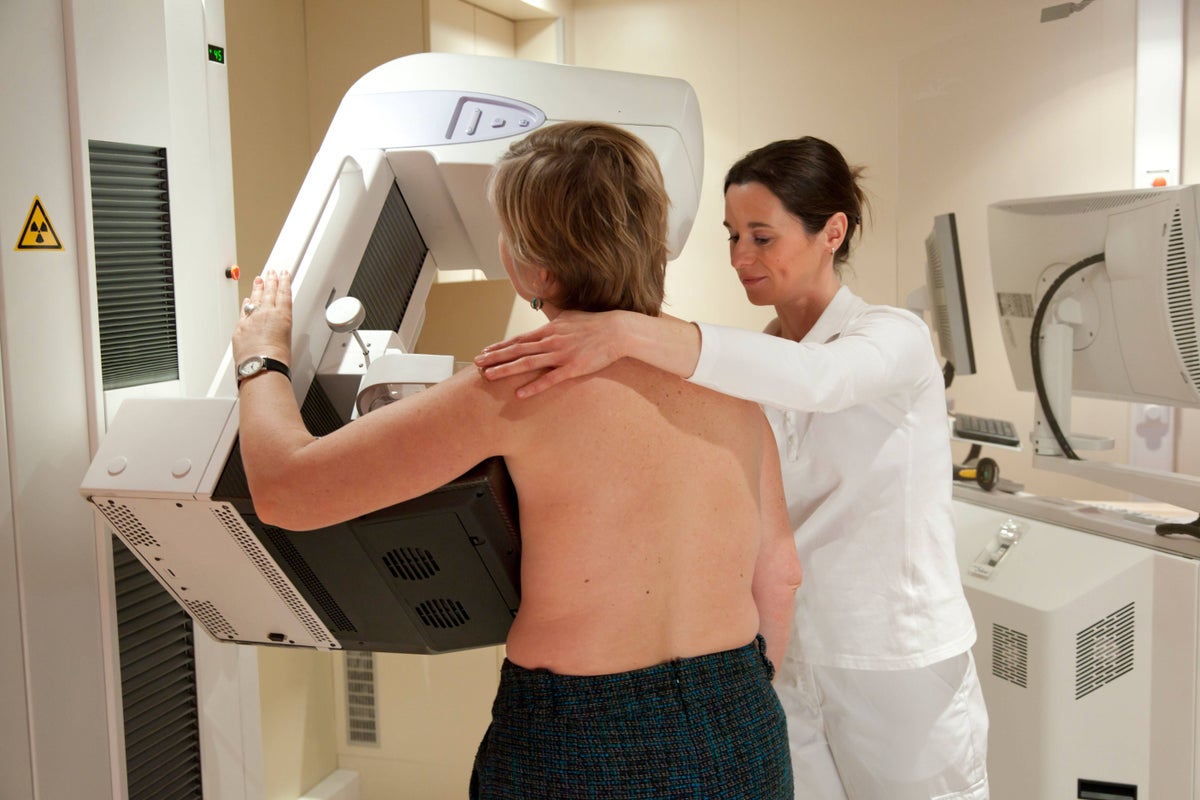
Experts utilised AI to identify calcification in breast arteries, a substance known to increase the risk of heart attack, stroke, and early death

Experts utilised AI to identify calcification in breast arteries, a substance known to increase the risk of heart attack, stroke, and early death (Hospital Services Limited)

The study, published in the European Heart Journal (EHJ), included 123,762 women who had taken part in breast screening but had no known heart disease.

AI was used to look for calcium deposits in the arteries of breast tissue, which is known to harden arteries and can increase the risk of heart attack and stroke.

Researchers noted whether the calcification was severe, moderate, mild or absent and compared this with data on whether women went on to suffer serious heart disease, including stroke, heart attack or early death.

Women with mild calcification were around 30 per cent more likely to suffer serious heart disease compared to those without, the study found.

Meanwhile, in those with moderate calcification, the risk was more than 70 per cent higher, and in women with severe calcification the risk was two to three times higher.

Dr Trivedi said: “We found that the more calcium visible in the breast arteries on a mammogram, the higher a woman’s risk of a serious heart event such as a heart attack, stroke or heart failure.

“This was true even in younger women under 50 – a group often considered low risk – and held up after accounting for other risk factors like diabetes and smoking.

“For women, this means a mammogram you’re already having could also provide important information about your heart health – prompting a conversation with your doctor about preventive steps such as cholesterol testing or medication.

“For clinicians, it offers a practical way to identify women at cardiovascular risk who are currently being missed.

“Policymakers could consider integrating this into existing mammography programmes, potentially reaching tens of millions of women annually without any additional infrastructure.”

AI was used to look for calcium deposits in the arteries of breast tissue, which is known to harden arteries and can increase the risk of heart attack and stroke

AI was used to look for calcium deposits in the arteries of breast tissue, which is known to harden arteries and can increase the risk of heart attack and stroke

Dr Sonya Babu-Narayan, the British Heart Foundation’s clinical director and a consultant cardiologist, said: “Heart disease is the world’s biggest killer of not only men, but also women.

“For many years, the BHF have been highlighting that women are disproportionally unaware, unheard, underdiagnosed, and undertreated, when it comes to the heart.

“The stark reality is that as a woman, there is a chance that you might end up disadvantaged throughout your heart care journey.

“It’s encouraging to see that using AI to leverage large-scale data from breast cancer screening could help identify women at risk of future cardiovascular disease.

“It is exciting to think that if this approach is further proven, it could lead to better and earlier cardiovascular disease prevention because the screening programme doesn’t just find breast cancer early, but it might also help flag those with the highest cardiovascular risk.

“As AI continues to emerge as a powerful force in cardiovascular science, it may provide an important opportunity to improve the chance of preventing heart attack, stroke and heart failure in women.”

Share. Facebook Twitter Pinterest LinkedIn Tumblr Telegram Email

Related News

Oxford celebrate end of decade of women’s Boat Race hurt as men share honours in feisty encounter – UK Times

Oxford celebrate end of decade of women’s Boat Race hurt as men share honours in feisty encounter – UK Times

4 April 2026

A14 westbound within J57 | Westbound | Congestion

4 April 2026

M62 westbound within J21 | Westbound | Congestion

4 April 2026
Cambridge win men’s Boat Race after Oxford end losing run in women’s event – UK Times

Cambridge win men’s Boat Race after Oxford end losing run in women’s event – UK Times

4 April 2026

A14 eastbound between J33 and J34 | Eastbound | Broken down vehicle

4 April 2026
Springs Fire in southern California reaches 45% containment as evacuations continue – UK Times

Springs Fire in southern California reaches 45% containment as evacuations continue – UK Times

4 April 2026
Top News
Oxford celebrate end of decade of women’s Boat Race hurt as men share honours in feisty encounter – UK Times

Oxford celebrate end of decade of women’s Boat Race hurt as men share honours in feisty encounter – UK Times

4 April 2026
Martin O’Neill is NOT the right man to help drag Celtic into the modern era

Martin O’Neill is NOT the right man to help drag Celtic into the modern era

4 April 2026

A14 westbound within J57 | Westbound | Congestion

4 April 2026

Subscribe to Updates

Get the latest UK news and updates directly to your inbox.

Recent Posts

  • Oxford celebrate end of decade of women’s Boat Race hurt as men share honours in feisty encounter – UK Times
  • Martin O’Neill is NOT the right man to help drag Celtic into the modern era
  • A14 westbound within J57 | Westbound | Congestion
  • M62 westbound within J21 | Westbound | Congestion
  • Cambridge win men’s Boat Race after Oxford end losing run in women’s event – UK Times

Recent Comments

No comments to show.
© 2026 UK Times. All Rights Reserved.
  • Privacy Policy
  • Terms of use
  • Advertise
  • Contact Us

Type above and press Enter to search. Press Esc to cancel.

Go to mobile version