



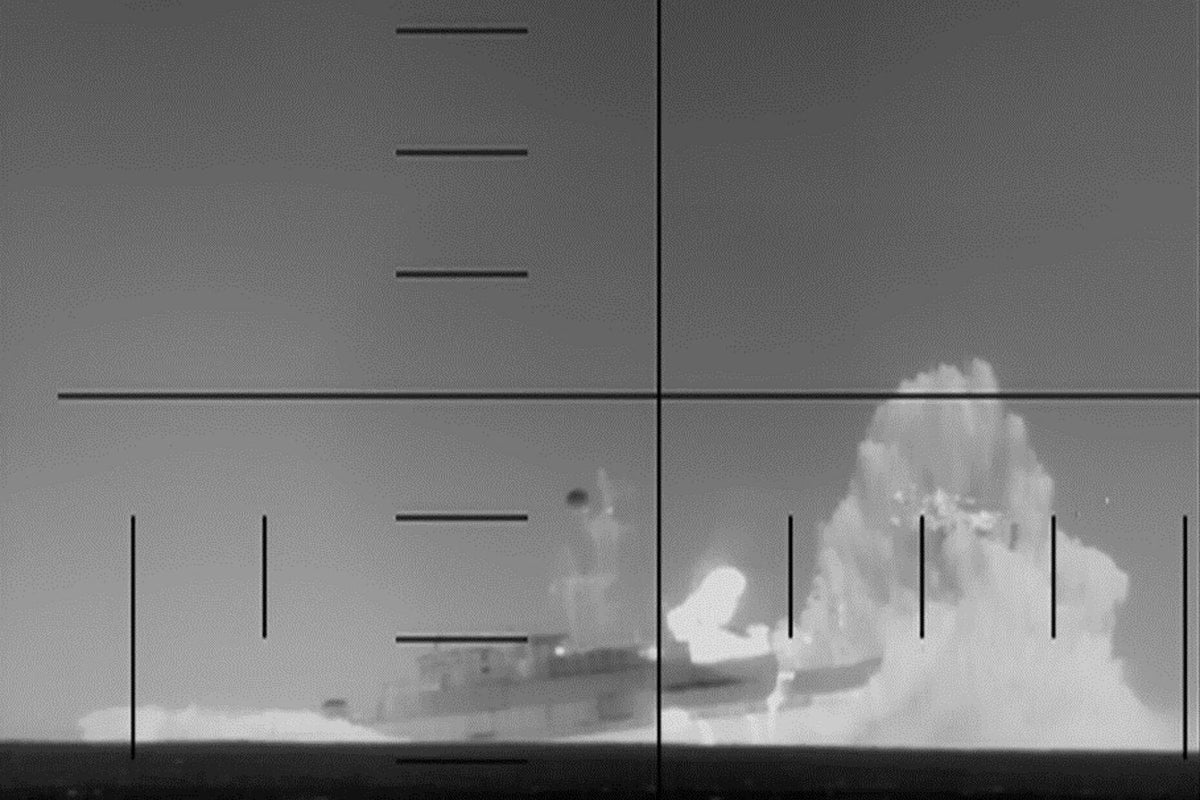
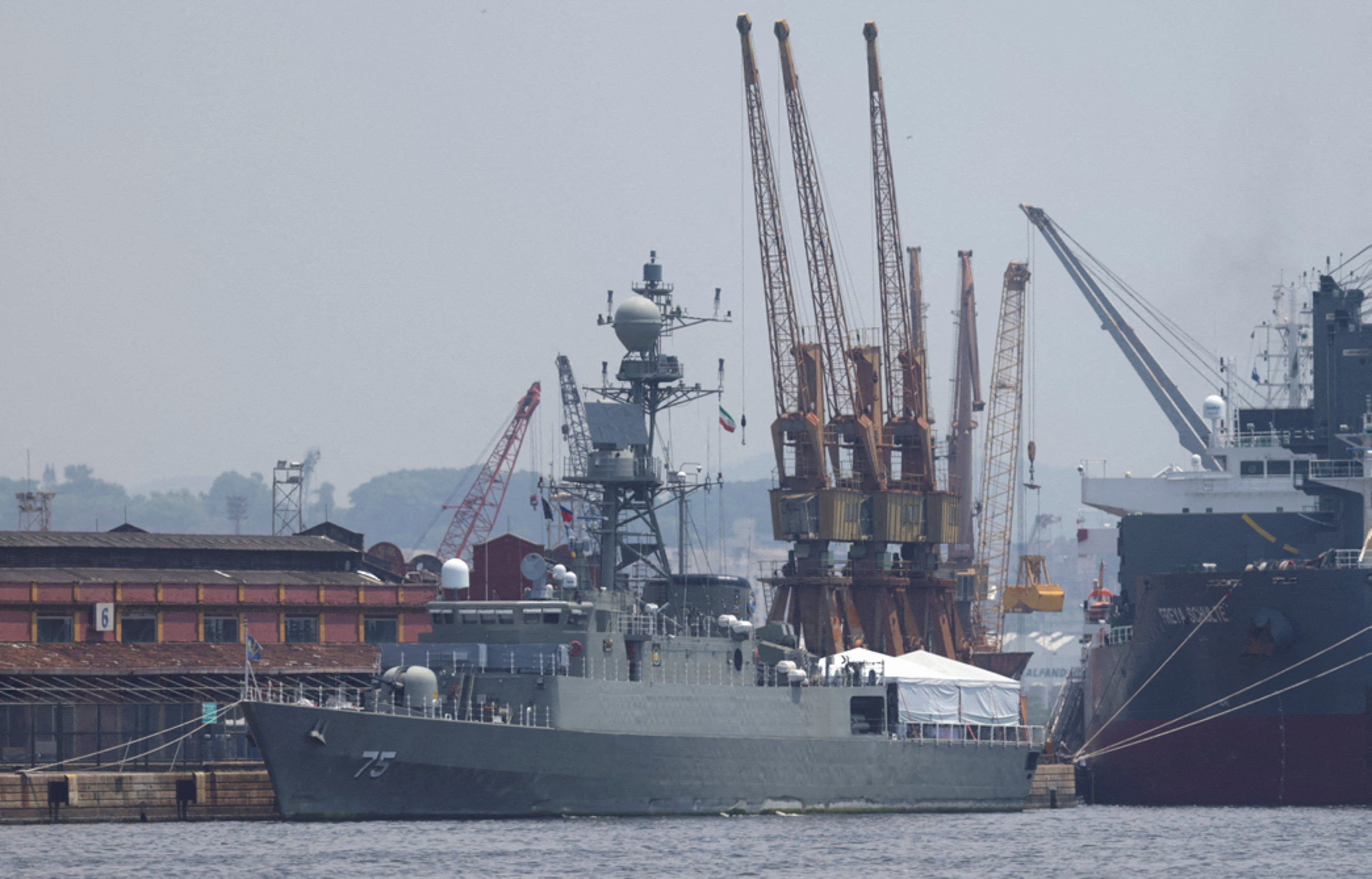
A US submarine sank the Iranian frigate IRIS Dena off the southern coast of Sri Lanka on Wednesday, killing 87 people.
The submarine struck the ship with a torpedo, US Defense Secretary Pete Hegseth said, resulting in “quiet death”.
The event marks the first time a US submarine has launched a torpedo in combat or engaged and destroyed a ship since the Second World War.
Why is this old weapon reappearing now? And for that matter, what are torpedoes? Can ships defend against them, or even see them coming?
What are torpedoes, and how do they work?
Torpedoes have changed little over the years in terms of their concept and their operation. Simply put, a torpedo is effectively a small, unmanned submersible – a kind of hybrid of a mini-submarine and a missile, designed to attack both submarines and surface ships.
However, they have been modernised to an extent. Torpedoes today are generally “dual purpose”, designed to attack and destroy both ships and submarines. Single-purpose torpedoes are less commonly seen, but given their specialised nature are often more lethal.
Torpedoes are initially connected to the launching submarine by a wire or fibre-optic cable transmitting targeting data. These wires are designed to be “cut” as the torpedo gets close to its target, with the torpedo then switching on its own active sonar to steer the rest of the way.
Exactly how far torpedoes can be fired is highly classified information, but it may be tens of kilometres. It depends partly on how the torpedo is propelled – either with an electric motor (more common) or a fuel-powered one.
Electric motors are generally preferable, given their ability to accelerate instantly and achieve higher speeds. However, the range is generally considered to be lower than fuel-propelled torpedoes.
Why torpedoes are still in use today
Torpedoes are quite old and in many ways quite simple compared with more modern weaponry. However, they remain the primary armament of attack submarines.
As the name suggests, attack subs are designed to hunt and destroy other submarines, surface combatants (warships) and, if necessary, commercial vessels.
Other types of submarines such as ballistic missile submarines (designed for retaliatory nuclear strikes) and guided missile submarines (designed to fire guided missiles) also generally carry torpedoes for self-defence.
Submarines are by their nature stealthy. They are designed to sneak in close to their target undetected, and launch surprise attacks while remaining submerged.
To fire an air missile, a submarine needs to surface and risk detection. So torpedoes, which can be fired underwater, remain the perfect offensive weapon for submarines.
Torpedoes can also be delivered by aircraft, usually to strike at submarines where airborne missiles can’t reach. Aircraft typically use missiles to strike surface ships, as an aircraft would need to make a risky close approach to get within torpedo range.
How do warships detect and protect themselves from torpedo attack?
Beneath the sea, visibility is low and the radio waves used for radar don’t travel far. The primary tool for detecting submerged objects is sonar.
Sonar systems use sound, which travels faster and further through water than air.
There are two kinds of sonar: passive and active. Passive sonar listens quietly for engine noise, or transient sounds such as a torpedo tube being opened.
Active sonar generates a loud “ping” or series of pings and then listens for echoes. The initial pulses of noise reflects off objects to effectively paint an image, in a process known as echolocation.
The use of active sonar is generally avoided unless absolutely necessary, as it gives away the sonar user’s location. It can also be detected further away than it can itself detect objects such as submarines.
Submarine warfare plays out as a game of cat and mouse. The submarine attempts to sneakily move in close to its target undetected using passive sonar, and attack up close where the target has less chance of evading.
In turn, warships are constantly attempting to listen with passive sonar to avoid sneak attacks. If suspicious of close submarine contact, they will turn to active sonar to more accurately locate and attack first.
Active defences
If they know a torpedo is coming their way, surface ships and submarines have a few options up their sleeves for defence.
The first option is often to immediately accelerate and undertake radical changes of direction. The idea here is to make the torpedo manoeuvre in such a way as to break its guidance wires, or throw off its sonar.
If the guidance wires are cut prematurely, the torpedo’s active sonar may not be able to accurately detect the target (and could even possibly target the submarine that launched it if it were to manoeuvre in such a way as to accidentally cross the torpedo’s path).
Failing this, both warships and submarines are equipped with decoy noise makers, either towed or standalone. These generate bubbles and noise to try and get the torpedo to attack them instead of the target vessel.
As a last resort, warships are generally “compartmentalised” so damaged sections can be sealed off, meaning the vessel can still float even if a large amount of damage occurs.
An old weapon but hard to beat
Given the stealthy nature of submarines, in reality it is unlikely that they will be detected. It is also unlikely a torpedo will be detected until the final stage when it switches to active sonar to reach its target.
As a result, ships and submarines are likely to be first aware they are under attack when the torpedo detonates.
While torpedoes are still an old technology, there is still little in the way of active defences against them. This is quite different to the situation in the air, for example, where missile interceptors can often detonate an incoming missile in flight.
For the foreseeable future, torpedoes will still be the main weapon for submarine and anti-submarine warfare.

