



With Pancake Day fast approaching, let’s go back in time to look at the history of the humble dish.
Recipes from the first published cookbooks show that in England, pancakes were made very thinly – hence the phrase “flat as a pancake” – from lots of wet ingredients that were forbidden during the impending pre-Easter Lenten Fast. Eggs, cream, butter and animal fats are all products from which people were meant to abstain, alongside all other meats.
It makes sense, then, that the dish, generally eaten year-round, became associated with Shrovetide – the days before Lent – when cooks wanted to clear out their pantries to avoid temptation in the long fast before Easter.
Early pancakes were cooked until crispy and served warm with butter and sprinkled with sugar.
It’s common to see a recipe in old cookbooks that used ale, much like the coating of beer-battered fish we’re familiar with today. One recipe from a book published in the reign of Elizabeth I is a rich affair which mixes:
- A pint of thick cream
- 4 or 5 egg yolks
- A handful of flour
- 2 or 3 spoonfuls of ale
This is seasoned with “a good handful of sugar, a spoonful of cinnamon, and a touch of ginger”.
The batter is set aside while the cook takes a knob of butter “as big as your thumb” in a frying pan and heats it until it is “molten brown”. Now tip the fat out and ladle the batter into the tilted pan as thinly as possible over a low heat. Flip when one side is “baked” and cook the other until the pancake is as dry (crispy) as possible, but not burned.
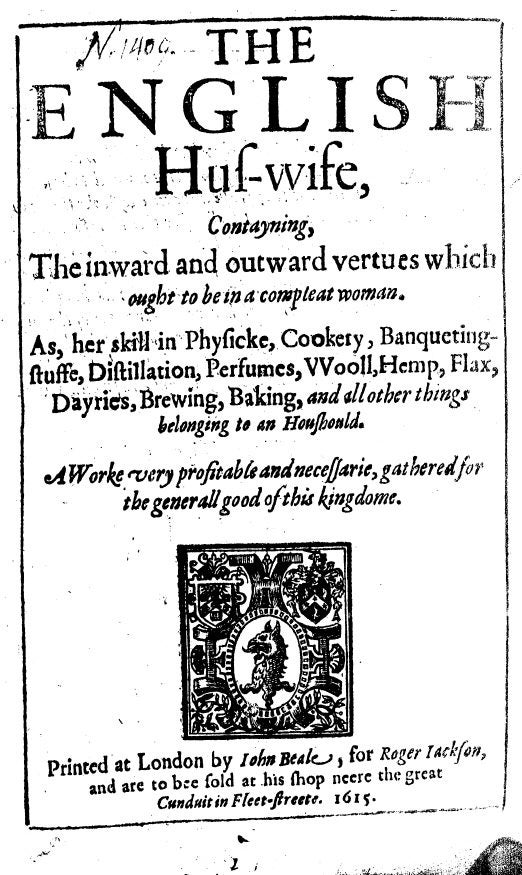
English poet and writer Gervais Markham’s bestselling book of household management, The English Housewife, which ran to at least nine editions from its first publication in 1615, has a recipe for “the best pancakes”.
In this dish, there are two or three beaten eggs to which you mix in “a pretty quantity of fair running water”. The eggy mixture is seasoned with salt, cloves, mace, cinnamon and nutmeg, and thickened with “fine Wheate-flower”. You then fry a thin layer of batter in sweetened butter or seam (pig lard) and serve sprinkled with sugar.
Markham recommends using water over milk or cream because dairy “makes them tough, cloying and not crisp, pleasant and savoury as running water”.
Fritters or pancakes?
On Shrove Tuesday in 1661, which fell on February 26, diarist Samuel Pepys paid a visit to his cousin Jane Turner’s house, where he found her mixing pancake batter with her daughters Theophila and Joyce. After leaving them to their preparations, he later returned to dine “very merry and the best fritters that ever I eat in my life”.
In the 16th and 17th centuries, the names pancake and fritter were often used interchangeably, although fritters (like the modern incarnation) were cooked with fruit in them.
One of the reasons Pepys enjoyed his pancakes so much might be found in a contemporary recipe book, The Gentlewoman’s Cabinet Unlocked (1675), which boasts in its title that it will provide “directions for the best way of making pancakes, fritters, tansies, puddings, custards, cheesecakes; and such like fine knacks and other delicate dishes, which are most frequently used in gentlemen’s houses”.
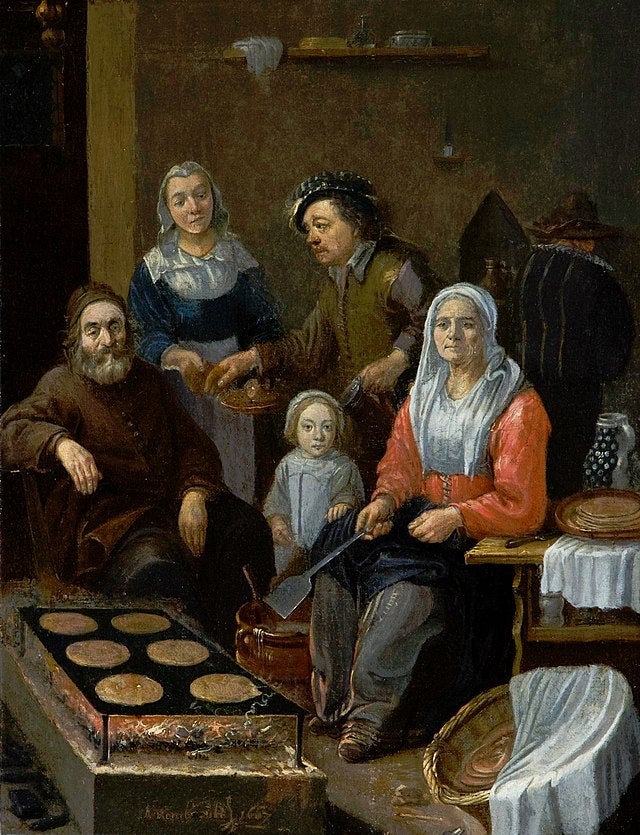
The author doesn’t include a specific pancake recipe, since there is one for fritters. A glance through the ingredients listed shows why these were more likely to end up on the table of a gentleman than that of a labourer:
“Take nine eggs, yolks and whites, beat them very well, then take half a pint of sack [Spanish wine], a pint of ale, some ale yest. Put these to the eggs and beat them all together, put in some spice and salt, and fine flower. Then shred in your apples and let them be well tempered, and fry them with beef-suet, or half beef and half higs-suet dried out of the leaf.”
While earlier recipes mention topping pancakes with sugar and sometimes things like rose water, it isn’t until the 19th century that the combination of lemon juice and sugar appears in print. But lemon juice had probably been used for a long time before then.
Elizabeth Hammond’s Modern Domestic Cookery (1819) includes this pancake recipe: “Take eggs, flour and milk, with which make a light batter. Add nutmeg, ginger and salt, fry them in plenty of hot lard. Serve with lemon juice and powdered loaf sugar.”
A modern cook might be surprised to see Hammond recommending substituting “snow” for eggs during the winter, “when they are generally very dear”. This is a tip for making eggs go further by using just the whites beaten until fluffy, leaving you free to use the yolks in another dish.
While Markham and many other cookbooks recommend it, refined wheat flour was the most expensive of grains and largely something that more affluent families ate regularly. It only gradually became the ubiquitous ingredient it is today.
In 1923, the flour brand Be-Ro (founded in 1880 in the north-east of England) began giving away a recipe book to encourage sales of the relatively novel self-raising flour. This small cookbook ran to over 40 editions and is still available.
Like many northern homes, my family still have our copy, which is the 16th edition from 1953. While pancakes aren’t normally made with a raising agent, Be-Ro still offered a recipe for them.
- 5oz Be-Ro flour
- Quarter teaspoonful salt
- One egg
- Half a pint of milk
The very thin batter was cooked on a “fairly brisk fire” in lard which had been heated to smoking point, and served with sugar or syrup and lemon or orange.
We can see from this how modern recipes became much more precise with their measurements. The pamphlet ends with a warning that all its recipes are especially designed for Be-Ro self-raising flour: “Ladies are warned that unless Be-Ro is used, satisfactory results may not be obtained.”
Whether you’re planning to have a rather austere Be-Ro style pancake or are tempted to switch things up with something a little boozier, perhaps the key takeaway from history is that there is no reason to reserve pancakes just for Shrove Tuesday.