

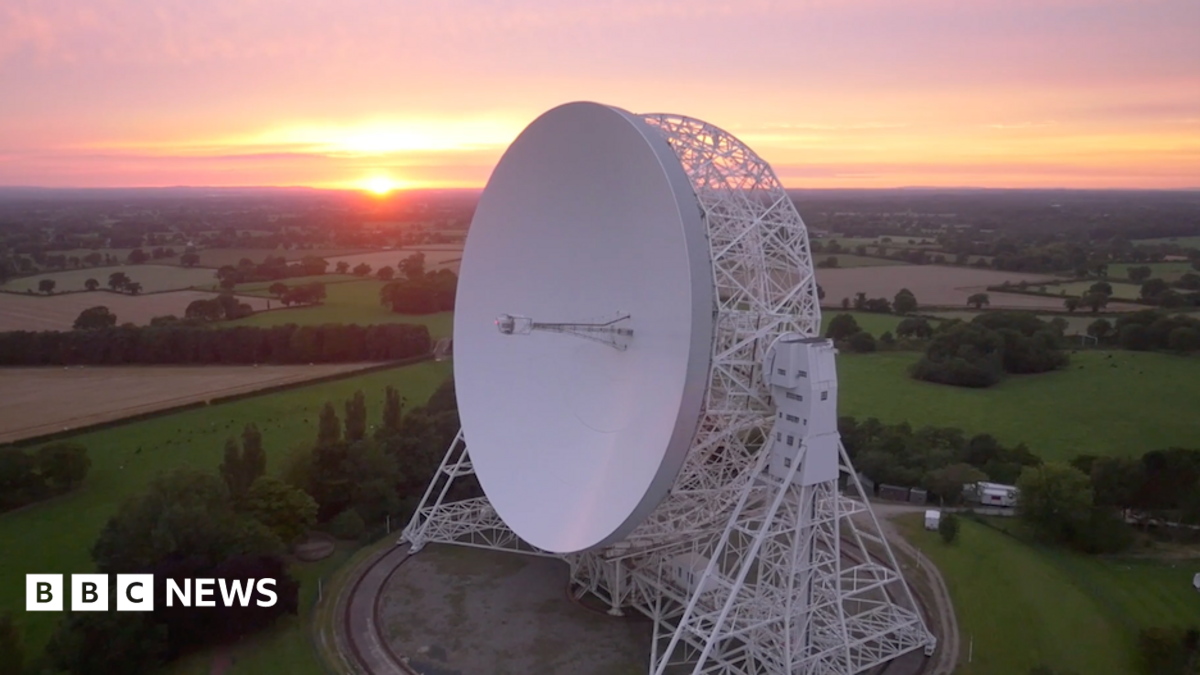
The Jodrell Bank Observatory, which has housed the UK’s largest telescope for nearly 70 years, has lost its funding and could now close, the understands.
The observatory and its network of telescopes have been pivotal to the country’s study of distant galaxies and training future astronomers. Scientists have described the decision as “heartbreaking” and “scientifically misguided”.
All scientific observations at Jodrell are expected to cease on the 1 April 2028 unless alternative funding can be found.
The funding body, the UK Research and Innovation (UKRI) agency, said it had to focus investment on projects that deliver “the greatest long-term impact”.
The site was first established in 1945 and pioneered radio astronomy and the study of galaxies beyond our own.
It was also pivotal during the Cold War, when it was used to monitor Soviet missiles during the height of nuclear tensions between the USSR and Nato powers.
Its contribution to global scientific efforts earned it Unesco World Heritage status in 2019.
But the UKRI, which has an annual budget of just under £10bn, says it has had to cut the observatory’s annual £2.8m budget because planned research costs for physics and the running of its labs had escalated.
UKRI has put more emphasis on funding research that it believes has more potential to create new industries and safeguard research positions.
The announcement is just one of many deep cuts to astronomy projects being implemented.
The UK will no longer participate in research at the James Clark Maxwell Telescope in Hawaii, which scientists are using to image supermassive black holes at the centre of galaxies.
And there will be a 20% cut in funding that supports UK participation in the Vera Rubin Telescope in Chile, which is creating the first movie of the Universe – the project was only launched last year.
Prof Michele Dougherty, executive chair of the science and technology branch of UKRI, said: “After listening to our community we have protected core discovery research. However, the situation does require some tough, but necessary, decisions.
“These are never easy choices, but we have made what we feel are the right decisions to bring… a sustainable financial position by 2029/30.”