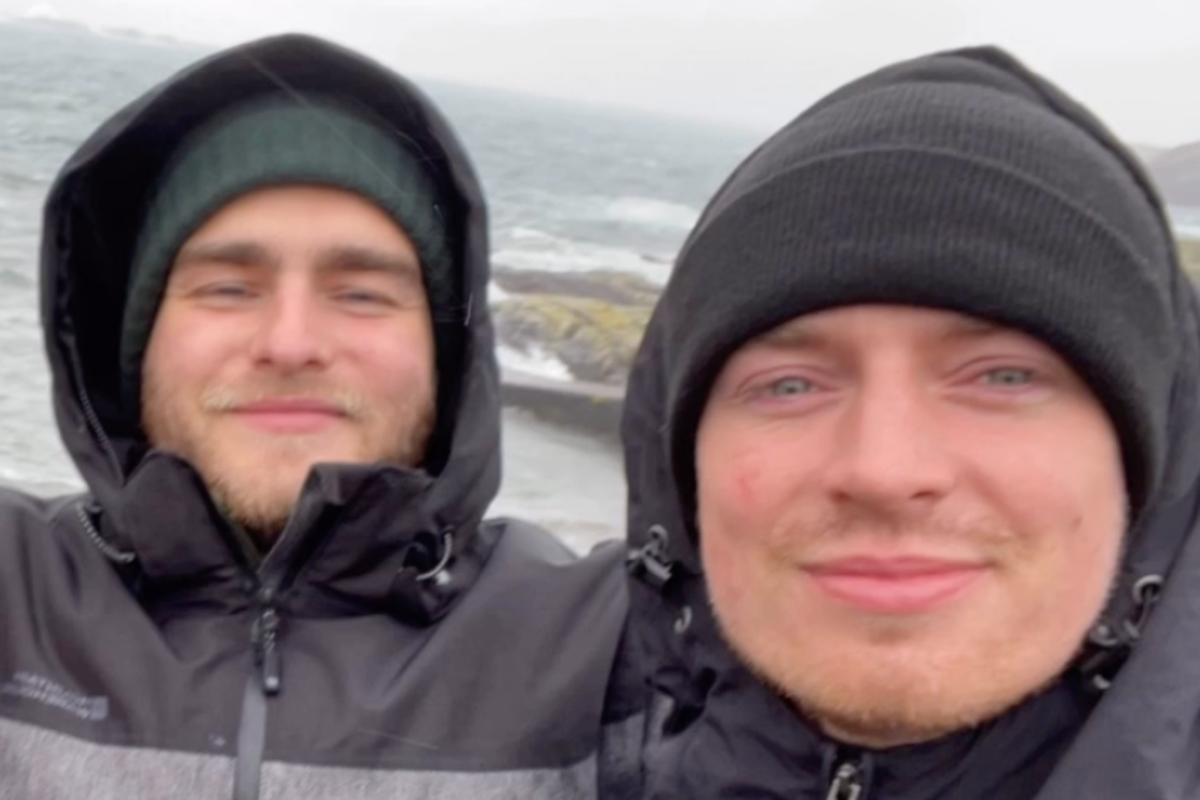


.jpeg?trim=500,0,500,0&width=1200&height=800&crop=1200:800 "Man who went to opticians for reading glasses diagnosed with melanoma – UK Times")
A father-of-four who went for routine eye test was left with a devastating terminal cancer diagnosis – despite never having any symptoms.
Jez Bridges, 59, from Stourbridge in the West Midlands, was told by doctors he had uveal melanoma in July 2025, a rare type of eye cancer which affects just 750 people a year in the UK.
But six months later, the cancer spread to his liver – a diagnosis that carries a two-year life expectancy. He was left with little option but to raise £200,000 for a private treatment to help extend his life.
“I just wanted to get some new reading glasses, so I had an eye test and a deep scan of my eye and the opticians said I had a small mole on the back of my left eye,” he told the Independent recalling his initial diagnosis.
“It didn’t really mean anything to me then, I hadn’t realised there was any such thing, it was surprising,” he added.
.jpeg)
Stressing the importance of regular eye tests, Mr Bridges explained he had an optical coherence tomography (OCT) scan, which produces a 3D image of the entire eye, rather than just the surface, which revealed the small mole on his eye.
“I wouldn’t know if I hadn’t had that eye test, I wouldn’t know now. And when I did find out, it would be too late to do anything,” Mr Bridges said, explaining that still to this day he has no symptoms.
Ocular melanoma does not always cause symptoms, according to ocular melanoma UK, but it can cause changes to a person’s sight. Blurred vision, floaters in the eye and flashes of light are all symptoms people have reported before diagnosis.
After undergoing proton radiotherapy treatment in September 2025 Mr Bridges and his family were hopeful. Although he knew he would eventually lose the sight in his eye, he believed the treatment had worked and had shrunk the melanoma.

But a follow up MRI scan in March revealed the cancer had spread to his liver and he now has stage four terminal cancer.
The only treatment options for Mr Bridges are clinical trials, which only work for a small percentage of patients, or a privately funded treatment called chemosaturation which could cost him £200,000.
Chemosaturation is a highly intensive targeted therapy which is not offered on the NHS and costs about £40,000 a session. Mr Bridges may need up to five sessions.
The therapy, which isolates the organ from the rest of the body and bathes it in chemotherapy, has been shown to be effective for 90 per cent of patients in a clinical trial.

A spokesperson for the National Institute for Health and Care Excellence (NICE) said its guidance concluded that “chemosaturation can be used for patients with liver metastases from ocular melanoma, but that there were sufficient uncertainties about its safety and efficacy”. It added that its use was recommended with sufficient oversight.
Mr Bridges has set up a fundraising page on GoFundMe in hopes of raising enough money to give him more time with his children and wife Kate.
He wants to see his family celebrate their achievements, walk his daughters down the aisle at their weddings and one day hopefully hold future grandchildren in his arms.
“It sounds dramatic, but I want to enjoy the time I have left,” said Mr Bridges, who has raised £64,000 so far.
He added: “It seemed a bit hopeless in the initial few days, but then I started to think how valuable a week is. I’ve got to do anything I can.”