The White House Correspondents’ Dinner was originally conceived as a brief, harmless truce between the press corps and the presidency — an evening where the leader of the free world submits to a bit of self-deprecation to prove that American democracy is sturdy enough to survive a punchline.
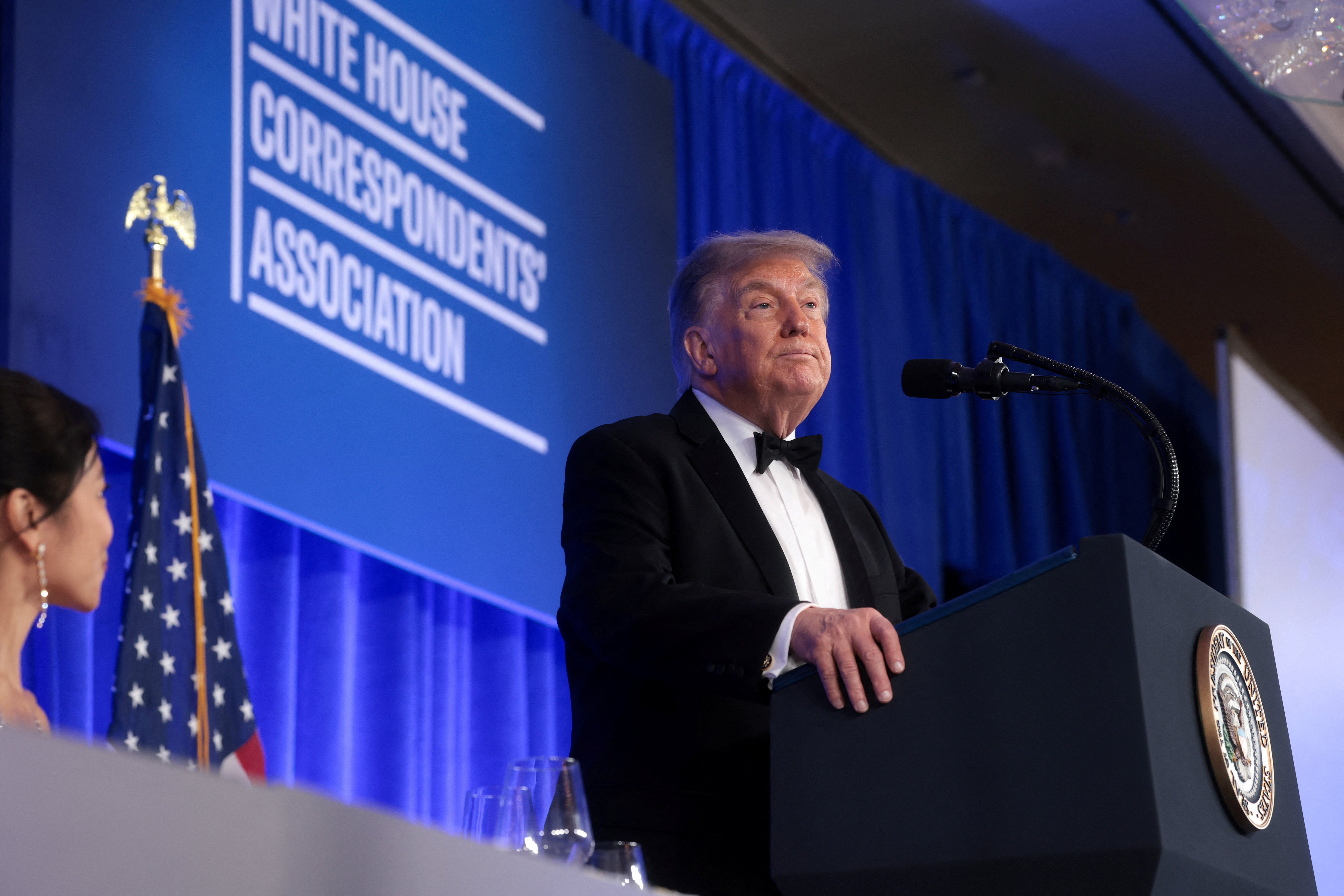
But on Friday night inside the Waldorf Astoria, Donald Trump didn’t offer self-deprecation. He offered a shambolic, grievance-laden routine that was less a comedy set than a stark window into a presidency that views democratic guardrails as props and political norms as punchlines.
The delayed event had already been shadowed by the trauma of April’s security incident outside the original venue. And while the president briefly reached for solemnity — saluting Secret Service Officer Victor Gonzales, who survived a shot to his ballistic vest during the attack — the pivot back to Trump’s standard repertoire of resentment was almost instantaneous.
What followed was an unvarnished display of a president completely incapable of playing the self-aware roaster, opting instead for a bizarre mix of flat jokes, thin-skinned outbursts, and outright constitutional threats.
Comedy requires a minimum baseline of shared reality, a quality that was entirely absent from the podium on Friday. Trump’s scripted material fluctuated between the incomprehensible and the downright grotesque.
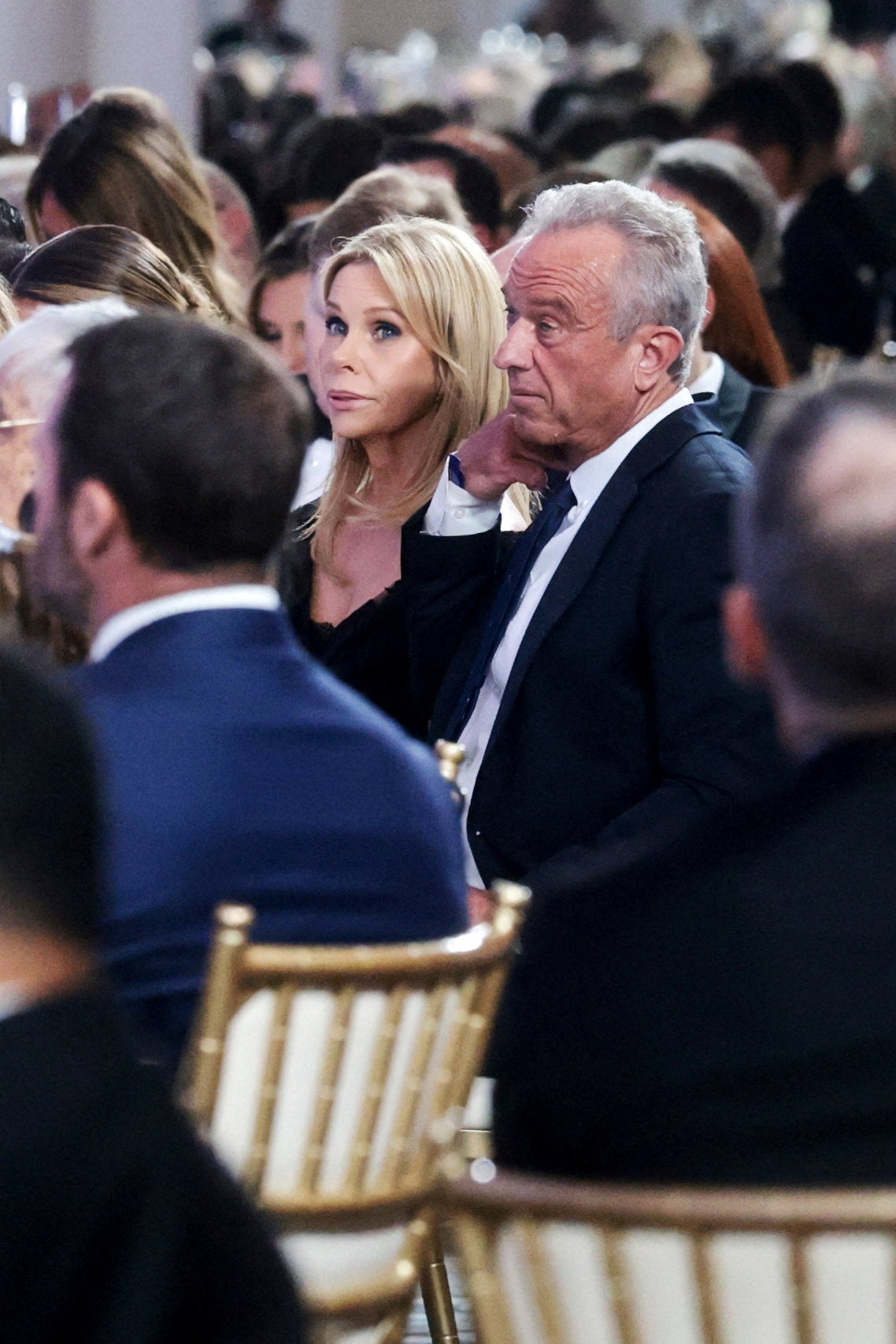
In one of the evening’s most surreal moments, Trump attempted to roast his Health and Human Services Secretary, Robert F. Kennedy Jr., by claiming the cabinet official “personally ran over the cow with his car. And he cut it up and he brought it here for you to eat tonight.”
Instead of landing a sharp political jab, the comment hung over the ballroom like a cloud of smog, producing a bewildered, polite chuckle from a room full of journalists wondering whether they were listening to a joke or an unhinged culinary confession.
Worse than the bad jokes was the president’s total inability to handle an audience that wasn’t wearing red hats. When a scripted joke regarding term limits received a lukewarm response, the mask of the entertainer completely slipped.
Breaking character, Trump berated his own speechwriters live on stage: “Does anybody get that? I thought that was actually pretty good. That was actually the only thing I thought was good in this whole freaking stupid speech.”
It was a quintessential Trumpian moment: a thin-skinned autocrat unable to take responsibility for a flat punchline, blaming the teleprompter rather than recognizing that his audience wasn’t in the mood for tired executive humor.
The performance was all the more striking because, in a purely transactional political sense, it represented a massive wasted opportunity. Love him or loathe him, Trump’s political ascent was built in no small part on a raw, instinctual talent for comedic destruction.
Unfiltered at a rally podium, he has historically possessed a natural, late-night host’s sense of timing — bestowing ruthlessly accurate nicknames, channeling absurdity, and working a crowd with the cruel efficiency of a veteran insult comic.
That talent is not trivial; it has historically been a decisive electoral weapon. As no less an authority on humor than director and comedy producer Judd Apatow has famously noted, in modern American politics, the funnier candidate tends to win elections.
Apatow pointed out that Reagan was funny, Clinton was funny, Bush was funnier than Gore, Obama was funnier than almost anyone who had ever run, and in 2016, Trump’s dark, improvisational wit proved vastly more entertaining to voters than Hillary Clinton’s rehearsed policy points. Humor disarms critics, humanizes the performer, and projects a sense of effortless dominance over stiff, scripted rivals.
Yet on Friday night, that organic comedic instinct was entirely smothered under a blanket of paranoia and executive rigidness.
When Trump abandoned his observational crowd work to read canned jokes prepared by nervous staffers, the charm vanished, leaving behind only the cold, unyielding architecture of his grievances. Instead of using the White House Correspondents’ Dinner to showcase a disarming, self-aware wit that might reassure a skeptical nation, he treated the room to the spectacle of a man suffocating under his own teleprompter.
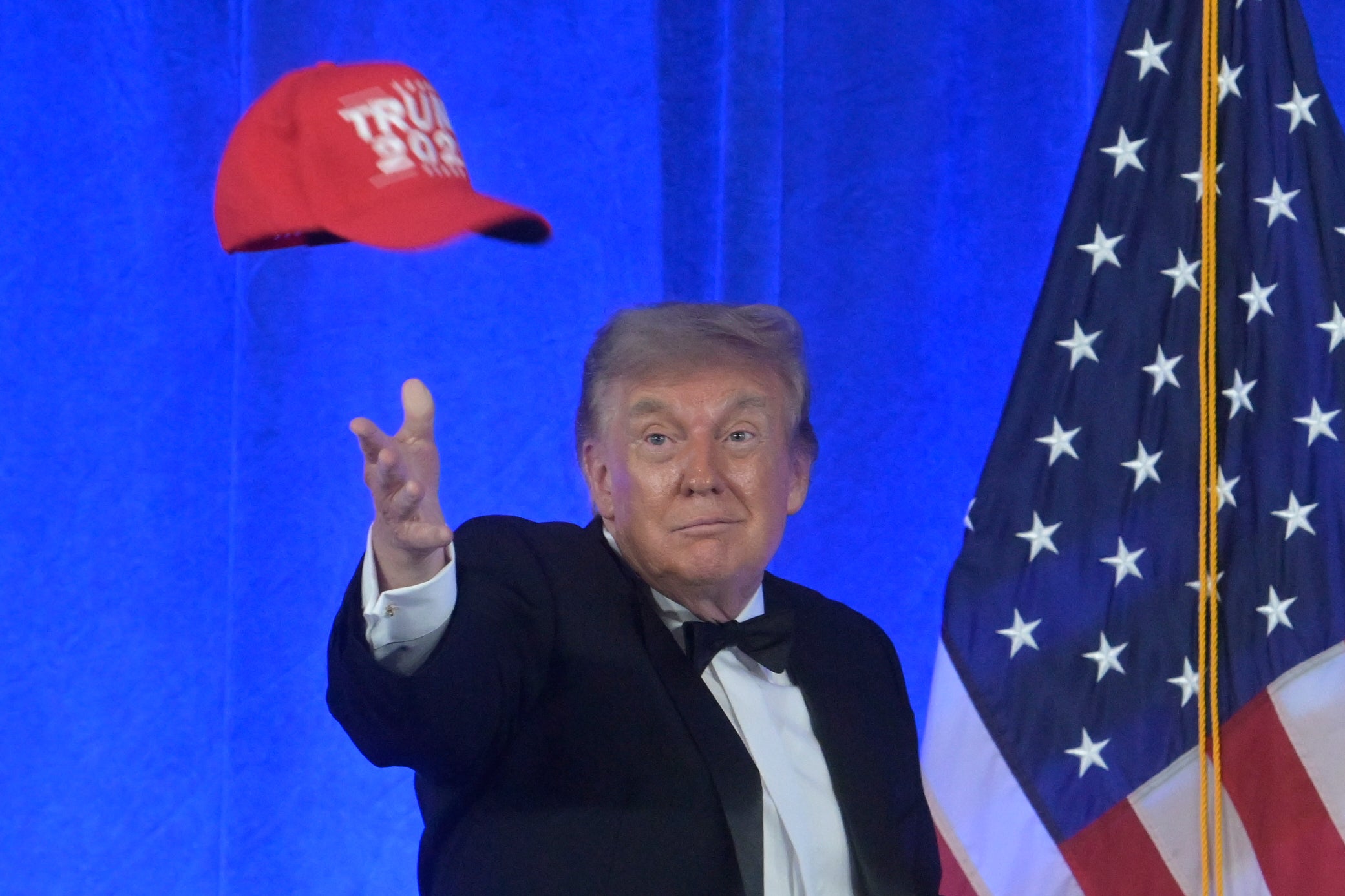
The moment that definitively erased any lingering pretense of humor came near the end of his rambling remarks. Reaching beneath the lectern, the 80-year-old president produced a red baseball cap emblazoned with the words “Trump 2028.”
Placing the hat on his head, Trump declared to the room of reporters his intention to “save your ratings,” formally announcing his “intention to run for a fourth term as President of the United States.” He doubled down with a characteristic boast: “I won three times, now I’m going to do it again.”
This is precisely why the speech failed as comedy: in modern Washington, a president “joking” about violating the 22nd Amendment isn’t satire — it’s a trial balloon wrapped in a MAGA hat.
For years, the president’s apologists have played the exhausted game of claiming his most authoritarian musings are merely “trolling the media” or playing to the crowd. But when a sitting president repeatedly floats staying in power indefinitely, weaponizes federal law enforcement against political rivals, and systematically dismantles executive oversight, the joke expires. It ceases to be humor and becomes a statement of intent masquerading as a bit.
Throughout the night, Trump took familiar swipes at his usual political targets—ranging from Chris Christie and Jerry Nadler to Senator Adam Schiff and musician Bruce Springsteen. He even paused to cast a suspicious eye at the press awards handed out earlier in the evening, asking with characteristic suspicion, “Do I have a say in those awards?”

Ultimately, Friday’s rescheduled dinner exposed the fundamental absurdity of trying to apply traditional Washington rituals to a leader who rejects the very concept of democratic accountability. Trump did not come to the Waldorf Astoria to laugh at himself, nor did he come to bridge the chasm between his administration and the press corps he routinely denounces as the “enemy of the people.”
He came to demand deference, air old grievances, and test how far he could push the boundaries of constitutional norms while hiding behind the protective shield of “just joking.”
The room didn’t laugh because there was nothing funny to find. What the audience witnessed was not a charismatic entertainer leveraging his wit, but a man profoundly obsessed with holding onto power at all costs — leaving the press corps to report on a reality where the punchline might very well be the end of the constitutional republic.