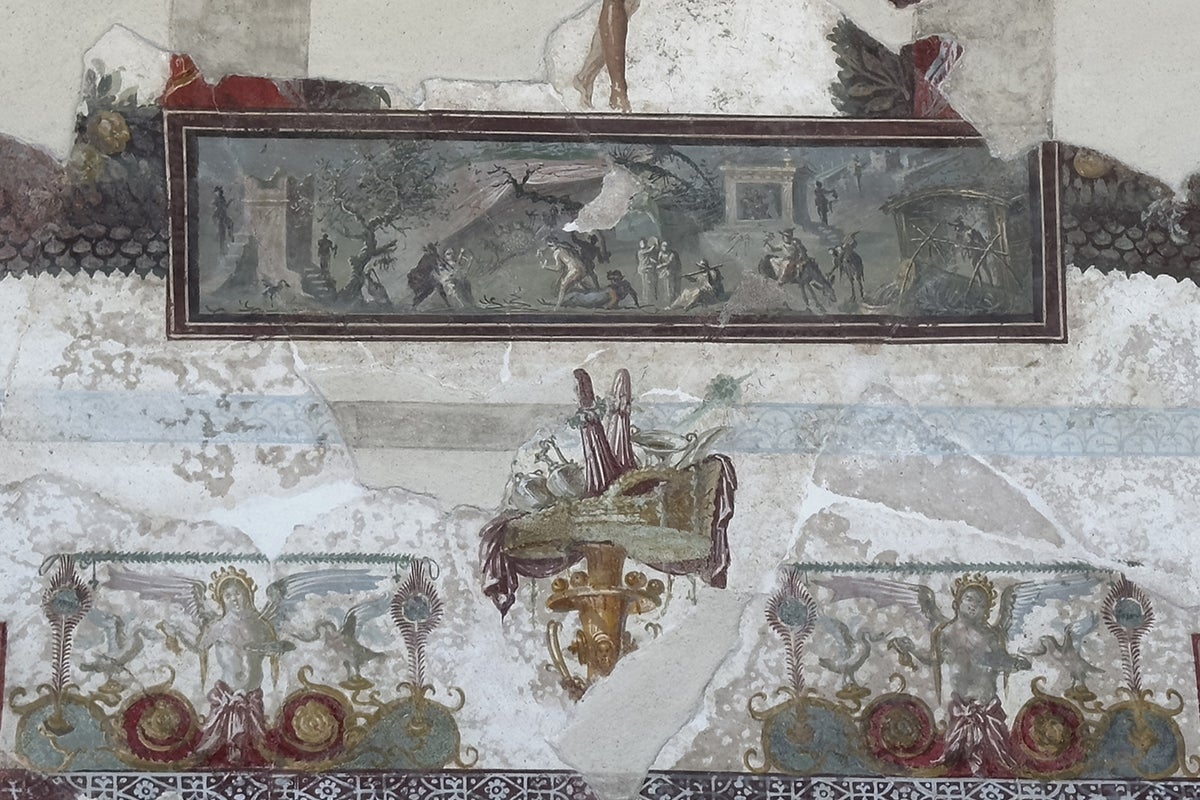
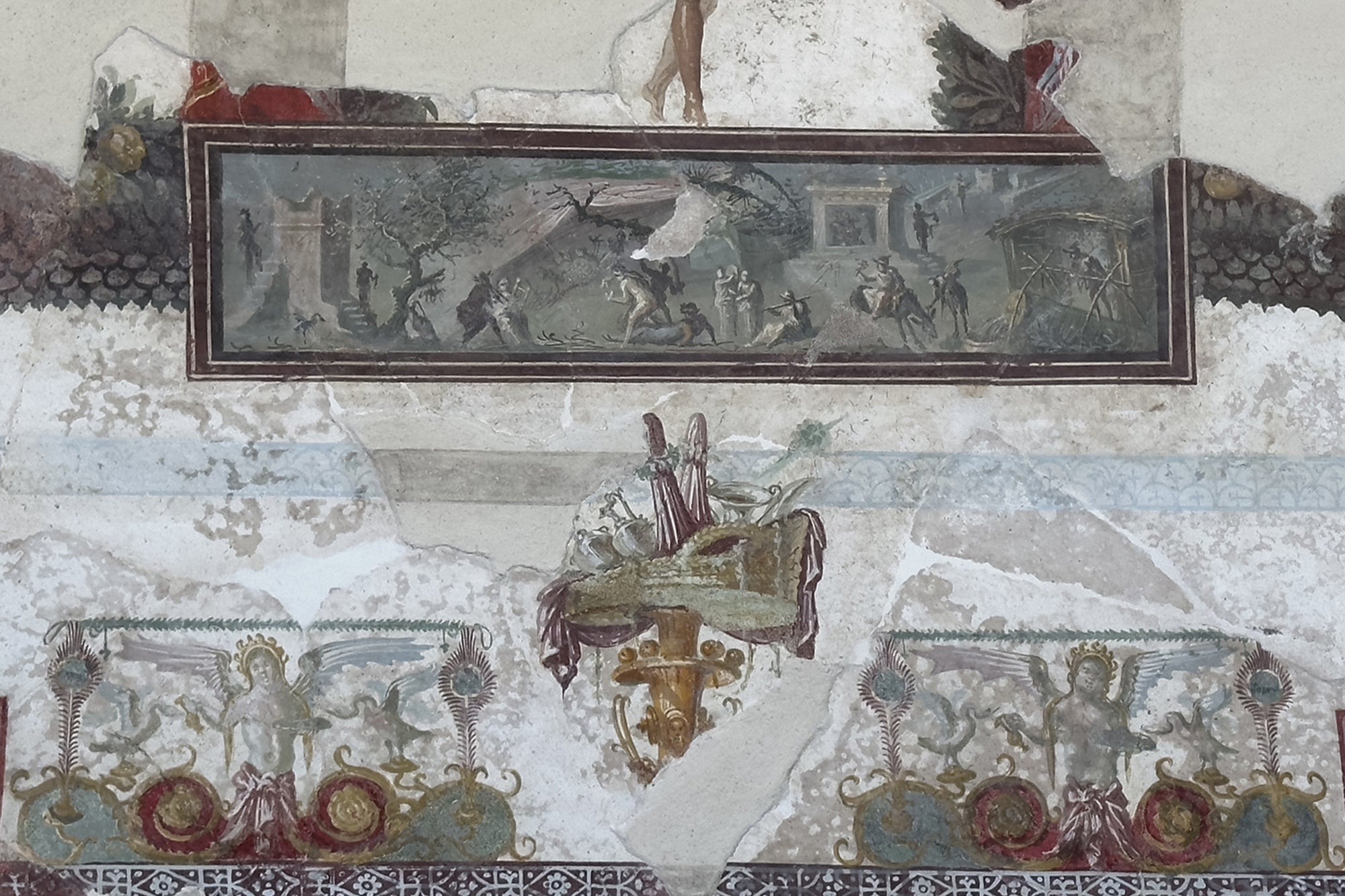
Archaeologists in Pompeii have unveiled a partially reconstructed frescoed ceiling vault, featuring detailed images from Greek mythology.
Pompeii, which was buried by the eruption of Italy’s Mount Vesuvius in AD 79, is a Unesco World Heritage Site and one of the country’s most popular tourist attractions.
The archaeologists presented the ceiling vault late on Thursday, at the end of an international workshop on new discoveries at the ancient city.
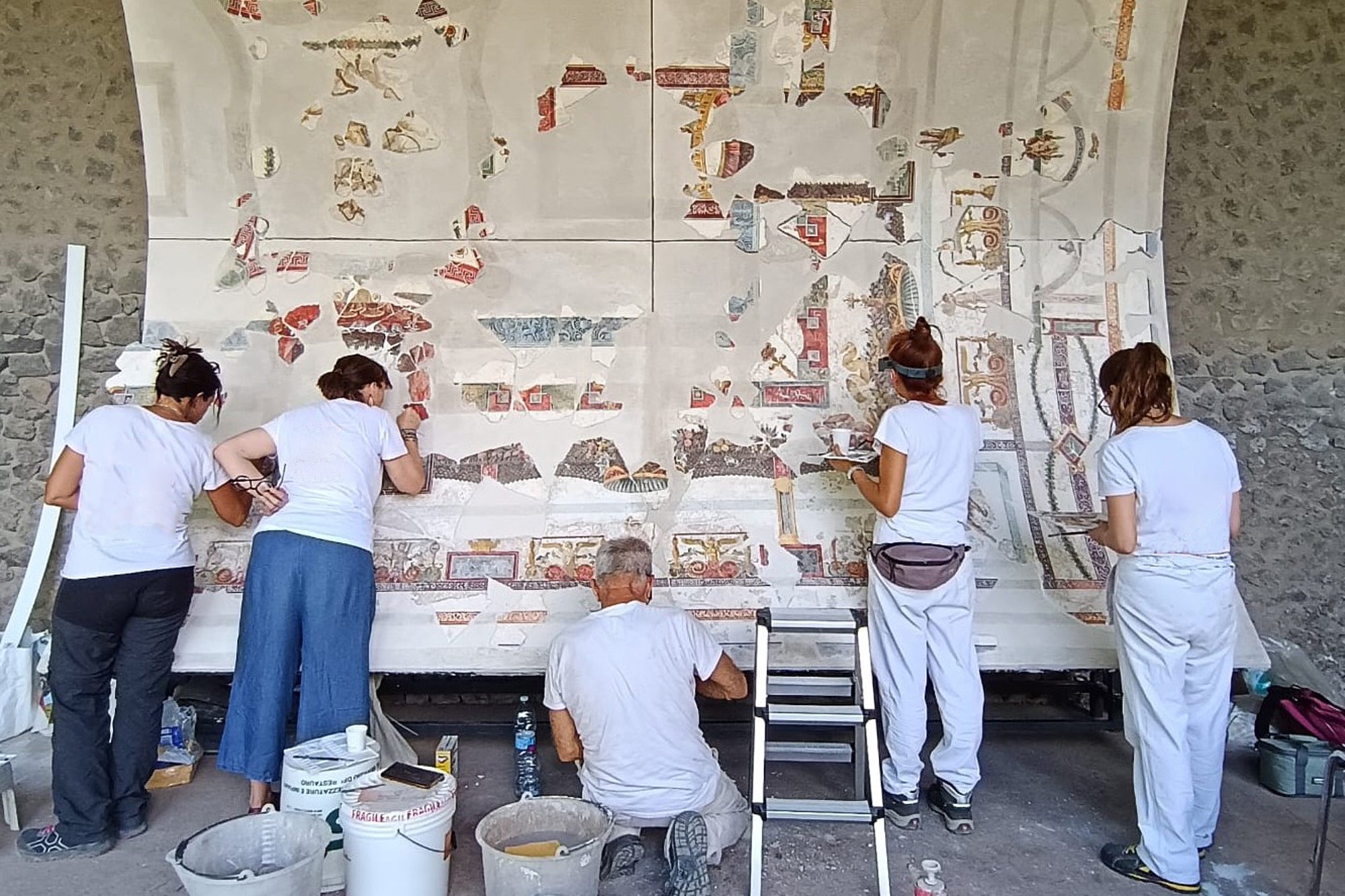
They said that they created a curved support structure to place the fragments in the design, which replicates the original shape of the vault.
As new fragments of frescoes are found and restored, they can be added to the scene, the archaeological park said.
Experts determined that the main theme of the work was of Cretan princess Ariadne and Dionysus, the god of wine and revelry.
The couple’s union is one of the best-known Greek myths.
Other discoveries at Pompeii
In 2025, archaeologists discovered a spa-like complex that was described as a “once-in-a-century” find.
What is thought to be one of the largest private bathhouses in the city was uncovered after it lay buried underneath metres of volcanic rock for centuries.
The chambers – complete with a large plunge pool, and hot, warm, cold and changing rooms – could accommodate up to 30 people and were found at the heart of a grand residence.
Archaeologists at the site said that the discovery set an example of how private homes were used as a “spectacle” to gain favour with others.
The baths were found near the house’s banquet hall, suggesting the Roman residence lent itself to being a “stage for celebration” that goes beyond what we would consider a “private space” by today’s standards.
In March this year, more than 20 plaster casts of victims who died in the catastrophic volcano eruption went on display for the first time in a permanent exhibition.
The casts, which scholars call “imprints of pain”, dramatically capture the exact position each resident of the city died in 79 AD.
The reproductions were created by pouring liquid plaster into the voids left by the decomposed bodies in the hardened ash.
AP