




There are few pleasures greater than letting a piece of chocolate melt slowly on your tongue. Indeed, the proximity of chocolate’s melting point to our own body temperature is one of the reasons it is so widely appreciated.
But this quality also makes it go soft and lose shape when temperatures rise, making it hard to store and transport in warm climates. To overcome this limitation, the food industry has developed several ways to make heat-resistant chocolate.
But to understand how this works, we must first learn how chocolate is made – particularly the role that cocoa butter plays in its physical properties.
Chocolate is made from the seeds of the cocoa tree (Theobroma cacau), which is native to the tropical rainforests of the Amazon basin. Each fruit contains between 20 and 60 seeds (also known as beans) enveloped in a sugar-rich pulp.
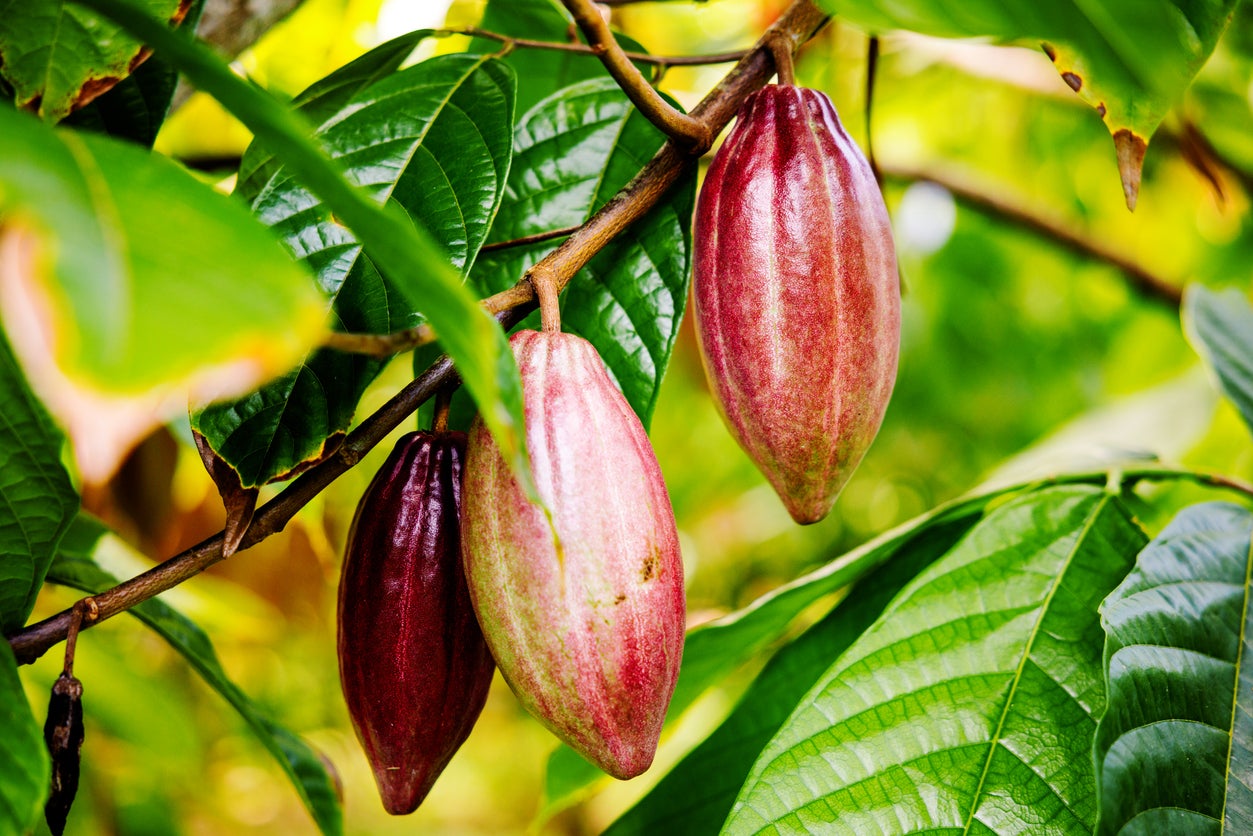
After harvesting, the seeds are fermented, allowing yeasts and bacteria to transform the pulp. This triggers biochemical reactions that produce the precursors to chocoloate’s unique flavour profile. The seeds are then dried and roasted, allowing the Maillard reaction to produce a wide range of flavour compounds.
Only after this process can we make what we would call chocolate. The roasted seeds are ground to make a cocoa paste (or “liquor”) which, after hot pressing, can be separated into cocoa butter and cocoa powder.
Dark chocolate is made by mixing cocoa paste with cocoa butter and sugar, while other types are made by adding different ingredients such as milk. After this refinement, the mix is “conched”, a process of heating and prolonged pressing that reduces moisture, removes volatile, indigestible compounds, and ensures that the cocoa butter completely covers the cocoa and sugar solids. This is how chocolate achieves its signature creamy texture.
The final stage is tempering, a process of controlled melting and cooling that allows cocoa butter to crystallise in its most stable form (known as “form V”). This gives chocolate shine, hardness, a clean snap when it breaks, and a melting point of around 34C – very close to human body temperature.
If cocoa butter crystallises in a different polymorphic form, the chocolate loses its shine, its texture is different, and you may see “fat bloom”, a whitening on the chocolate’s surface caused by the migration and re-crystallisation of fats.
Heat-resistant chocolate
Chocolate’s prized quality of melting in the mouth is what also makes it melt so easily in warm weather. To solve this problem, material scientists in the food industry are working to develop heat-resistant chocolates. These are chocolates capable of keeping their shape at temperatures of 38-45C – even higher in some experimental formulations.
Current research is following three related lines of enquiry.
1. Sugars
The first is a modification of sugar microstructures. This involves reinforcing chocolate’s internal structure by incorporating very small amounts of water or hydrophilic (water-attracting) compounds like glycerol or sorbitol.
These additives partially dissolve sugar particles and allow them to bind to one another, creating a rigid three-dimensional “sugar network”. This acts as an internal structure that can prevent solids from breaking apart and immobilise melted liquid fat. The chocolate thus keeps its shape at higher temperatures.
The main drawback is that water must be added with extreme precision. Even a tiny variation can alter the chocolate’s viscosity or cause sugar bloom, a surface defect caused by the recrystallisation of sugar.
2. Fats
Another method is to modify the fat phase composition to increase chocolate’s melting point. There are two ways of doing this: partial replacement of cocoa butter, or additives.
Cocoa butter can be partially replaced with two types of vegetable fats:
- Cocoa butter equivalents – fats such as shea butter, palm oil or mango seed oil – all have a very similar chemical composition to the original and do not alter chocolate’s properties.
- Cocoa butter substitutes – hydrogenated fats derived from coconut or palm kernels that mimic the physical properties of cocoa butter – are not as compatible as shea butter or other equivalents. To use them, the chocolate recipe has to be adjusted.
In terms of additives, cocoa butter improvers are used to modify the behaviour of the fat phase and reduce fat bloom. They are obtained through fractionation (separating fats according to their melting point) or interesterification, a chemical and enzymatic process that reorganises the fatty acids within the triglycerides to increase the proportion of more thermally stable molecules.
However, if these additives are overused, they can harden the chocolate and leave an unpleasant, waxy sensation in the mouth.
Other additives are oleogels and bigels: structured materials that immobilise vegetable oils using gelling agents. They can partially or totally replace cocoa butter, which increases the product’s thermal stability and prevents it from melting.
3. Manufacturing
Some of the latest research has looked at the manufacturing process itself, changing the way the chocolate is made rather than its ingredients. Various studies have shown that small variations in chocolate’s microstructure can significantly improve its heat resistance.
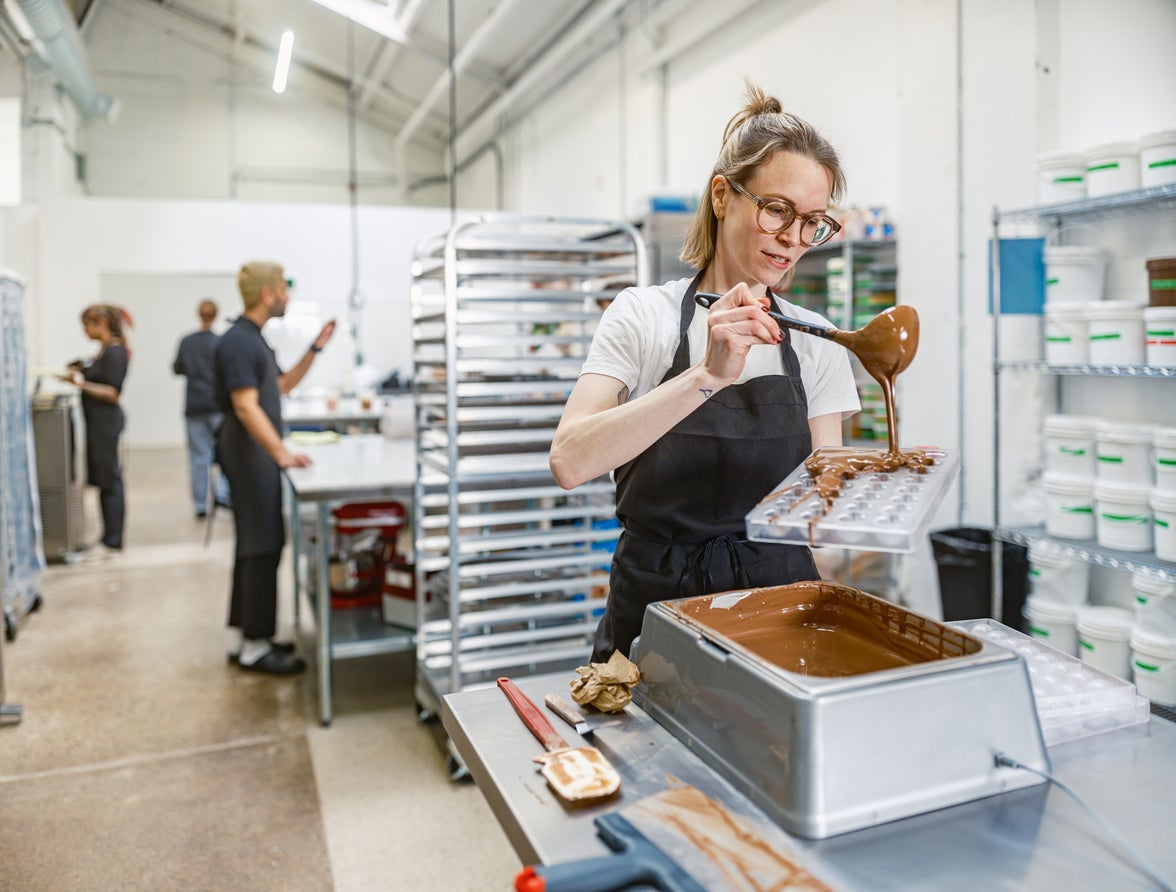
Optimising the refining and conching processes yields solid particles of a very uniform size, which are more efficiently coated with cocoa butter. This creates a more compact and stable microstructure that can hold its shape even when some of the fat begins to melt.
There are also methods based on mechanical changes to the chocolate’s structure. An well-known example is the Cadbury Flake, whose internal structure consists of multiple thin layers of fat and tiny air pockets generated by folding and stretching the chocolate.
Although the Flake was designed to create a unique texture – not to develop a heat-resistant chocolate – its arrangement means the chocolate heats up more slowly, and softens more slowly.
Striking a balance
Despite major advances over the last few decades, there is still no heat-resistant chocolate that fully recreates the properties of conventional chocolate. Better thermal stability usually means changes in texture, melting rate, the release of aromatic compounds, or sensory perception.
Some formulations can even increase the risk of other defects such as sugar bloom, or may fail to comply with the legal definition of what can actually be called “chocolate” in certain countries.
The goal of current research is therefore not only to prevent chocolate from melting during storage or transport. It also has to preserve its shine, texture, aroma and, above all, its ability to melt gently in the mouth – qualities that have made chocolate one of the most widely enjoyed foods in the world.