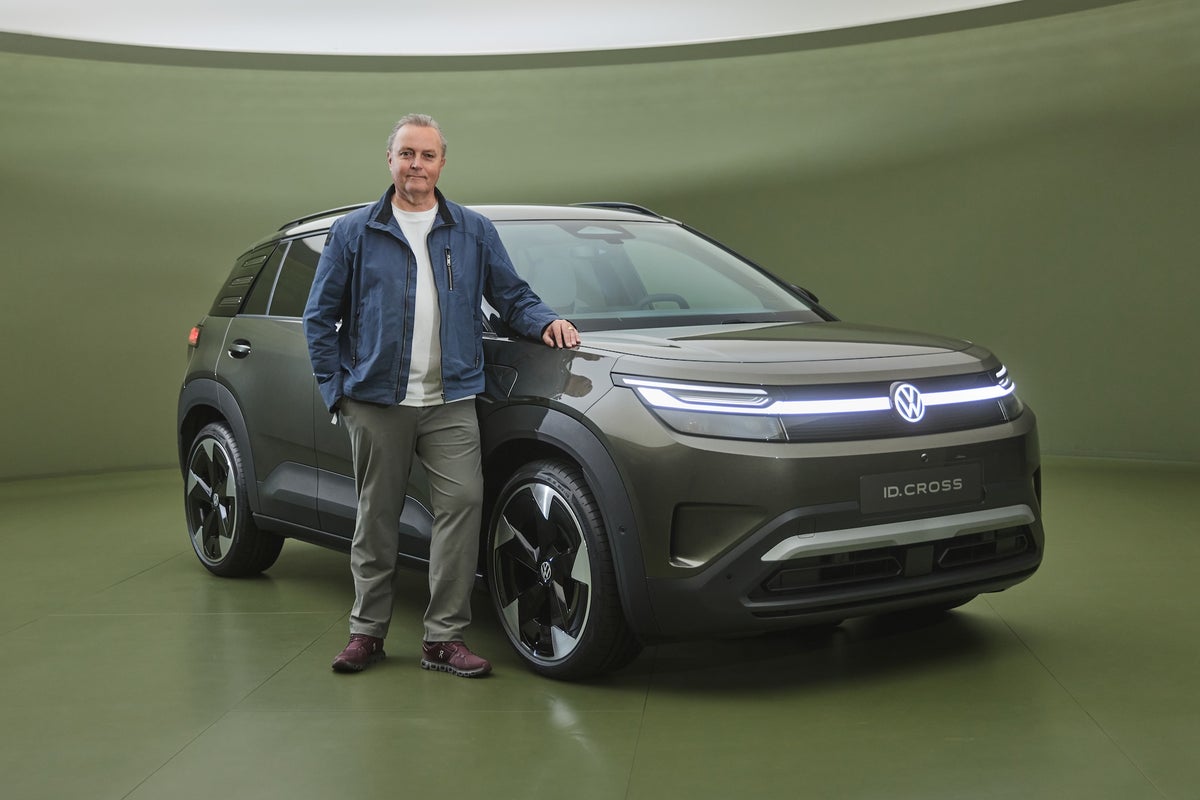
Volkswagen has finally revealed the production version of its new ID. Cross, an EV that’s set to be its biggest selling electric car yet.
The Volkswagen ID. Cross is a small electric SUV that will cost around £25,000, travel up to a claimed 271 miles on a charge and bring some surprisingly posh features to the affordable end of the electric car market. And I’ve already driven it.
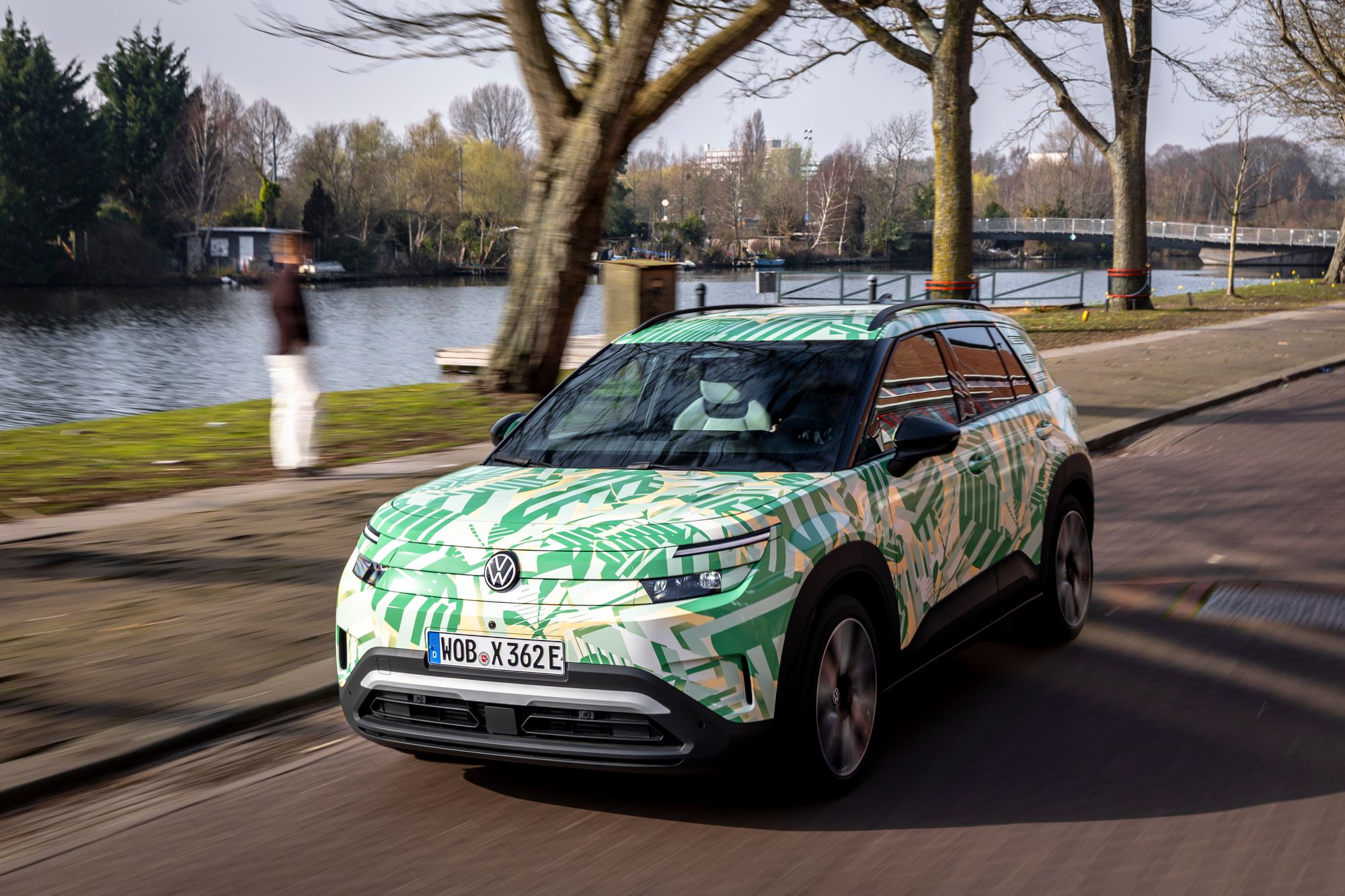
Earlier this year, I was among a small group of journalists invited to Amsterdam to drive a heavily camouflaged, close-to-production prototype of the ID. Cross. I drove it through the city, along motorways and out towards the coast, giving me plenty of time to find out whether Volkswagen’s baby electric SUV felt as grown-up as the company claimed.
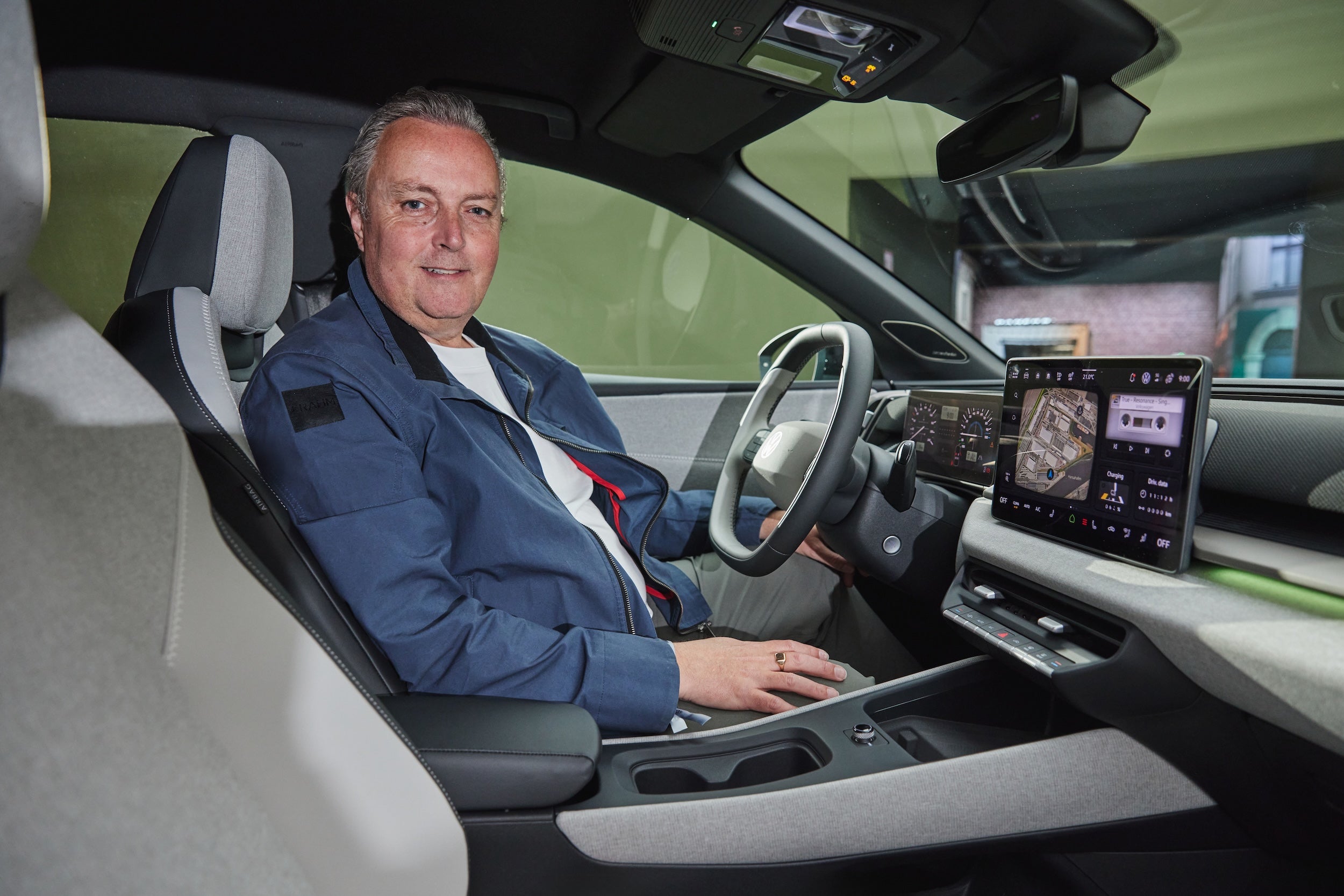
Now the camouflage has come off, I’ve also had the chance to see and sit in the finished production car. The good news is that the smart design and impressive driving experience are backed up by a high-quality interior that looks and feels more expensive than the expected price suggests.
There’s plenty of fun in there, too, including an option that makes the digital displays look like the dashboard of an old Golf. The navigation map appears to sit inside an old-fashioned television, while music is shown on a cassette tape with little reels that spin as the track plays.
It might sound a little gimmicky, but it gives the ID. Cross something that is often missing from small electric SUVs, especially those coming from China: a bit of personality. With the current resurgence of vinyl records, wired headphones and old iPods, I applaud Volkswagen’s timing with this playful bit of nostalgia.
The ID. Cross is the SUV member of Volkswagen’s new family of smaller electric cars. It will sit alongside the forthcoming ID. Polo hatchback and share many of its parts with the Cupra Raval and the very similar Skoda Epiq. All four cars are being developed as part of the Volkswagen Group’s Electric Urban Car Family and will be built in Spain.
Volkswagen believes the ID. Cross will outsell the ID. Polo, which shows just how important small SUVs have become. It is the electric alternative to the petrol-powered T-Cross, although the two cars sit on completely different platforms.
The ID. Cross is expected to arrive in UK showrooms in early 2027, with European sales beginning in autumn 2026. Volkswagen has announced a starting price of around €28,000 in Germany, which works out at roughly £24,000, although a UK starting price around the £25,000 mark is more likely.
Final British prices have yet to be confirmed and the more powerful, longer-range versions are expected to stretch into the low-to-mid £30,000s.
Thomas Schäfer, chief executive of the Volkswagen brand, said: “The ID. Cross brings together technological expertise, clean design, impressive, intricate solutions and genuine all-rounder qualities – all for excellent value for money. These are ideal conditions for a new success story from Volkswagen.”
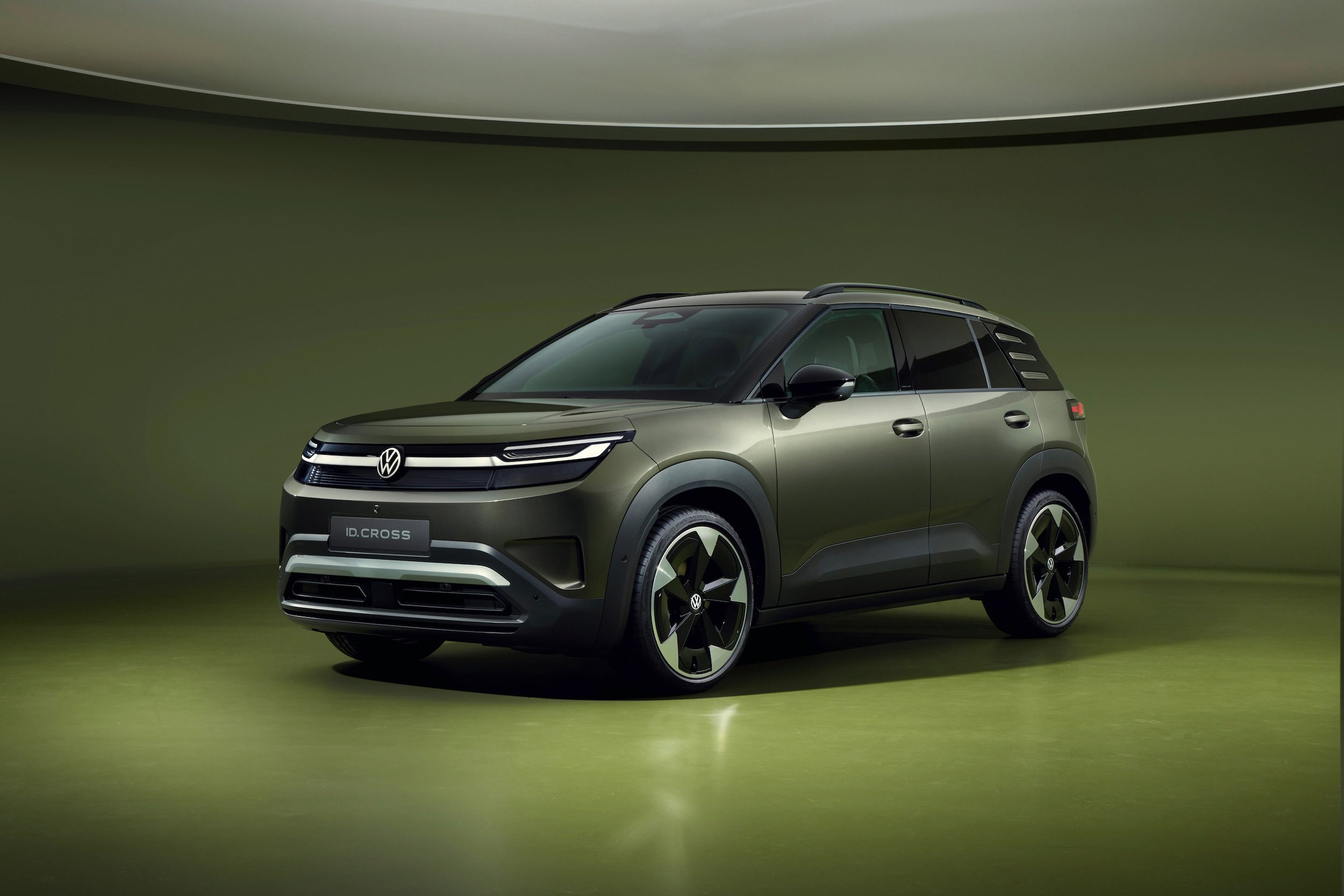
The production car stays very close to the ID. Cross Concept shown at the Munich motor show in 2025. Volkswagen describes its latest design approach as “Pure Positive”, based around three ideas: stability, likeability and something its designers call “secret sauce”.
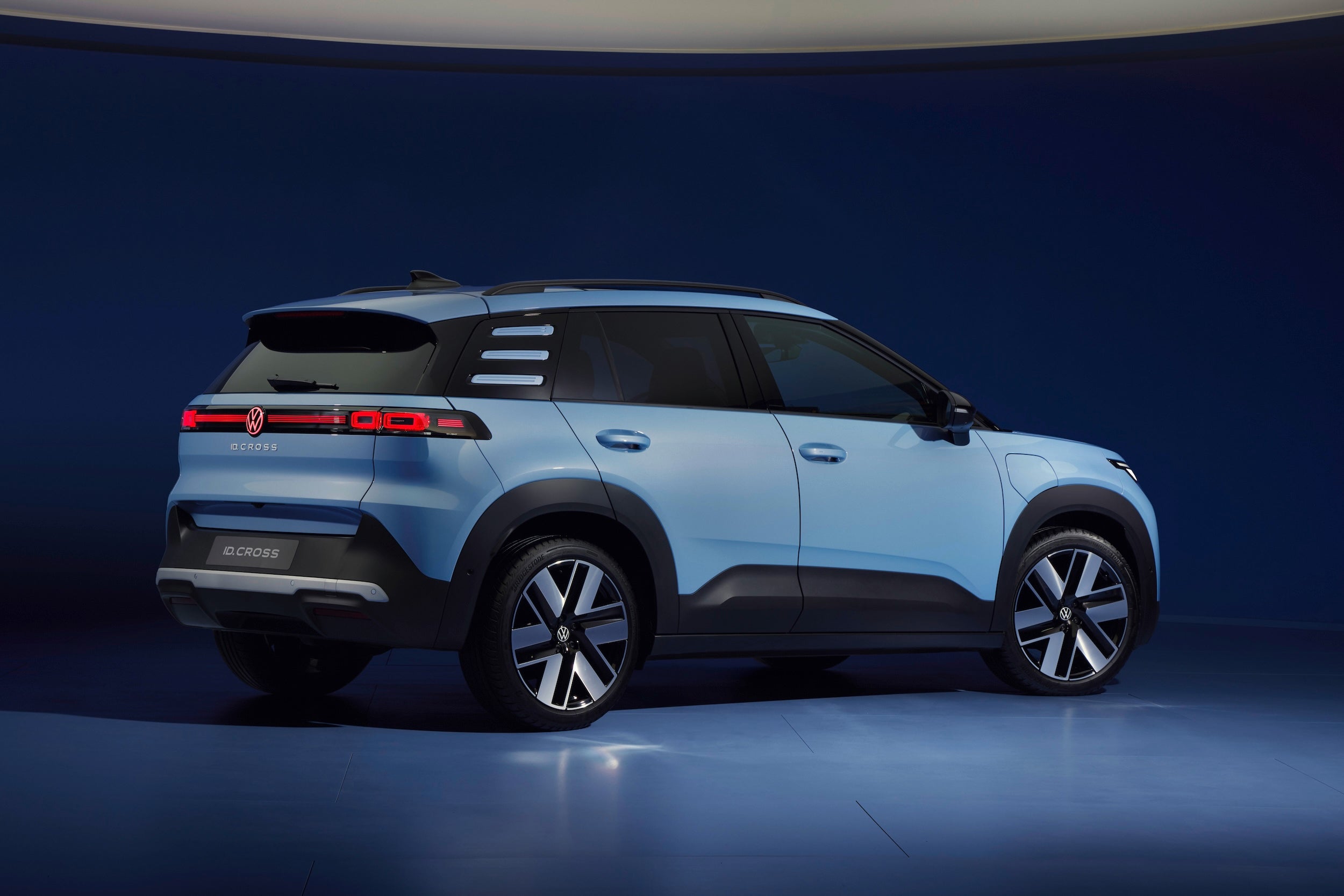
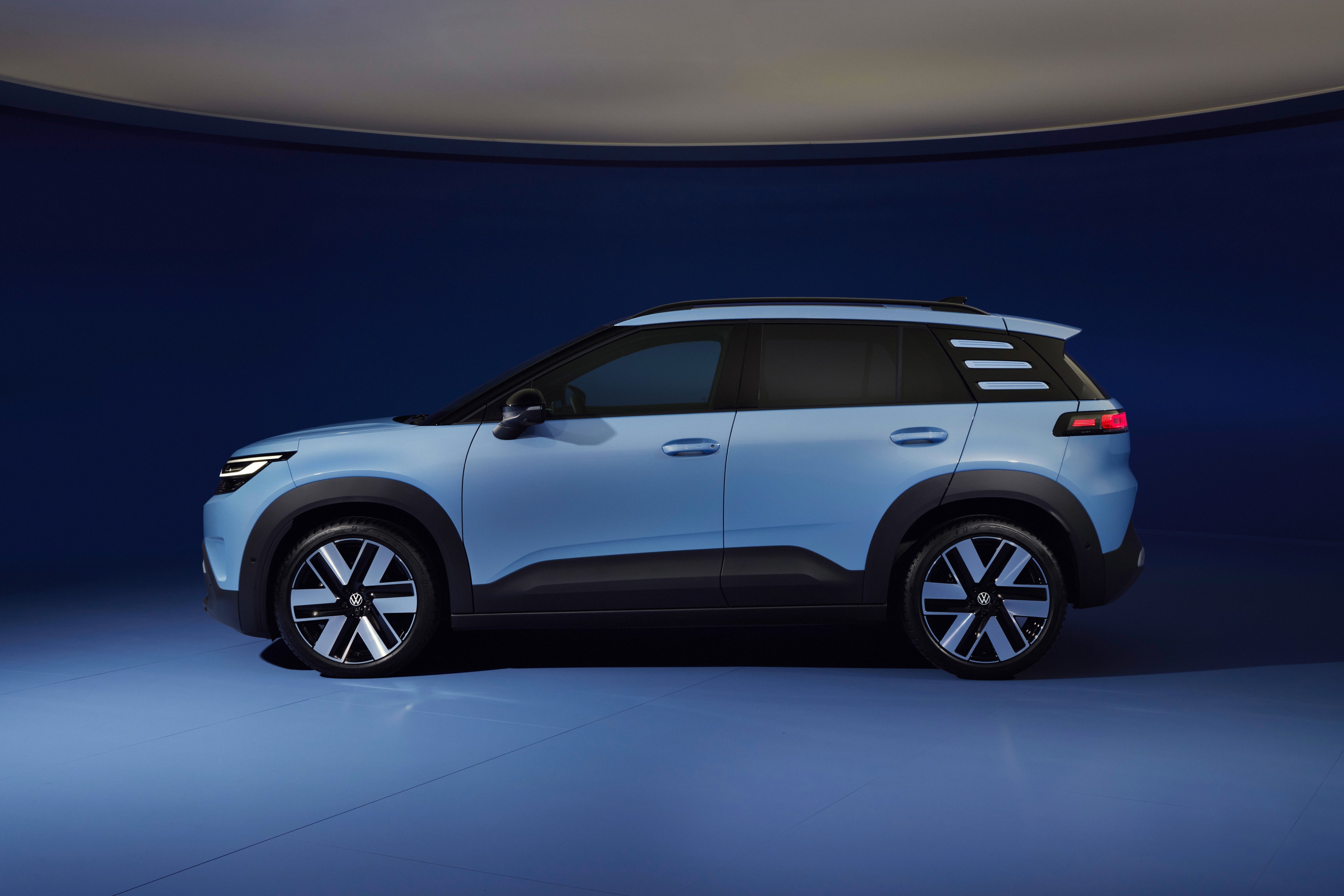
The stable bit comes from the ID. Cross’s chunky stance, strong shoulders and squared-off shape. Likeability is provided by the friendly face that wears a smile thanks to slim headlights that are joined by a wide light bar. Then there is the secret sauce, covering the little details that inject the all-important personality.
Those include thick rear pillars inspired by the original Golf and Volkswagen Bus, a roof that appears to float above the side windows and, on better-equipped versions, illuminated VW badges at the front and back.
The ID. Cross certainly looks smart in the metal. It has the upright, solid stance buyers seem to want from a small SUV, but it doesn’t look overdone or too aggressive. Large wheelarches and wheels of up to 20 inches help it appear more substantial than its dimensions suggest.
At 4,153mm long, 1,794mm wide and 1,581mm tall, the ID. Cross is still a compact car. Its 2,601mm wheelbase is 38mm longer than the T-Cross’s, though, while the electric platform allows more of its overall length to be used for passengers and luggage.
There’s plenty of room in the front and loads of headroom in the back. The rear doors open wide, and visibility is good in every direction, with sensibly sized windows and door mirrors.
Rear knee room is okay, but not overly generous. Taller passengers may find their knees close to the front seats, while children in forward-facing child seats could end up kicking the seatbacks. Personally, I would happily trade a little of the enormous boot for an extra inch or two of rear legroom, but there is enough space for five people when needed.
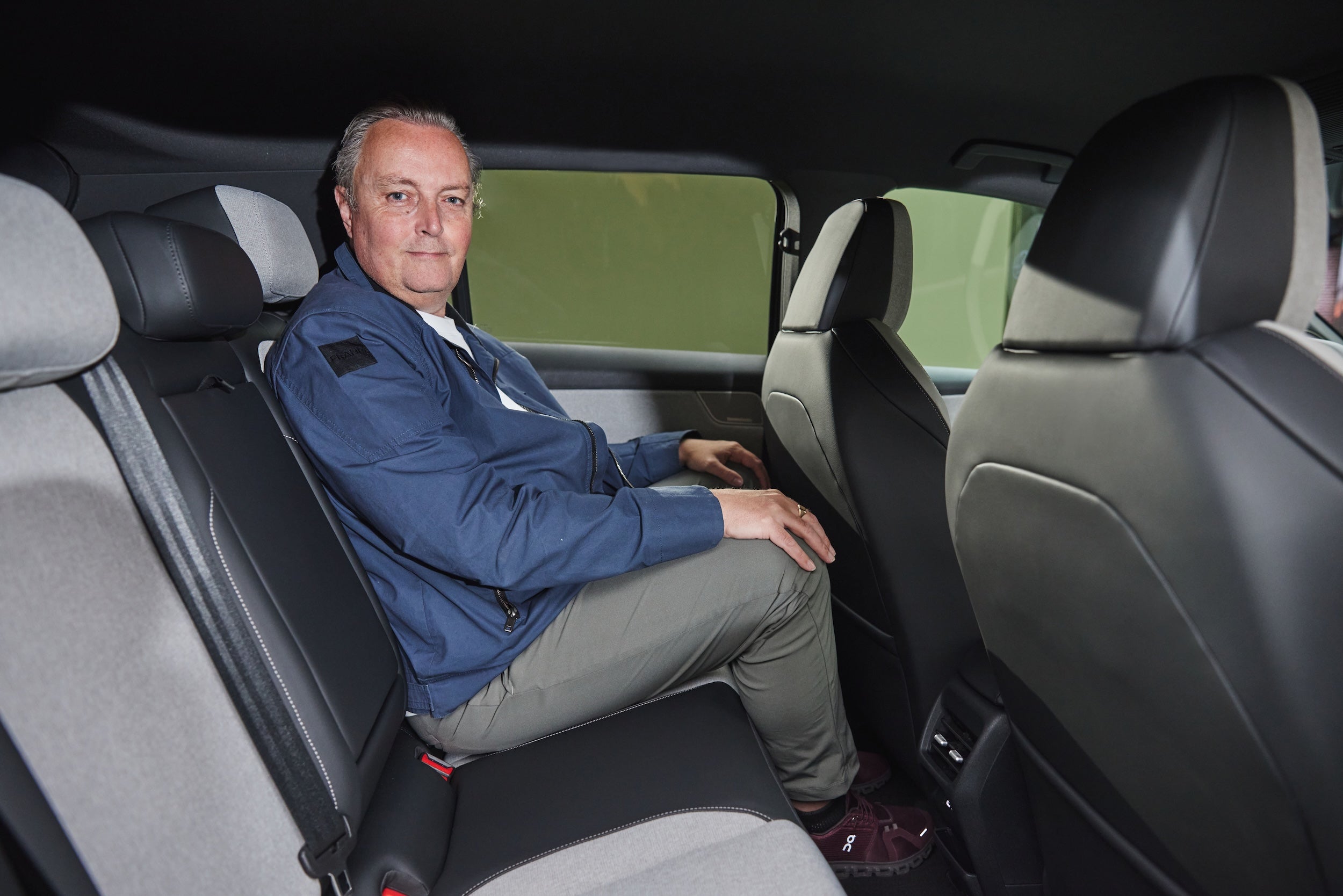
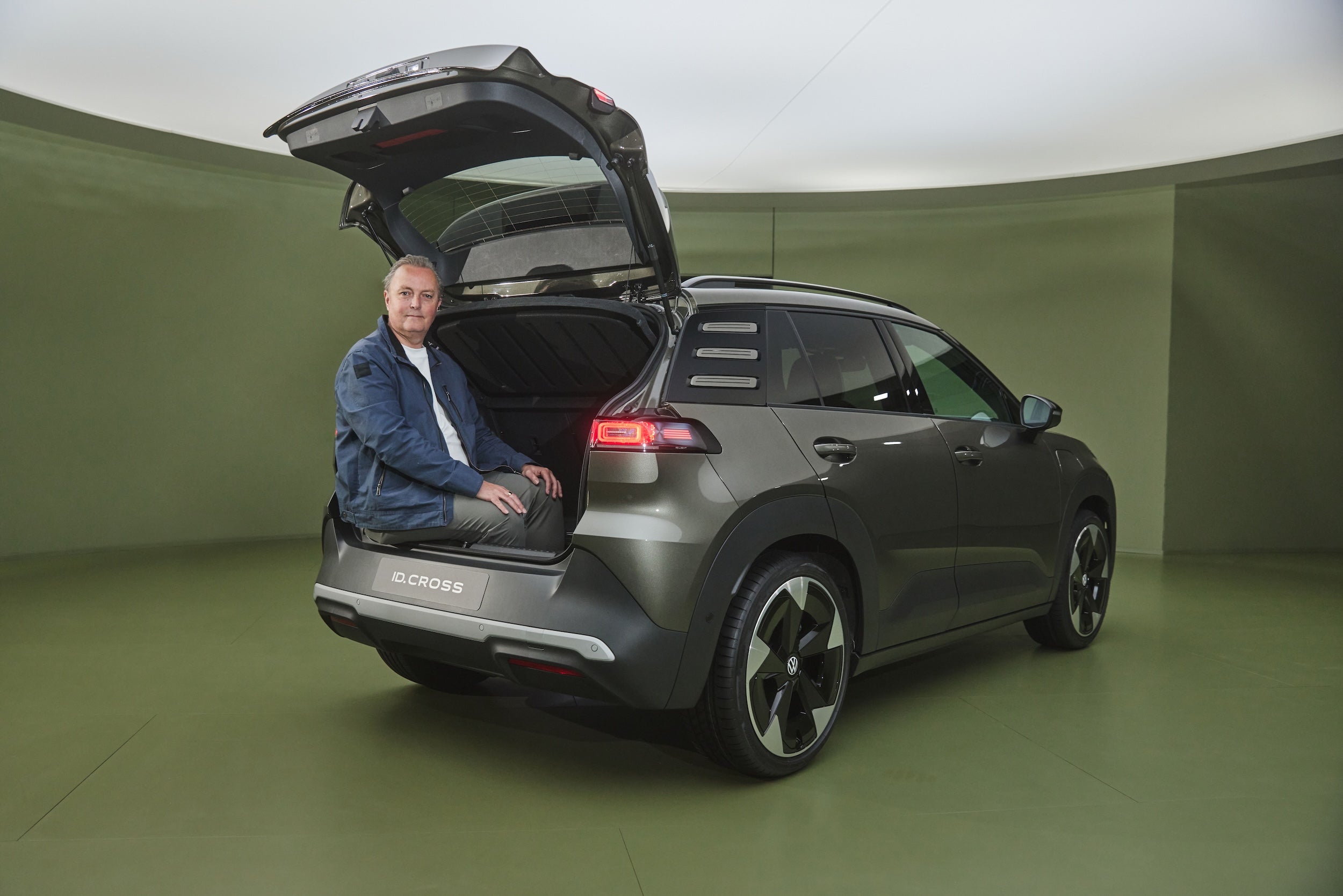
The boot holds 475 litres with the rear seats in place, which is 20 litres more than you get in the T-Cross. Fold the back seats and the space rises to 1,340 litres.
Those figures only tell part of the story. There is a very deep storage well beneath the main boot floor, and it really is deep: as you can see from the pictures, I was able to sit in the boot with my legs hanging comfortably down into it. That should make it useful for hiding charging cables, bags or all the other bits that tend to roll around in a family car.
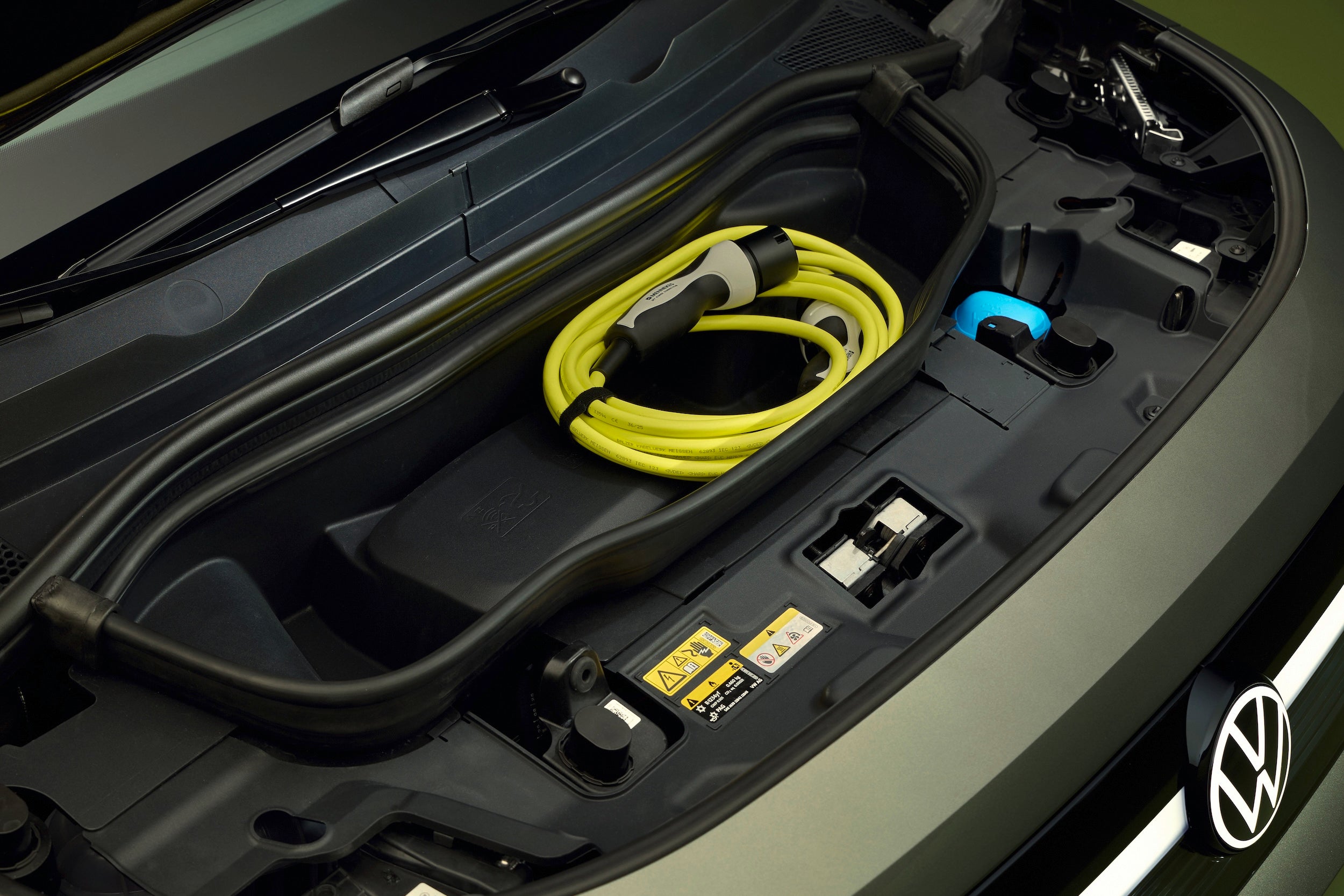
There’s another 25-litre ‘frunk’ under the bonnet, providing a handy place for the charging cable without having to unload the boot to reach it.
The interior is similar to the one in the new ID. Polo, although the taller SUV dashboard gives it a slightly more substantial feel. Having now sat in the finished production car, rather than the covered prototype I drove, it is one of the ID. Cross’s most impressive features.
There are fabric-covered surfaces across the dash and doors, a smart mix of colours and materials and a general feeling of quality that goes beyond what many people will expect from a car at this price. It feels warm and welcoming rather than plain or built down to a cost.
The front seats are comfortable and, if you are prepared to explore the options list, can be electrically adjusted in 12 directions and fitted with three massage programmes. The driver’s seat also gets a memory setting.
Other extras include a large panoramic glass roof and a 425-watt Harman Kardon stereo with 10 speakers, including a centre speaker on top of the dashboard and a subwoofer in the boot. These are features more commonly found in larger and considerably more expensive cars.
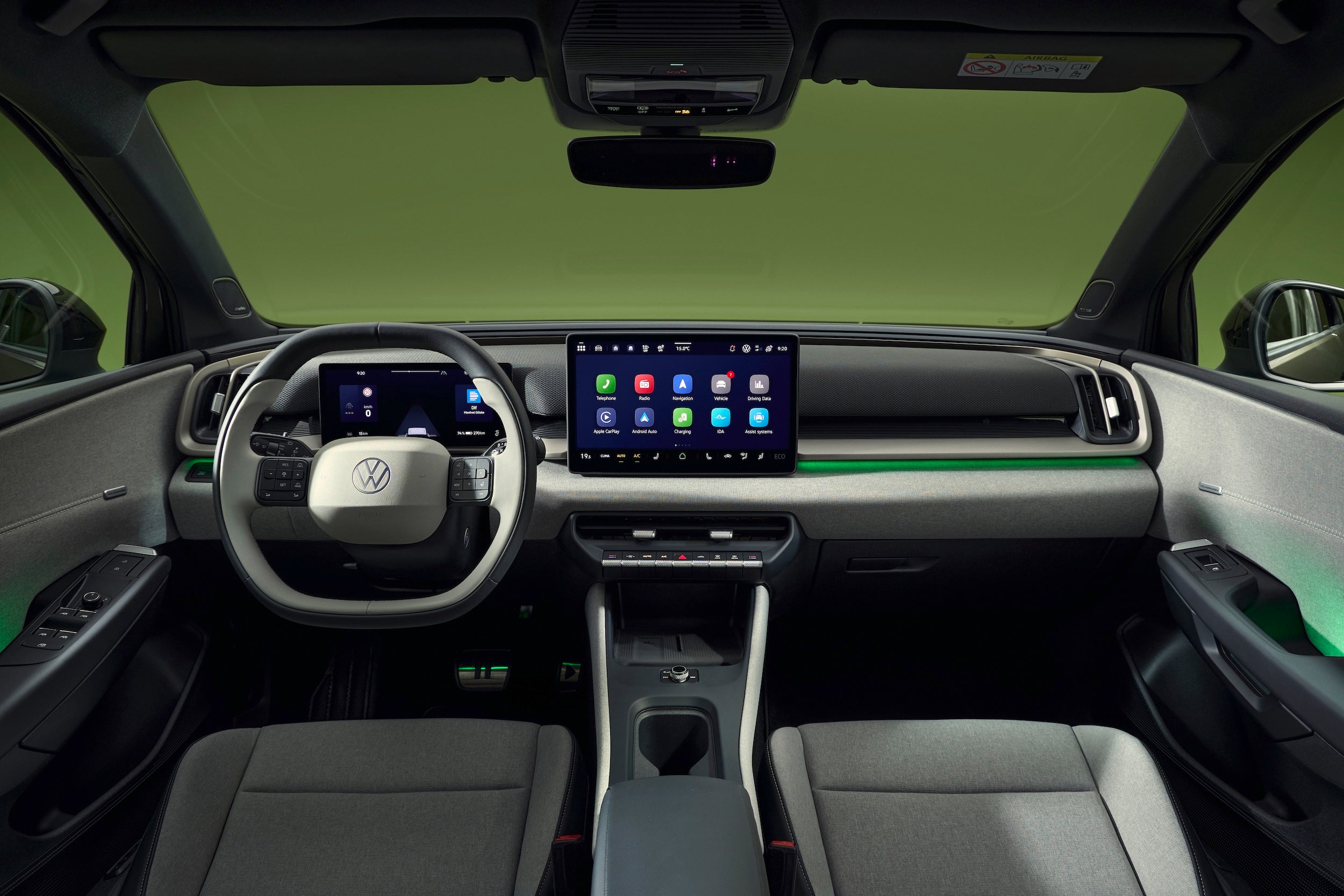
Volkswagen head of design, Andreas Mindt, said: “That’s why – for new Volkswagens like the ID. Cross, but also the ID. Polo or T-Roc – we have created an interior that feels like a friend from the very first encounter. Clear physical buttons foster a feeling of stability and confidence, warm-looking materials give it a friendly aura, while lovable details like the new retro instrument views allow Volkswagen’s hallmark charisma to shine through as the secret sauce. In the case of the ID. Cross, all this is combined with excellent economy of space. And it is precisely this combination that creates an interior that invites passengers to enjoy their time on board.”
Volkswagen has also listened to criticism of the fiddly controls and troublesome software in some of its earlier ID models.
The ID. Cross has a proper volume knob on the centre console, physical buttons on its steering wheel and a separate row of controls for the heating and ventilation beneath the central touchscreen.
There are rather a lot of buttons on the steering wheel, so it may take a little while to learn where everything is, but proper switches are easier to use on the move than Volkswagen’s previous annoying touch-sensitive pads.
The 12.9-inch central touchscreen and 10.25-inch driver display look excellent and, importantly, now work really well. The menus respond quickly, the graphics are sharp and the most commonly used functions are easy to find.
That makes a big difference; Volkswagen’s early electric cars were often let down by slow software and controls that required too much attention, but the new set-up is a major step forward.
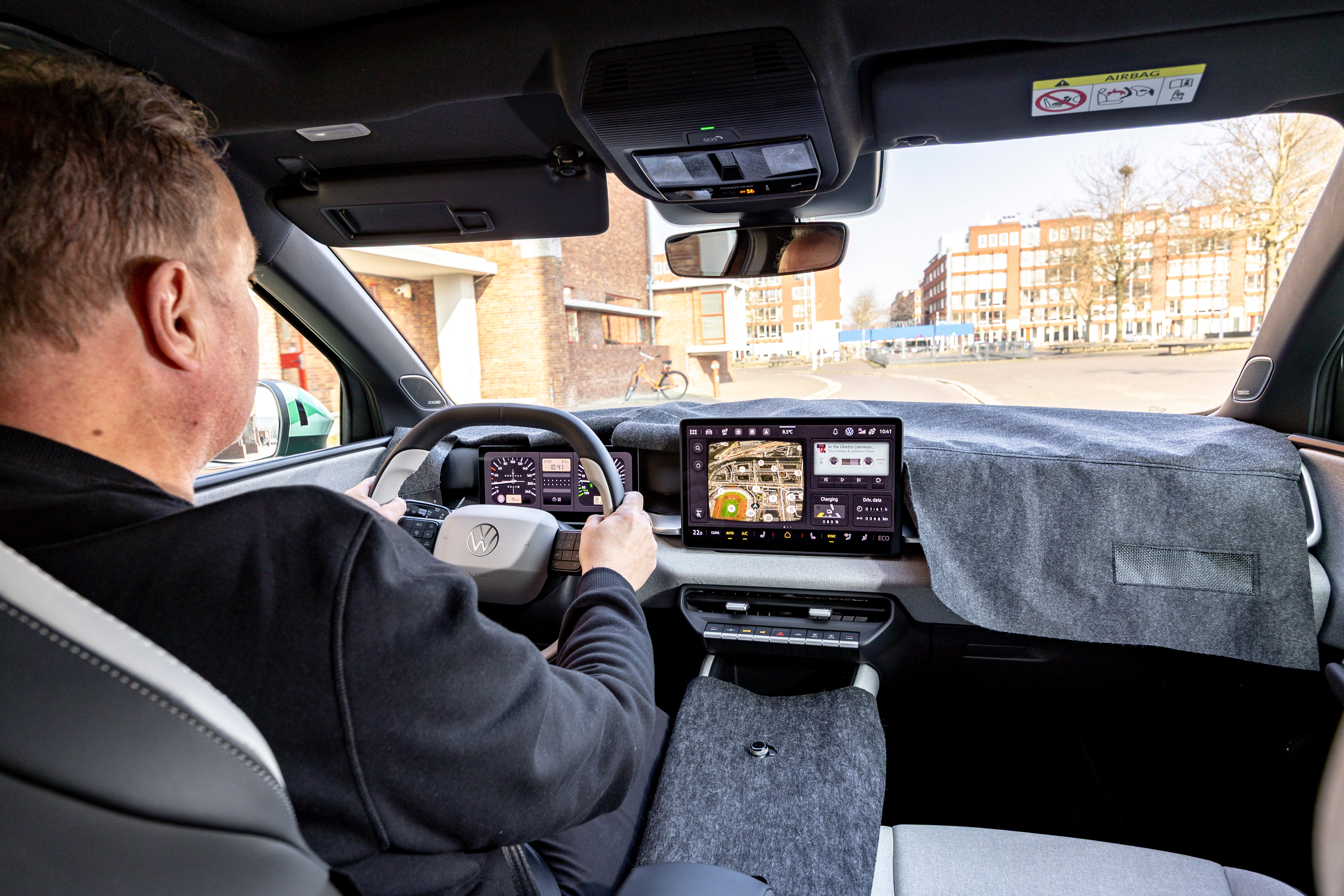
The retro display theme is the highlight. The driver can choose a design inspired by the later versions of the original Golf, with a traditional speedometer and what looks like an old rev counter, but reconfigured to show how much energy the car is using or putting back into the battery.
The main screen carries the theme even further with its old television aesthetic, retro fuel readout and cassette graphic. It is a simple idea, but it is cheerful, easy to understand and gives the cabin a sense of fun without getting in the way of usability.
There will be two battery sizes and three power outputs. The entry-level ID. Cross Trend gets a 37kWh battery and a 114bhp electric motor, while Life and Style versions use a 133bhp motor with the same battery as standard.
A larger 52kWh battery can be paired with a 208bhp motor in Life and Style cars. All versions have front-wheel drive.
Volkswagen expects the 37kWh cars to travel up to 196 miles on a charge, while the larger battery raises the official forecast to 271 miles. Those numbers are still awaiting final confirmation.
The smaller battery can charge at up to 90kW, taking it from 10 to 80 per cent in about 23 minutes. The 52kWh version raises the maximum charging speed to 105kW and should complete the same top-up in around 24 minutes.
That 105kW figure does not sound especially quick when some rivals can reach much higher peaks. Volkswagen says it has concentrated on keeping the charging speed steadier as the battery fills, rather than achieving a big number that appears only briefly before tailing off.
The prototype I drove had the 52kWh battery and 208bhp motor. Performance felt lively without being excessive, which should suit a small family SUV perfectly well.
The bigger surprise was the ride. Even in prototype form, the ID. Cross felt remarkably polished, smoothing away poor road surfaces with the sort of calmness normally associated with a more expensive car.
Volkswagen has used the same basic suspension layout as the Skoda Epiq, with struts at the front and a simple torsion beam at the back. However, the later suspension settings on the ID. Cross felt noticeably more settled than the early Epiq prototype I had driven previously. Ultimately, they’ll share the same settings and characteristics.
The Volkswagen was comfortable without becoming floaty and remained composed over rougher surfaces. The car felt solid and well connected to the road, but never harsh.
The brakes were another strong point. A new braking system gives the pedal a smooth, natural response, without the sudden grab or changes in feel that can affect some electric cars. It was easy to judge and remained consistent in town and at higher speeds.
The one area that needed more work was the steering. There was too much slack around the straight-ahead position in the normal driving mode, making the car feel slightly vague. Sport mode improved things by making the steering more direct.
I mentioned that to Volkswagen’s engineers after the drive. They later took me to one side to say they agreed and planned to move the production car’s normal steering setting closer to the Sport calibration.
The finished ID. Cross also gets one-pedal driving, allowing it to slow more firmly when the accelerator is released, plus Volkswagen’s Connected Travel Assist system. This can help control the car’s steering and speed and can recognise traffic lights, bringing the car to a halt when it detects a red light. As with all of these assistance systems, the driver still remains responsible at all times.
Vehicle-to-load technology allows the battery to power external electrical equipment at up to 3.6kW. Volkswagen suggests using it to recharge electric bikes, although it could also run camping equipment or power tools.
The 52kWh ID. Cross will be able to tow up to 1,200kg on an eight per cent slope, while the roof rails can carry 75kg, enough for a suitable roof tent.
Entry-level Trend cars will get rapid charging as standard. Life models add equipment including 18-inch alloy wheels, two-zone climate control, adaptive cruise control and a reversing camera.
Style versions bring matrix LED headlights, three-dimensional rear lights, illuminated light bars and VW badges, special interior trim and keyless entry.
There are still questions to answer before the ID. Cross reaches British roads. We need confirmed UK prices and equipment details, while the final production steering must deliver the improvement promised by Volkswagen’s engineers.
However, my early drive showed that the important basics are already in place. The ID. Cross rides beautifully, feels lively enough, brakes naturally and has the sort of calm, grown-up character that is rare in a small electric SUV.
Now that I have seen the finished car, its interior strengthens the package further. The materials feel genuinely upmarket, the screens look great and work properly, the retro graphics bring some welcome fun and the boot is enormous – as my slightly unusual seating position proves.
If Volkswagen can hold the price close to £25,000 when the ID. Cross arrives in early 2027, its smallest electric SUV could also become one of its biggest sellers.