



This will not be the end of Conor McGregor, the salesman. He has already insisted “I will return”, after his second first-round injury in as many fights – albeit five years apart. But this is the end of Conor McGregor, the commodity.
Hype for his return on Saturday already sat somewhat apathetically on a rung below those for his prime fights, perhaps quelled by his long absence, advancing age, broken body, and a civil case that saw a jury find him liable for sexual assault. And while it should be said that McGregor, who unsuccessfully appealed that 2024 verdict, continues to deny the allegations against him, it could be said he is denying his own reality when it comes to his fighting career.
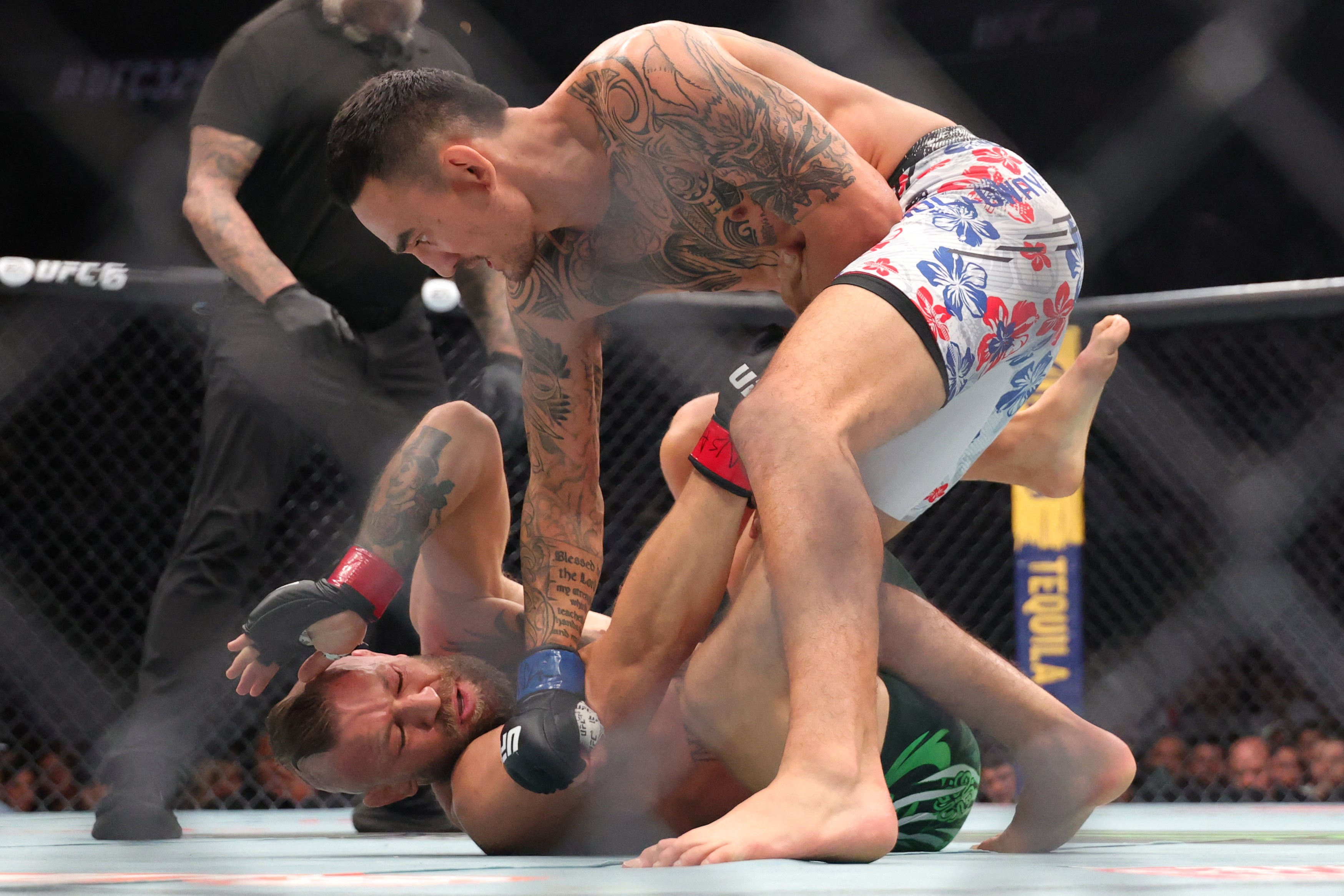
Five years after breaking his leg in Las Vegas’s T-Mobile Arena, in the first round against Dustin Poirier, McGregor was barely able to surpass the one-minute mark against Max Holloway. A blown ACL, it seems, was the cause of his sudden downfall at UFC 329 – or rather the moment that confirmed a much longer, more gradual downfall.
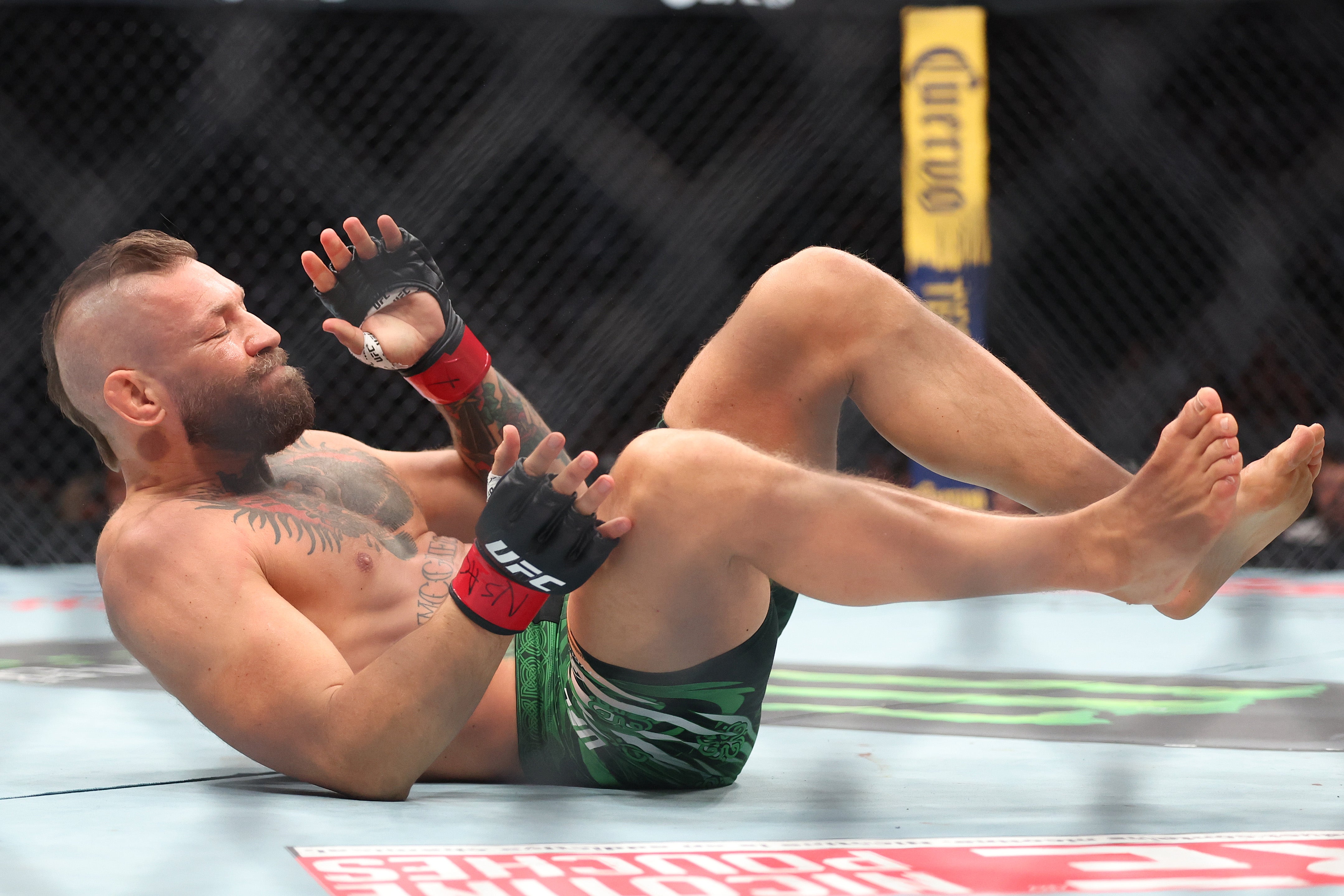
It was the other leg this time, see, injured in the first two seconds of the fight when McGregor ran, jumped, and threw a high kick at his Hawaiian foe. So, while some had pondered whether McGregor’s worst-case scenario on Saturday would be a fresh break of the same leg, there is an argument that this outcome was worse. It was certainly unforeseen.
But this is where one can feel silly, even conned. It should have been foreseeable. Perhaps McGregor’s relative inactivity since 2016 (five UFC fights in 10 years, plus one boxing match with Floyd Mayweather) has concealed a reality: that McGregor is one of those athletes who is simply, sadly for them, made of glass.
Because Saturday’s incident could be framed as an older fighter, no longer match-fit, being betrayed by his body, but on closer inspection – and with the benefit of hindsight – a different narrative emerges.
McGregor injured himself in his first fight with Holloway, in 2013. He fought through an injury to face Chad Mendes in 2015. He healed from an injury just in time to fight Eddie Alvarez in 2016. He claimed his foot looked “like a balloon” in his camp for MMA’s fiercest-ever grudge match, against Khabib Nurmagomedov in 2018. A stress fracture finally broke when he fought Poirier for the third time, in 2021. A broken toe thwarted his planned bout with Michael Chandler in 2024. And now this.
McGregor, who turns 38 on Tuesday, quickly moved to dismiss theories that he had carried a pre-existing injury into UFC 329, for what it’s worth. Various pre-fight moments – from his backstage warm-up to his walkout – were replayed in slow motion by fans and on the UFC broadcast itself, with numerous suggestions that he appeared to be on awkward footing.
Yet McGregor tweeted: “My head gasket is gone. Destroyed. I had no injury / injuries going into the fight. I was throwing kicks, planted and jumping, all throughout camp as well as backstage before the fight. This came out of nowhere. I am beyond dark here. I can only describe it as hell.
“I was so sharp and ready for this fight I cannot believe what has happened. The talk of me being off while walking in to the fight is nonsense. I was calm, ready, and confident. I am in shock at what has taken place. The devil is literally staring at me right in front of my face here. I am not engaging. I will be at church tomorrow.
“I will overcome this. I will not be deterred. I will return.”
McGregor has one fight left on his UFC contract. At that stage, the promotion often tries to negotiate a new deal, to tie a fighter down. They may not feel a need with McGregor.
They may actually let him fight out his contract and pursue big-money, crossover boxing matches elsewhere, believing that his body will betray him again, that his physical peak has passed, and that further defeats – to lesser rivals – await him.
Many voices suggested this week that no one should be buying a Conor McGregor fight again. Saturday provided another reason not to.