



Swiss glaciers experienced an unusually early disappearance of snow this summer, weeks ahead of schedule, as a European heatwave intensified ice loss across the Alps, scientists have reported.
Researchers said that the Rhone Glacier in southern Switzerland hit its “Glacier Loss Day” on 29 June.
This signifies when the winter’s accumulated snow has completely melted, and the glacier begins to shed its underlying ice.
Experts have said the heatwave, which lasted from about June 20-28, was the worst recorded in Europe, causing disruption to power generation, damaging infrastructure and overwhelming healthcare systems. The extreme heat was almost certainly driven by climate change, scientists said.
Matthias Huss, director of Glacier Monitoring Switzerland, said three months still remained this year for ice to melt that has taken decades or even centuries to build up.
“This is really a worrying situation,” he said.
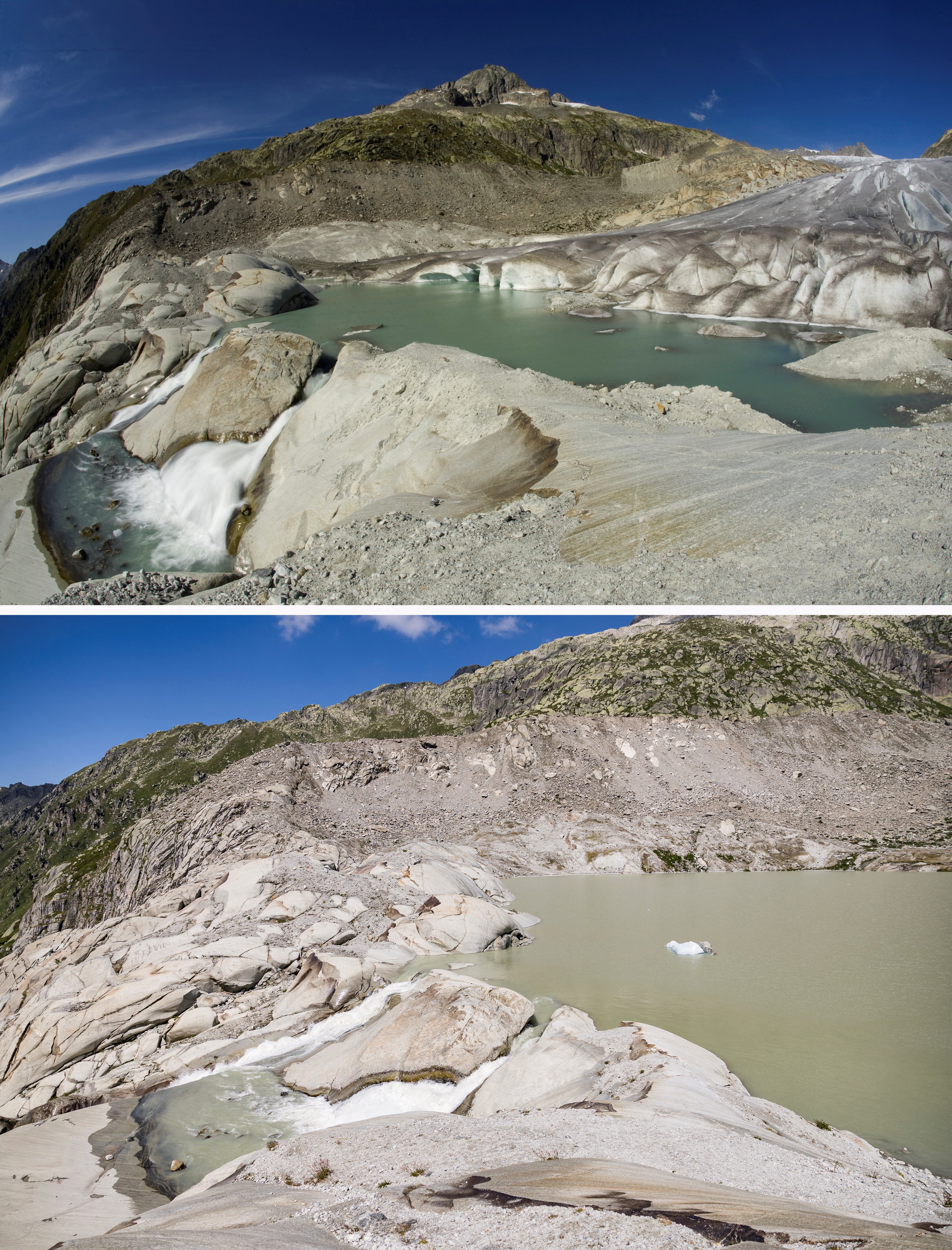
This year, two heatwaves that followed low winter snowfall helped accelerate “Glacier Loss Day” to its second-earliest date on record. In 2022, it occurred three days earlier.
During June’s heatwave, the melting water from glaciers across Switzerland could have filled an Olympic-sized swimming pool every six seconds for two weeks, Huss said.
“The glaciers are in a very bad state at this time of the year,” Huss said. “We are almost as critical as in the record-breaking year 2022.”
Huss said one monitoring site at the Rhone Glacier recorded a loss of about 1.5 metres (5 feet) of ice during two weeks of extreme heat.
Tourists visiting the glacier retreats said changes were impossible to ignore.
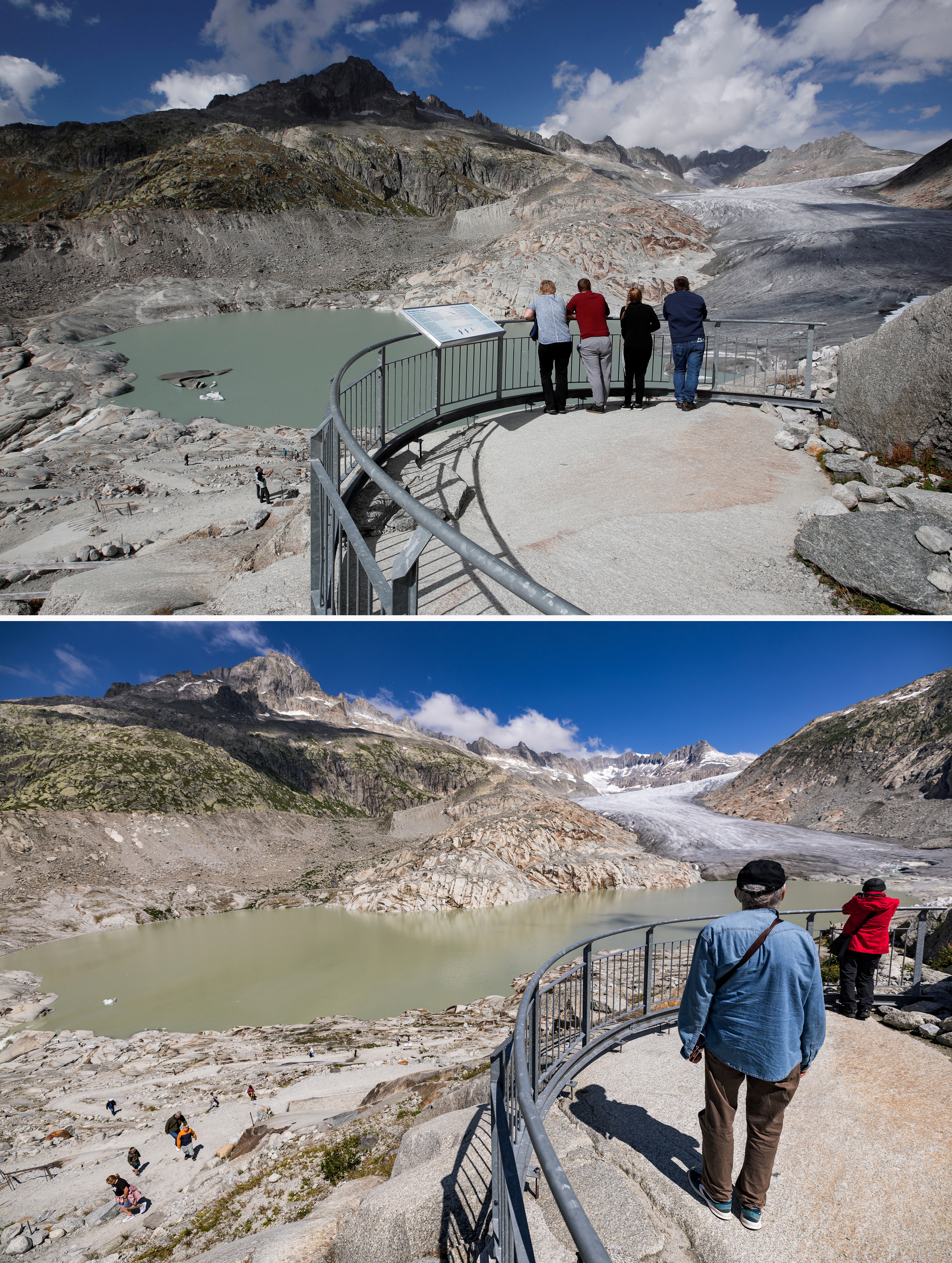
German tourist Harry Block, who has been visiting the Rhone Glacier for 50 years, became emotional at the sight of them.
“I can cry,” he said, describing how the glacier, once 80 metres high, has shrunk. “Here you see climate change. This is climate change.”
France, the Netherlands and Belgium recorded 3,700 excess deaths during the June heatwave, with authorities warning that the numbers are preliminary and could rise.
There were 2,025 excess deaths recorded in France during the heatwave, with a particular increase in deaths among people aged over 45, French Health Minister Stephanie Rist told local television on Friday.
Deaths at home rose 91% between June 22-28 compared to the previous week, while deaths in nursing homes and healthcare facilities also increased, the country’s public health authority said in a bulletin.
“Mortality will … be higher than these initial figures suggest,” the authority warned.
In Belgium, the Health Ministry said on Thursday it had registered excess mortality of about 1,200 deaths between June 18 and June 29, adding that 530 of the deaths were among people aged 85 or older. People aged under 65 accounted for 180 of the excess deaths.
“Such excess mortality during a heatwave is unprecedented in our country,” the ministry said in a statement.
Authorities in the Netherlands said the heatwave led to about 480 excess deaths, mainly among the over 80s.