



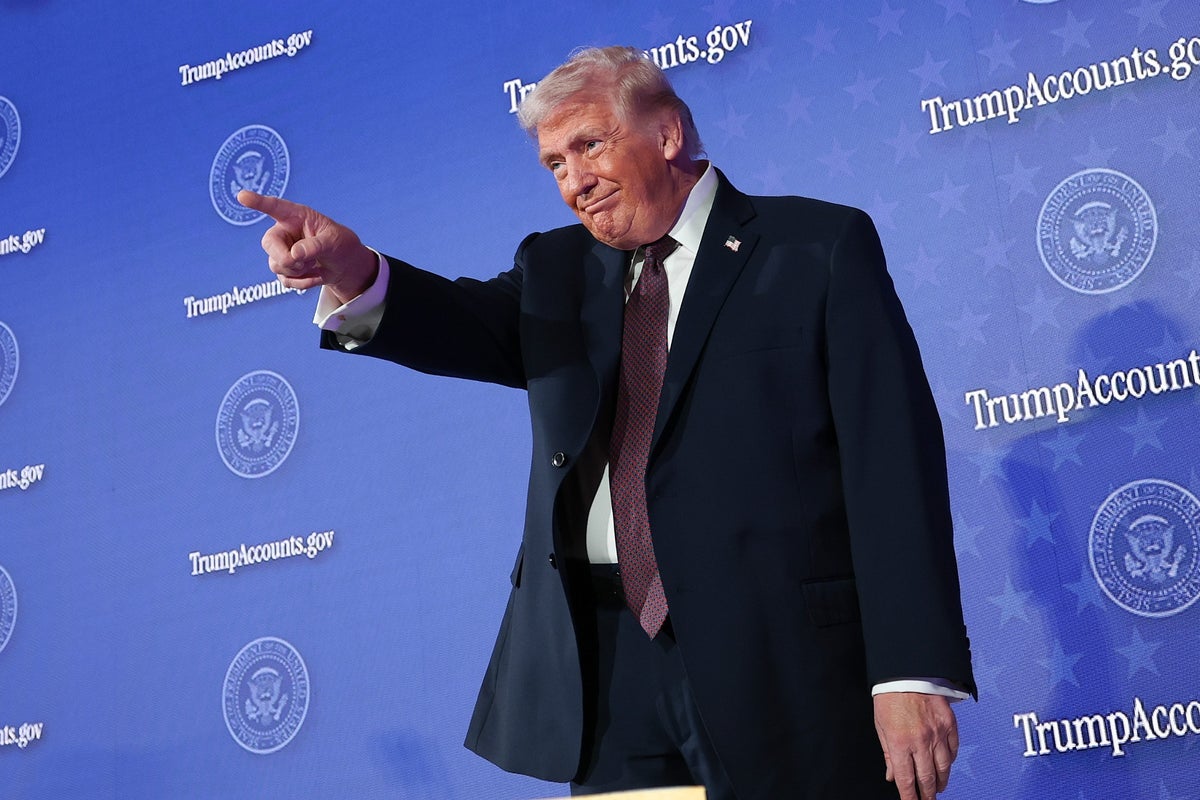
President Donald Trump’s administration is set to launch Trump Accounts on Saturday, tying the 250th anniversary of the signing of the Declaration of Independence to an effort to boost financial independence for American kids.
Parents can open investment accounts for any child born during Trump’s second term, between January 2025, and December 2028, and automatically receive $1,000 from the government. Accounts can be opened for older children as long as they don’t turn 18 before the end of the calendar year but they will not receive the $1,000.
That money, and anything else deposited by employers, philanthropies and relatives, is invested in the stock market by private firms. Children won’t be able to access the money until they turn 18, and then only for specific purposes, like paying for a home or school.
The accounts already have gotten a boost from billionaires beyond the $1,000 from the government. Michael Dell, the founder of Dell Technologies, and his wife, Susan, pledged to give $6.25 billion to the accounts of some kids who don’t qualify for the government’s $1,000. On Wednesday, Trump announced on Truth Social that Sanjay Mehrotra, CEO of Micron Technology, would give $250 million.
The donation “will help jumpstart the American Dream for these fabulous children as we celebrate America’s 250th Anniversary! This MASSIVE Investment will help MILLIONS of American children and families get a strong start in life, and give them REAL Financial Security,” wrote Trump, a Republican.
Trump Accounts launch amid widespread affordability concerns. The Federal Reserve’s preferred inflation gauge rose to a new three-year high in May as gas prices peaked during the war with Iran. Food prices have risen since Trump’s inauguration, too. Meanwhile, many Americans are bracing for changes to social safety net programs like Medicaid and the Supplemental Nutrition Assistance Program, or SNAP, which were cut under the same legislation that created Trump Accounts.
Here’s what you need to know about Trump Accounts and how to claim the money:
What is a Trump Account?
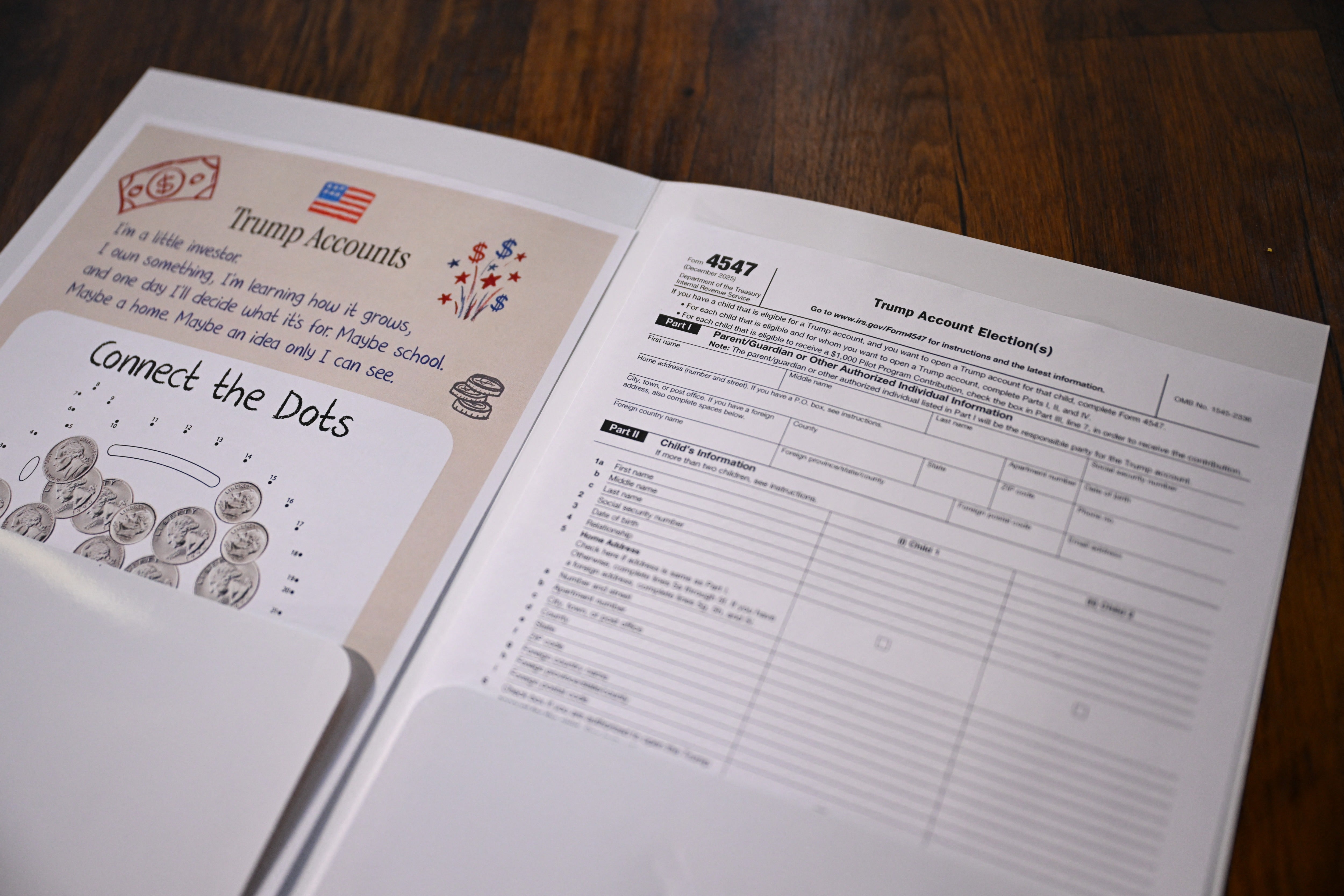
It’s a new savings tool in which money is invested in the stock market on a child’s behalf. The child can’t access the money until they turn 18 and can use it only for specific purposes, such as paying tuition, starting a business or making a down payment on a home. Families can already sign up at trumpaccounts.gov.
After a parent or guardian opens an account, the U.S. Treasury Department will contribute $1,000 for newborns. Private banks and brokerages will manage the money, which must be invested in U.S. equity index funds that track the stock market and charge the accounts no more than 0.10% in annual fees.
Parents can contribute up to $2,500 annually in pretax income, much like they do for retirement accounts. Parents’ employers, relatives, friends, local governments and philanthropic groups can also pitch in. Yearly contributions are capped at $5,000, but contributions from governments and charities don’t count toward that total.
“We’re doing something much better than giving the next generation a handout,” Trump said. “We’re giving them ownership of America’s future.”
Who gets $1,000?
As part of the initiative’s launch, parents of older children also are encouraged to open accounts, but they won’t get the $1,000 bonus. That money is reserved for babies born during the calendar years of the current Trump administration.
To qualify for the $1,000 seed money, a baby must be a U.S. citizen, have a Social Security number and be born between Jan. 1, 2025, and Dec. 31, 2028. Any parent can open an account for a qualifying child, regardless of the parent’s immigration status.
It’s important to note the child won’t be able to access the money until they turn 18, except in rare circumstances. So the money can’t help with immediate expenses. And disbursements from the accounts will be subject to taxes.
Can older kids get any bonuses for their Trump Account?
Some can, thanks to contributions from some of the country’s wealthiest entrepreneurs.
The Dells’ $6.25 billion donation will allow some children who are age 10 or under to receive $250 in seed money if their parents open an account. That money is reserved for kids who live in ZIP codes with a median family income of $150,000 or less who are too old to get the $1,000 seed money from the Treasury.
Hedge fund founder Ray Dalio and his wife, Barbara, pledged $75 million for kids under age 10 in Connecticut, where Dalio lives. That would amount to $250 for 300,000 children in qualifying ZIP codes.
Trump announced in January that investor Brad Gerstner would donate $250 to Trump Accounts for every child under age 5 in Indiana.
Several major companies also plan to add Trump Account contributions to their benefits packages, including Uber, Intel, IBM, Nvidia and Steak ‘n Shake. The administration has encouraged such donations through what U.S. Treasury Secretary Scott Bessent calls the “50 State Challenge.”
What’s the idea behind the accounts?
Backers of the accounts say they want to introduce more people to the stock market and give even children born into poverty a chance to benefit from it. Supporters also say the accounts bolster capitalism when openly socialist candidates are growing more popular.
“The answer to more socialism is more capitalism,” Gerstner said in January at a White House event. “This makes every child in America a capitalist from birth.”
About 58% of U.S. households held stocks or bonds in 2022, according to the U.S. Securities and Exchange Commission, though the wealthiest 1% owned almost half the value of stocks in that year.
Before Trump created the accounts, California, Connecticut and the District of Columbia were piloting baby bonds programs, which are similar to Trump Accounts in some ways. Several other states, including Maryland, are weighing programs.
But those programs are targeted to youths growing up in poverty or foster care, plus children who lost a parent to COVID-19. Wealthier children don’t benefit from them. They’re also managed by the state, not private investment firms.
What do critics say?
Critics point out the accounts do little to help children in their early years, when they’re most vulnerable and most likely to be in poverty. The accounts, they say, also fail to offset cuts the Trump administration and congressional Republicans have made to other programs that benefit young people and the adults in their lives, including food assistance and Medicaid. Republicans created the accounts in the Trump tax and spending cuts bill that reduced spending for some of those programs.
And even with the contribution from the government, critics say the Trump Accounts will widen the wealth gap. Affluent families that can afford to make the maximum pretax contribution to the accounts will realize the greatest benefits. Poor families that can’t afford to set aside money for the accounts will benefit the least. Assuming a 7% annual return, the $1,000 in seed money would grow to roughly $3,570 over 18 years.

