

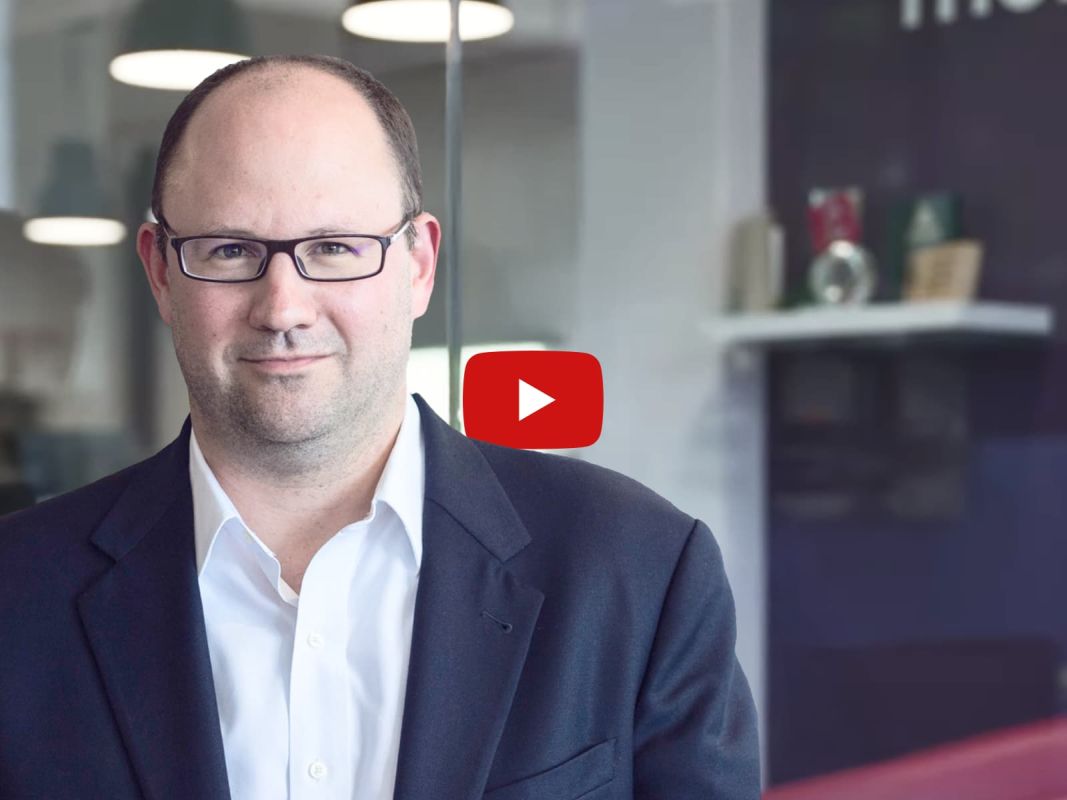
In the latest monthly update – recorded on June 29th – our Chief Investment Officer, Richard Flax, explores how financial markets responded to geopolitical developments and monetary policy decisions. You can also find a written version of his commentary below.
June was a pretty busy month, and there’s quite a lot to discuss. Overall, it was a fairly stable month for financial markets, with global equities and global government bonds virtually flat through June 26th. Commodities have been relatively weaker, driven by lower prices for gold and oil.
In terms of geopolitics, we saw some signs of de-escalation in the Middle East with a Memorandum of Understanding between the US and Iran. That de-escalation has been getting tested over the past few days, but so far, it’s been enough to drive oil prices from close to US$95 per barrel at the start of June to around US$73 at the end of the month. Investors are betting that we’ll see increased supply of oil through the Strait of Hormuz, although it’ll take some time for that to happen. If the agreement holds, and petrol prices fall, that should provide some welcome relief for consumers over the coming months.
On the policy side, we saw some slight differences in approach. In the US, we got a chance to hear from the new head of the US central bank Kevin Warsh. In general, the message was quite conservative. Warsh focused on the fact that US inflation was running above target and reiterated his focus on keeping inflation low. The US Federal Reserve kept its policy interest rate unchanged, but indicated that they expected to raise rates at some point before the end of the year.
In Europe, we saw the European Central Bank (ECB) raise rates for the first time since September 2023. The ECB raised its estimate for inflation for 2026, on the back of higher oil prices and chose to act. The Bank of England took a more lenient view. Policy-makers there left rates unchanged, although two of the nine voters did favour a hike, even though they highlighted the potential impact of higher oil prices. With oil prices coming down, and growth still pretty anemic in the UK and Europe, we’re not expecting to see many rate increases there. The ECB rate hike might even be the only one we see in the Eurozone this year.
Finally, on the equity side, we saw tech companies raise a lot of capital from investors during June. The SpaceX IPO was a high point – the largest IPO in history (US$75 billion) at what we thought was quite an optimistic valuation. Shortly afterwards SpaceX also raised another US$25 billion of debt. Also in June, we saw Alphabet (the owner of Google) raise US$85 billion from equity investors.
Tech companies continue to invest aggressively on Artifical Intelligence (AI), and that’s something that has driven not just the tech sector but the global economy overall. We think that AI can have a profound impact on the global economy and society over the coming years, but expectations are already high. We’ve seen strong performance and rising volatility in some tech-heavy equity markets, particularly Korea. For now, we’ve kept our positioning unchanged, with a slight tilt towards technology across many portfolios, but it’s something we’ll continue to monitor closely.
*As with all investing, financial instruments involve inherent risks, including loss of capital, market fluctuations and liquidity risk. Past performance is no guarantee of future results. It is important to consider your risk tolerance and investment objectives before proceeding.