

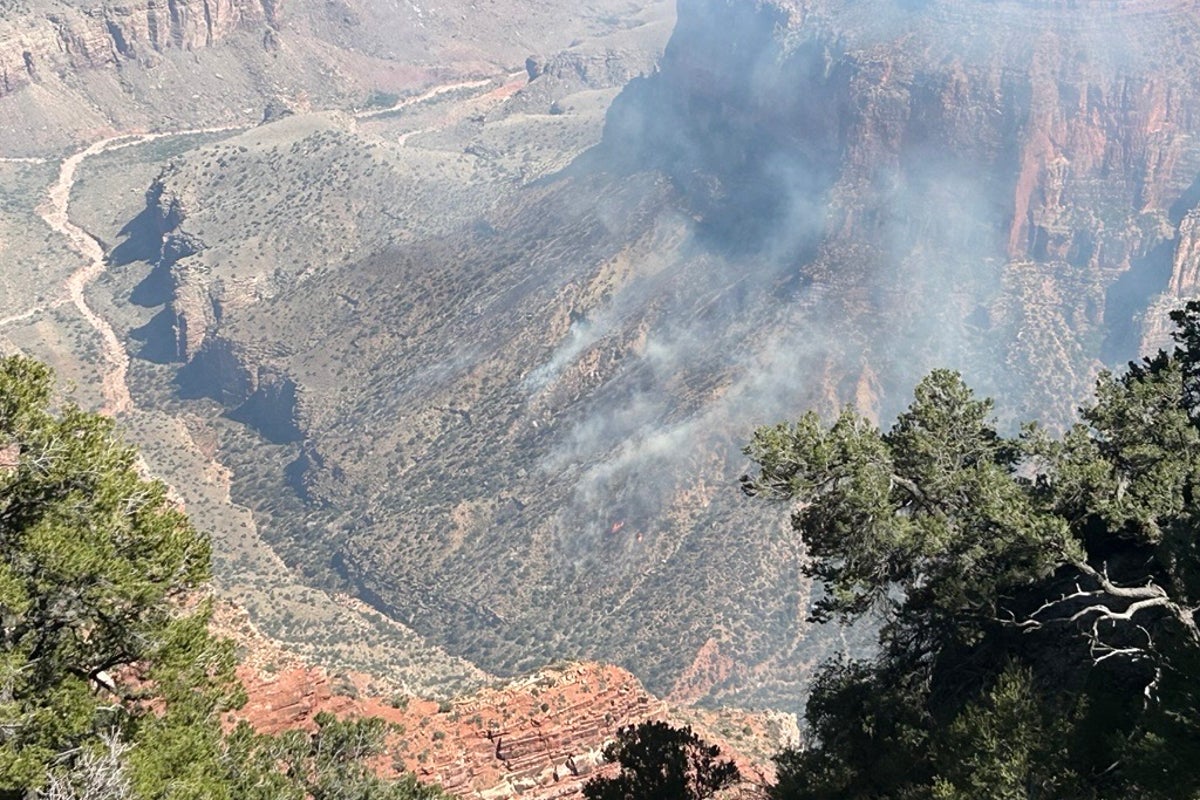
A wildfire caused by lightning is raging through Grand Canyon National Park, exactly a year after a megafire burned nearly 150,000 acres.
The Cliff Spring Fire began below the North Rim of the park Tuesday and was burning through grass, brush, pinyon pine and juniper, the National Park Service said.
The fire was zero percent contained as of Tuesday night, and had burned through an estimated 171 acres, park officials said. Officials had not shared an update as of Wednesday afternoon.
There are currently no trail or area closures as a result of the fire, but the park has temporarily stopped issuing permits for trips in the Walhalla Plateau area as firefighters battle the nearby blaze.
“Resources assigned include one U.S. Wildland Fire Service engine, one cooperating engine and a USWFS helicopter. Firefighters are currently using a direct extinguishment strategy through helicopter bucket drops,” the park officials said.
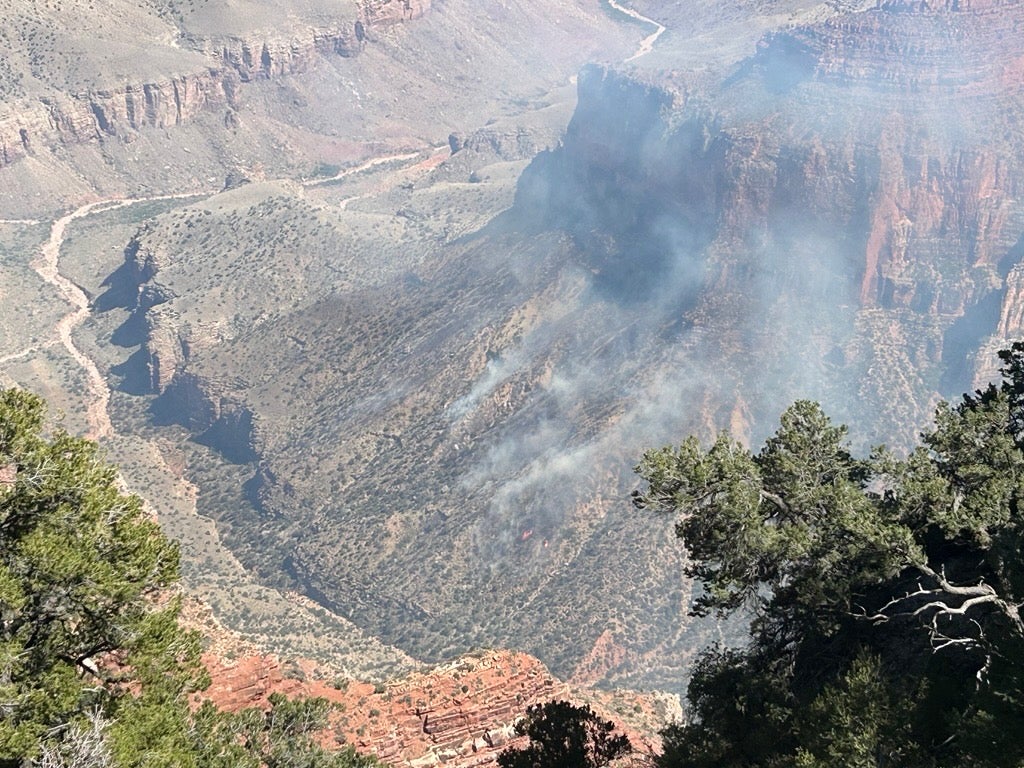
Crews are working mainly from above because the fire is located in steep, inaccessible terrain to limit fire spread while keeping personnel safe.
“Visitors may see smoke in the area as firefighters continue suppression efforts. Fire activity, weather and operational needs can change rapidly, and visitors should be prepared for changing conditions,” the parks leader warned.
The Independent has contacted the National Parks Service for more information.
The Grand Canyon North Rim reopened on May 15 after remaining closed for months following the devastating Dragon Bravo Fire, an intense blaze that ravaged 149,399 acres from July 4, 2025, through September 29, 2025.

About a week after lightning sparked the Dragon Bravo Fire, weather conditions caused the blaze to explode into thousands of acres. Within a week, the fire spanned over 5,000 acres and destroyed dozens of buildings, including the iconic century-old Grand Canyon Lodge.
Earlier this year, the Secretary of the Interior Doug Burgum, who oversees the parks service, said that mismanagement allowed the Dragon Bravo Fire to burn out of control.
“In retrospect an approach of suppression versus containment might have saved hundreds of millions of dollars of historic properties,” Burgum said in April, according to KJZZ.
It took three months for the fire to be contained. In that time, it grew to become the seventh-largest wildfire in Arizona history, and the largest wildfire in the U.S. last year.