

UK TimesUK Times
  • Home
  • News
  • TV & Showbiz
  • Money
  • Health
  • Science
  • Sports
  • Travel
  • More
    • Web Stories
    • Trending
    • Press Release
What's Hot
Jose Mourinho asks Real Madrid for two more signings – but £120m Enzo Fernandez transfer ‘seems far from financially feasible’

Jose Mourinho asks Real Madrid for two more signings – but £120m Enzo Fernandez transfer ‘seems far from financially feasible’

25 June 2026

Banned swimmer’s daughters to realise Commonwealth Games dream | UK News

25 June 2026
Why leaving a dog in a hot car for one minute is too long – and what to do if you spot one – UK Times

Why leaving a dog in a hot car for one minute is too long – and what to do if you spot one – UK Times

25 June 2026
Facebook X (Twitter) Instagram
UK TimesUK Times
Subscribe
  • Home
  • News
  • TV & Showbiz
  • Money
  • Health
  • Science
  • Sports
  • Travel
  • More
    • Web Stories
    • Trending
    • Press Release
UK TimesUK Times
Home » What is an earthquake ‘doublet’ and why is Venezuela prone to deadly tremors? – UK Times
News

What is an earthquake ‘doublet’ and why is Venezuela prone to deadly tremors? – UK Times

By uk-times.com25 June 2026No Comments4 Mins Read
Facebook Twitter LinkedIn Telegram Pinterest Tumblr Reddit WhatsApp Email
What is an earthquake ‘doublet’ and why is Venezuela prone to deadly tremors? – UK Times
Share
Facebook Twitter LinkedIn Pinterest Email

The latest headlines from our reporters across the US sent straight to your inbox each weekday

Your briefing on the latest headlines from across the US

Your briefing on the latest headlines from across the US

Evening Headlines

On Wednesday evening just after 6pm local time, two earthquakes violently shook northern Venezuela.

The first one struck near San Felipe, the capital of the state of Yaracuy. Just 39 seconds later, another quake struck near the town of Yumare, within 5 to 10km from the first one.

Powerful ground shaking was felt across the region, including in Venezuela’s capital Caracas about 150km east of the earthquake epicentres. Buildings collapsed, and authorities report the casualty toll may be in the thousands.

In addition to strong shaking, ground failure including landslides and liquefaction are anticipated to have occurred throughout the region. The earthquakes happened in a mountainous region where slope failures are common. And the type of sediment beneath Caracas amplifies seismic waves and enhances earthquake damage.

According to the US Geological Survey (USGS), the earthquakes were a “doublet”: a magnitude 7.2 foreshock followed 39 seconds later by a mainshock, this one with a magnitude of 7.5.
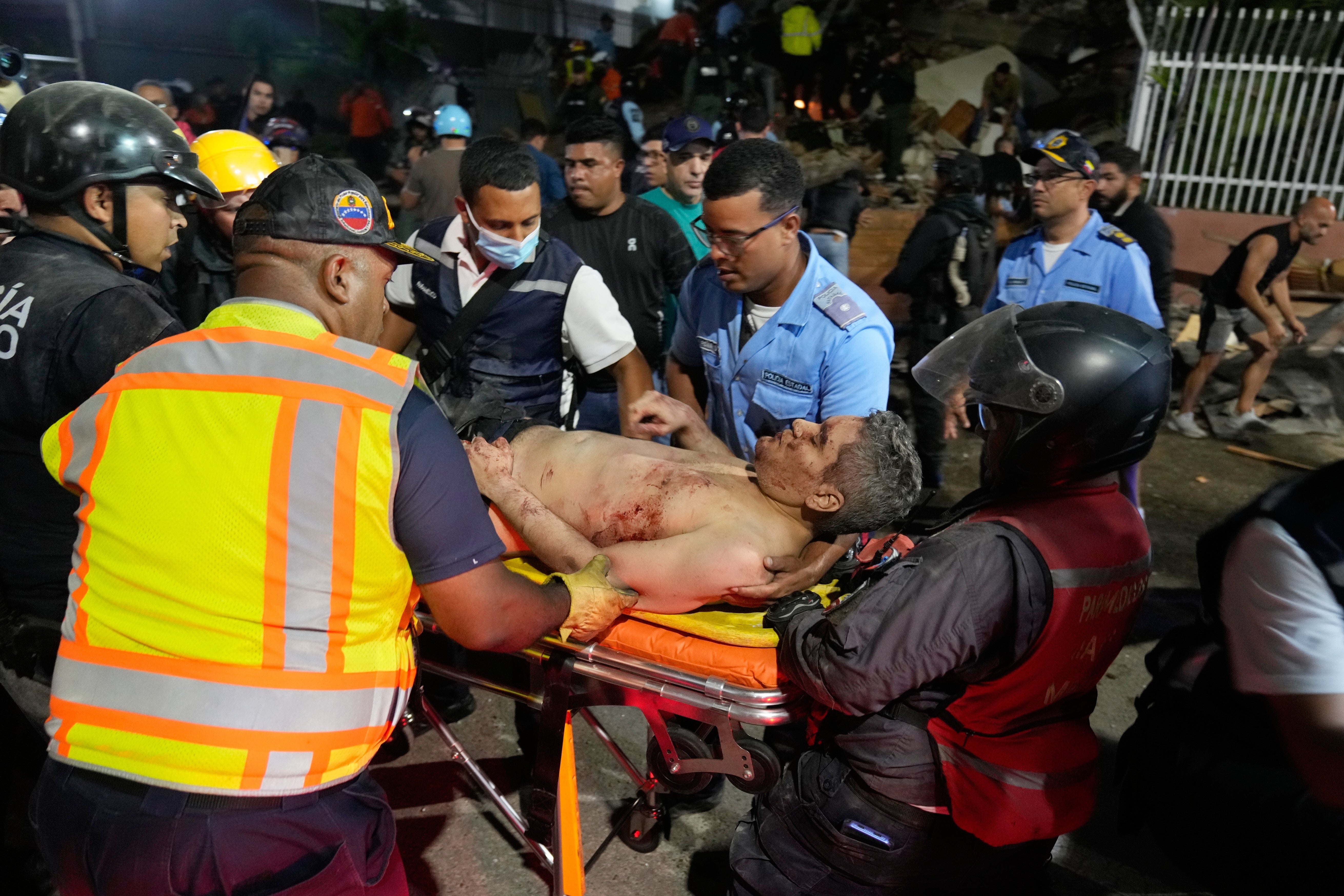
Authorities report the casualty toll may be in the thousands
Authorities report the casualty toll may be in the thousands (AP)

What is an earthquake ‘doublet’?

An earthquake doublet is a pair of earthquakes that happen within a short time and distance from each other.

Unlike a typical earthquake sequence, where a larger earthquake is followed by significantly smaller aftershocks, doublets are earthquakes of similar magnitude that are causally linked, but seismologically distinct. This means the seismic waves from each quake are separated by a gap in time, and/or originate from distinct sources.

Although the Venezuelan earthquake epicentres were within mere kilometres of each other, seismic wave information from the USGS suggests they likely originated from different faults with different rupture styles.

This is consistent with previously developed maps of active faults in this region. These show large strike-slip faults, where rocks slide past each other in an east-west direction, linked with arrays of smaller faults in various orientations.

It’s likely the first earthquake triggered the second one. This could have happened because Earth’s crust displacement in the first earthquake fault increased stress on the second earthquake’s source fault. Additionally, the passage of seismic waves from the first earthquake could have rattled nearby faults already prone to a rupture, causing them to fail.

Earthquake doublets are uncommon, but they do happen. In 2023, an earthquake doublet struck Turkey and Syria, measuring at magnitudes of 7.8 and 7.7. These happened just 95 kilometres and nine hours apart, affecting 14 million people and causing widespread damage.

In 1988, a “triplet” – a series of three earthquakes just half an hour apart from each other – occurred in Tennant Creek in Australia.
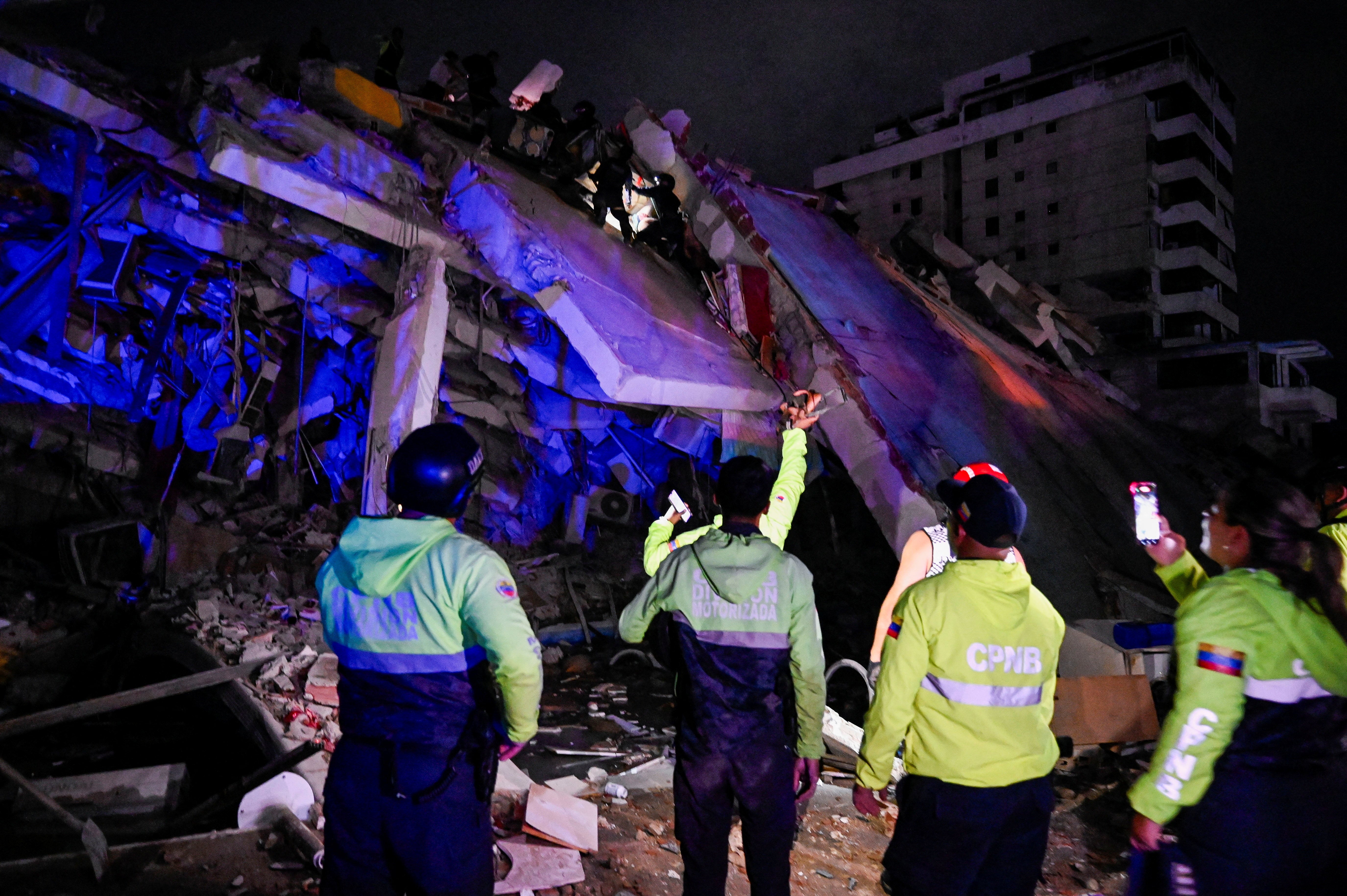
According to the US Geological Survey (USGS), the earthquakes were a “doublet”: a magnitude 7.2 foreshock followed 39 seconds later by a mainshock, this one with a magnitude of 7.5
According to the US Geological Survey (USGS), the earthquakes were a “doublet”: a magnitude 7.2 foreshock followed 39 seconds later by a mainshock, this one with a magnitude of 7.5 (Reuters)

Why is Venezuela so prone to earthquakes?

The doublets in Venezuela occurred along the diffuse onshore boundary between the Caribbean and South American tectonic plates.

In northern Venezuela, these plates slide past each other at a rate of about 20mm per year as the Caribbean Plate moves east relative to the South American Plate. This produces large strike-slip faults, including the Boconó, San Sebastián, and El Pilar fault systems.

This active plate boundary generates frequent shallow earthquakes, some of which can be damaging.

The region has experienced several significant earthquakes in the past. These include the magnitude 7.7 Caracas earthquake in 1900 and a magnitude 6.5 earthquake in 1967.

West of the recent earthquake, the plate boundary becomes broader and more complex, and is prone to widespread seismic activity, with many shallow to intermediate-depth earthquakes.

Share. Facebook Twitter Pinterest LinkedIn Tumblr Telegram Email

Related News

Banned swimmer’s daughters to realise Commonwealth Games dream | UK News

25 June 2026
Why leaving a dog in a hot car for one minute is too long – and what to do if you spot one – UK Times

Why leaving a dog in a hot car for one minute is too long – and what to do if you spot one – UK Times

25 June 2026

M5 northbound within J18 before M49 exit | Northbound | Road Works

25 June 2026

M20 eastbound between J1 and J2 | Eastbound | RoadOrCarriagewayOrLaneManagement

25 June 2026
Wigan cabbie says ‘crazy’ policy will ‘put me out of work’ | Manchester News

Wigan cabbie says ‘crazy’ policy will ‘put me out of work’ | Manchester News

25 June 2026

Record broken in Wales for the UK’s warmest night amid red weather warning | UK News

25 June 2026
Top News
Jose Mourinho asks Real Madrid for two more signings – but £120m Enzo Fernandez transfer ‘seems far from financially feasible’

Jose Mourinho asks Real Madrid for two more signings – but £120m Enzo Fernandez transfer ‘seems far from financially feasible’

25 June 2026

Banned swimmer’s daughters to realise Commonwealth Games dream | UK News

25 June 2026
Why leaving a dog in a hot car for one minute is too long – and what to do if you spot one – UK Times

Why leaving a dog in a hot car for one minute is too long – and what to do if you spot one – UK Times

25 June 2026

Subscribe to Updates

Get the latest UK news and updates directly to your inbox.

Recent Posts

  • Jose Mourinho asks Real Madrid for two more signings – but £120m Enzo Fernandez transfer ‘seems far from financially feasible’
  • Banned swimmer’s daughters to realise Commonwealth Games dream | UK News
  • Why leaving a dog in a hot car for one minute is too long – and what to do if you spot one – UK Times
  • M5 northbound within J18 before M49 exit | Northbound | Road Works
  • Alison Kilburn appointed Joint Head of the Government Economic Service

Recent Comments

No comments to show.
© 2026 UK Times. All Rights Reserved.
  • Privacy Policy
  • Terms of use
  • Advertise
  • Contact Us

Type above and press Enter to search. Press Esc to cancel.

Go to mobile version