

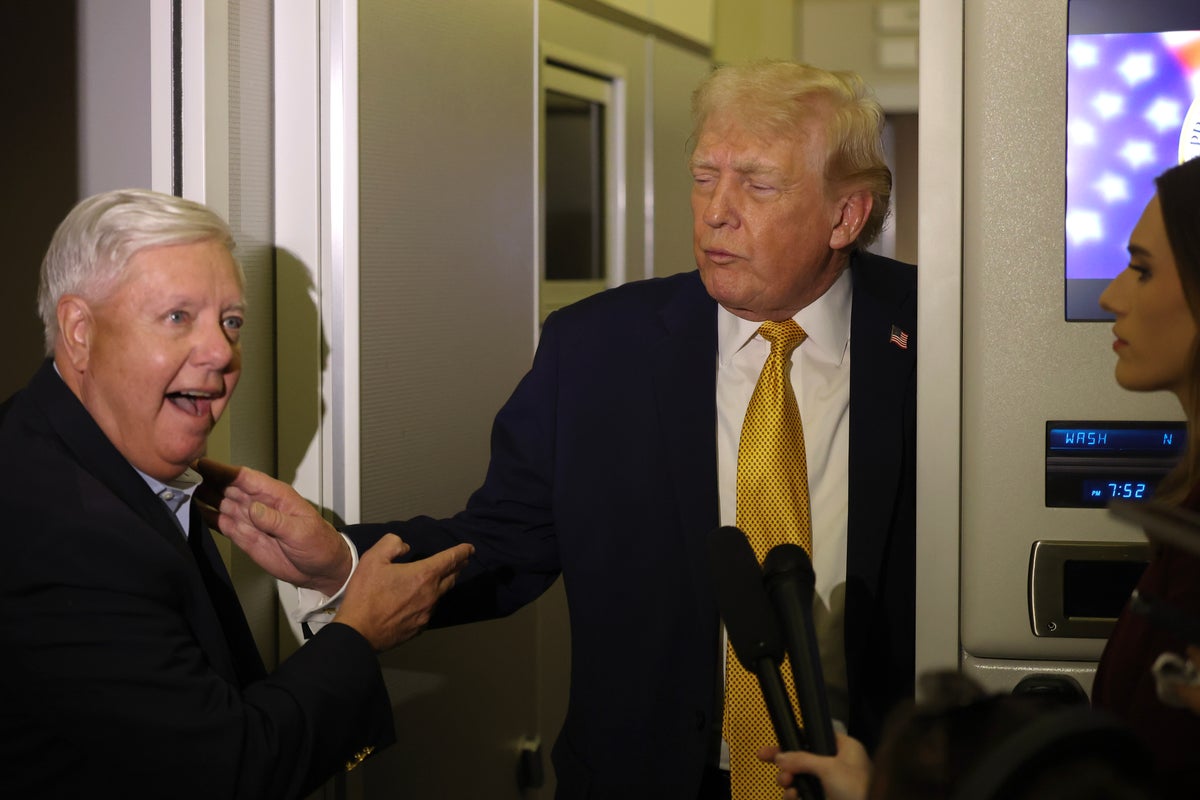
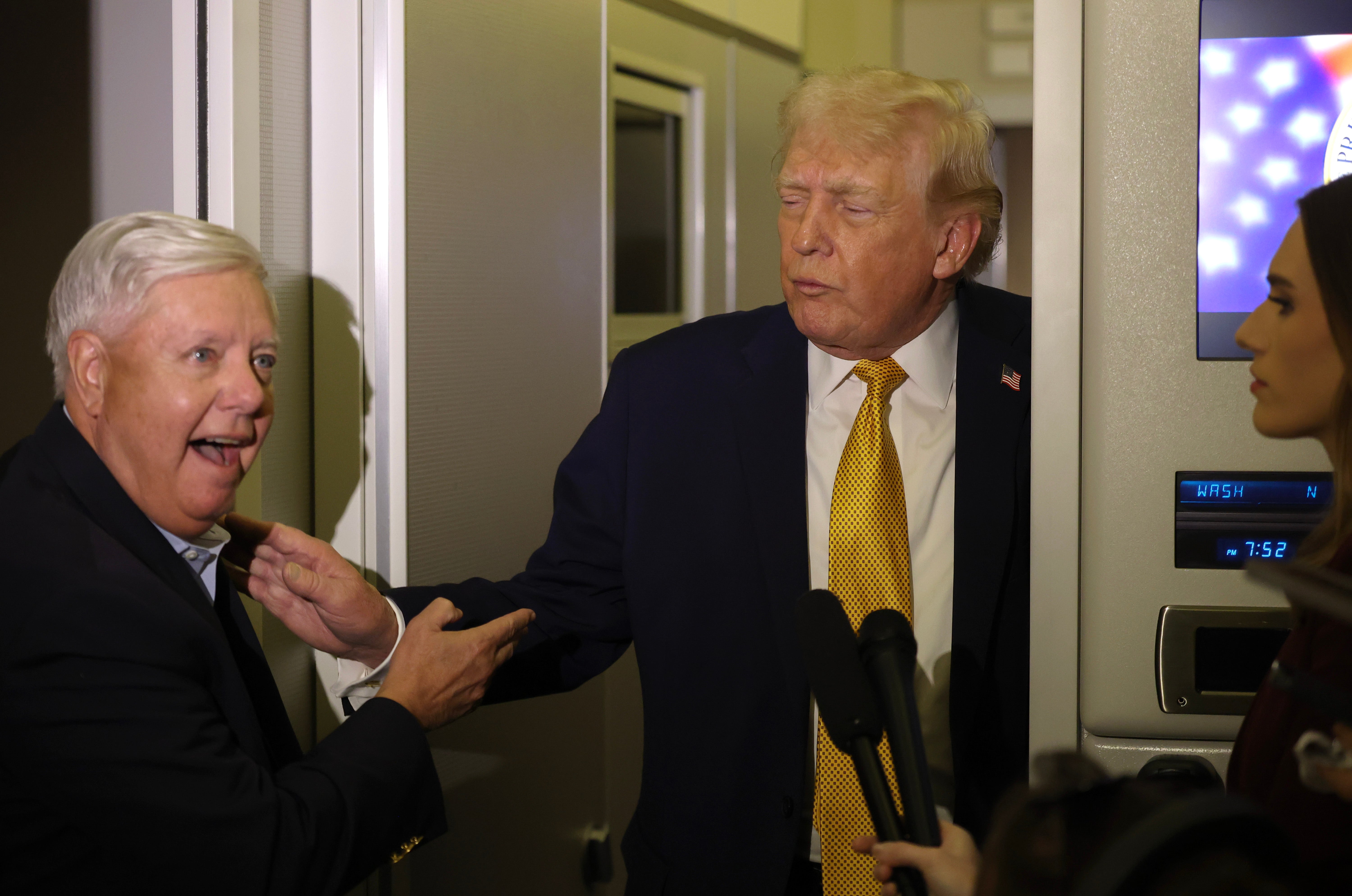
Sen. Lindsey Graham is backing away from President Donald Trump on a key issue dividing Capitol Hill.
The South Carolina senator is one of the president’s closest allies in the Senate, where he has relied on Trump’s endorsement to win re-election and charted as close of a course to MAGA as one could after strongly opposing the president’s initial 2016 campaign and breaking with him in the wake of the January 6 attack.
But the president’s relationship with the Senate Republican caucus has deteriorated in recent weeks, spurred on by his twin endorsements against sitting Republican incumbents who would go on to lose their primary contests and further complicate the Republican Party’s path to holding the Senate in the midterms.
The president has generally made life miserable for Senate Republicans: He has waged war against the chair of the independent Federal Reserve, demanded funding for deeply unpopular pet projects as part of key legislation, and leaned on Senate gadflies like Mike Lee to push leadership into supporting the elimination of the filibuster.
Graham spoke Sunday on CBS’s Face the Nation, and made it clear that Trump’s steamrolling of the Senate GOP was coming to an end as he called on Trump publicly to drop the nomination of his key ally, Bill Pulte, to the position of director of national intelligence.
Graham says he wants Jay Clayton, a top federal prosecutor in Manhattan, for the job.
“I think what we had in place should happen. [Jay] Clayton should be the new DNI,” Graham said on Sunday, sidestepping a question about whether he would support Pulte’s nomination.
Blaming Trump for “getting mad” and pulling Clayton’s nomination over Democrats’ refusal to reauthorize the Foreign Intelligence Surveillance Act (FISA), Graham urged the president to back down and allow Clayton to take the position with bipartisan support.
Graham went on to say that Democrats were “playing with fire” by refusing to reauthorize FISA while Pulte would serve as acting DNI. But Trump himself has threatened to block the law from being reauthorized without Senate passage of voter ID legislation, playing the same game Graham accuses Democrats of taking part in.
He did not go as far as defending Pulte’s credentials; there are none.
Pulte has no background in the intelligence community and is only notable for his service at the Federal Housing Finance Agency, where he used the office to try and provoke prosecutions of Trump’s enemies for mortage fraud.
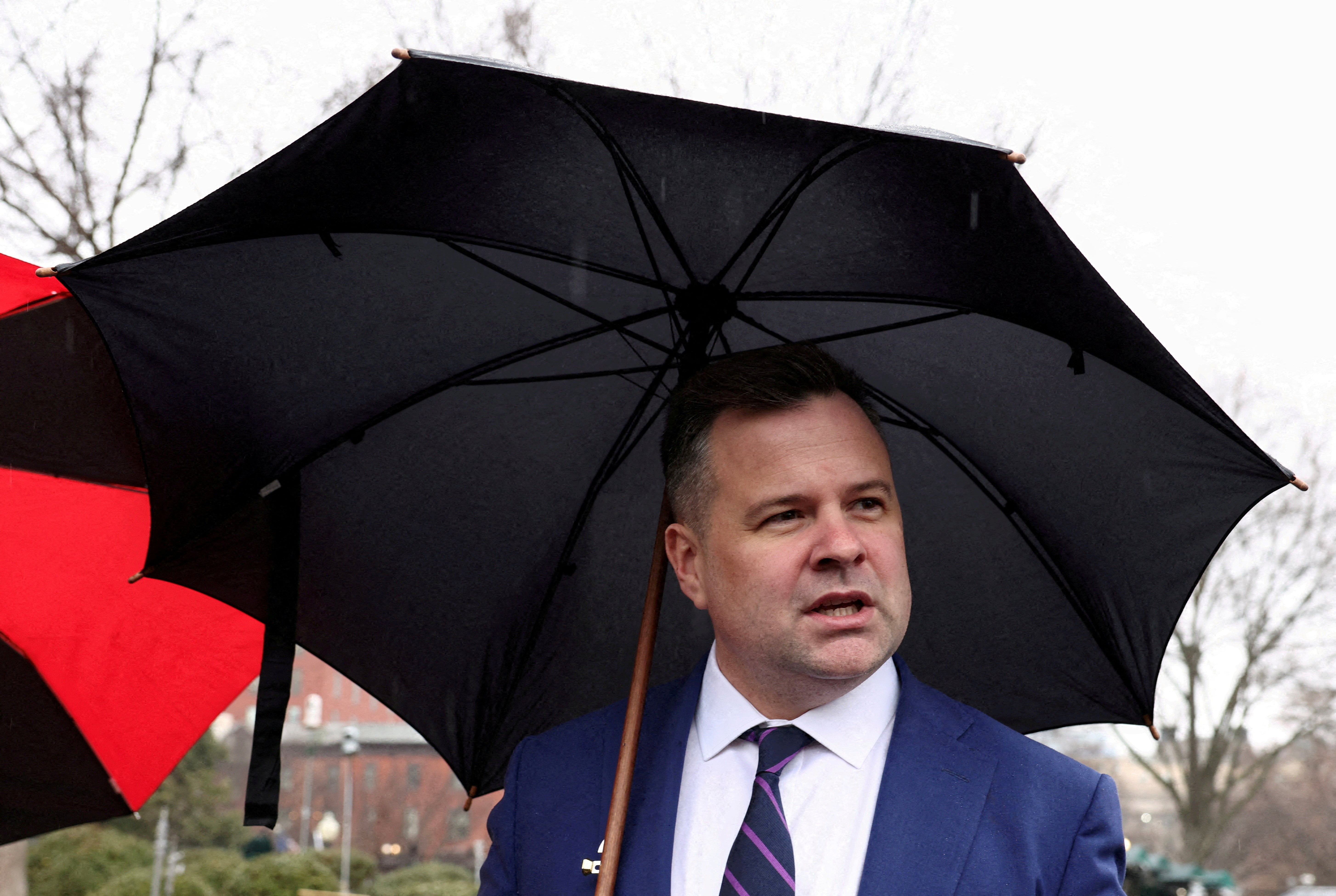
Pulte’s nomination torpedoed the otherswise bipartisan path to reauthorizing FISA at a time when the U.S. is seeing elevated levels of foreign tourism as millions stream into stadiums around the country to witness World Cup championship matches taking place in numerous cities.
Republicans and Democrats on the intelligence committees have argued for weeks that FISA’s reauthorization is of extra importance while the World Cup is ongoing, even as Trump administration officials like Homeland Security Secretary Markwayne Mullin have stated that there are no known specific threats against the World Cup.
Clayton was picked by the president to succeed Pulte earlier this month as the Senate faced a key deadline to reauthorize the FISA legislation. But he reversed course and told Clayton not to show up to the beginning of his confirmation hearings on Capitol Hill, forcing senators to cancel Clayton’s testimony, and tacked on another poison pill to the situation by writing on Truth Social that he’d veto FISA reauthorization legislation if it did not also include the Save America Act, a piece of voter ID legislation opposed by every Democrat in the chamber.
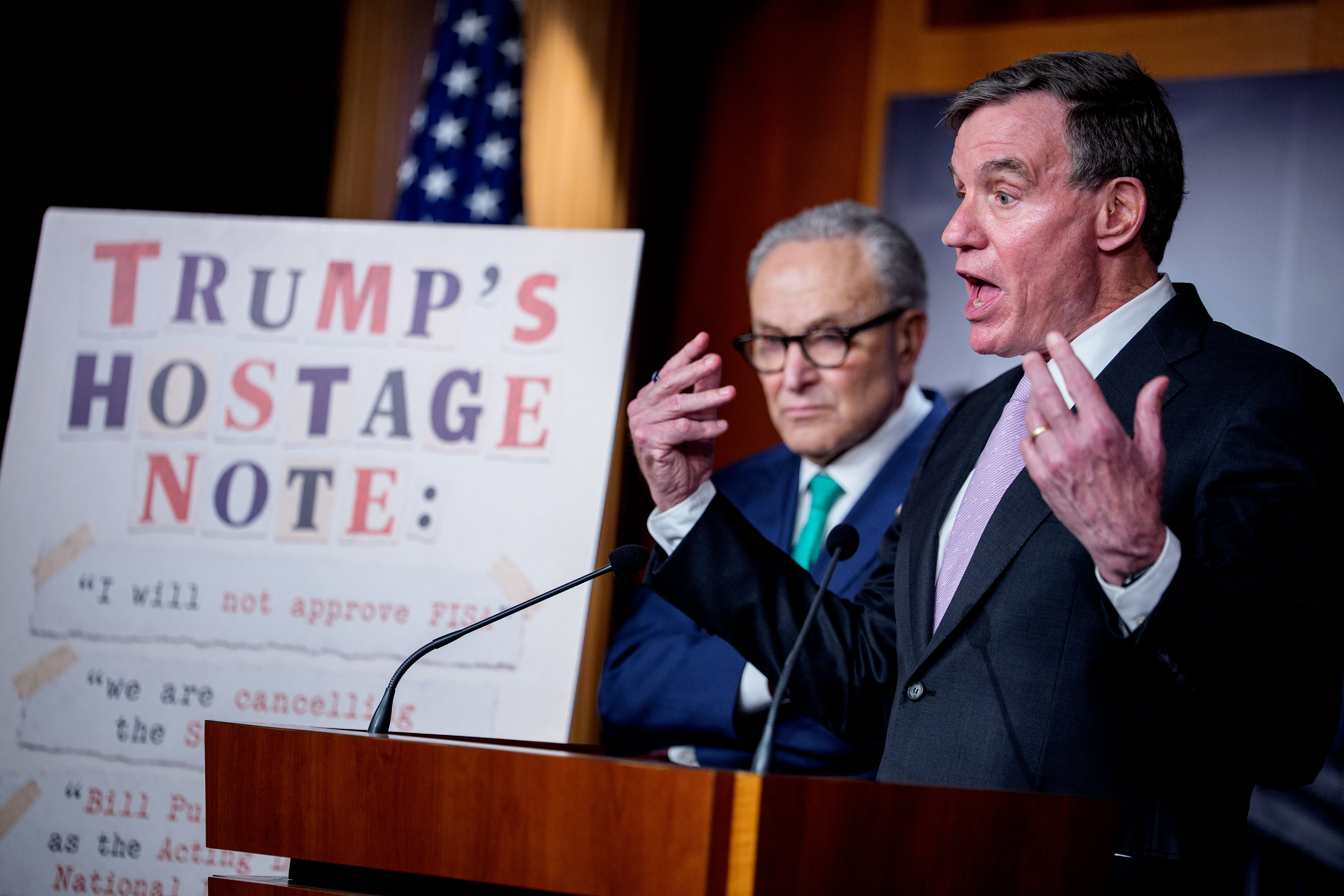
Trump has made voter ID one of his top legislative priorities, despite being well short of the 60 votes it needs to pass the Senate. He has pressured Senate Majority Leader John Thune to take several steps that would possibly hasten its passage, such as firing the Senate parliamentarian or eliminating the filibuster, but Thune has repeatedly rebuffed his efforts.
Senate Republicans have also revolted after Trump’s unveiling of the terms of his ceasefire extension with Iran, which some conservatives have derided as unacceptable and a defeat for the Trump administration.
He also recently saw Republicans in the Senate shoot down plans to fund a $1.776 billion “slush fund” aimed at rewarding January 6 rioters and others “targeted” by the Justice Department during the Biden years.