

At first, it feels thrillingly new: a car pulls up without a driver and with a twirling display on its roof, inviting you to step in. Next, it feels vaguely haunted, when the car starts driving itself and the steering wheel spins around on its own. Then it feels outright terrifying, as your car heads towards a junction behind a waiting lorry, and you have visions that maybe this time it won’t see it, won’t stop, and you’ll end up as a cautionary tale.
But, quietly – as you are driven, by nobody, across the city’s streets, and your fears don’t come true – you realise: maybe this is good after all. Maybe this future isn’t quite so dystopian after all, even if it’s easy to think of it that way.
This week, Waymo announced that it was recalling thousands of its self-driving taxis, after it became clear that a software issue meant that they would drive into construction zones on highways. It highlights a problem, and not only the obvious one that it’s not good for anyone if your car drives straight into roadworks – it’s also a reminder that a small software bug could be enough to put your life in danger, and there’s nobody to shout at if your car seems to be careening straight into cones.
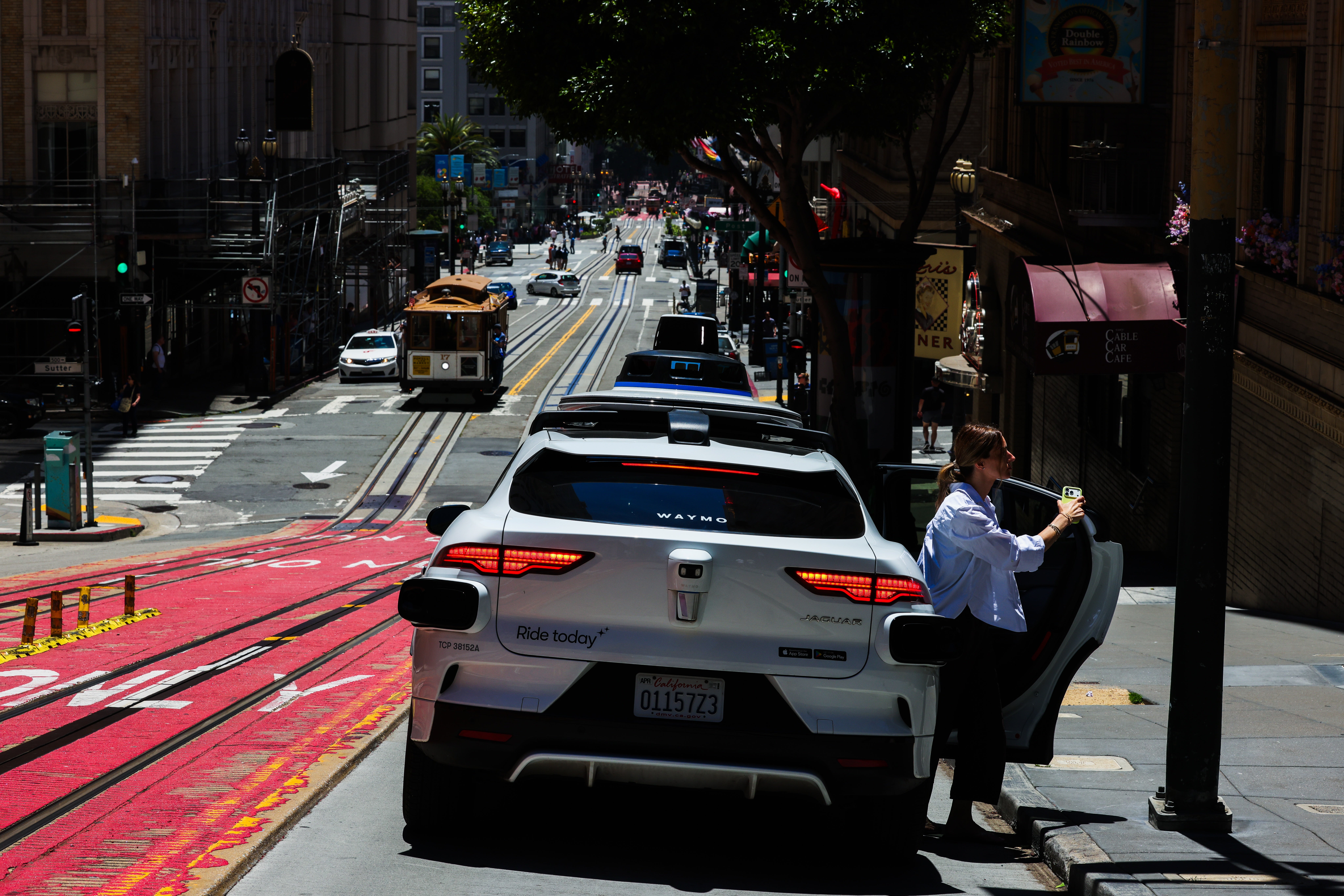
Waymo has already been testing its cars on London’s streets – with people behind the wheel, for now – and they will start driving themselves around soon. It’s not clear how it will go, and whether they will be able to deal with the messy street lay-outs and prevalent pedestrians of the UK. Early indications suggest that it might not go so well: on one East London street, for instance, residents are regularly woken up by the cars repeatedly going down a cul-de-sac and having to reverse back out, which they do by letting out a loud siren that wakes up residents.
On a recent trip to Silicon Valley, where Waymo’s self-driving cars are already available, I was able to finally see what it’s like to be driven by nobody. But that same trip was a reminder of another concern about the cars – that they are maybe the most obvious example of robots taking our jobs, and perhaps a sign of what is to come for everyone else.
There is something both distasteful and telling in the image of tech workers automating away one of the few places that they have to confront the real people doing the service jobs they rely on. The Waymos whizzing around San Francisco are high-speed symbols of the threat and promise that the tech world is constantly making to the rest of us: one day, maybe today, we won’t need you anymore.
But Uber drivers, in my experience, were mostly relaxed about becoming obsolete. On the same trip, I also took cars driven by humans, one of whom was soothingly zen about the threat: there is very little he can do about it, he said, and if people choose them then they choose them. (For now, human Ubers are cheaper than their non-human competitors, so that choice is complicated for at least two reasons.)
Anyway, he was less interested in speaking as an Uber driver than as a Ghanaian. We had a chat about his team’s upcoming fixture against England in the World Cup, and how Trump’s immigration crackdown had made him feel disillusioned about the tournament, a charming experience that Waymo will presumably never be able to replicate.
It’s easy to be worried about Waymos, for all these reasons – danger, lack of accountability, confusion about messy streets and the human connection that can be found on many taxi journeys – and more. But it turns out that is much less easy when you’ve taken a journey in one.
Summoning a Waymo is largely the same as calling an Uber. You open the app, choose your destination, get a car allocated to you and it turns up. The cars have a display mounted on their roof, which shows your initials, and you press a button to start the journey, which makes the cars handles pop out and let you get in.
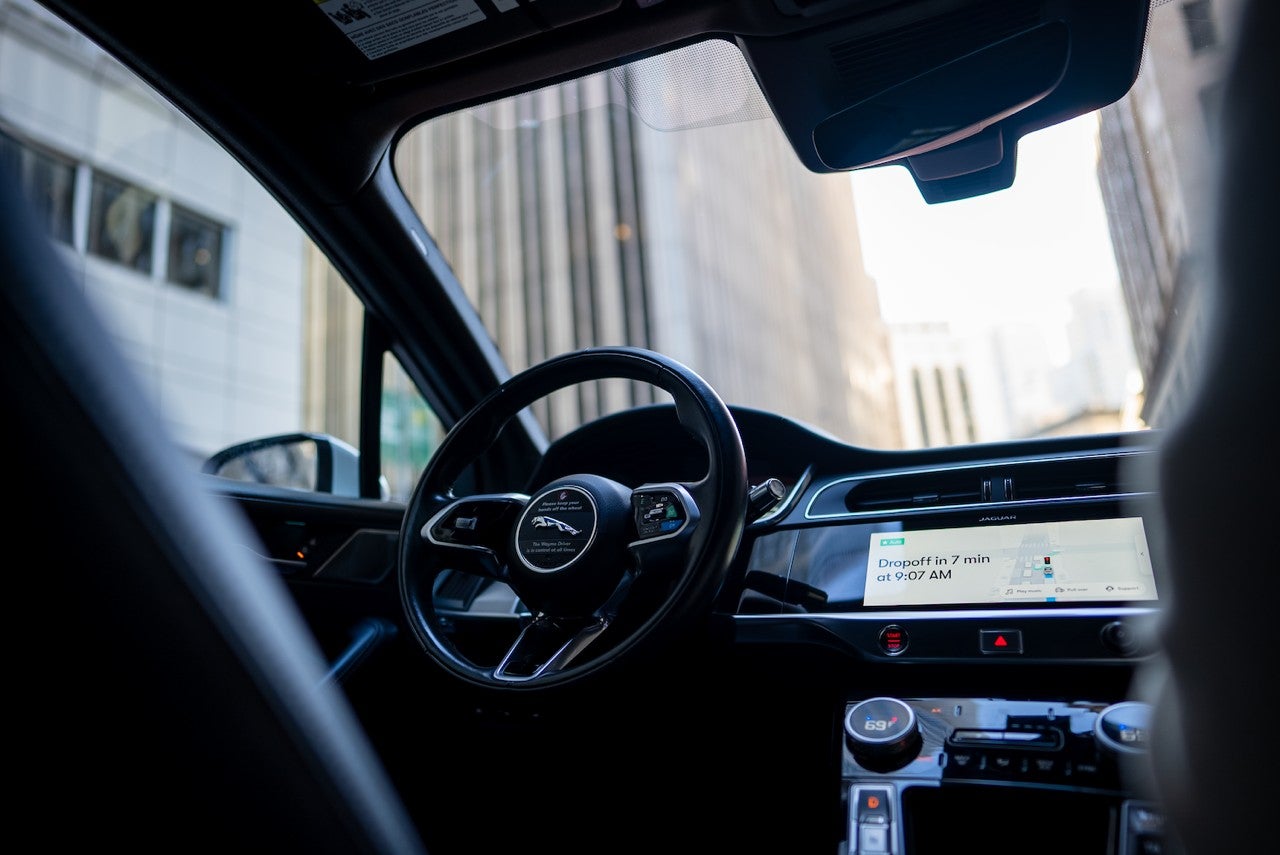
You get in, and make sure not to sit where the driver would go, or you will trigger a call with a human agent who can see you through the cars’ camera and might give you a strike for bad behaviour. Then you press a button on a display to start the journey, and the car will get going.
The Waymo goes to every length it can to soothe you. There are displays throughout the car, which show what it can see, so that you know that it really has seen the truck in front of you. You can choose what music the car plays, but it defaults to a kind of bland, calming ambient radio station – New Age music for the new age of travel.
And you will, probably, be soothed. The Waymo Driver, as the company calls it, drives largely the same as a real one. The haunted magic of a steering wheel moving itself around quickly becomes normal. The relative ease, dependability and – it seems – safety of a Waymo allows it to rapidly become what it perhaps really needs to be: boring.
On the same trip to Silicon Valley, a friend was travelling in her own Uber when a police car came up behind; like a human driver, the Waymo pulled itself into the side of the road, cutting off a motorbike that had been travelling behind. The rider was angry, and pulled around in front of the taxi, shouting and gesturing about the unsafe driving; once they made it to the front of the car, however, their anger became confusion as they realised they were shouting at nobody.
The Waymo Driver didn’t care; it couldn’t care. And as it drives you around, you realise too that this might be its greatest strength: it is not interested, and not interesting.