



Recently, my Instagram algorithm has decided I need help with my personal finances. It’s probably not wrong.
My feed has been serving me content from female finance creators reminding me to fill up my ISA in the new tax year, to check my subscriptions, and to maximise my pension contributions.
And I don’t think I’m the only one. Over lunch last month, my sister asked me what Stocks and Shares ISA I thought she should set up. It seems these content creators are playing a genuinely important role to close the financial literacy gender gap in the UK. We still live in a society where men are twice as likely as women to hold Stocks and Shares ISAs. In fact men between 18-24 invest at double the rate of young women in the same age bracket. “Finfluencers” are making conversations about money more accessible – though you need to take care over acting on any advice from social media.
But there’s one part of financial education that I’ve noticed rarely makes it into the conversation: charitable giving.
I’m perhaps more attuned to this than most as a 30-year-old founder of a charity.
Our organisation, The Zena Launchpad, supports women in rural Uganda to start businesses as pathways out of extreme poverty. The idea is simple: women entrepreneurs re-write the story of poverty by creating income for their families and jobs for their communities.
I have spent my 20s living in Uganda and building this model with our team. Over the past 10 years, we have seen 100 women go through our programme. These women together have pulled over 1,000 individuals out of poverty.
Our work is fully led by our Ugandan team, so my job is to bring in the funding. Which, to be honest, is easier said than done.
Like many charities in the UK, we are broadly reliant on our generous community of donors who pay for training expenses, capital for the programme members and electricity for our offices. However, charities like ours are facing a challenge. The 2026 Charities Aid Foundation Giving Report found that not only has the number of donors fallen in the UK, but people are giving less, too.

Get a free fractional share worth up to £100.
Capital at risk.
Terms and conditions apply.
Go to website
ADVERTISEMENT
Get a free fractional share worth up to £100.
Capital at risk.
Terms and conditions apply.
Go to website
ADVERTISEMENT
This is obviously a real problem for the charity sector, but I also think it’s a shame for us as individuals. Giving has been shown to improve happiness, wellbeing and even longevity. But beyond that, regular giving makes purpose part of our monthly budget.
One thing finfluencers regularly remind me of is to check my subscriptions. I have a good few: Spotify, Netflix, and now more cloud storage since filling my phone with thousands of photos of my ten month old. In fact, us Brits spend an average of £72 a month on subscriptions.
But what if we thought about charitable giving in the same way we think about our subscriptions? Millennials and Gen Z are generations known to care deeply about the world.
My hot take: What if we all started a monthly “Impact Subscription” too?
For my age group, giving money to charity is something we often do when our friend runs a marathon, or there is a global disaster. But I wonder if we could be missing an opportunity to proactively build generosity into our financial lives?
A friend of mine is a nurse who has an Impact Subscription of £20 a month to our work. Broken down, this provides weekly business mentorship for three women on our programme. When I thanked her, she said: “Honestly if I didn’t give it to you I would spend it on something I don’t need.”
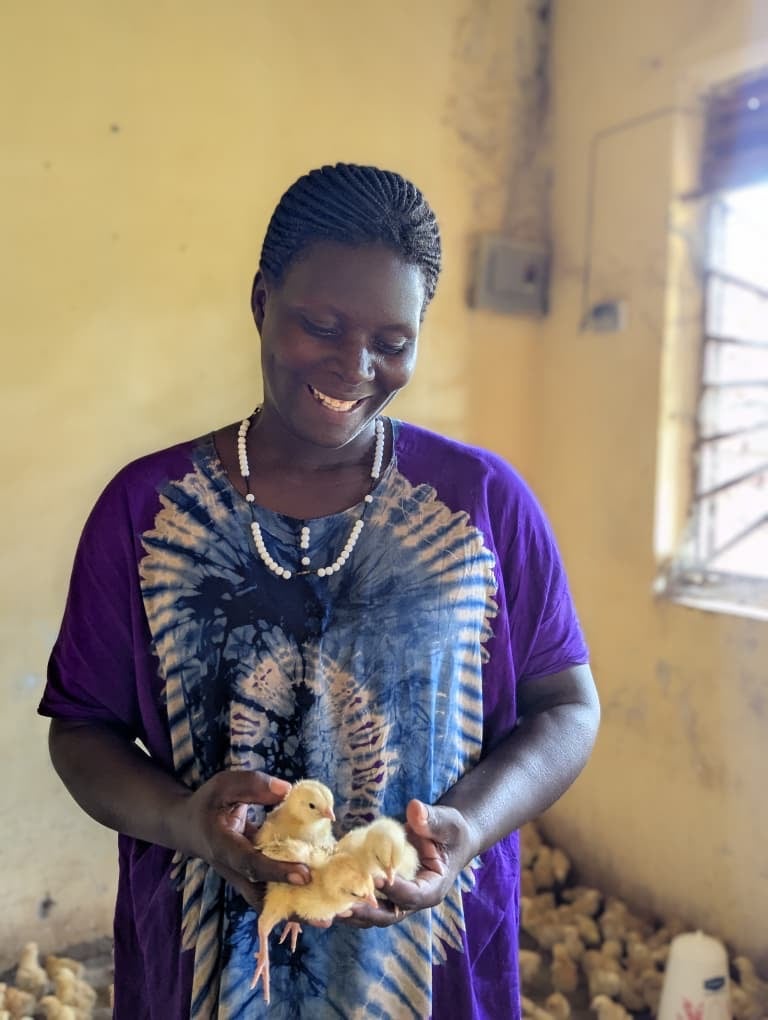
One of our Zena graduates, Rosemary, was living on just £10 a month before she accessed this mentorship two years ago. Upon graduation, she was able to start a poultry farm with 400 chicks. In her first year she made an extraordinary profit of £1,250, more than enough to pay school fees for her four children and medical fees for her husband. Now she trains women in her community, teaching them to start their own poultry farms to support their families. Relatively small amounts of money, given consistently, can radically alter someone’s future.
Can you imagine if we each set up an Impact Subscription to a cause we cared about? That’s the vision behind Women Who Give, the new network launching next week designed to inspire and unlock generosity in the UK.
Consider: if every UK Spotify subscriber gave the same amount each month to charity, we could add £2.3 billion to the sector each year.
The finfluencers I follow talk a lot about investing early and investing often. How cool would it be to think about our generosity in the same way? Not ad hoc or incidental, but consistently committed over a long period of time to a cause close to our hearts.
I personally believe few things could be more powerful than reintegrating generosity as a normal, modern financial habit for our generation.
When investing, your capital is at risk and you may get back less than invested. Past performance doesn’t guarantee future results.

.jpeg?trim=624,0,625,0&width=1200&height=800&crop=1200:800 "Are today’s motorists starting to care less about horsepower? – UK Times")