

.png?trim=0,0,0,0&width=1200&height=800&crop=1200:800 "The truth about whether LED face masks actually work, according to an expert – UK Times")
The phenomenon of an LED face mask is hard to avoid in 2026. A quick scroll through social media or a conversation with anyone who has a casual interest in skincare, and chances are you’ll encounter the red light therapy devices that make bold promises of clearer, brighter or firmer skin.
What was once a treatment associated with dermatology clinics and high-end facialists has become increasingly accessible, with brands such as Currentbody and Silk’n bringing light therapy into our homes. As a result, LED face masks are no longer reserved for those willing to splash out on a professional appointment. But the growing number of devices on the market raises an obvious question: do they actually deliver the same results as an expert-led treatment?
Given that many of the most popular masks cost upwards of £400, I wanted answers from someone who works with the technology day in, day out. So, I spoke to Mayfair-based aesthetic doctor Dr Ahmed El Muntasar about the science behind LED therapy, the differences between red, blue and green light, how long results typically take to appear and whether these investment devices are truly worth the money. Here’s what I learned.
Read more: Best teeth whitening kits, tested
Meet the expert
- Dr Ahmed El Muntasar is an NHS GP and aesthetic doctor who owns his own clinic (The Aesthetics Doctor) in central London. In addition to performing more than 10,000 procedures at the time of writing, Dr Muntasar is a four-time award winner of The British Aesthetics Awards.
Do LED face masks work?
“Absolutely, LED masks do work,” reassures Dr Muntasar, who adds, “There is actually a good amount of evidence supporting the use of LED both in clinic and at home, particularly for certain skin concerns.”
Getting technical, he reveals that this cutting-edge technology works “through something called photobiomodulation, which is essentially using light energy to stimulate the skin’s natural processes.” The result? “This can help reduce inflammation, boost collagen production and support overall skin healing.” For anyone that doesn’t know, collagen is a naturally occurring ingredient in the body, and the one that’s responsible for structure, support and strength in the skin.
Dr Muntasar explains how he uses LED in clinic regularly, “as part of treatment plans, often alongside other procedures to enhance results and recovery.”
And, if you’re looking for a mask with his expert recommendation, he advises: “I tend to recommend the Currentbody skin LED light therapy mask series 2 and the Omnilux contour face.” As for his reasoning, he explains, “Both are well-designed, have good clinical backing and deliver the correct wavelengths needed to see real results.” If that isn’t enough to sway you, you’ll find both of these masks performed well in my guide to the best LED face masks, with the Currentbody model earning the guide’s top spot after my “skin felt bouncier and more lifted” post-testing.
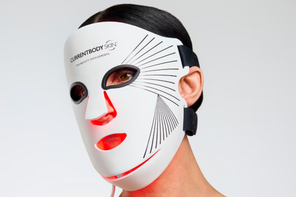
Currentbody Skin LED red light therapy face mask: series 2
Currentbody’s series 2 mask earned was found to be the best LED face mask in my review, owing to its use of liquid silicone for a comfortable, moulded fit, as well as a whopping 236 individual LEDs for more comprehensive skin coverage.
I described “how much brighter my skin looked,” and reported that “I saw an improvement in my skin texture and a reduction in redness after just two weeks of consistent use.”
Read the full Currentbody Skin LED red light therapy face mask series 2 review
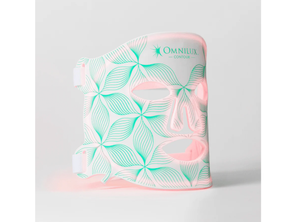
Omnilux contour face
Omnilux’s LED face mask is loved by celebrities such as Kim Kardashian. I dubbed it the best LED mask for plumping in my guide, describing how my “raised whiteheads were banished, and scarring from previous blemishes was reduced” after consistent use. Even better, I found that “after six weeks, [I had seen] improvements to facial elasticity, with the skin appearing fuller and more supple.”
How do LED masks work?
“LED works by emitting specific wavelengths of light that penetrate the skin at different depths and trigger biological responses,” Dr Muntasar tells me.
Specifically, he details “The key mechanism is the stimulation of mitochondrial activity within skin cells, which increases ATP production.” For anyone getting confused by the jargon, he outlines that “ATP is essentially the energy source for cells, so when you increase that, you improve overall cellular function, collagen synthesis and repair processes.”
He continues, “It also helps reduce inflammation and supports the skin’s natural healing response.”
How quickly will you see results from an LED face mask?
“For collagen stimulation and anti-ageing benefits, you’re usually looking at around 12 weeks, but for general skin quality and that overall ‘glow’, you might start to see improvements within about six weeks,” says Dr Muntasar.
For anyone suffering blemishes and congestion, you’re in luck, as Dr Muntasar assures, “results [for acne-prone skin] can often be seen a bit sooner, typically within four weeks.”
Though he caveats, it depends entirely on what you’re treating.
How often should you use an LED mask?
“For best results, I would recommend using them daily, or at least five times a week,” suggests Dr Muntasar, justifying this guidance on account of the fact that “consistency is really key with LED, as the benefits build over time rather than being instant.”
How long should you use an LED mask for?
“Most devices are designed to be used for around 10 minutes per session,” Dr Muntasar shares. In my experience as an IndyBest tester, I’ve found treatment times can range from 10 to 30 minutes (as with the MZ Skin golden facial treatment device) but, concurring with Dr Muntasar, 10 minutes seems to be the most common duration.
Do different LED light colours work?
“The most evidence-backed wavelengths are red light and near-infrared light,” argues Dr Muntasar, but these days, you’ll find masks offering a range of frequencies, such as green, blue, yellow, white and purple.
According to Dr Muntasar, “Red light, typically around 630 to 660 nanometres, helps stimulate collagen production, improve fine lines and wrinkles, and enhance overall skin texture and quality.”
Meanwhile, he continues, “Near-infrared light, which sits around 800 to 850 nanometres, penetrates deeper into the skin – this makes it particularly useful for healing and reducing inflammation.”
As for those extra frequencies, he doesn’t vouch for yellow, white and purple light, but claims that “blue light works more superficially and is helpful for acne, as it targets acne-causing bacteria.”
On a final note, he tells me, “Green light is sometimes included in devices and may help with pigmentation, but the evidence for this is much more limited compared to red and blue light.”
In summary? Red, near-infrared and blue light get Dr Muntasar’s seal of approval, but the jury’s still out on the others – so don’t break the bank in search of a mask that offers every colour of the rainbow, the basics should suffice.