


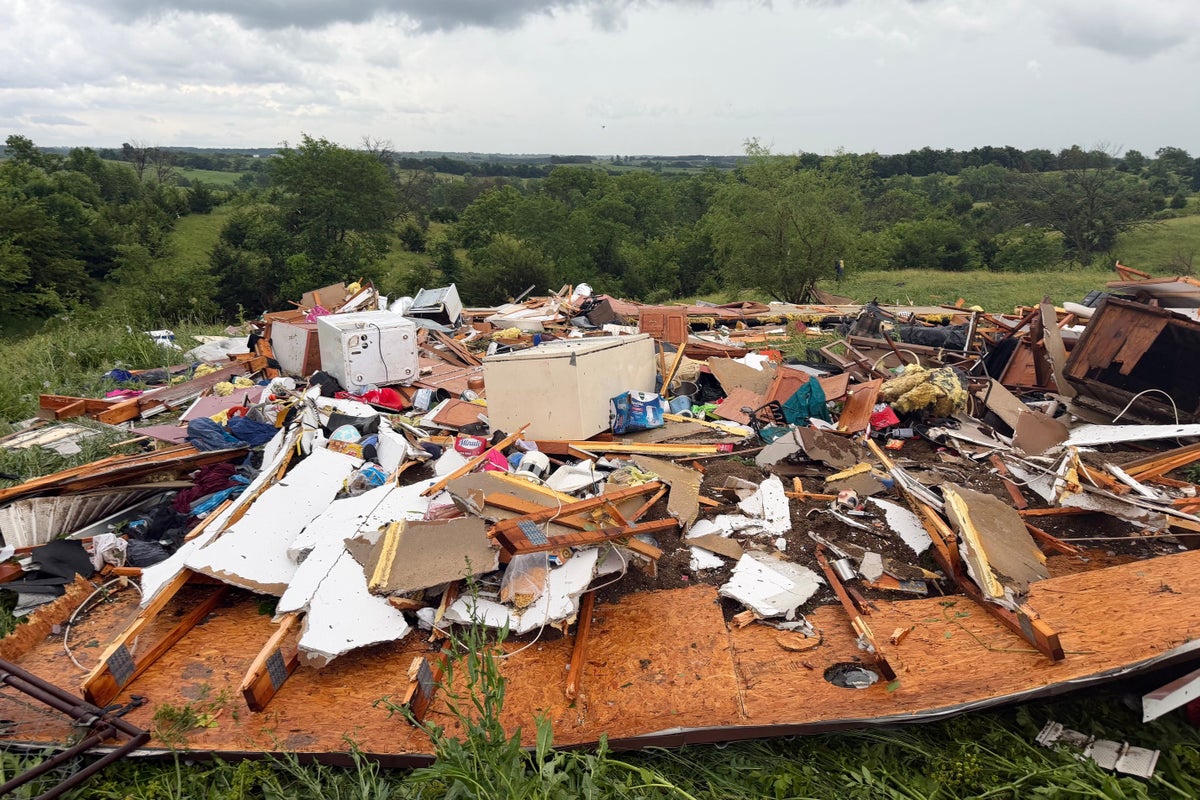
At least three tornadoes tore through communities outside Chicago on Thursday, leveling homes, ripping down trees and power poles, as severe storms grounded flights and cut power to hundreds of thousands across the Midwest and Northeast.
The extreme weather events marked a day of widespread disruption and destruction.
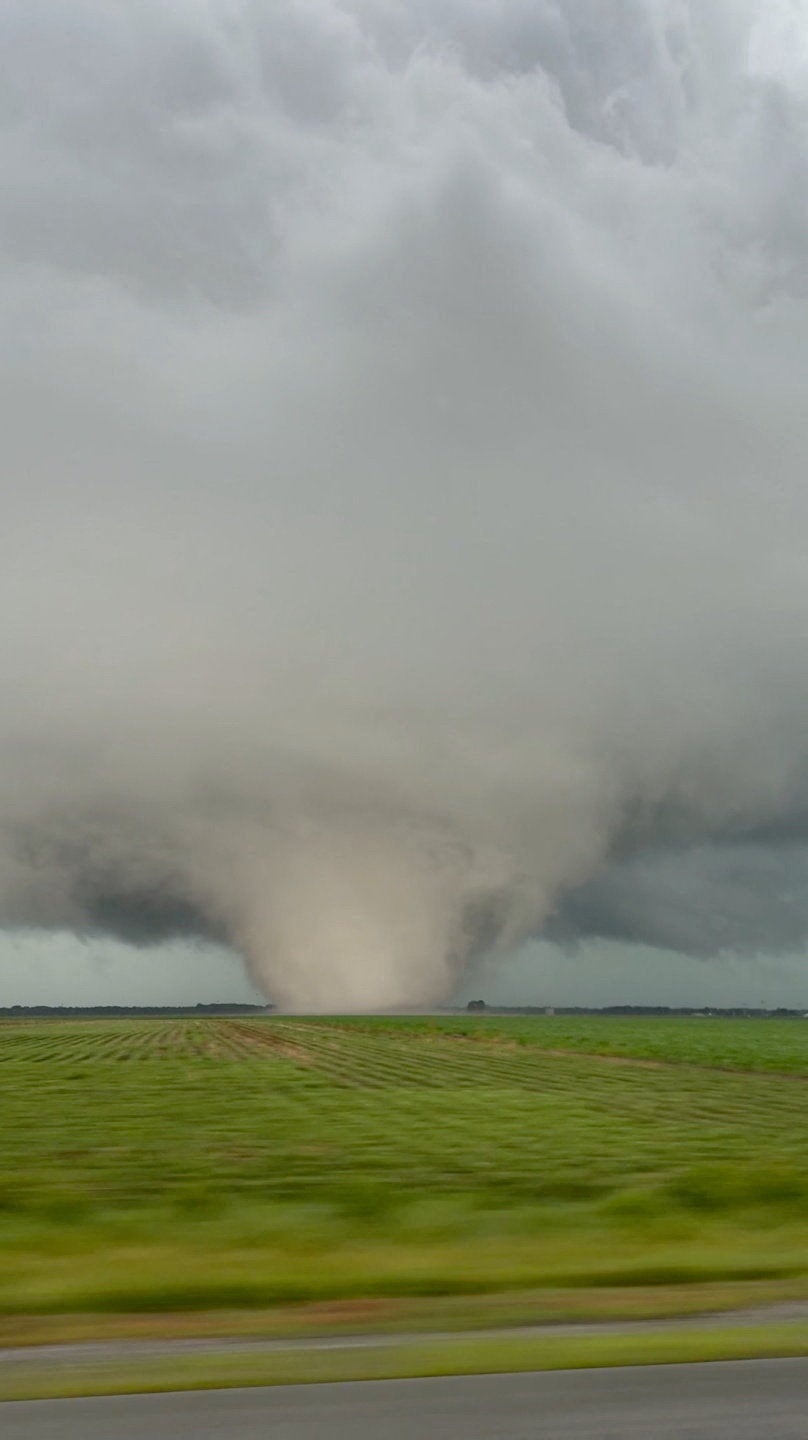
In Merrillville, Indiana, approximately 33 miles southeast of Chicago, a large column of air descended, prompting city police to issue urgent warnings for residents to seek cover.
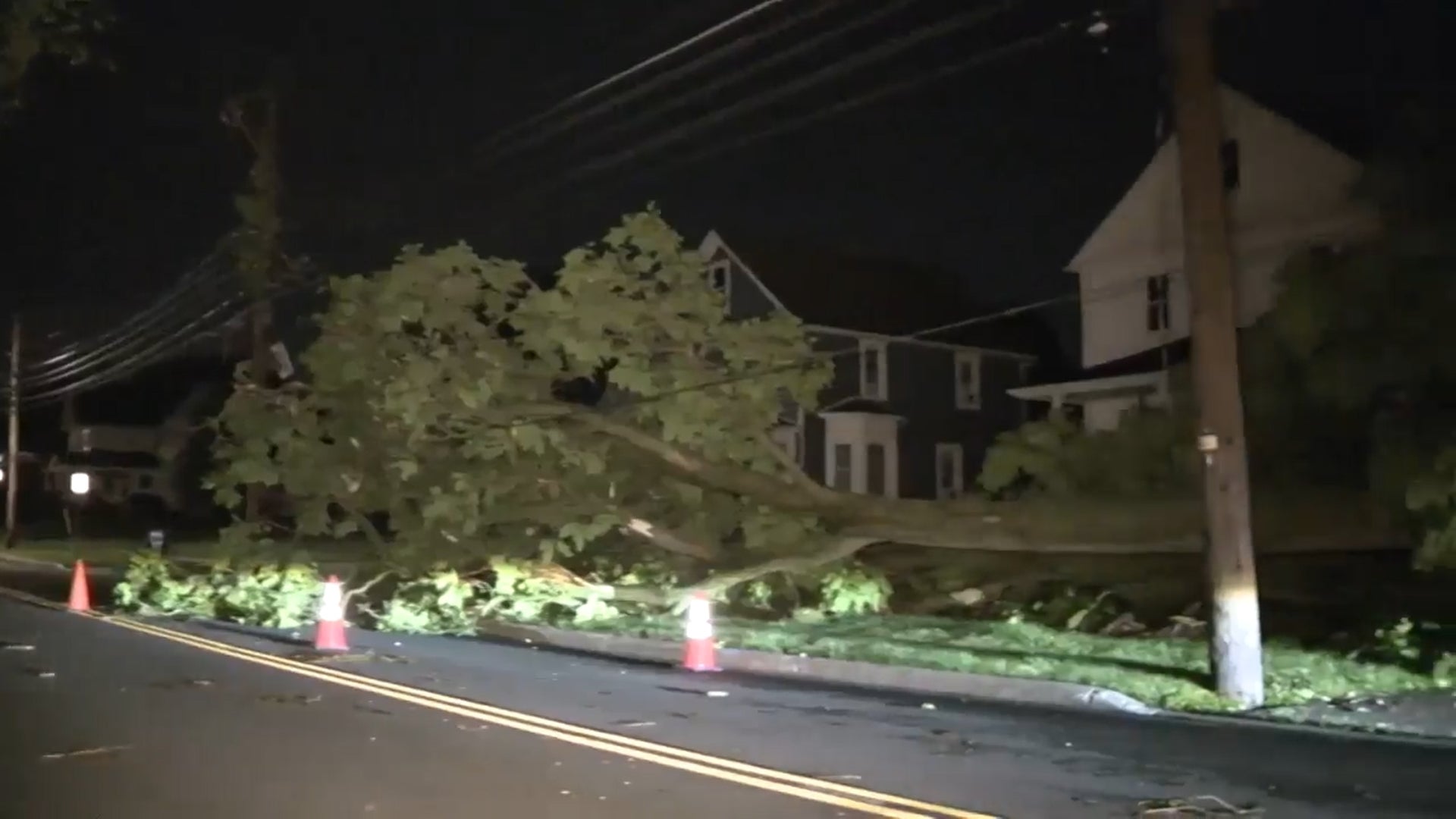
By evening, the town was grappling with the aftermath: streets blocked by downed trees and power lines, homes severely damaged, and a section of a high school’s roof ripped off.
Meanwhile, emergency crews were deployed to Streator, Illinois, a manufacturing and farm city reeling from tornado damage.
A reunification center for displaced residents was established at City Hall, and the Red Cross opened a shelter to assist those affected.
Streator Mayor Tara Bedei confirmed there were no reported deaths, stating, “We are incredibly grateful for the safety of our residents and the quick action of emergency personnel.”
These tornadoes followed a series of severe storms that swept through the Midwest on Wednesday, causing widespread power outages, damaging buildings, and leading to flight cancellations.
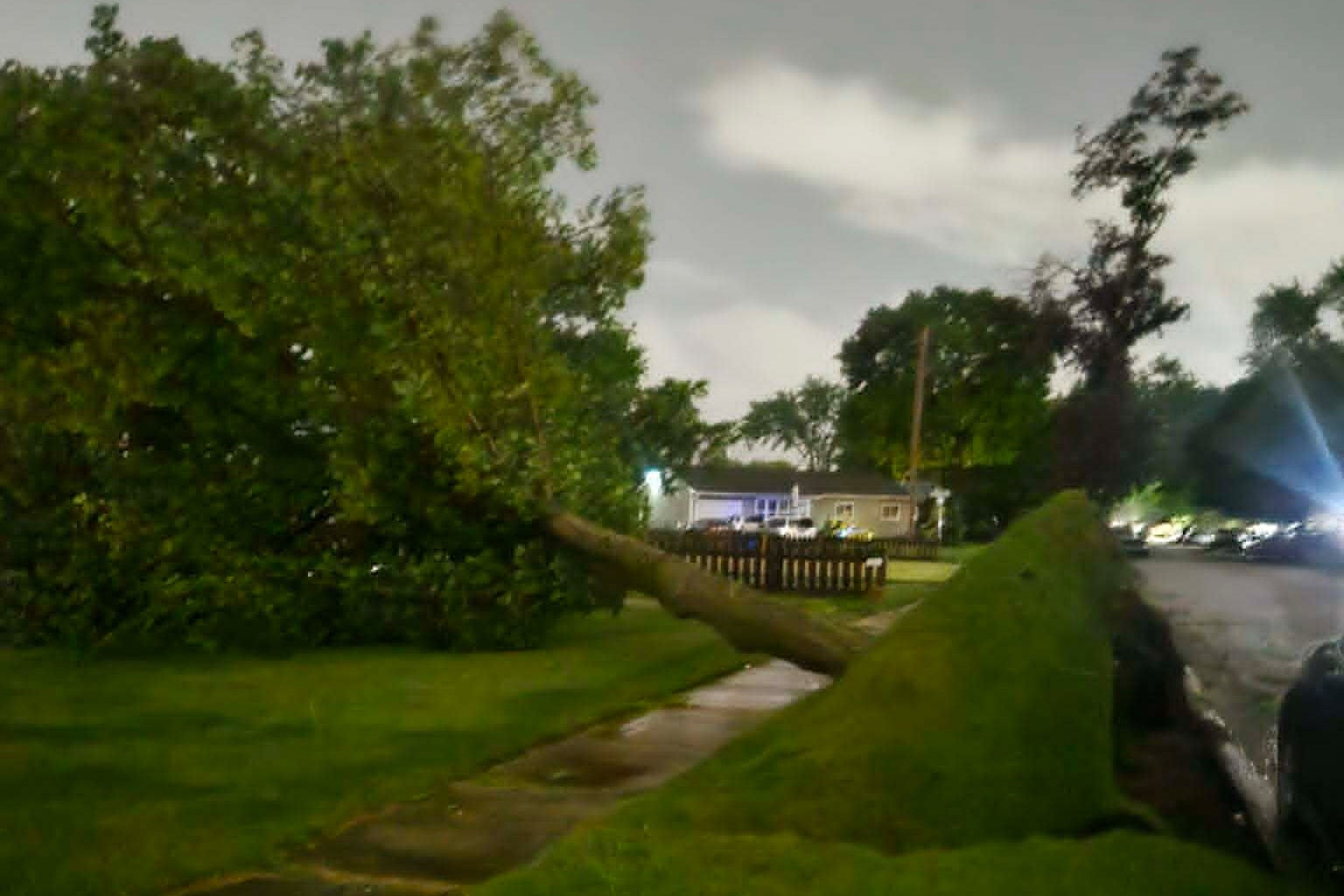
In Des Moines, Iowa, a 54-year-old man tragically died at a homeless encampment in a park after being struck by a tree that “broke apart and fell during strong storms,” according to police.
No other deaths or injuries were immediately reported from these earlier storms.
Tornado warnings were also issued for Chicago and parts of Indiana and Michigan on Thursday by the National Weather Service.
In Elkhart, Indiana, Jennifer Hall recounted hearing a loud crash as winds and rain intensified, only to discover a tree limb had pierced the roof of her rental home.
She resorted to using buckets to catch the incoming rain, expressing her distress: “I’m just nervous because it’s just been one thing after another.”
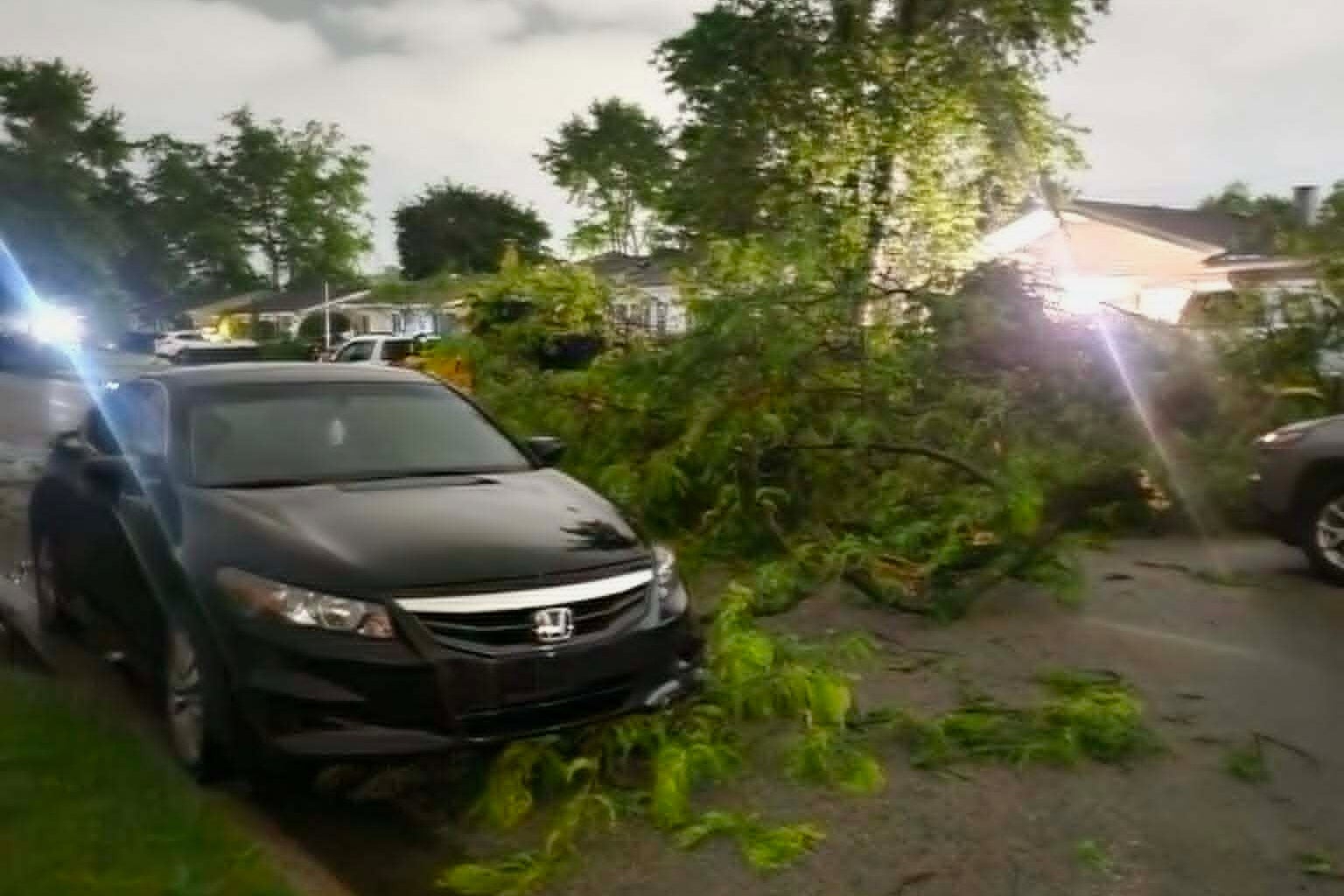
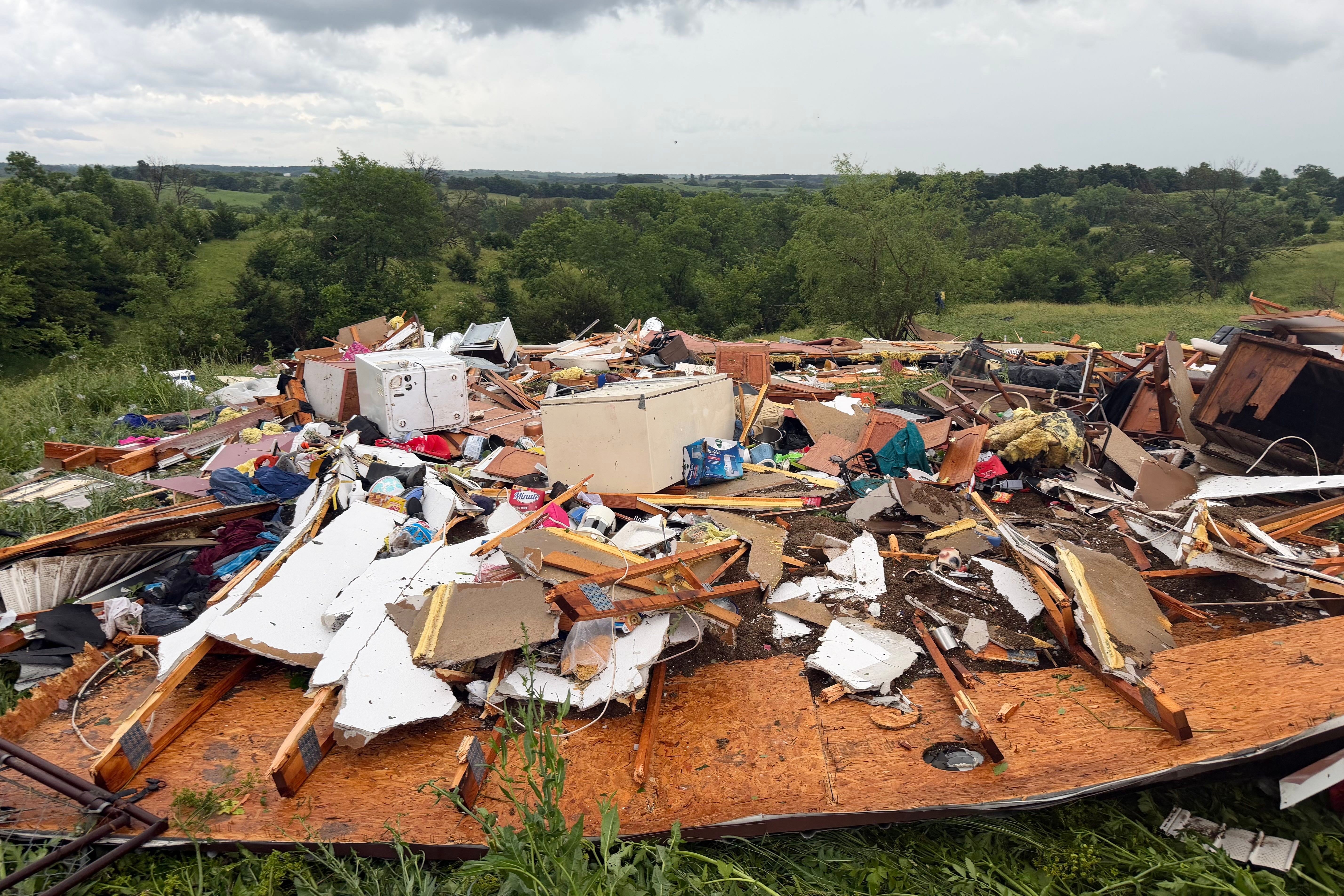
In Unionville, Missouri, Shane Tipton and his daughter Kylie Rouse witnessed their mobile home obliterated by a twister after Tipton managed to rush his 87-year-old father to safety.
Rouse told The Associated Press, “Everything’s destroyed. It was scattered clear for miles. If my grandpa had been in there, there’s no way that he would be alive.” They also believe they lost one of their hunting dogs.
In Springfield, Illinois, residents suspect a tornado touched down late Wednesday, causing significant damage to two buildings at the Animal Protective League shelter.
Despite the heavy damage, none of the nearly 150 cats and 28 dogs housed there were injured.
Deana Corbin, the group’s executive director, called it “a miracle,” adding, “It pretty much wiped out our shelter facility, took the roofs off both of our buildings. We were so blessed to not have any injuries of either people or animals.”

The community rallied, with local animal control, veterinarians, and residents temporarily housing the animals. Damage was also reported at Abraham Lincoln Capital Airport in Springfield.
Meteorologist Frank Pereira explained that the system generating these storms, characterized by high winds and hail, was moving eastward on Thursday, fueled by the collision of cool air from Canada with warm, humid air from the South.
The severe weather wreaked havoc on air travel and power infrastructure.
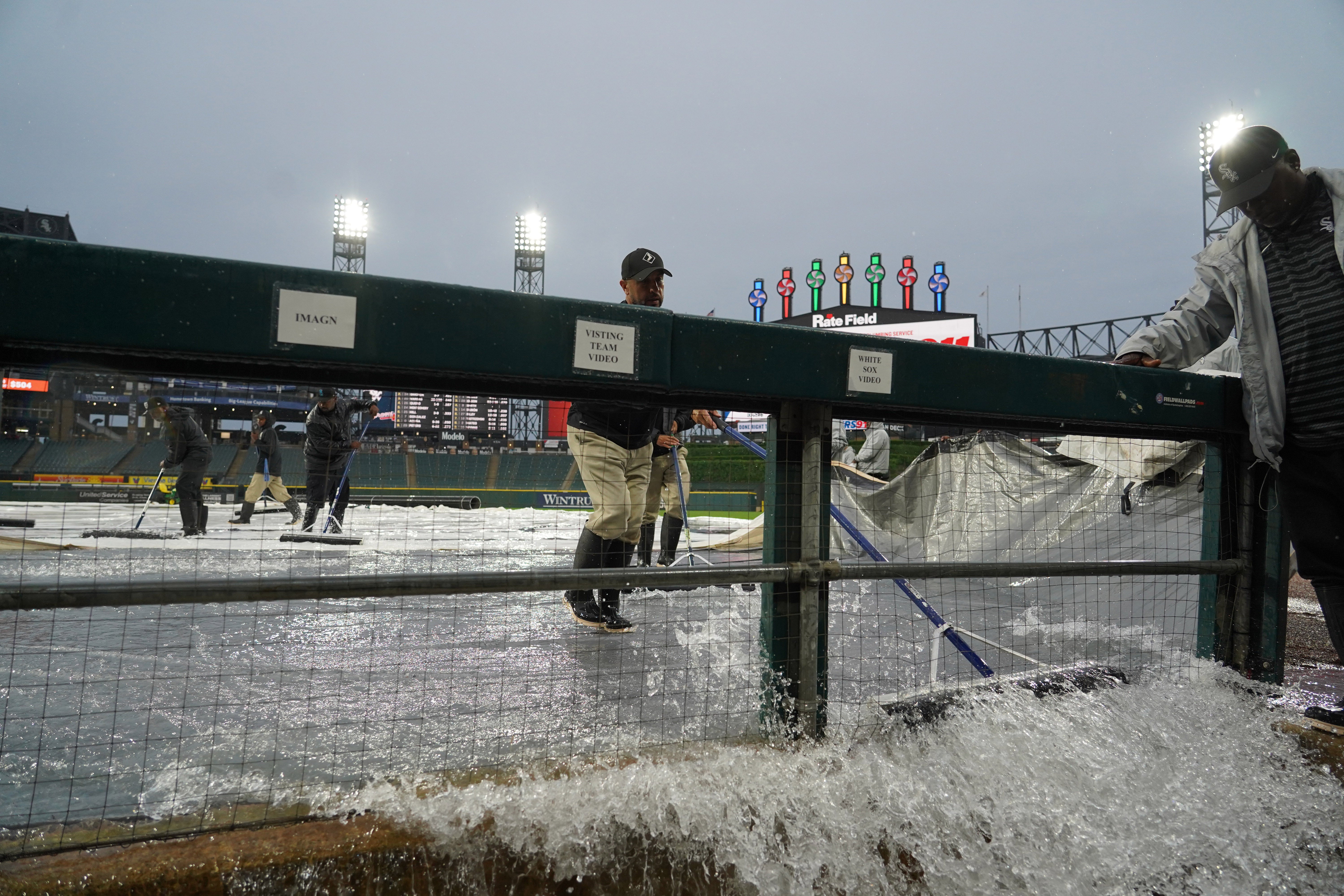
Ground stops were issued at Chicago’s O’Hare International and Midway International airports, as well as John F. Kennedy International Airport in New York.
Pittsburgh International Airport experienced a temporary power outage due to an “extraordinary” power surge.
FlightAware, a flight-tracking website, reported that over 1,000 flights to and from Chicago were delayed or canceled. Commonwealth Edison Company, serving northern Illinois, reported downed poles and wires and anticipated “80% restoration” by late Saturday.
Concurrently, a potentially dangerous heatwave with high humidity arrived on Thursday and was expected to persist through Friday across a swath of the East Coast, from the mid-Atlantic to the Northeast.
Record-high temperatures were anticipated in numerous locations, with mid-90s Fahrenheit feeling like 100 degrees or more due to the humidity.
Philadelphia declared a heat health emergency for Thursday and Friday, activating cooling centers, home visits by field teams, and outreach to people experiencing homelessness.
New York City officials urged residents to take precautions, including drinking plenty of water and seeking cool places if they lacked air conditioning.
The dual threat of destructive tornadoes and severe storms in the Midwest, coupled with a dangerous heatwave on the East Coast, underscored a challenging period of extreme weather across the United States.