


When Aldewa Anjasmara Halip’s three-year-old daughter cried hysterically every time she was due to attend a daycare centre in Indonesia’s cultural capital of Yogyakarta, he thought the toddler wanted to stay at home and play.
But, according to local police, the little girl was one of dozens of children aged 2-6 who were physically abused at the Little Aresha daycare centre.
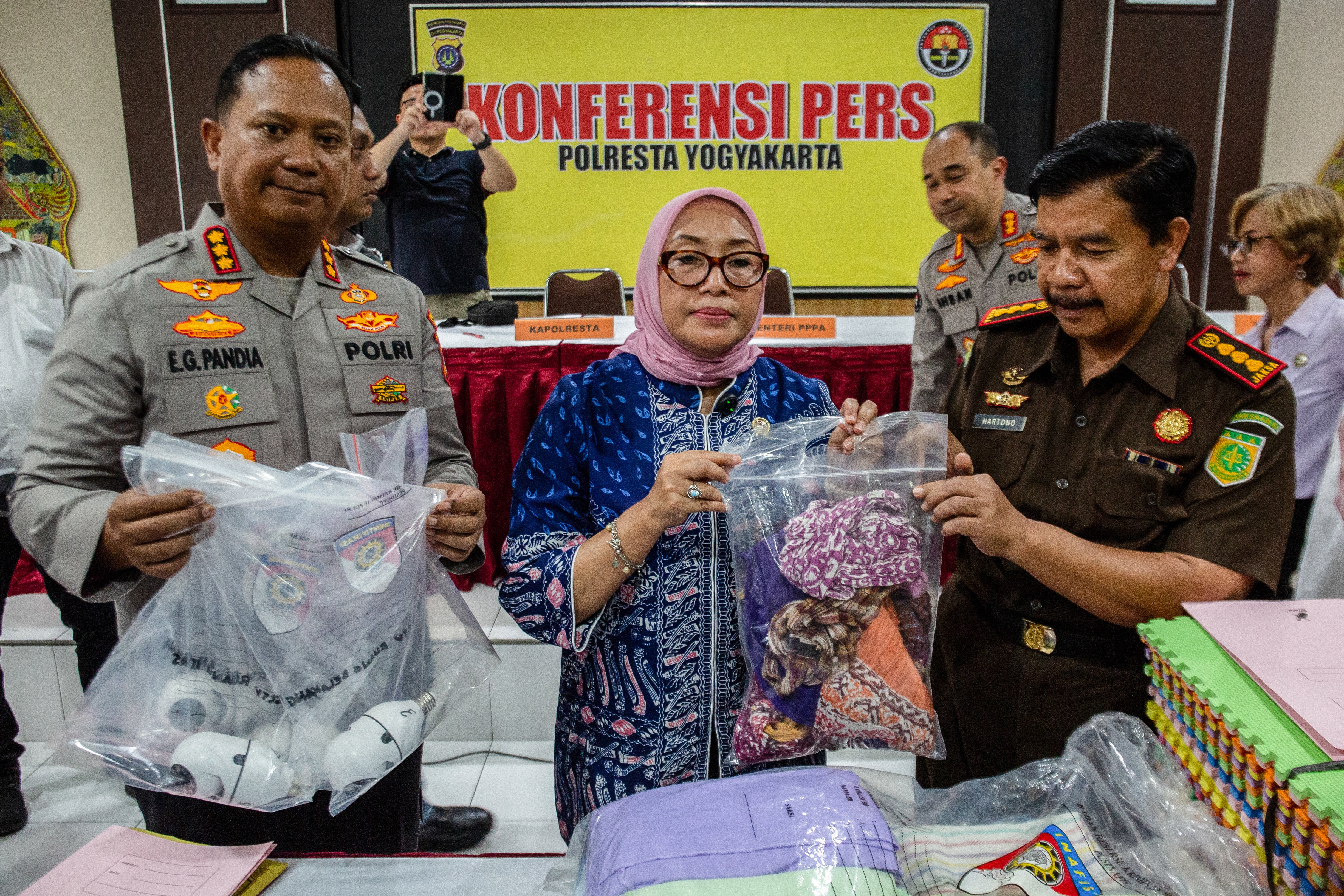
Authorities arrested 13 carers in late April on suspicion of child abuse and neglect, sparking a public outcry and calls for stronger government oversight of the emerging child daycare sector. Police also said the centre had been operating without required licences.
“I thought it was just a normal thing because she was simply too lazy to go,” said Mr Aldewa, who like many Indonesians uses his first name on second reference, “but it turns out she has been traumatised there.”
He and his wife work at nearby malls.
Police found most of over 100 children enrolled at the centre with their hands and feet tied up when they raided it in April, the head of child protection at Yogyakarta’s police criminal investigation unit, Apri Sawitri, said. Some were tethered to doors, she said.
Another investigator, Diyah Puspitarini, a commissioner at Indonesia’s child protection agency, said many of the children were routinely slapped and pinched.
Caregivers told police the physical punishment was designed to make the children “more manageable”, Ms Diyah said.
All 13 suspects are women and include the owner, principal, and caregivers.
Police did not publicly identify the suspects, instead referring to them by their initials, a typical practice in Indonesia before a case goes to court.
Reuters was unable to contact any of the suspects, or identify their lawyers, to seek comment. An answering service responding to calls to the registered number of Little Aresha said the telephone number was no longer available. None of the suspects commented publicly about the allegations.
The case is the biggest single example of alleged child violence in Indonesia, according to child rights activists.
It sparked front-page headlines in mainstream media, viral social media coverage and widespread condemnation from rights groups and lawmakers.
In light of the arrests, the government promised more oversight and regulation and better coordination between central and regional authorities.
“We hope Yogyakarta can serve as a starting point for a national review to ensure that all daycare centres in Indonesia meet child protection standards to the highest possible standard,” Arifah Fauzi, minister for women’s empowerment and child protection, said.
Little Aresha is one of the more expensive child daycare centres in Yogyakarta, a city of some 4 million people and a cultural tourism destination. It charged as much as 1 million rupiah per month, according to Ms Diyah, in a city where the average monthly income is about 3.2 million rupiah.
After news of the case became public, the centre was vandalised with spray-painted profanities on the walls and windows.
Ms Diyah said the allegations came to light when one of the caregivers turned whistleblower. She said caregivers told investigators the children were restrained under the orders of the centre’s principal as part of a strategy to maximise the number of children to staff.
The five-room centre, located in a house, was cramped with as many as 30 children packed into a 3-by-3 metre room, she said. Caregivers were not trained and they handled 10 children each, she added.
The government’s staffing guidelines, which are not binding, recommend one caregiver to four children.
In Indonesia, convictions for child abuse and neglect carry maximum sentences of five years imprisonment and a 100 million rupiah fine.
Police also alleged the centre violated the national education law by operating without a licence, a crime carrying a maximum penalty of 10 years in jail.
Little Aresha had been operating since 2018, Ms Diyah noted. A banner at the premises says it offers services for children as young as 2 months old, depicting images of rainbows and children playing in a playground.
There are thousands of child daycare centres in India, although the concept is relatively new in the country, where children are traditionally looked after by their extended family.
“The government does not have an official figure of the total number of daycares in Indonesia,” Ms Arifah said, adding that the government is now calling for all such centres to register.
She said the daycare centres had operated under various institutional frameworks. Some are part of early childhood education centres or kindergartens, some are community-based or home-based and many are not registered with any authorities.
Ms Diyah’s agency urged the government, police, and heads of local community units to carry out routine inspections on all child daycare centres.
The agency also urged the government to raise requirements on carer qualifications and the amenities that centres should provide.
Imedia Dwi Anjani’s four-year-old son was found tied to a door during the raid, police said.
She said she had found bruises and bumps on her son’s body in the past, but caregivers said they were caused by the rough and tumble of toddlers at play.
She said her son had a delayed speech condition, which meant he could not communicate about what was going on.
“Everything they have done is despicable,” she said.
Police expect to complete their investigation by late June, at which point a police report would be handed to the provincial prosecutor’s office to consider formal charges.