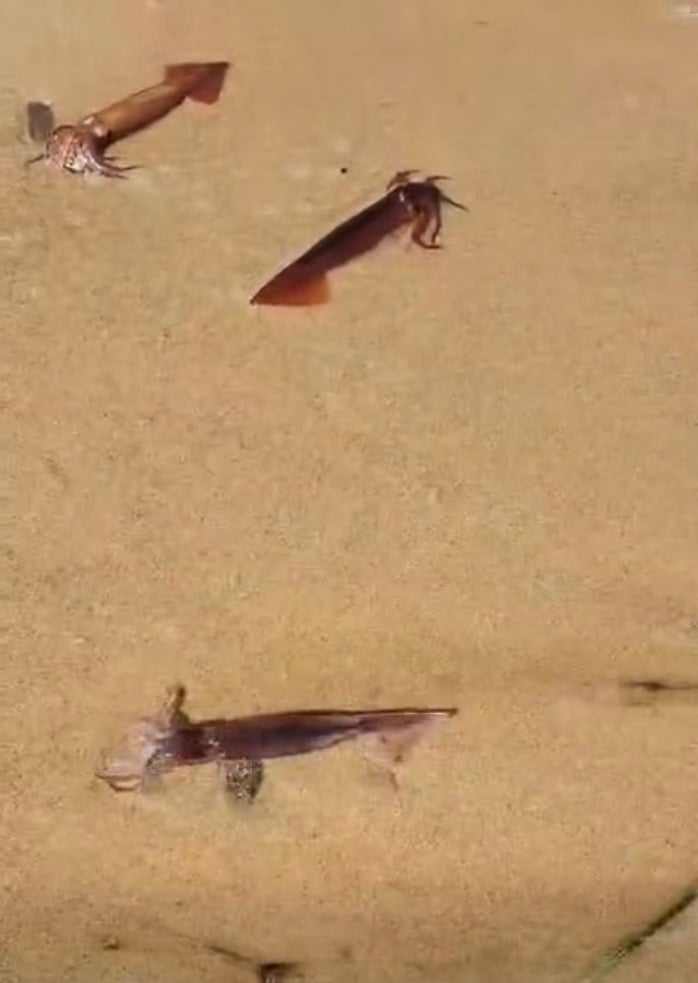
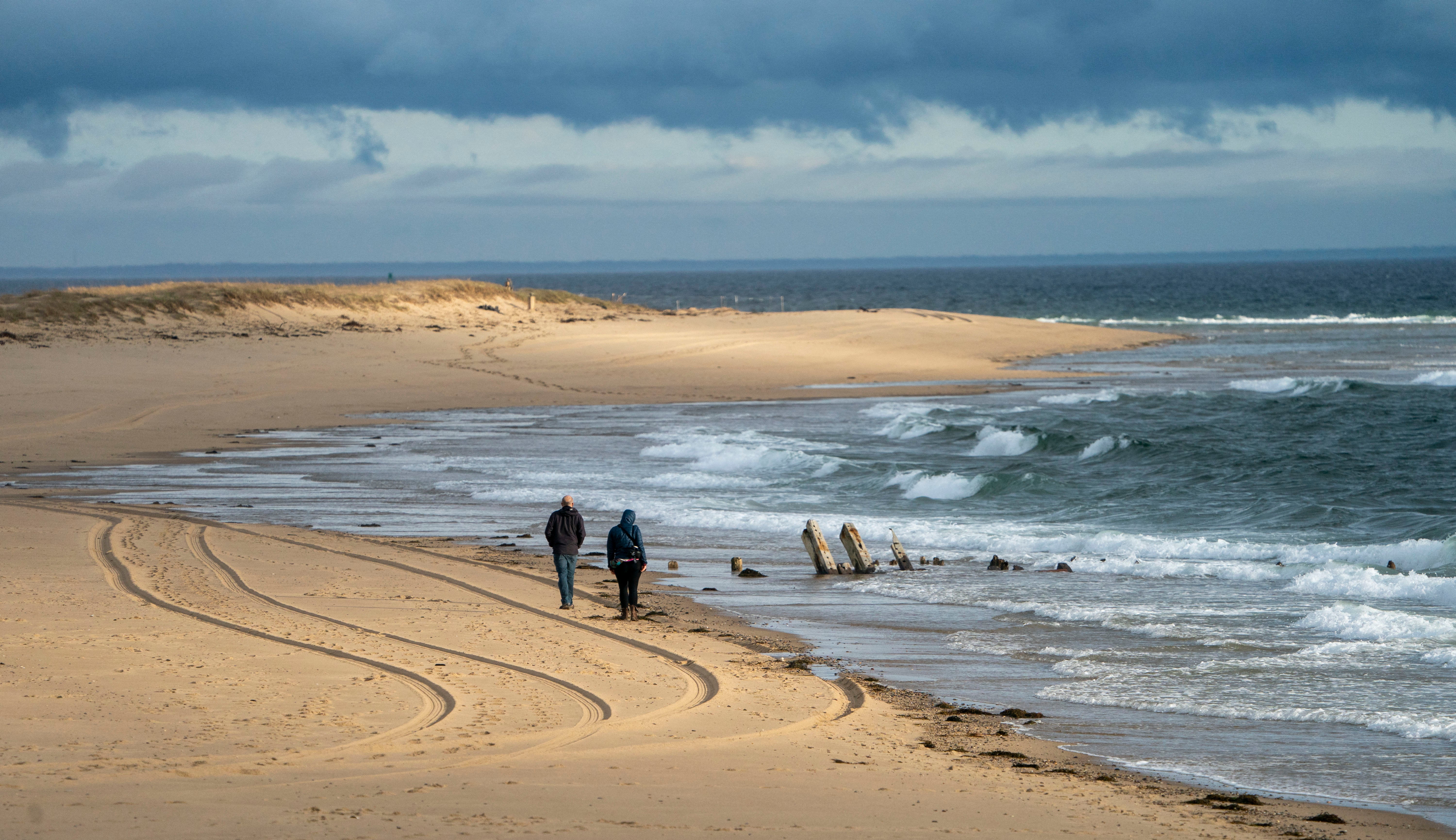
Thousands of wriggling brown-tinged squid have recently washed up on a stretch of beach along Cape Cod, Massachusetts, officials said Saturday.
But, there’s nothing to worry about, Provincetown’s Harbormaster’s Office assured in a Facebook post.
The stranding event is “completely natural,” they wrote.
“What you’re seeing is the Atlantic longfin inshore squid (Doryteuthis pealeii) at the end of its life cycle,” the office explained. “These squid migrate inshore to spawn — and like many species, the adults die shortly after spawning. It’s a mass spawning die-off. Add in the right combination of wind and tide, and the dying animals get pushed up onto the beach instead of staying out in the water.”
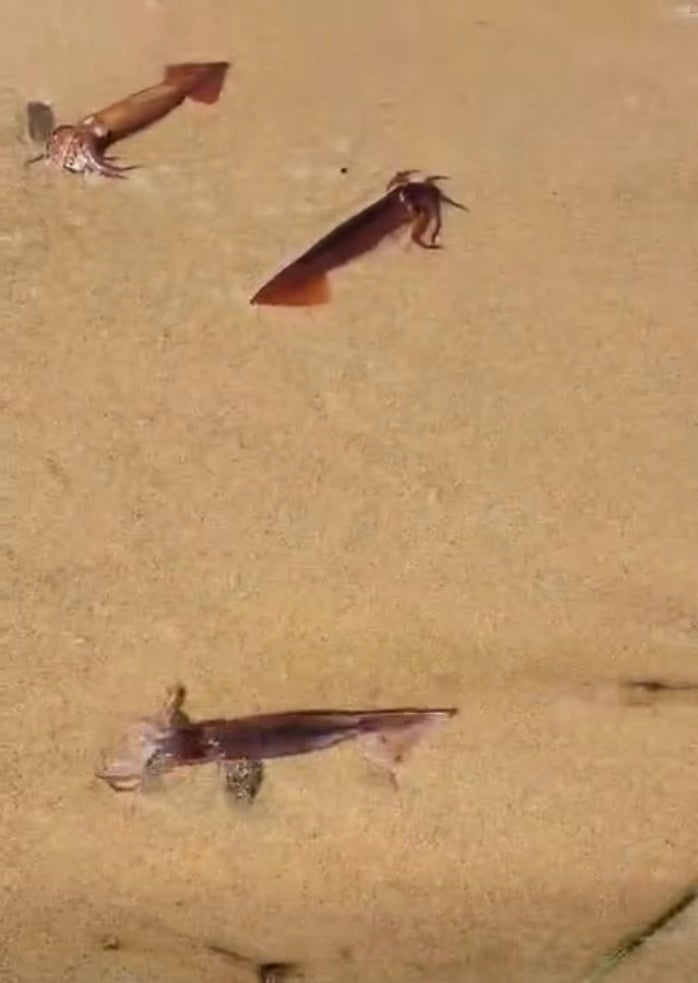
A video posted by the office showed bodies of the skinny marine invertebrates littering the water’s edge. Some moved slightly as the water touched them.
These types of events happen “all the time,” the office explained. However, it typically occurs underwater and their bodies are quickly eaten by predators. The squids are also eaten on land by seagulls and diving birds, crabs, other animals in the area and fished by humans.
Growing up to 1.6 feet in length, the squid has a lifespan of less than a year, according to the National Oceanic and Atmospheric Administration.
They reproduce shortly before they die and are born year-round. Each female lays a total of between 3,000 and 6,000 eggs.
While young, the squid feed on plankton and eventually crustaceans and small fish. They may even eat their own species sometimes.
Highly sensitive to their environment, they are found up to 1,300 feet below the Atlantic Ocean’s surface from Newfoundland, Canada, to the Gulf of Venezuela — but are mostly abundant between Georges Bank near Cape Cod and Cape Hatteras, North Carolina.
The squids are typically inshore during the spring, summer and fall, but migrate outward to spend winter in warmer waters.
While there are species that have died in multiple mass strandings along the Atlantic coast over the last few years and others caught up in harmful algae blooms, this is not the case, the office noted.
So, while beachgoers may find the sight unsettling and potentially smelly, the answer to what has affected them is Mother Nature.
“Will they smell? Possibly a little, as they break down,” the office wrote. “If the squid in front of your stretch of beach are bothering you, feel free to shovel them right back into the water — totally fine to do, and the tide and critters will handle the rest.”