

Almost a decade on from the EU referendum, and about five years since Brexit was formally enacted, there is sufficient distance to take a view on the impact of the narrow “Leave” result – 52 per cent to 48 per cent, as few people will need reminding. Such a margin was unlikely to settle matters; if it was anything, it was more of an uncertain vote of confidence in Britain’s past than its future.
It is already clear that it has not lived up to expectations. For example, Daniel Hannan, now a Conservative peer and one of the most dedicated Eurosceptics, made a rather ethereal video about what life would be like for the British as they celebrated their “Independence Day”, around now, in 2026. The UK was apparently destined to be a global leader in the new technologies, enjoy cheaper energy and food prices, and generally be better off outside the EU’s supposedly stultifying single market and customs union. Of course, to be fair to Lord Hannan, he might not have foreseen the war in Ukraine or Donald Trump’s tariffs; but it is also true that solid economic research has shown that the nation is between 5 and 10 per cent worse off than it would otherwise be.
Some Eurosceptics argue that Brexit didn’t work because it wasn’t done properly. Nigel Farage is one such figure, still rather too prominent in public life. But at the time he also argued that the UK would be better off whatever Brexit eventually looked like. It seems superfluous to add that, whether or not the NHS ever received its £350m a week extra, any benefit has been dwarfed by the loss of tax revenues and the outflow of skilled labour back to the EU. Few would argue that the UK is more secure nowadays, and the world of growing free trade envisaged in 2016, in which Britain would be able to strike lucrative trade deals with the fastest-growing, most dynamic nations in the world, has proved, at best, a chimera. “Take back control” did not mean we could control what other nations did for us or to us. It was a colossal act of self-harm, probably the worst since appeasement in the 1930s (an earlier policy disaster born out of a desire to be separate from the affairs of the rest of the continent).
But, whatever the sense of national betrayal evinced by this sad anniversary, bygones are bygones. The old, highly advantageous deal that the UK enjoyed has gone forever. Brexit cannot, in that sense, be reversed, even if public opinion, propelled by a new generation of voters, now favours turning back the clock. The opt-outs from the euro and Schengen zone, the rebate and the other special concessions cannot be easily recovered, if at all. The best way now to look at Britain’s future relationship with Europe is to recognise its transcendent importance, but to approach it afresh, unburdened by recent history. This is what The Independent’s latest campaign on the issue seeks to do – and it is the only realistic way to deal with the problems Brexit has created.
Europe: The Way Back seeks to open up a new debate about a closer, mutually rewarding and evolving partnership with the EU, which, of course, remains Britain’s biggest trading partner and, prospectively, its primary defence partner as the US disengages from Nato and Europe. From trade, investment and security to scientific collaboration, migration and opportunities for young people, the debate about Europe is not over. It has entered a new phase. How that should proceed needs to be a matter of urgent focus; talk about rejoining is for the future.
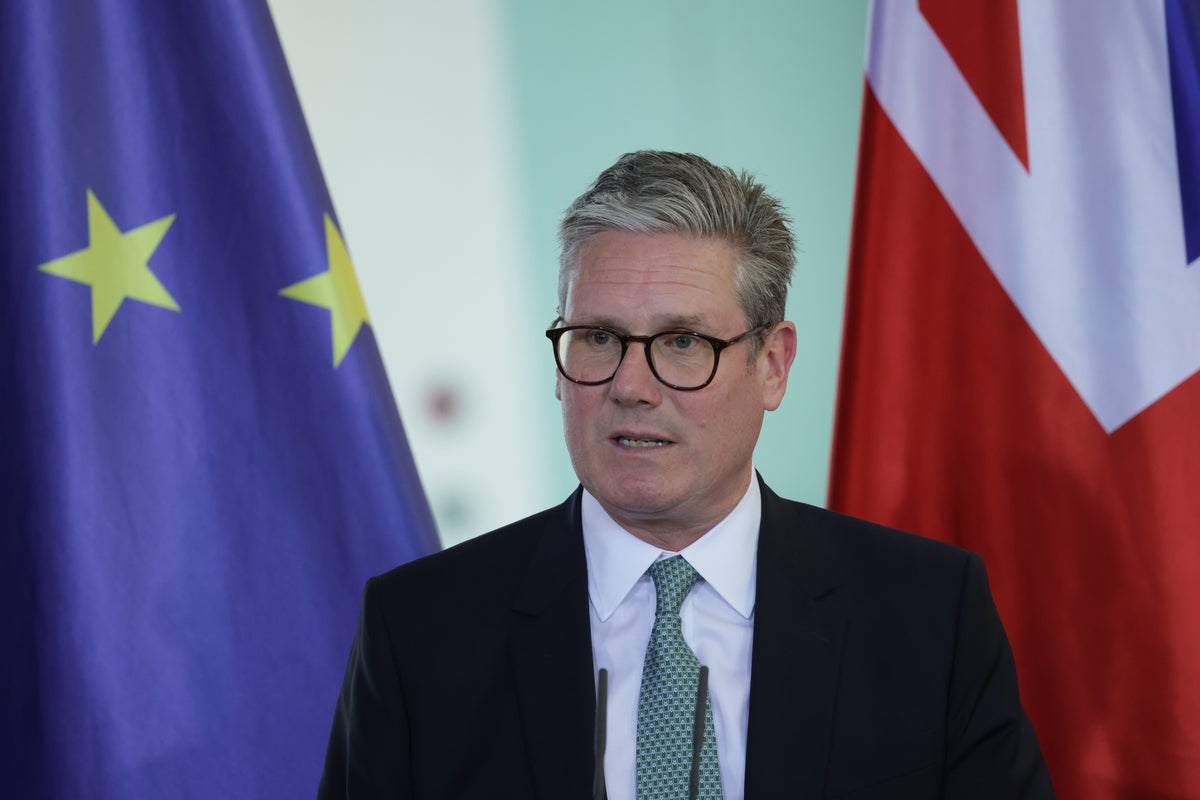
Most immediately, there comes the next phase of the government’s “reset” of the botched Brexit deal signed by Boris Johnson – there is no point in trying to wish away that failure. This work actually began during the Sunak administration, with a much more satisfactory arrangement for Northern Ireland, and a “thaw” in diplomatic relations, icily cold under Mr Johnson and Liz Truss. Since the last general election, it has been extended by Sir Keir Starmer and his colleagues. Within his manifesto “red lines” – no rejoining of the customs union, single market or free movement of labour – the prime minister has already negotiated easier movement for foodstuffs, a return to the Erasmus student scheme and, most important so far, a decision to adopt “dynamic alignment” with EU product rules, carbon emissions trading and electricity networks. This came out of the first of the annual EU-UK strategic partnership summits, with the next one due in mid-July.
Sir Keir is said to want to be still more ambitious this time, but his room for manoeuvre is limited by his manifesto commitments, opinion at home, the strictures of new trade agreements with, for example, India and the US, and, too often neglected, what the bloc will actually want to concede without financial contributions and EU jurisdiction in return. Cherry-picking by the British is no more an option now than it was for Theresa May.
Though it might not seem so now, Europe will be an issue at the next election. There is so much dissatisfaction with Brexit and so much fear about Russian aggression, that further changes to the relationship feel inevitable. The Greens and Liberal Democrats will be wanting the UK to rejoin EU structures, and so might Labour. The Conservatives will not. But it will also be an issue because Reform UK is keen on a “reset” of a very different kind – “more Brexit” and a more distant relationship even than the hard Brexit that Mr Johnson signed up for. Europe is not going to go away any more than Britain is going to be towed away into the Atlantic Ocean. There is a way back.