
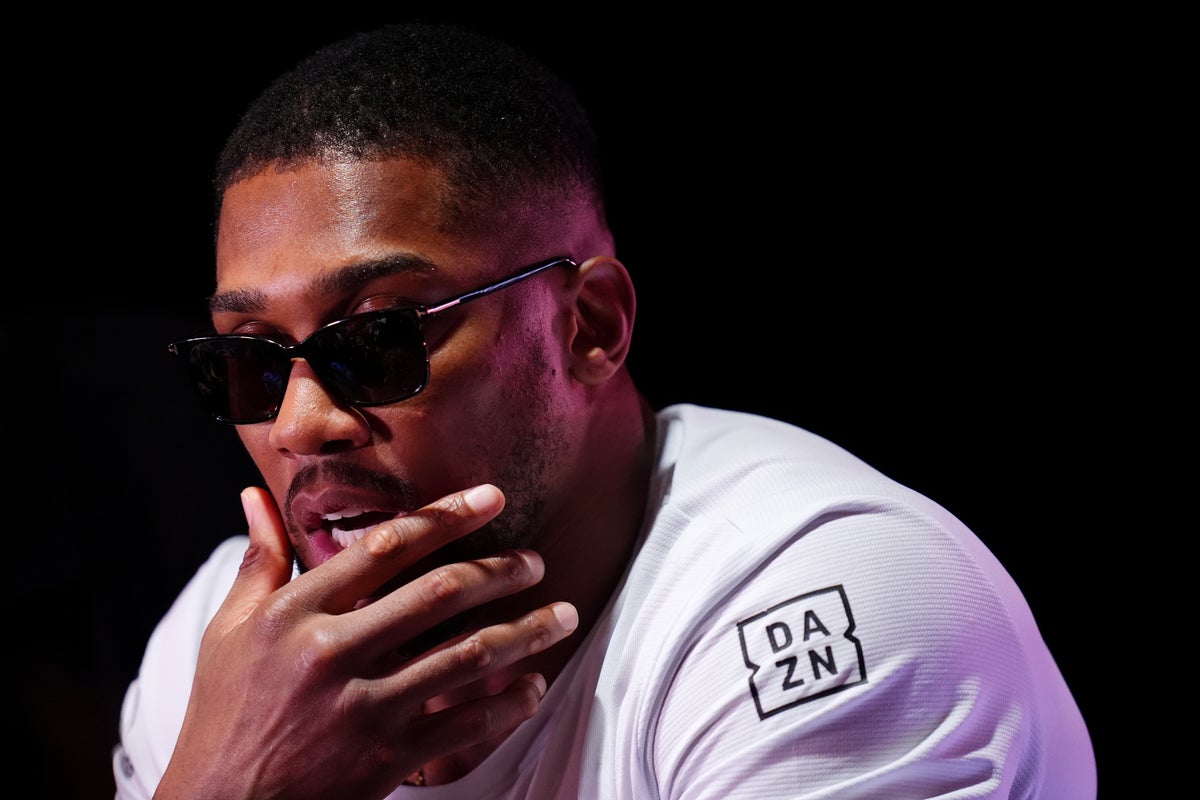
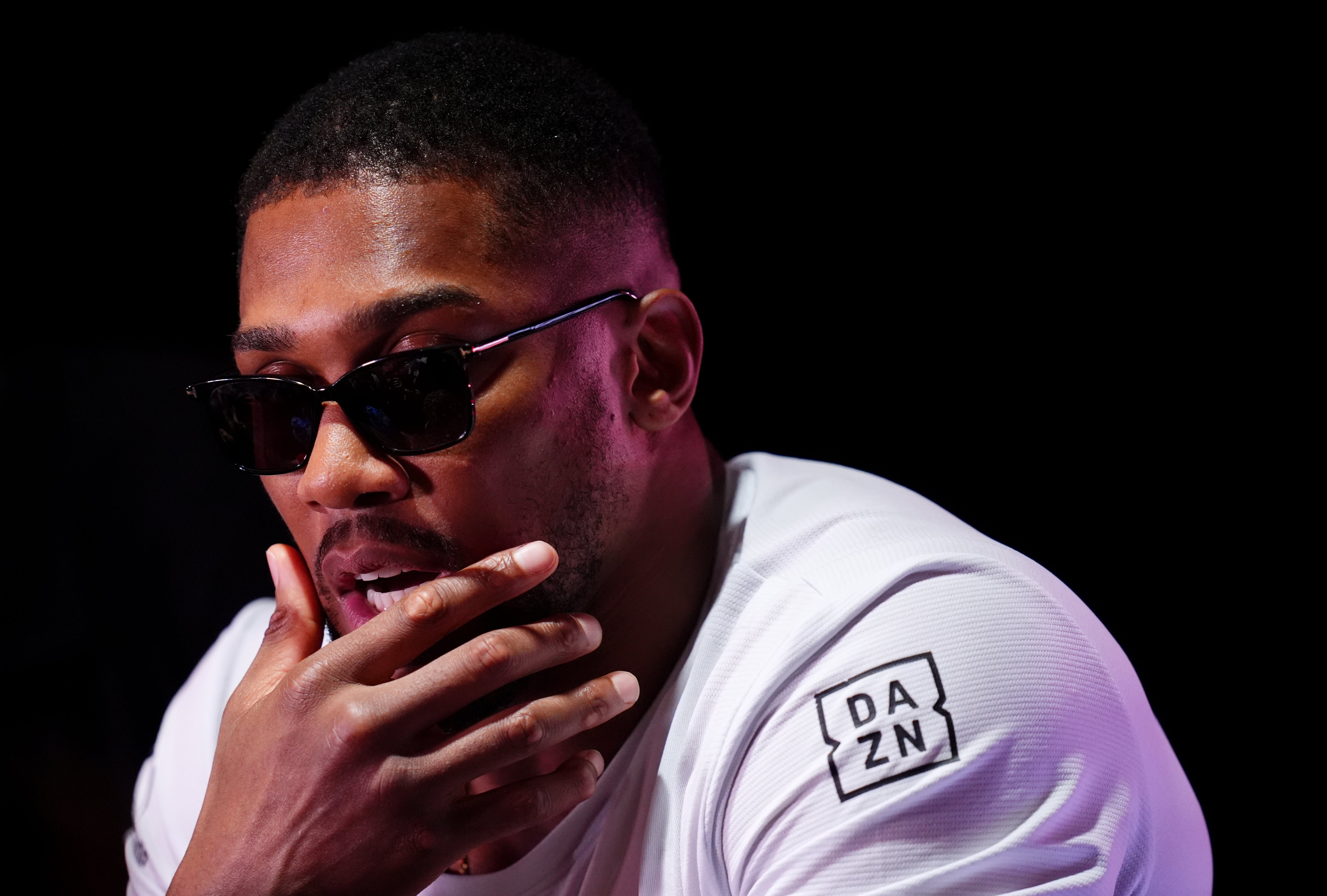
Anthony Joshua stood with his back to the door, journalists forming a semi-circle in front of him. He towered above us, his eyes dwelling behind square black sunglasses, but as several questions about his recent car crash were lobbed up at him – however gently – one might’ve wondered if he was the intimidated one.
There had been polite whispers in the minutes before he entered the room, suggestions from one side that the topic should be avoided, or limited to one or two questions, and at least approached with great sensitivity. In these situations, it’s sometimes hard to know whether it’s the athlete or their team who has made that call.
Ultimately, though, there were certainly more than one or two references to the accident. And yes, it was approached deftly and with genuine sympathy, but in a prolonged scene of what might be described as nuanced discomfort. That’s how it felt to me, at least. Maybe others in the room would disagree.
Six months on from surviving an accident that claimed the lives of his friends Sina Ghami and Latif “Latz” Ayodele, Joshua is preparing to box again. He knew that this decision would bring media duties with it, but the truth is that he could have opted against such duties. He is one of the very few athletes who could. Few would have complained, you would imagine.
Still, here was the former world heavyweight champion: all black sunglasses and grey tracksuit (a familiar sight), flanked by promoter Eddie Hearn, and ushered into a dimly lit room, underground in an event space in White City. For whatever divided opinions exist on the 36-year-old, he has always been unfalteringly polite in these environments, I have found. Here, as usual, he entered and exited with handshakes for everyone and acknowledgements of all. Hearn, not as usual, was silent throughout.
Between AJ’s entry and exit, though, he had the task of discussing Tyson Fury, whom he will fight sometime later this year; his rival-turned-friend Oleksandr Usyk; and the crash.
At no point was he asked about Kristian Prenga, the unknown Albanian heavyweight whom he will box in Saudi Arabia on 25 July.
Even some of the questions that weren’t about the crash contained vague references to it – references laced with hope, as though Joshua might bite on that awkward, sad thing hanging in the air, whatever it really was.

Enjoy 185+ fights a year on DAZN, the Global Home of Boxing
Never miss a fight from top promoters. Watch on your devices anywhere, anytime.
Buy Now
ADVERTISEMENT. If you sign up to this service we will earn commission. This revenue helps to fund journalism across The Independent.
Enjoy 185+ fights a year on DAZN, the Global Home of Boxing
Never miss a fight from top promoters. Watch on your devices anywhere, anytime.
Buy Now
ADVERTISEMENT. If you sign up to this service we will earn commission. This revenue helps to fund journalism across The Independent.
To be clear, this is not in any way a criticism of those questions or their askers. A journalist has two main jobs, you could argue: to uncover news and to tell stories (there is an overlap there, of course). Asking Joshua these questions was doing both. Maybe it’s a fault of my own that I couldn’t bring myself to ask one. Then again: maybe, if there hadn’t already been so many questions on the matter, I would have asked one anyway.
Regardless, Joshua did discuss the crash, to his immense credit – not that there would have been anything wrong with skirting the topic entirely.

“Everyone’s different,” he began, when asked how he has dealt with the grief of the last six months. “For me, I have to put my emotions to the side, because I’m focused on the parents if I’m honest. My emotions can come at a later stage, but I really look at their parents and understand that it must be most difficult for them.
“So, I don’t make it about me; I make it about them. I make it about the mums and the dads of the two boys […] That’s, for me, number one: being a good soldier for them. Got to look after the boys’ parents.
“[Burying it is] not [the best way] for everyone. Everyone deals with it differently, but I think… for me, that’s the best way I’m handling the situation. It’s not about me, it’s bigger than me.
“All of the boys, there’s a few of us that knew Latz, knew Sina. It’s love. It’s good to see from my perspective, it’s really good to see.” There it came and went: Joshua’s sole reference to his friends by name.
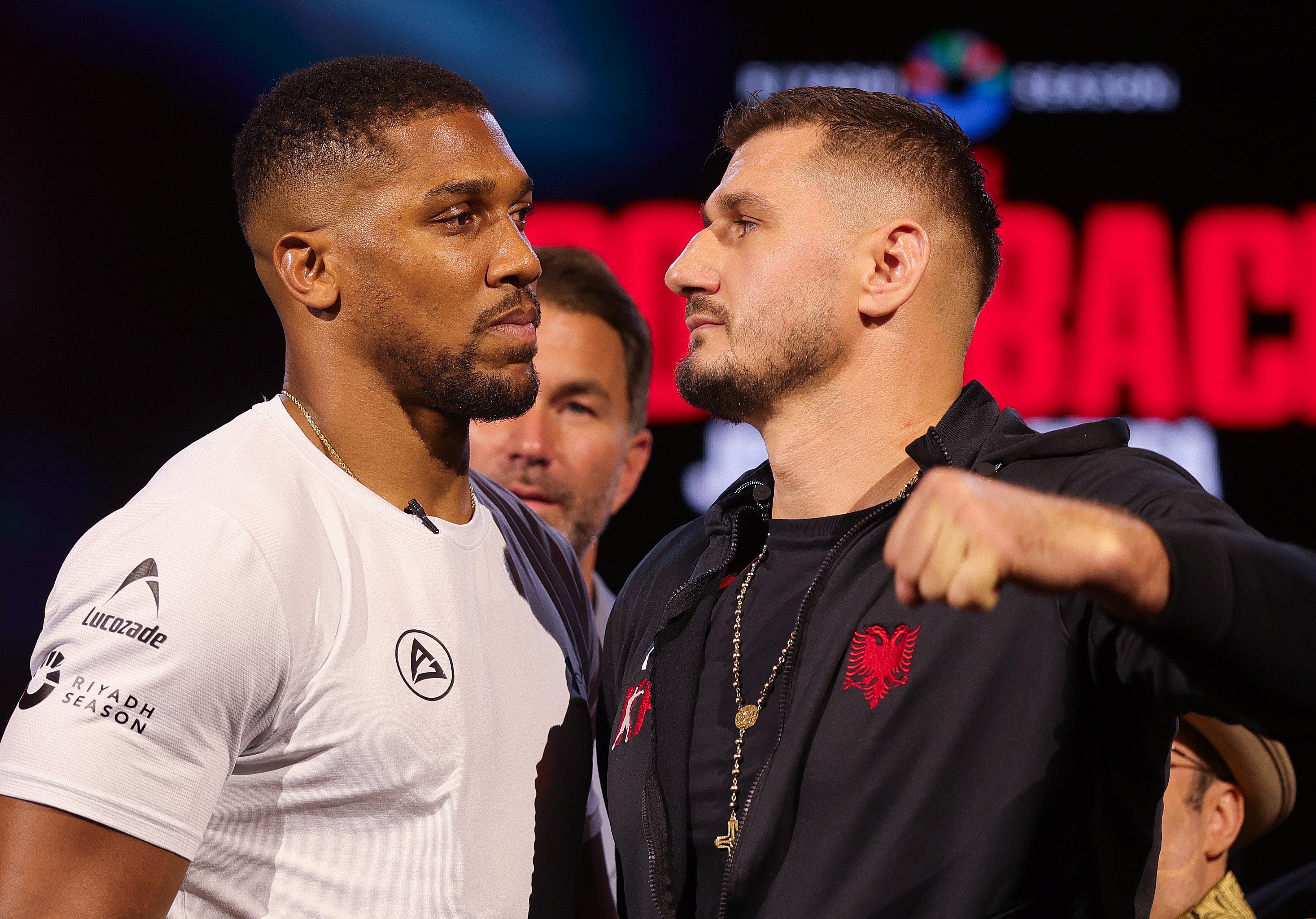
In other interviews on Monday, questions on the accident were largely avoided and Joshua’s references to it were translucent, apparently. Still, he was generally deemed to have been on good form. With us, he even found the verve to label Fury a “d***-rider”.
Also in our interview, one question put forward was whether Joshua had considered retiring in the last six months. It was one of those questions that mentioned the crash without actually mentioning it, I suppose.
Joshua insisted that he had not contemplated retirement, even suggesting that he could box for another three and half years, until he is 40. “I know [boxing] is the place where I am most comfortable,” he said. “It gives me a purpose in my life, so yeah, I’m content being here with you guys.”
So, there is Joshua’s side, and it is naturally worth more than any of ours. One could argue that, in graciously saying he was “content” to share a room with us, he was in some way accepting a gentle probe into the most traumatic episode of his extraordinary life. And it is a privilege for us to be granted these opportunities, of course.
Still, while I can’t speak for anyone else in that room, I wish he’d been anywhere else than with us, discussing that.