

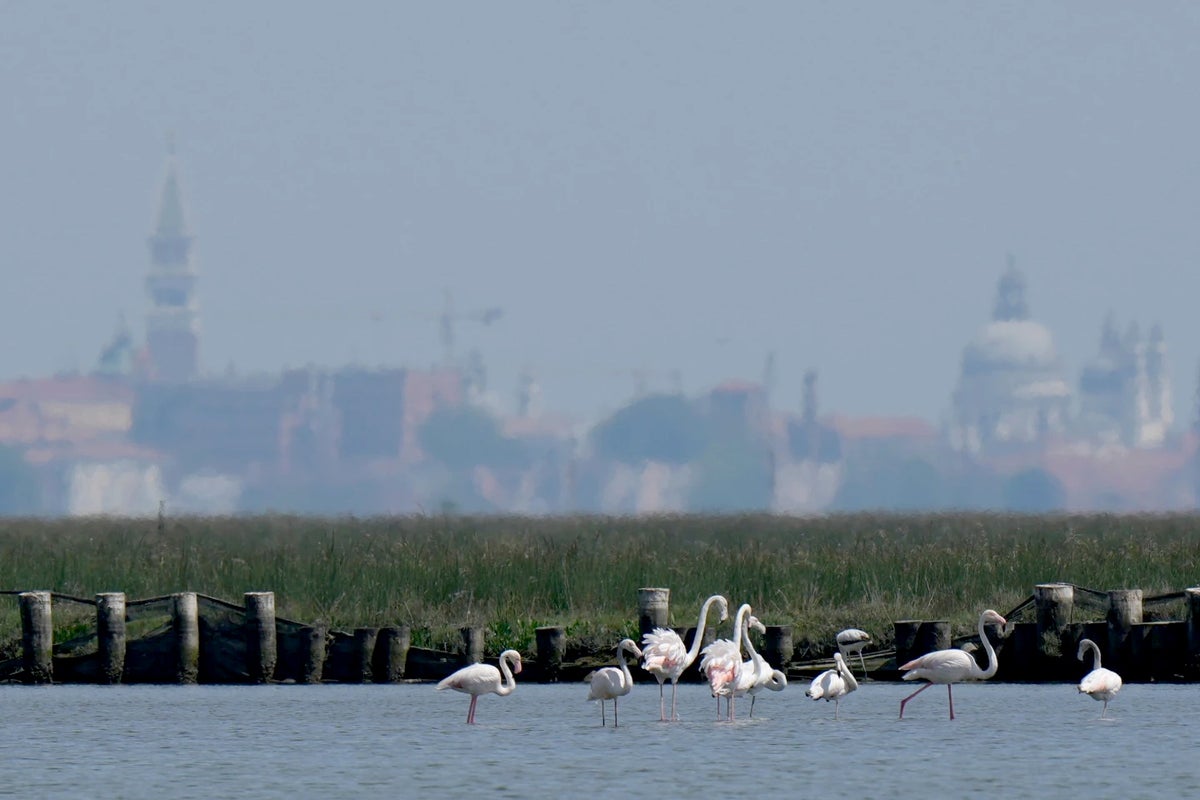
The flamingo’s newcomer status in the Venetian Lagoon is perhaps best underscored by the absence of a word in the local dialect for the striking birds.
The pale pink creatures, known as “fenicotteri” in Italian, are now appearing in Venice in unprecedented numbers.
The surge is attributed to ongoing ecological initiatives aimed at restoring damaged wetlands, which are expanding their habitat and could potentially encourage them to nest within the lagoon.
Flamingos, which are more commonly associated with nesting sites in Spain and France, first began to appear in the vast Venetian Lagoon in the early 2000s.
Their presence was primarily noted in the remote fishing valleys and mudflats of the lagoon’s outer reaches, with sightings in the historic, tourist-frequented centre of Venice remaining a rare occurrence.
An unlikely flamingo haven
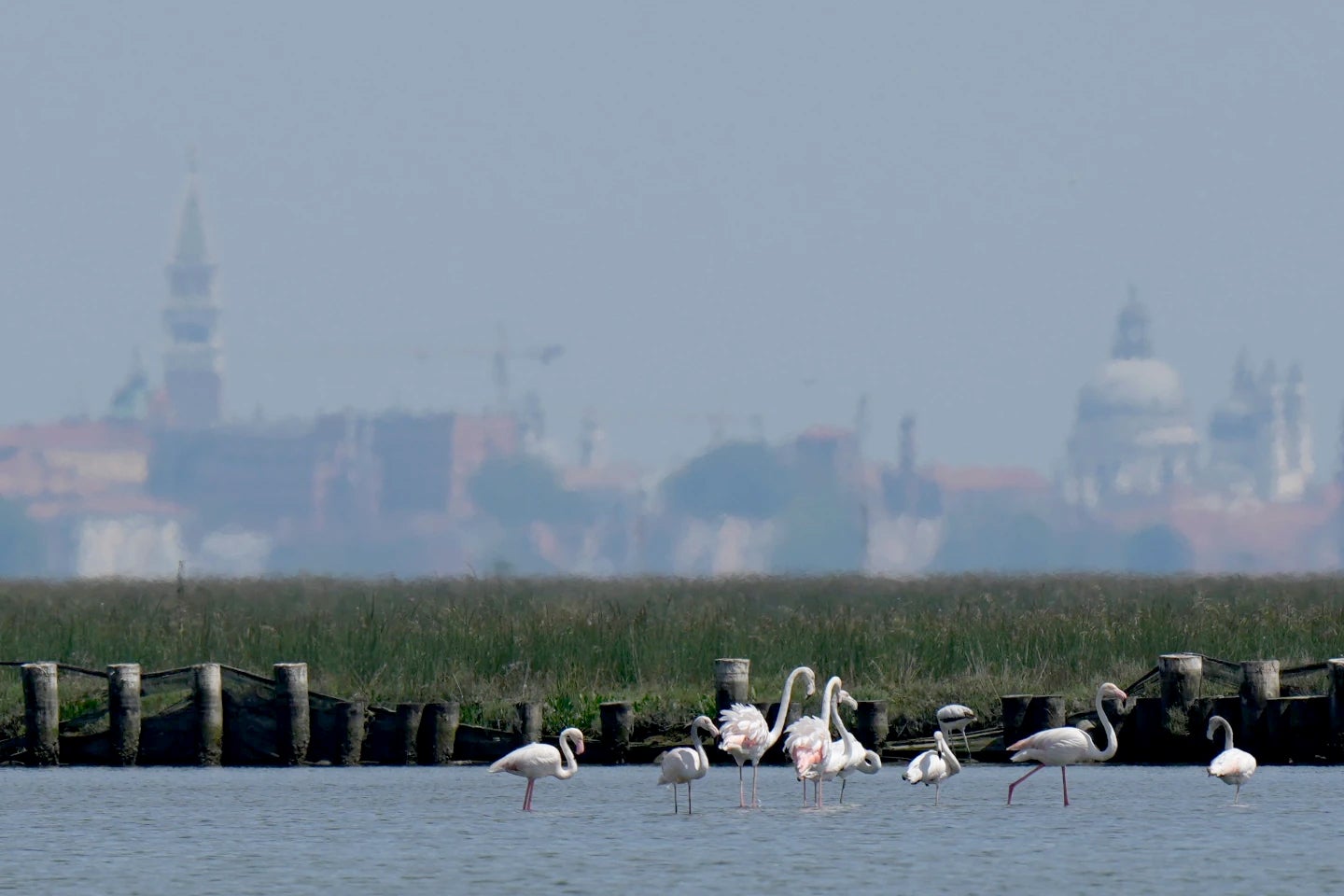
Environmentalists say their arrival in Venice as the European flamingo’s range expands is a sign of the lagoon’s health and suitability as a feeding ground.
In 2025, the number of wintering flamingos in Venice peaked at a record of nearly 24,000. That is 6,000 more than the previous year, numbers “that position the Venetian Lagoon as one of the most important wintering spots in its entire habitat range”, said ornithologist Alessandro Sartori.
Mr Sartori surveys the lagoon weekly by boat for signs of nesting, which would indicate a self-sustaining Venetian colony. So far there are no fresh signs after two nesting attempts, in 2008 and 2013, in northern lagoon fishing valleys suffered serious setbacks, including violent hail that killed dozens of birds.
More than 90 per cent of the birds counted in last year’s census were in the northern lagoon, which contains a large area of natural salt marsh. The flamingos are also attracted by the traditional fishing valleys, semi-natural embanked wetlands that provide abundant food but can also bring them into conflict with human activity.
Debate over marsh project
A project to reconstruct salt marshes in the more isolated southern lagoon — past the historic centre and the industrial port — raises prospects that flamingo numbers will increase there as well by offering a new habitat in an area of the lagoon where wetland erosion has been especially severe. It could also draw the birds away from competing human uses in the north.
The Venetian Lagoon, covering an expanse of 550 square kilometres (more than 200 square miles), was originally nearly half salt marsh. Today the area of salt marsh — or “barene” in the Venetian dialect — is just about 7 per cent, about half of it reconstructed, said Jane da Mosto, the executive director of We Are Here Venice, the local partner in the EU’s €23.6 million euro (£20.4 million), five-year WaterLANDS project to restore wetlands across Europe.
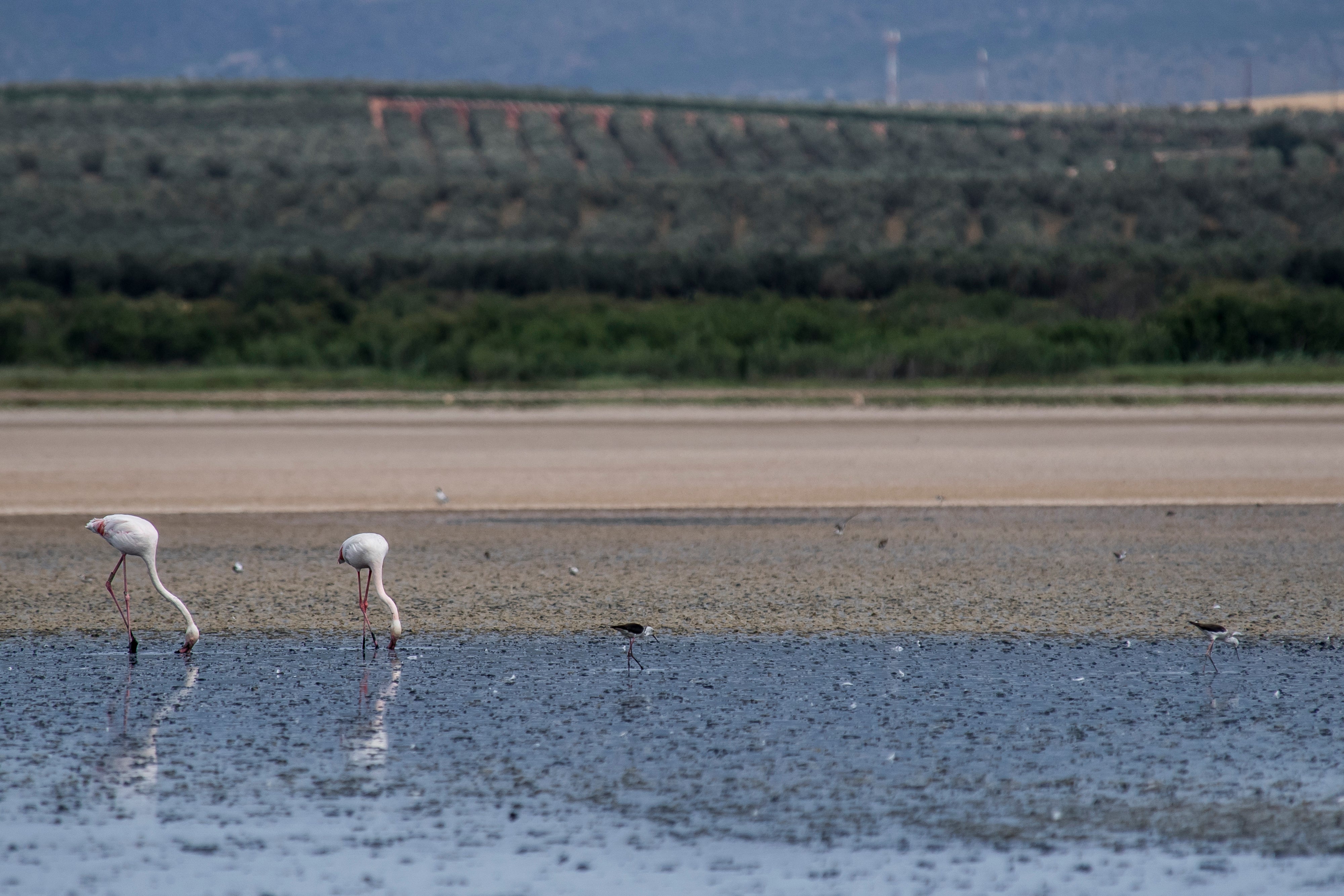
The damage is especially stark in the central and southern lagoon, due to the combination of natural erosion and the dredging of shipping channels to access the Marghera industrial port in the 1960s.
“And since then, there’s been much more widespread erosion and loss of sediments from the lagoon to the point that Venice is now on a trajectory to becoming a marine bay,” said Ms da Mosto. The wetlands reconstruction project “is specifically to show that it’s possible to address this trend and change the course of history”.
Rebuilding the salt marshes increases the lagoon’s ability to capture carbon dioxide, a greenhouse gas and driver of climate change, and mitigates the effects of rising sea levels. But Ms da Mosto said much larger areas would need to be restored to produce meaningful climate benefits. The goal of the EU project is to make salt marsh reconstruction scalable.
Flamingos can also benefit as biodiversity increases.
Ms da Mosto’s team is researching ways to increase biodiversity on the reconstructed marshes, including planting species that can help reduce erosion and make the wetlands more resilient.
The mudflat where they are working contains signs of flamingo activity, chiefly stray pink feathers. On a recent day, a flock of some 30 were perched in the distance — scattering when a pair of squawking oystercatchers alerted them to visitors.
Already, Mr Sartori believes that the reconstruction has begun to draw more flamingos to the area. Over the last three years, he has seen their numbers in the southern lagoon grow from just a handful to as many as 300 to 400 in certain periods.
“The hope is that they can find — as they have found in other parts of the Mediterranean — right here on these barene, places where they can nest,” Mr Sartori said.
Bird lovers could flock to Venice
The flamingos’ presence in the lagoon underlines the importance of the Venetian ecosystem and offers a new way for visitors to interpret the canaled city and outer islands through their ecological — and not just historical and artistic — significance.
Still, visitors to Venice who hope to casually spy flamingos will probably be disappointed, and reporters recently had to travel by boat for an hour to spot any. The flamingos inhabit shallow, difficult-to-access reaches of the lagoon where navigating safely requires close attention to tides and channels. Even at a distance, the birds are easily disturbed and quick to take flight.
Mr Sartori predicts flamingo spotting — already a possibility from the shores of the small lagoon islands of Murano and Burano but rare in the historic centre — could become more common as their numbers continue to grow.
“Obviously this should always be done with respect for the animals, keeping a safe distance and not interfering with their daily lives,” he said.