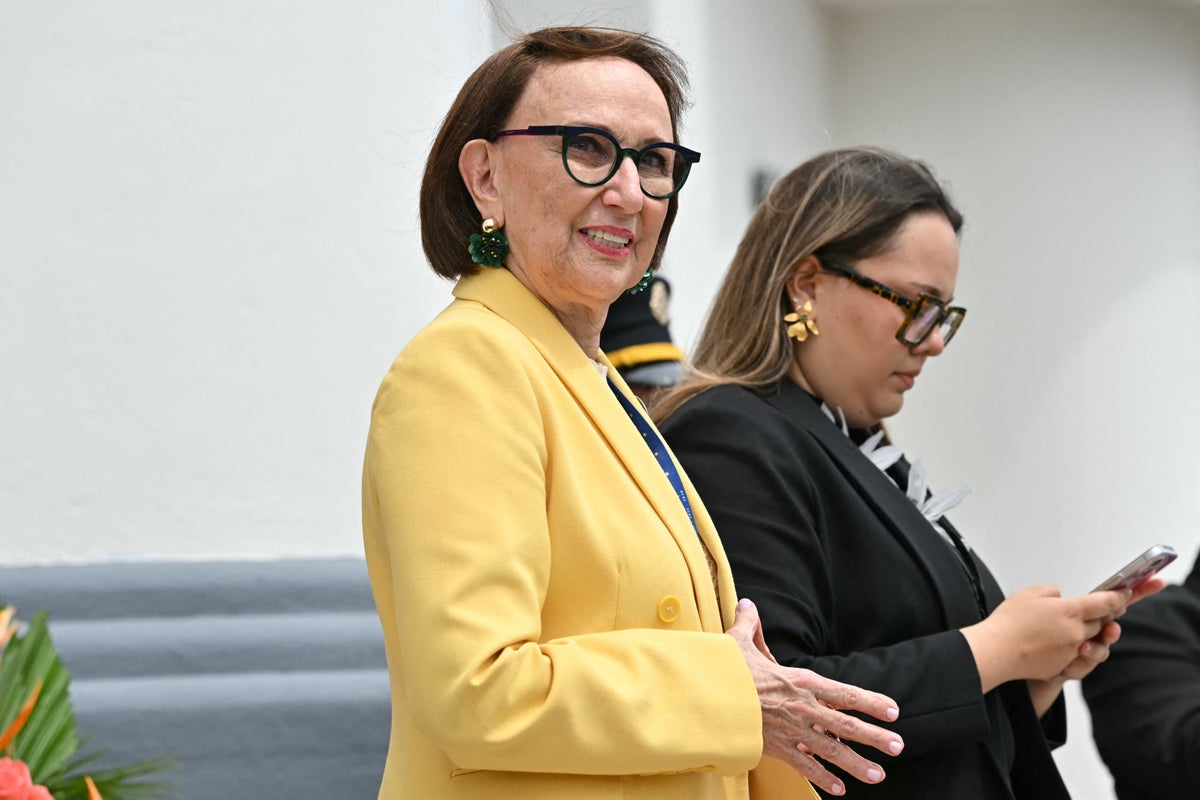
The UN must start taking more risks and not only be led by bureaucratic elements, Rebeca Grynspan, a leading candidate for the UN secretary general said at a hustings event at the think tank Chatham House on Friday.
Ms Grynspan’s comments come at a time when the UN is facing a daunting array of crises, including a severe funding shortfall that is crippling humanitarian and development efforts, political gridlock in the security council, and growing cynicism over its ability to play a peace-keeping role amid escalating conflicts around the world.
When asked how she would respond as secretary general to a scenario such as an armed intervention in Venezuela or an attack on Iran, Ms Grynspan said that the UN has become too “risk averse”, and agreed that it is important for the secretary general to “speak out”.
“The Secretary General is the moral anchor of the principles of the [UN] charter,” she said. “The UN has become too risk averse… [Sometimes] we have to take risk, not crazy risk, but calculated risk”.
The work of conflict mediation and preventive diplomacy cannot be carried out in a “pyramidal, bureaucratic structure”, she added, as she called for more strident moral leadership at the top of the global body. “Bureaucracies are very risk-averse by nature, and you cannot have a good idea or take risk,” she said.
A native of Costa Rica, Ms Grynspan rose to prominence as secretary general of UN Trade and Development (UNCTAD), where she drew widespread praise for her role negotiating a deal between warring parties for the continued export of grain from Ukraine in the months that followed Putin’s invasion, and thus avoiding a global food crisis.
She is now seen by some as the frontrunner to replace current secretary general Antonio Guterres, according to several sources familiar with the matter, and if selected she would be both the first woman and first Jewish person to be secretary general.
Speaking on Friday, Ms Grynspan also called on the UN Security Council to expand its membership, highlighting that there is currently no permanent member from either Africa or Latin America. “I have no doubt that the Security Council will carry more weight if it represents the world of today and not the world of 1945,” she said.
She suggested, too, that the UN’s current financial crisis is “linked to [a] political crisis”, and suggested that it would be important to “bring back those that are skeptical about us” such as the US, which last year cut its aid to the UN by 87 per cent.
Amid a wide array of global challenges and growing skepticism that the UN remains capable of addressing them, Ms Grynspan expressed confidence in the ability of the UN to renew its sense of authority around the world.
“The UN was built at a moment where there was also mistrust… but there was the belief and the hope that a better world was possible, that the use of uncontested and unrestrained power did not bring a better world, but destruction,” she said.
“I think that we have to recover that sense again… But I am not defending the UN as it is. I think that the UN has to change.”
This article was produced as part of The Independent’s Rethinking Global Aid project