
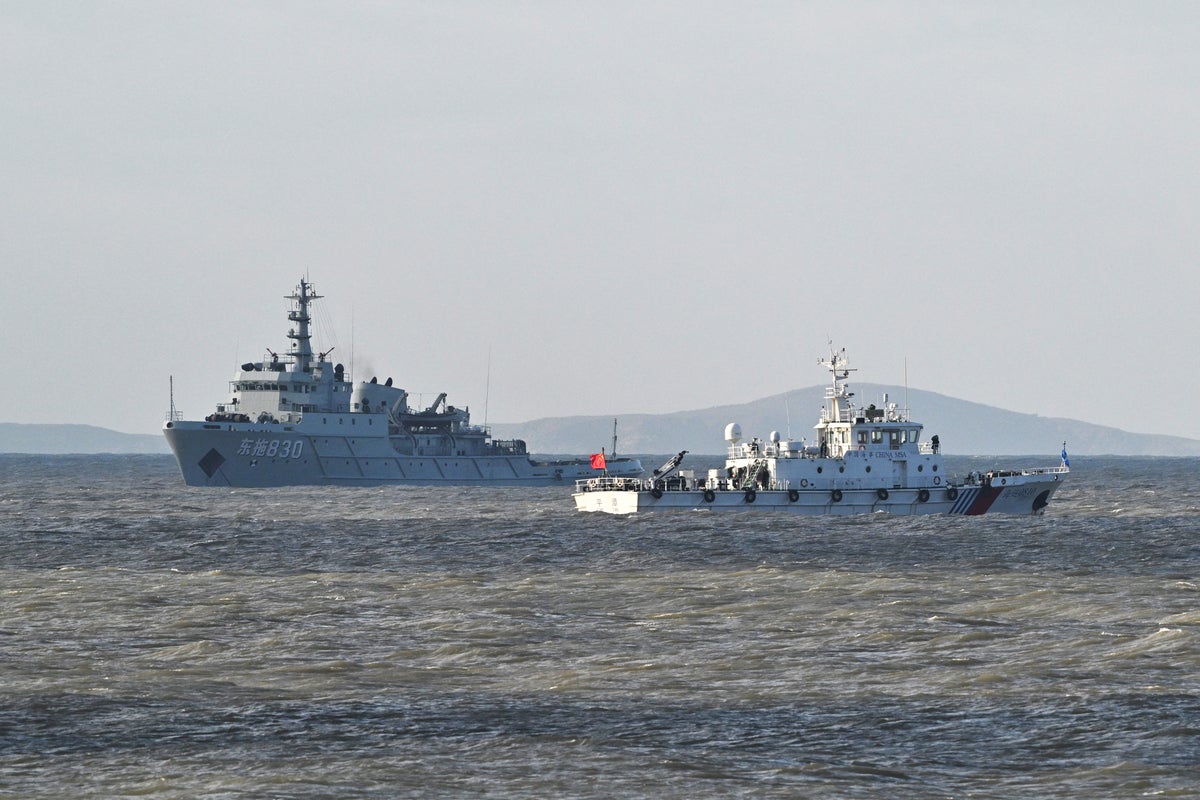
Taiwan sent ships and fighter aircraft to monitor a second Chinese “joint combat readiness patrol” near the island within a week as it intensified vigilance over Beijing’s military activities.
China has pressured Taiwan by increasing its military presence around it and Taipei has been on high alert for further Chinese actions after president Xi Jinping discussed the dispute over the island with American president Donald Trump in Beijing this month.
China views Taiwan as its own territory and operates its warships and warplanes around the island on an almost daily basis. Taiwan’s government rejects Beijing’s sovereignty claims.
Late on Monday, Taiwan’s defence ministry said that it had detected 21 Chinese aircraft, including J-16 fighter jets and drones, operating all around the island, which, along with warships, were carrying out a “joint combat readiness patrol”.
China’s defence ministry did not immediately respond to a request for comment.
Taiwan’s defence ministry published three pictures taken by its own forces, one from an F-16 jet of two Chinese fighters trailing a Y-20 refuelling aircraft, another of the Chinese warship Yinchuan and a third of a Taiwanese navy sailor watching the same ship through binoculars.
Speaking in Taipei on Tuesday, Pan Chun-kuang from the ministry’s intelligence department said that the Chinese “combat patrol” had already ended.
But Taiwan continued to track the movements of the aircraft carrier Liaoning operating in the Western Pacific and would release more details of Chinese activities as needed, he added.
China carried out a similar “readiness patrol” last Tuesday, the day before Taiwanese president Lai Ching-te marked his second year in office.
China previously called Mr Lai a “separatist” and rebuffed multiple offers from him for talks.
Over the weekend, Taiwan said its coast guard had faced off with a Chinese ship near its Pratas Islands, which are strategically located at the top end of the South China Sea.
On Saturday, Taiwan’s National Security Council secretary general Joseph Wu took to social media to detail the 100 Chinese ships he said were currently in the first island chain, referring to an area running from Japan through Taiwan and into the Philippines.