

The UK’s Eurovision entry, Look Mum No Computer, knows that the odds are, quite literally, stacked against him when he competes in this year’s final.
The bookies have him down at 80/1 to win, but the musician and YouTuber born Sam Battle has said he’s “happy to be an underdog” in the annual song contest, as he responds to calls to boycott the event.
Battle, 37, is representing the UK in Vienna, Austria, with his song “Eins, Zwei, Drei”, amid controversy surrounding the European Broadcasting Union (EBU) decision to allow Israel to compete.
Speaking to The Independent this week, Battle seemed acutely aware of the challenge he faces, but wasn’t bothered by predictions that he might fare poorly.
“I’m 100 per cent on the job – I’m focusing on it completely,” he said, speaking from a hotel room in Vienna. “I’m practising every day, exercising so I’ve got the stamina…”
“I’m used to being an underdog,” he continued. “There’s all different ways of looking at it, but it’s not bothering me, because nobody’s actually seen the full [performance]. There’s a lot more going on than meets the eye – I’m hoping it’s going to surprise people.”
He has the unenviable task of trying to bring the UK its first win since 1997, when Katrina and the Waves triumphed with their song “Love Shine a Light”.
Since then, the nation has rarely come close to winning – often coming in last or close to last place – with the exception of Sam Ryder in 2022, who came in second with his song “Space Man”. Otherwise, the UK’s glory days are a distant memory.
The reactions to “Eins, Zwei, Drei” – a zany electronic-pop song that makes heavy use of synths – have also been decidedly mixed. In a three-star review for The Independent, critic Adam White called the track “very English in a way that’s both horrendously embarrassing and oddly charming”.
“Sonically speaking, ‘Eins, Zwei, Drei’ has the feel of the distant past, like a Kaiser Chiefs album track or something by The Ting Tings,” he said. “Which is all to say that this is a very heterosexual Eurovision entry, devoid of camp or glitz or whatever Olly Alexander was doing a few years ago.”
Battle is guaranteed a spot in the final due to the UK’s position as one of the “Big Four” countries that make the largest financial contributions to Eurovision, along with Italy, Germany and France. However, he will still get to perform live during the second semi-final on Thursday (14 May).
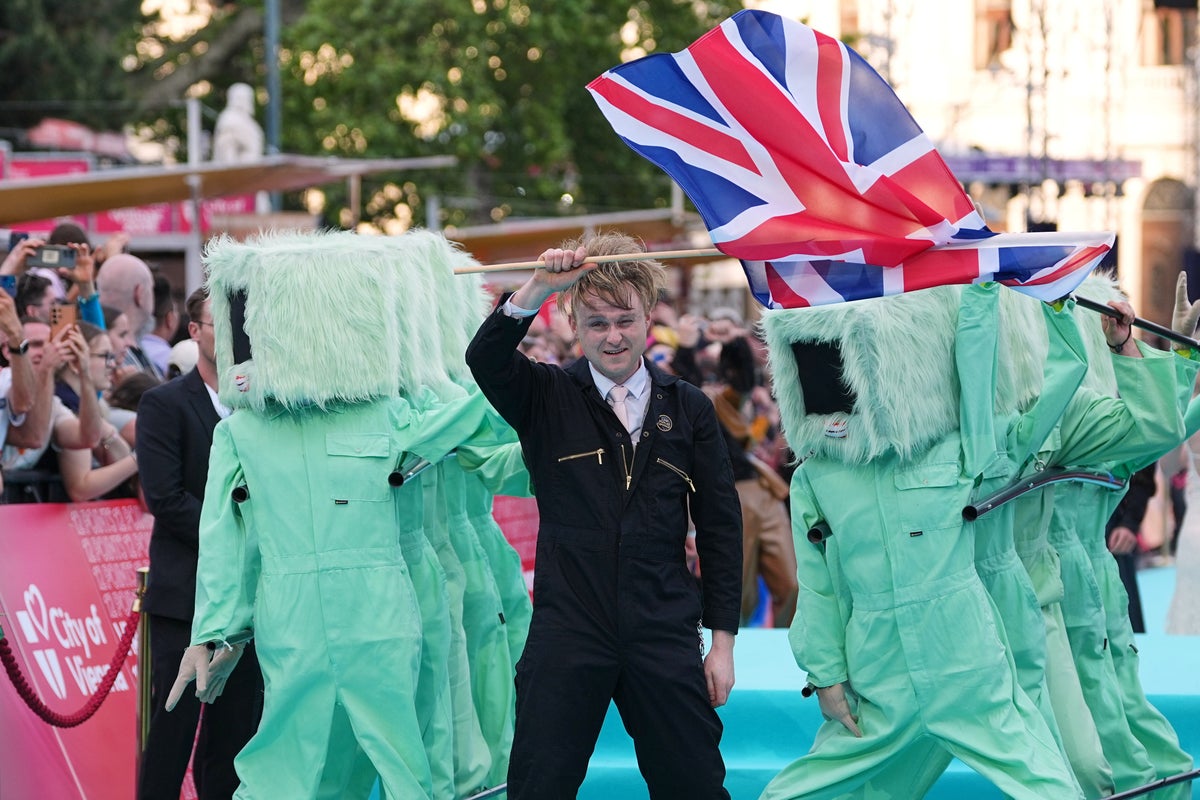
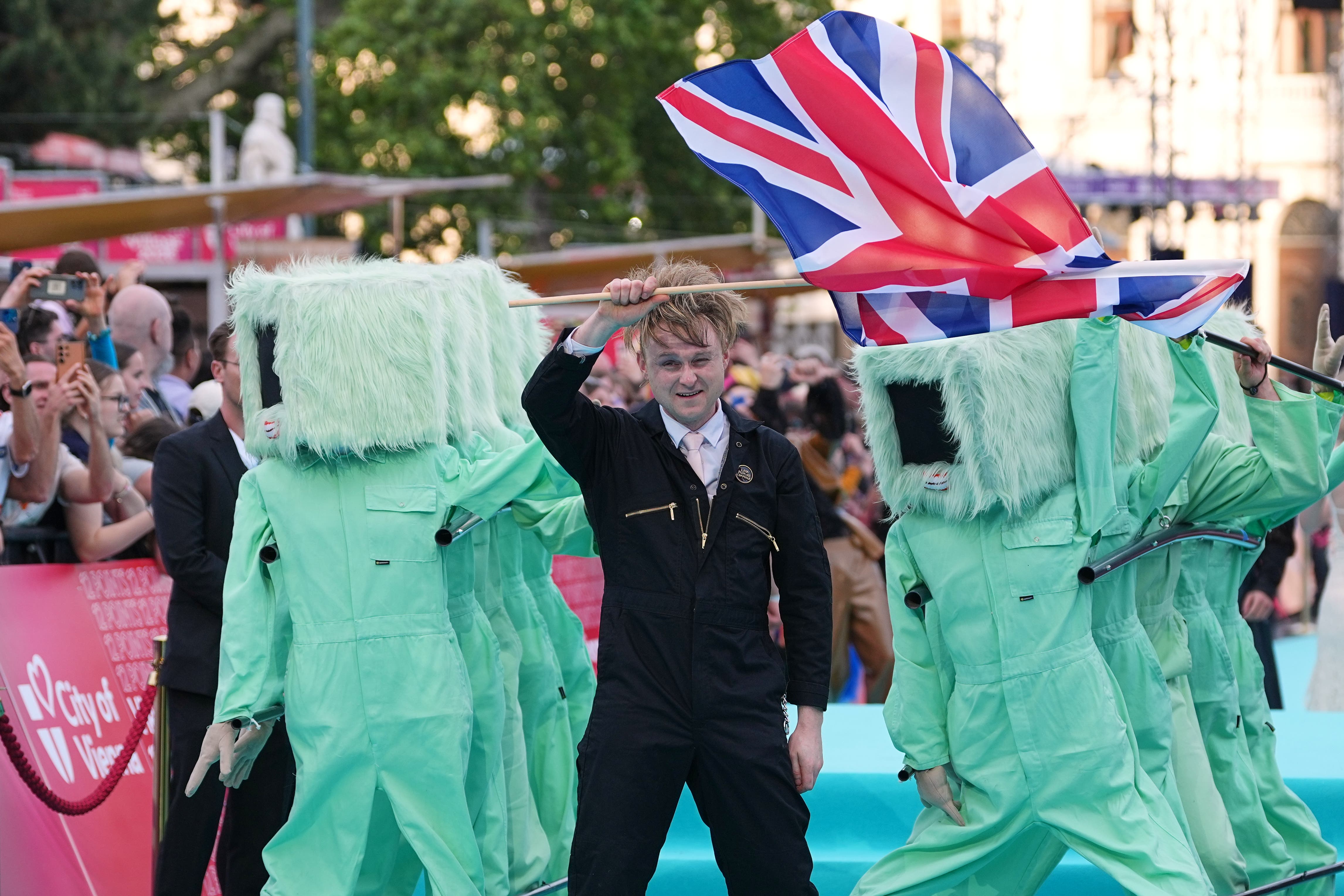
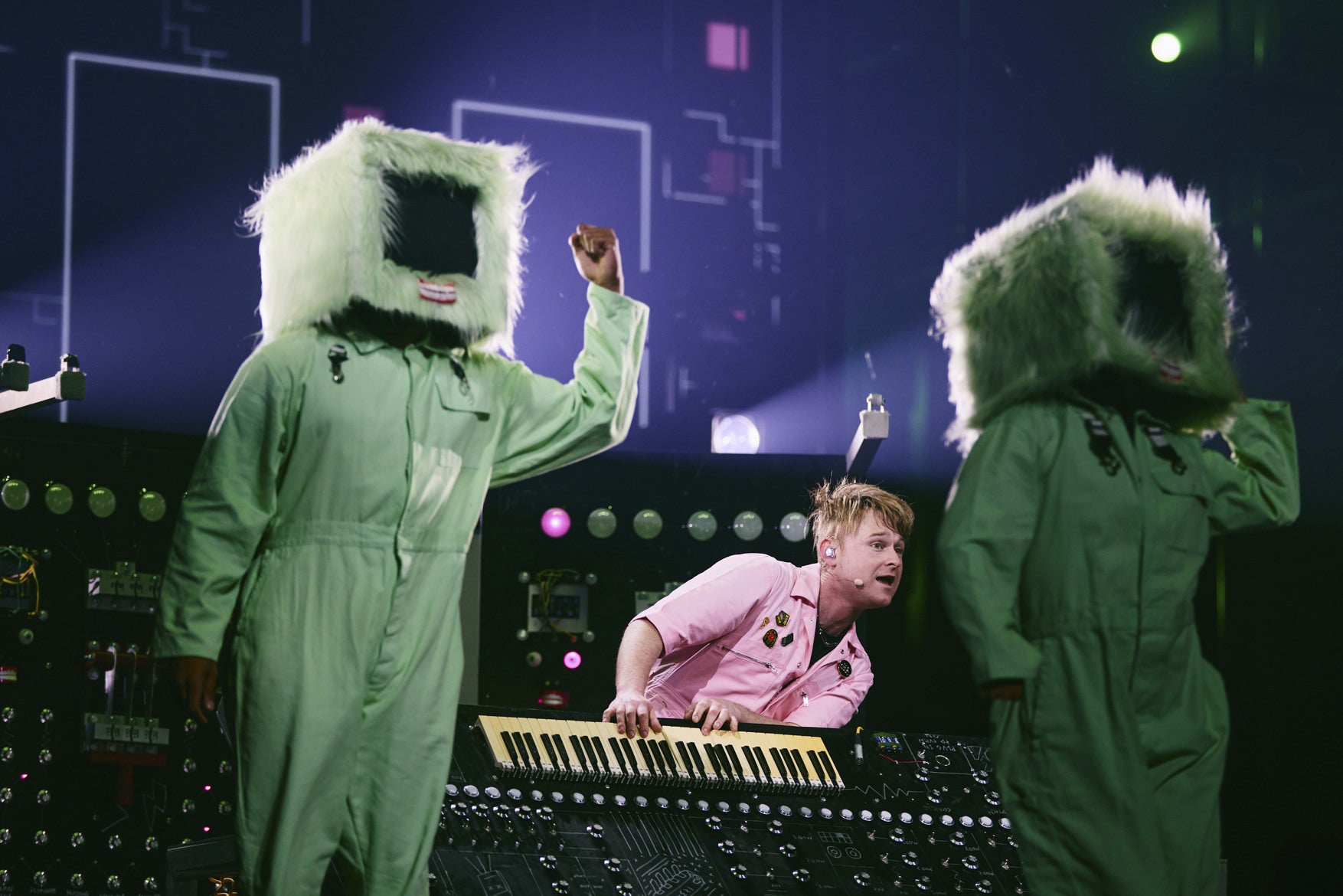
His staging is arguably the most eccentric of any Eurovision act this year.
The vision of creative director Fredrik Rydman – who created the stage for Nemo’s winning performance of “The Code” for Switzerland in 2024 – features office-themed props built by Battle himself, custom synths… and dancers in boiler suits with furry computers for heads.
Asked about the idea that any UK entry for Eurovision is something of a poisoned chalice, given our recent run of failures, Battle said he went through a “long thought process” before putting himself up for the task.
“Eurovision has been going for 70 years,” he said, “[it was started] to bring a bit more happiness within Europe postwar… It’s just about keeping it going and keeping it on the straight and narrow. The most important thing for me is to be involved.”
Last month, over a thousand artists signed an open letter calling for a Eurovision boycott over Israel’s inclusion, including Paul Weller, Brian Eno, Massive Attack and Paloma Faith.
“As musicians and cultural workers, many living within the reaches of the [EBU], we reject Eurovision being used to whitewash and normalise Israel’s genocide, siege and brutal military occupation against Palestinians,” the letter said.
Five countries – Spain, Ireland, Slovenia, Iceland and the Netherlands – also chose to boycott the event this year over Israel’s inclusion.
Battle responded to the calls for a boycott by stating that it was the BBC’s decision, as the UK broadcaster, to take part in Eurovision each year, and that he was going “as the artist … being creative and focusing on the music – and trying to focus on what it’s about, which is keeping Europe together, keeping Europe happy”.
“People need to bloomin’ smile once in a while, it’s about creativity and music,” he said.
“The tension might happen [at the contest], there might be a change of mood – that’s understandable as it gets past the semi-finals,” he continued. “The mood may be completely different, and I have no idea what to expect. I’m going to hunker down, focus on the job at hand and try my hardest.”
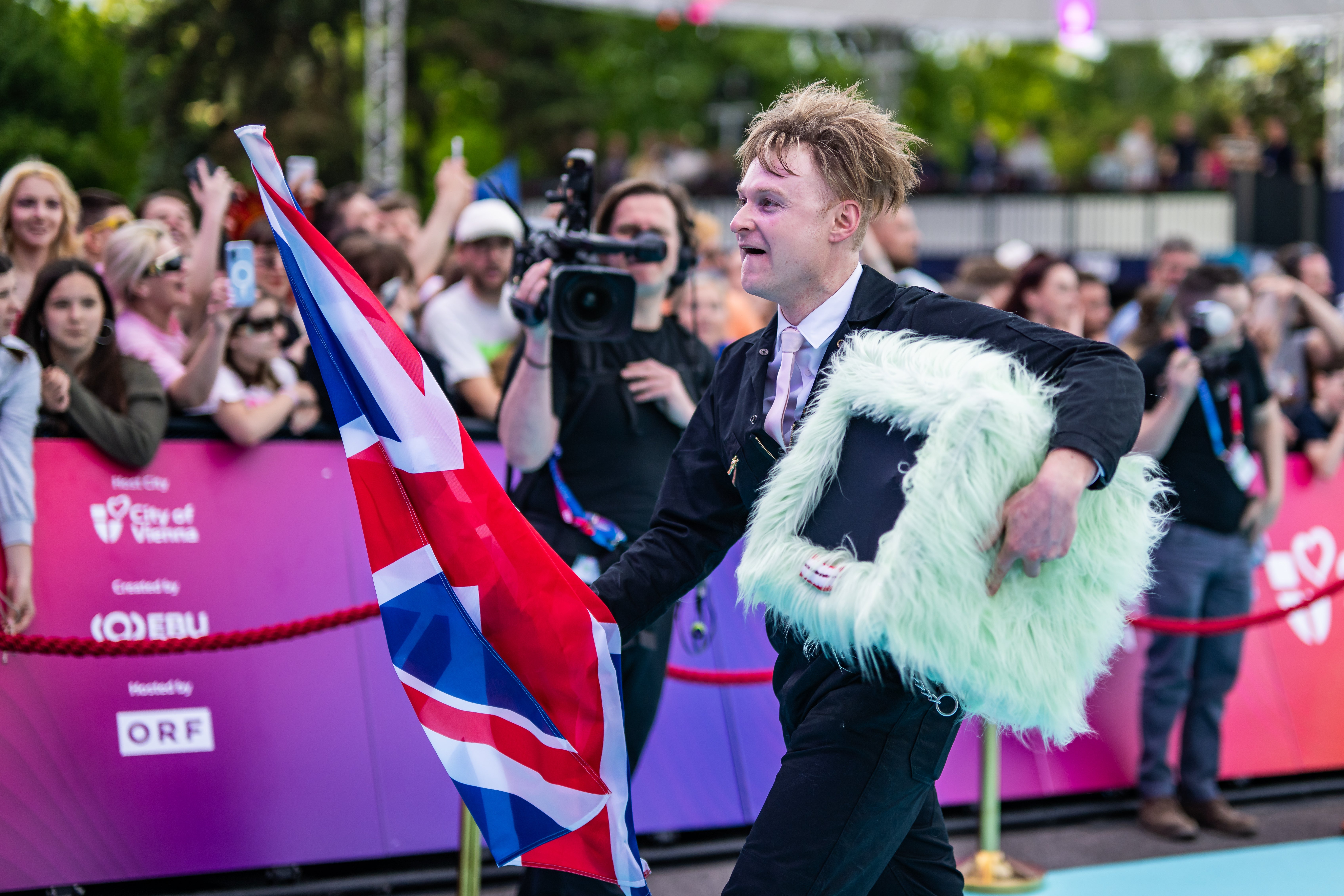
He said his staging was inspired by what he described as a cultural feeling in Britain of “whatever you’ve got, you make the most of it”.
“It’s the person in their shed in the middle of England… that mindset has fuelled inventions not just for the UK, but for the world,” he said. “I’m trying to maintain that kind of aspect of Britishness: it might not be perfect, but we just got to, you know, keep calm and carry on, basically.
“The main thing I want to take away from this is just knowing I tried my hardest.”
Watch Look Mum No Computer perform in the Eurovision semi-final on Thursday 14 May, from 8pm on BBC One, and in the grand final on Saturday 16 May from 8pm