The King’s Speech, traditionally a moment for governmental clarity and a reset, is set to proceed amidst profound political uncertainty, a stark contrast to its original intent as a boost for Sir Keir Starmer following recent electoral setbacks.
With the Prime Minister’s position in jeopardy and a growing number of Labour MPs calling for his exit, the speech, which outlines the government’s plans for new legislation and aims to set a clear policy direction, takes on heightened significance.
Following a parliamentary session that delivered key manifesto pledges such as the Renters’ Rights Act, Employment Rights Act, and the Planning and Infrastructure Act, this address will now outline longer-term governmental objectives. Below is a summary of potential new legislation for the 2026-27 session, drawn from ministerial statements, government publications, and media reports.
– Bills introduced in draft form before being formally introduced to Parliament are expected to feature
There were two draft Bills published during the last session of Parliament.
The draft Equality (Race and Disability) Bill, which includes a manifesto commitment to introduce mandatory reporting on ethnicity and disability pay gaps for large employers, was included in the King’s Speech in 2024.
The Government’s response to the consultation on the Bill reported in March that 87% of respondents supported mandatory reporting in this context.
The draft Leasehold and Commonhold Reform Bill represents the Government’s planned approach to a manifesto pledge to “bring the feudal leasehold system to an end”.
The draft Bill includes a ban on leasehold for new flats and a cap on annual ground rents.
– Which other Bills included in the 2024 King’s Speech have not been introduced?
The Government had planned to introduce National Wealth Fund Bill during the last parliamentary session in a bid to “simplify the UK’s fragmented landscape of support for businesses and investors”.
According to a Government briefing, the approach would align different bodies under the wealth fund and place it on a statutory footing.
Rachel Reeves later announced that the an existing statutory body, the UK infrastructure bank, would become the wealth fund with an extended remit and funding.
The Treasury said that, to achieve the transition, the Government would introduce legislation “as soon as parliamentary time allows”.
– Were there any other Bills announced in the 2024 King’s Speech that have not progressed?
The King’s Speech included a Government pledge to publish two further pieces of legislation in draft form.
A draft Audit Reform and Corporate Governance Bill, which was described in the King’s Speech as including a new regulator with a broader remit, has been abandoned by the Government.
A draft Conversion Practices Bill, which would ban practices that aim to change someone’s sexual orientation or gender identity, has not been published.
The Government has said it remains committed to publishing a draft Bill “as soon as possible”.
– Bills relating to the economy are set to be a key focus
Sir Keir Starmer announced on Wednesday new legislation giving the Government power to nationalise British Steel, with this power subject to a public interest test.
This would mean the Government could only initiate the process if doing so was in the interests of national security, critical national infrastructure and the economy.
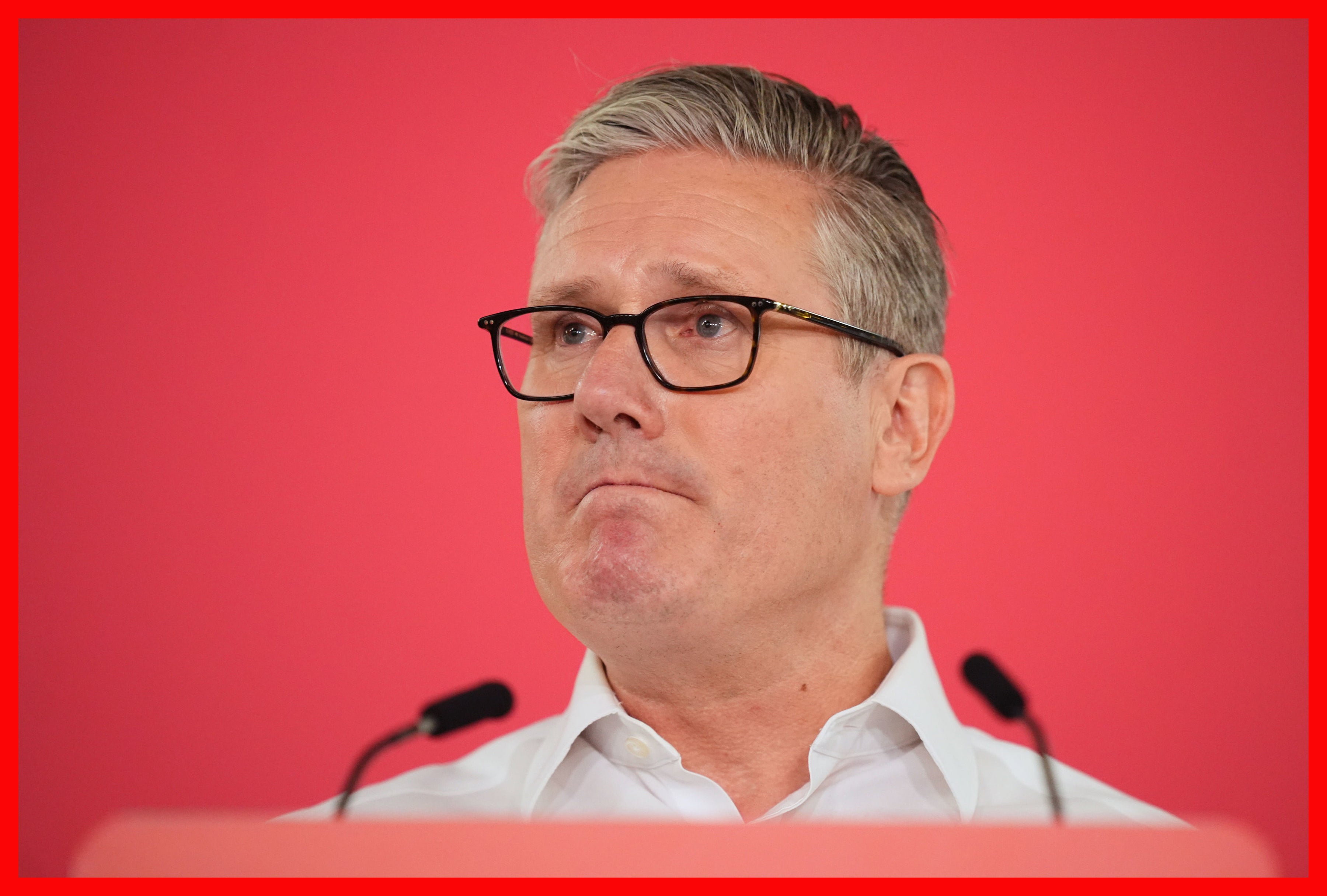
The Government has already taken control of British Steel operations and is in discussions with its current Chinese owner.
The Government has pledged to legislate to address late payments between business which are said to cost the economy nearly £11 billion a year and cause the closure of 14,000 businesses annually.
A new Bill focused on the technicalities of financial services is expected to be announced in the speech.
In October, Rachel Reeves has said plans to scrap paperwork and “arbitrary rules” for thousands of UK businesses would save firms almost £6 billion a year by the time of the next election.
She detailed measures to reform the company merger process, regulations for drones and reforms for artificial intelligence.
The Chancellor also confirmed plans to create simpler corporate reporting rules for more than 100,000 businesses, including removing the need for small business owners to submit lengthy director reports to Companies House.
The “Leeds reforms”, unveiled by Ms Reeves in July, promised the biggest package of changes to regulation on the financial sector in a decade.
It included reforming the bank ring-fencing regime and reducing burdensome regulation in the City in order to reintroduce “informed risk-taking” into the financial system.
– Expectation of legislation on asylum and human rights
The Government has stated its broad intention to make it more difficult for people in the UK without permission to obtain rights of residency.
A Home Office policy statement in November featured proposals which would require legislation.
Legislation is expected on restricting the use of Article 8 of the European Convention of Human Rights, an element that guarantees the right to respect for private and family life, which some migrants who do not qualify for a visa or asylum rely on.
New laws could be mentioned that would deny appeal rights to more people and establish an independent appeal body to hear claims currently considered by judges.
– Education and health potentially high on the agenda
The high-profile proposed reforms to the system of support for special educational needs and disabilities would required legislative change.
But the changes are not expected to be implemented until September 2029.
The reforms include a focus on shifting the emphasis on support towards greater inclusion.
A new health Bill is expected in the King’s Speech after the March announcement that NHS England, which has operational responsibility for the NHS in England, will be abolished.
Most of its functions, including commissioning some specialist services, are set to be absorbed into the Department of Health and Social Care.
The Government also use legislation to provide a statutory framework for reforms featured in the 10-year plan.
This could include changes in governance of local integrated care boards and NHS trusts.
– Home affairs and justice
Various commitments and conclusions from reviews suggest crime and criminal justice could feature in the speech.
A white paper published in January proposed significant changes to the structure of policing that would require legislation.
The Government wants to reduce the number of police forces, with a independent review currently considering the structure of new, larger regional forces.
There is also the aim to consolidate organisations including the National Crime Agency into a National Police Service and abolish elected police and crime commissioners.
The Government’s strategy for tackling violence against women and girls set out commitments to review current legislation alongside new measures.
As some of these are yet to be taken forward, they may be included in the speech.
Last year, the Government accepted all the recommendations made by Baroness Casey following her national audit on group based child sexual exploitation.
Several of the recommendations have been implemented or are in the process of being implemented.
However, a recommendation that it should be mandatory for police to gather data on the nationality and ethnicity of all suspects in such cases is yet to be implemented.
– Energy and water remain high on the agenda
Ed Miliband is expected to press ahead with the Energy Independence Act promised in the manifesto, with rising bills and concerns over the security of supply.
The Government has announced an increase in the windfall tax on electricity firms and is expected to legislate to make it easier to install electric vehicle chargers.
Legislation is set to replace water regulator Ofwat with a single body responsible for pollution and caps on household water bills.
– Other policy areas that could be mentioned
A Bill intended to accelerate remediation of cladding on properties is expected following an announcement last year.
The Government is likely to complete the Representation of the People Bill to reduce the voting age to 16 at general elections.
During the first joint summit between the UK Government and the EU since Brexit in May 2025, commitments were made to strengthen cooperation across a range of issues.
This included an agreement “to prevent unnecessary border checks and help tackle the cost of food”, which was a Labour manifesto commitment and would required primary legislation.
In the wake of the Lord Mandelson scandal, the Government promised legislation enabling the removal of peerage titles from “disgraced peers”.
There is currently no provision for the removal of peerage titles.