



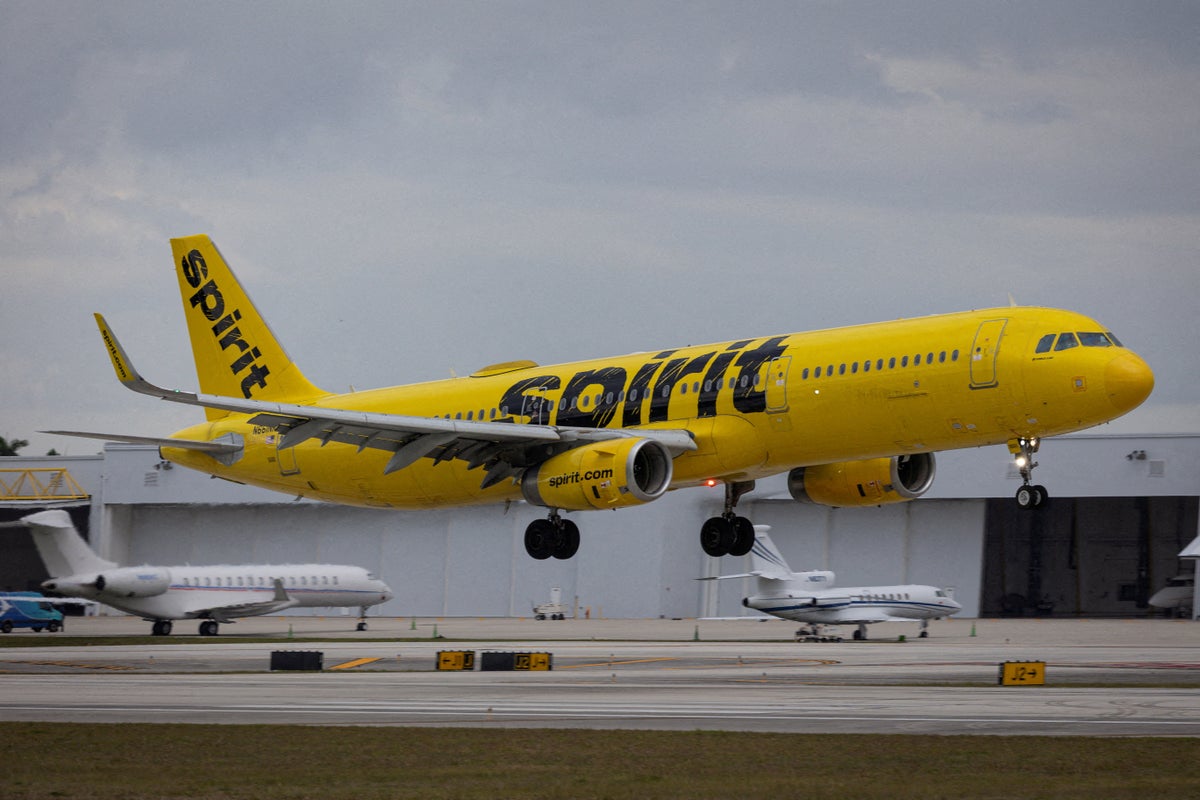
Spirit Airlines is preparing to shut down after failing to secure the critical financial support from the government needed to keep operating.
The struggling budget airline had been negotiating with the Trump administration for a $500 million rescue package that would have provided cash in exchange for equity-like warrants giving the government up to a 90 percent stake. However, the effort has stalled because Spirit has been unable to secure the necessary backing from bondholders and government stakeholders, people familiar with the matter told the Wall Street Journal Friday.
There were reportedly disagreements within the Trump administration over whether and how to fund the bailout, while not all Spirit bondholders were on board with the deal, either, the sources claimed.
Without agreement from both groups, the airline could not secure the funding it needed to continue operations. As a result, people familiar with the situation tell the WSJ that Spirit is now preparing for the possibility that it will run out of cash and cease operations entirely, though the exact timeline remains unclear.
The Independent has contacted Spirit and the White House for comment.
Spirit has already spent much of the past 18 months in Chapter 11 bankruptcy protection as it faces the threat of liquidation over rising fuel costs caused by the Iran war, Bloomberg reported last week.
Spirit has struggled to recover since the COVID-19 pandemic, as travel patterns shifted and many passengers increasingly preferred full-service airlines over ultra-low-cost carriers. The airline’s finances took a major hit, with losses piling up to more than $2.5 billion since 2020.
These ongoing challenges led Spirit to file for bankruptcy twice – first in November 2024 and again in August 2025. Despite this, the company initially showed signs of recovery after striking a deal with creditors to reduce its debt load and cut operating costs, raising expectations that it could emerge from bankruptcy by the summer.
However, that recovery path was disrupted when escalating geopolitical tensions, including strikes involving the U.S. and Israel against Iran beginning on February 28, added further uncertainty to global markets and travel conditions.

