

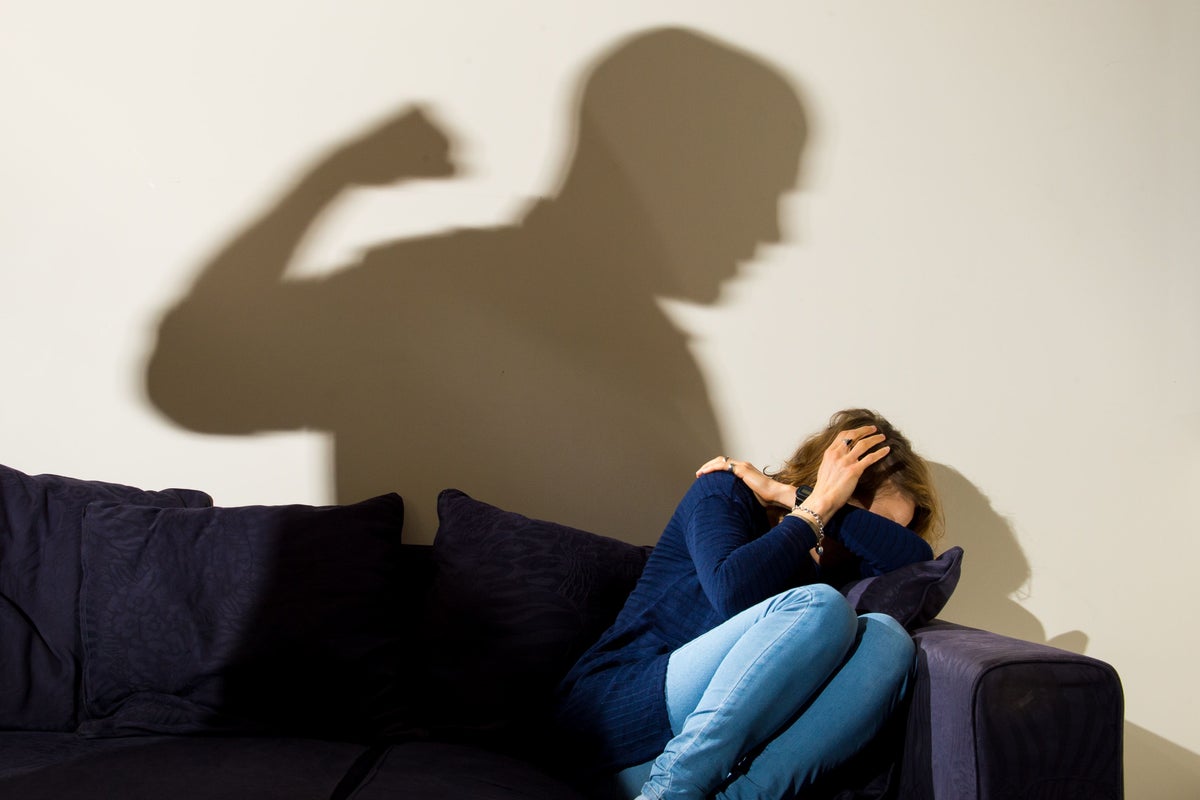
Domestic abuse is increasingly being recorded in the 16 to 19-year-old age group, with this last year marking the first case of suspected suicide following a teenage relationship where both the victim and suspect were under the age of 18.
The tragedy was among 150 suspected cases where abuse victims ended their lives in the year to March 2025.
Speaking as an annual report on police recorded domestic homicides was published on Tuesday, assistant commissioner Louisa Rolfe said: “People are now much more likely to access violent pornography which normalises violence and behaviour in a relationship, and particularly non-fatal strangulation, (which is) hugely dangerous.
“We see the connection between the sort of sense of toxic influencers online and their sort of views that are promoted about women and women’s status in society.”
Police forces across the UK have recorded an increasing number of suicides linked to domestic abuse, accounting for 38 per cent of abuse-related deaths in the last five years.
Between April 2020 and March 2025, there were 1,452 deaths of this nature, with 641 characterised as homicide and 552 being recorded as a suicide due to the impact of domestic abuse.
Across this time period, women made up 73 per cent of victims and were primarily aged between 25 to 54 years old, while 79 per cent of suspects were male.
A change in practice last year requires police officers to check for a history of domestic abuse at the scene of suicides and unexpected deaths, which has led to an increase in investigations and charges post-death.
Over the five year dataset, 17 cases of suspected suicide have successfully achieved a posthumous charge, while three are pursing investigations for unlawful manslaughter.
In 2017, Nicholas Allen was jailed for 10 years for the manslaughter of his ex-partner Justene Reece after he subjected her to intense stalking and coercive behaviour, while Lee Milne was jailed for eight years in Scotland after his sustained abuse led his wife, Kimberly Milne, to jump to her death from a bridge.
Campaigners want a new law to make suicide following domestic abuse a specific criminal offence separate from manslaughter, to make it easier for juries to understand.
Frank Mullane from support service Advocacy After Fatal Domestic Abuse said: “We need a new law which separates suicide from domestic abuse, from manslaughter.
“I’m speculating that the average juror sees manslaughter as maybe a punch-up in a car park, other types of killing.
“I think if we separate suicide from domestic abuse, it will help educate the public.”
In the five years of the annual Domestic Homicide Project, which analyses police recorded domestic homicides, 414 were intimate partner homicide, 227 were adult familial homicide, 553 were suicide following domestic abuse, 131 were unexpected deaths, 86 child deaths and 41 classed as other.
There have been four reported cases of suicides where the victim was under 16 and the perpetrator was over 18 – three an adult family member, and one an intimate partner.
Minister for safeguarding and violence against women and girls Jess Phillips said: “Every life lost to domestic abuse is a devastating tragedy, and my thoughts are with families and loved ones left grieving.
“I welcome this important report, which highlights the link between domestic abuse and suicide, and reinforces the need for tougher action to stop perpetrators causing harm.
“Our Violence Against Women and Girls Strategy sets out how we are rooting out the causes of domestic abuse-related deaths and deploying the full power of the state to crack down on these vile crimes.”
In the year leading up to March 2025, there were 150 suspected suicides following domestic abuse, as well as 80 murders committed by current or former intimate partners. There was also 45 homicides committed by an adult family member and 43 unexpected deaths of individuals with a history of domestic abuse that are still under investigation, but have not yet been deemed non-suspicious.
Ms Rolfe, national policing lead for domestic abuse, said: “This report reflects important progress in how policing is identifying risk and pursuing justice in new ways.
“But these findings are also a stark reminder that for too many victims, abuse was ongoing and already known before their death. We continue to see offenders deliberately targeting people who are vulnerable and using those vulnerabilities to maintain control and evade justice.
“Policing, alongside all other agencies, must recognise this and do everything possible to stop abusive behaviour, bring offenders to justice and better protect victims.
“I want to thank the families who continue to share their experiences and work with us to drive change, I am incredibly grateful for their courage and honesty.”
If you are experiencing feelings of distress, or are struggling to cope, you can speak to the Samaritans, in confidence, on 116 123 (UK and ROI), email [email protected], or visit the Samaritans website to find details of your nearest branchIf you are based in the USA, and you or someone you know needs mental health assistance right now, call or text 988, or visit 988lifeline.org to access online chat from the 988 Suicide and Crisis Lifeline. This is a free, confidential crisis hotline that is available to everyone 24 hours a day, seven days a week.
