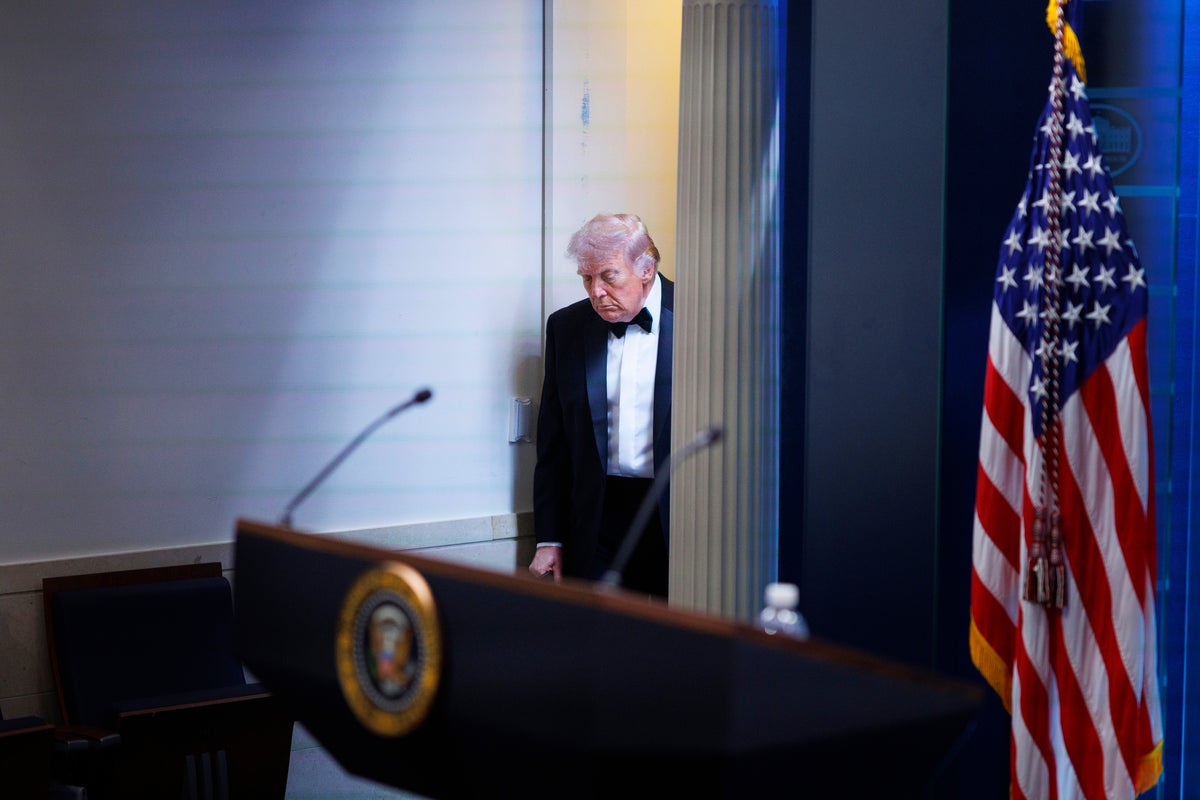
For the third time in three years, Donald Trump has come under threat by an attacker. Many facts remain unclear after a gunman stormed the Washington Hilton on April 25, 2026, during the White House Correspondents’ Association dinner.
As the investigation into the shooting continues, Alfonso Serrano, The Conversation’s politics and society editor, spoke with James Piazza, a political violence scholar at Penn State, about what is driving the rise of political violence in the U.S. and what can be done about it.
This is not the first time Trump has faced political violence. What stands out after the latest attack?
I think the events of April 25 underscore how dangerous this political moment is in the United States. For the past several years – certainly since Jan. 6, 2021 – the U.S. has been experiencing a period of increased political violence, which is generally defined as violence that is motivated by politics or is intended to communicate a political message or achieve a political objective.
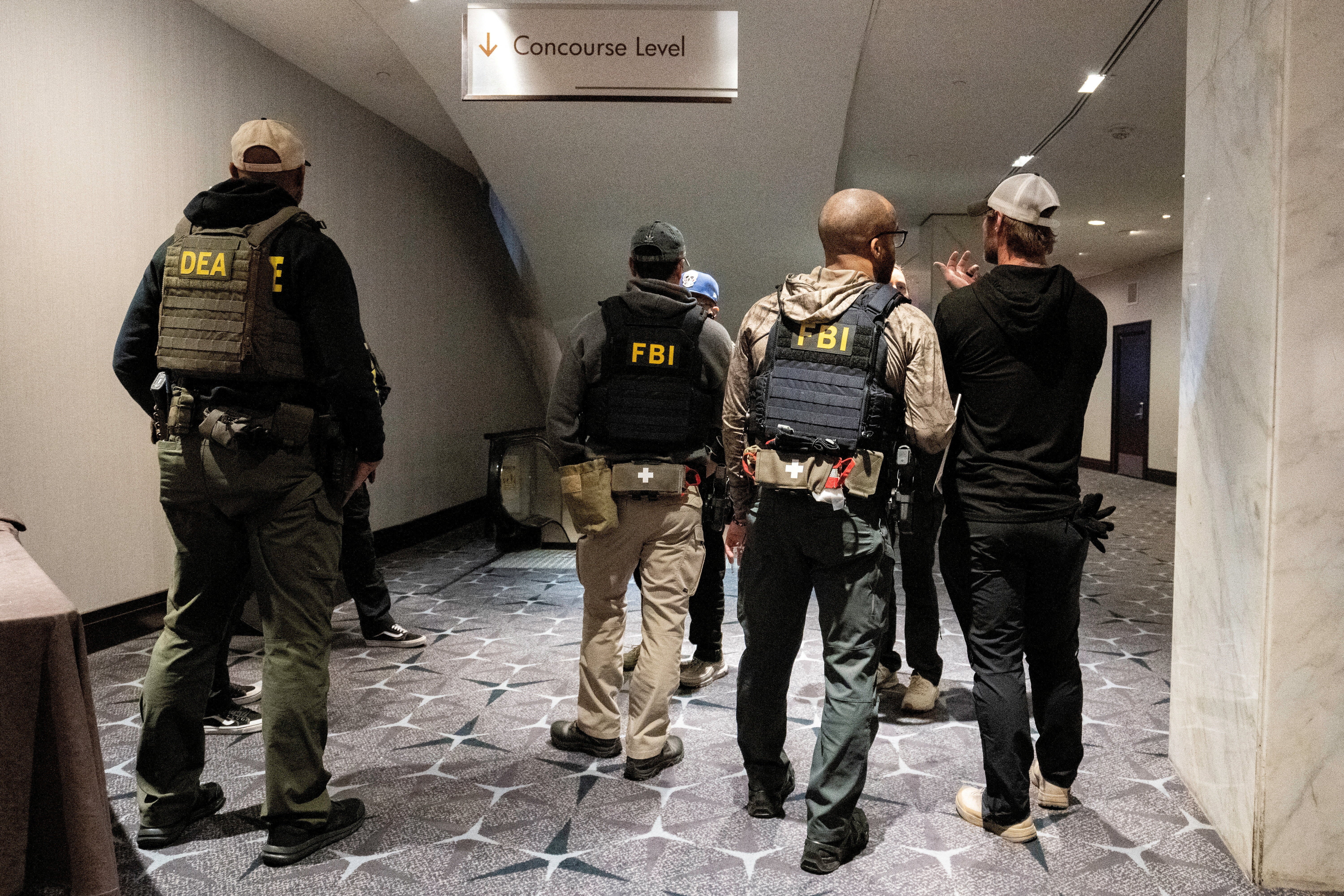
Researchers at the Polarization & Extremism Research & Innovation Lab have documented that political violence has increased in the U.S. in recent years. Several recent examples come to mind: the Jan. 6, 2021, insurrection at the U.S. Capitol building; multiple assassination attempts on President Trump; the deadly attacks on Minnesota lawmakers Melissa Hortman and John Hoffman that left Hortman and her husband dead; the attempted murder of Paul Pelosi; the assassination of Charlie Kirk. In my home state of Pennsylvania, Gov. Josh Shapiro was targeted in an attack on the governor’s mansion.
What’s driving that apparent plague of political violence afflicting the country?
There are several important drivers of political violence at work in the U.S. today, according to my own research and research by other scholars. The United States is currently very politically polarized, meaning that Americans are sharply divided against one another along partisan lines. They are suspicious and hostile toward one another, and this produces a tense and volatile environment for politics and public life. This has produced a “zero-sum” environment in which every election and political contest is a “do or die” moment.
What stands out to me is the moral dimension of polarization in the U.S. Each side views members of the other party not as merely having a different view on politics but rather as evil or immoral. The polarized environment has made political violence more normalized. It has also dampened public backlash against political violence when it occurs. This makes political violence more likely.
Political rhetoric has become much more divisive and violent in nature. This works hand in hand with polarization and helps to further normalize political violence. In particular, when politicians use demonizing or dehumanizing rhetoric to attack their opponents – for example, using words that depict their opponents as subhuman – this fosters extremism and helps motivate extremists to hurt their opponents physically.
Disinformation is also an important driver of political violence. A number of people who have engaged in recent acts of political violence seem to have been motivated by conspiracy theories and other forms of disinformation, often gleaned from social media. Disinformation plays a particularly important role in the context of social media communities, where people are exposed to large amounts of disinformation and are hermetically sealed off from other sources that might challenge their worldview. This facilitates radicalization and has been shown to fuel political violence in some cases.
Finally, I think an important factor is also the current assault on democratic norms and democratic institutions in the United States. U.S. democracy is experiencing pressures that are unprecedented in the modern era. This has had a very damaging effect on Americans’ trust in government, confidence in democratic institutions and value for democratic rule itself.
My work shows that individuals who are skeptical about democracy are much more likely to express support or tolerance for political violence.
How does this moment of political violence stand out from other violent periods in U.S. history – are we in uncharted waters?
While the U.S. is currently experiencing an uptick in political violence, unfortunately it is not unprecedented. One example would be the highly polarized period in the 1850s in the run-up to the Civil War. In this era, there was a sharp division between abolitionists and advocates of slavery. This culminated in political assassinations, an assault on an abolitionist member of Congress by a pro-slavery member of Congress, and a bloody civil conflict in Kansas between pro- and anti-slavery armed groups.
The early 1900s, right after World War I, saw another increase in political violence due to labor issues and violence by the second generation of the Ku Klux Klan.
Finally, the 1960s also saw a period of intense political violence surrounding opposition to the Vietnam War and backlash to the Civil Rights Movement.
Though there are some unique features about political violence today – namely the influence of social media – I think we can look for some parallels in these early periods of political violence.
Any last thoughts?
I believe it is absolutely critical that both Democratic and Republican politicians – politicians from all sides – unite to condemn this attack and all political violence. Political commentators and influencers can also condemn this and all use of political violence.
Research amply shows that what political elites – politicians, political leaders, media commentators, online influencers – say in the wake of these sorts of events has a huge effect on citizens’ attitudes. Political elites can adopt rhetoric that does not normalize this sort of behavior.
If the message comes from across the political spectrum, it will be that much more effective at reducing the public attitudes that nurture political violence.