
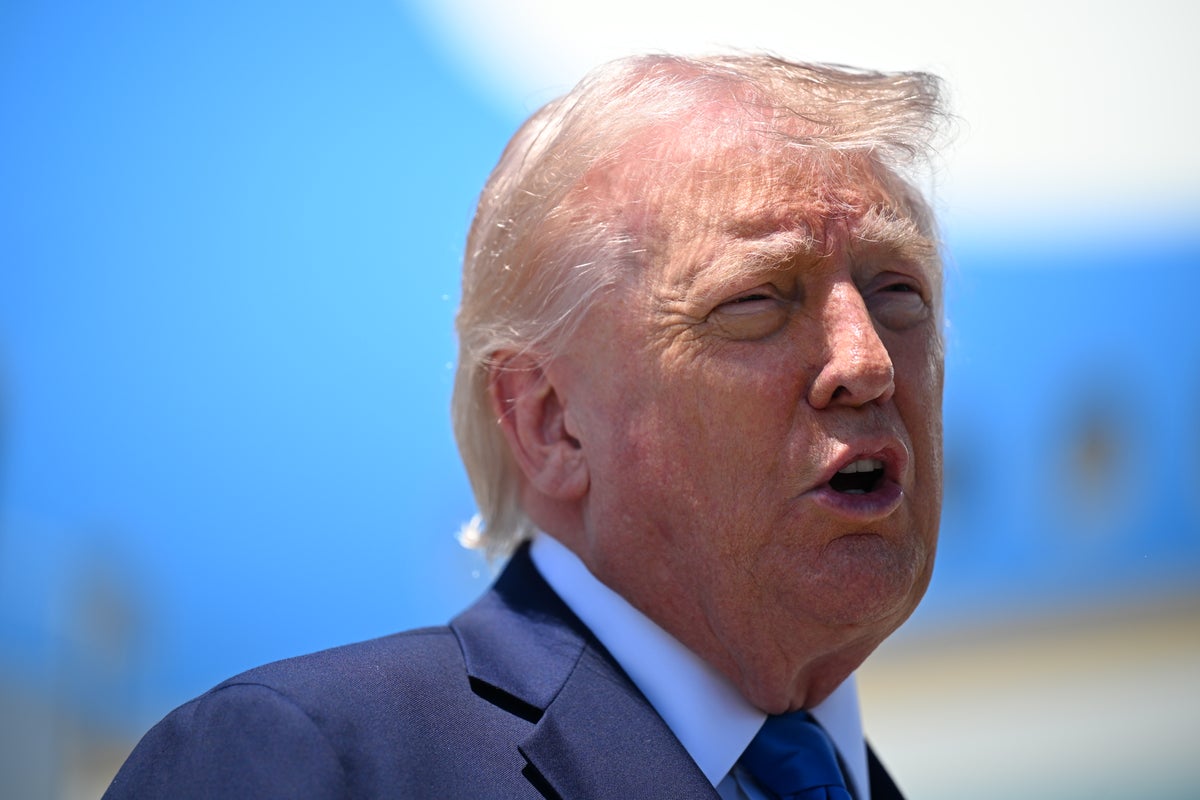
Donald Trump recently hosted an exclusive gathering for top investors in his $TRUMP cryptocurrency at his Mar-a-Lago club in Palm Beach, Florida, even as the token’s value has plummeted by over 95% from its peak last year.
The event unfolded amid escalating scrutiny of the Trump family’s expanding crypto ventures, prompting Democratic leaders to demand investigations into their activities.
The day-long gala, which Trump promoted as the “most exclusive” crypto and business conference globally, saw 297 of the largest $TRUMP token holders in attendance, where he delivered the keynote address. A select group of 29 also enjoyed a “special VIP reception and champagne toast” with him.
This gathering represents the latest instance of Trump intertwining his public stature with his family’s burgeoning portfolio of speculative cryptocurrency ventures. Government ethics experts have noted that this convergence has little modern precedent, particularly given that Trump’s personal crypto wealth has significantly increased as he actively shapes U.S. crypto policy.
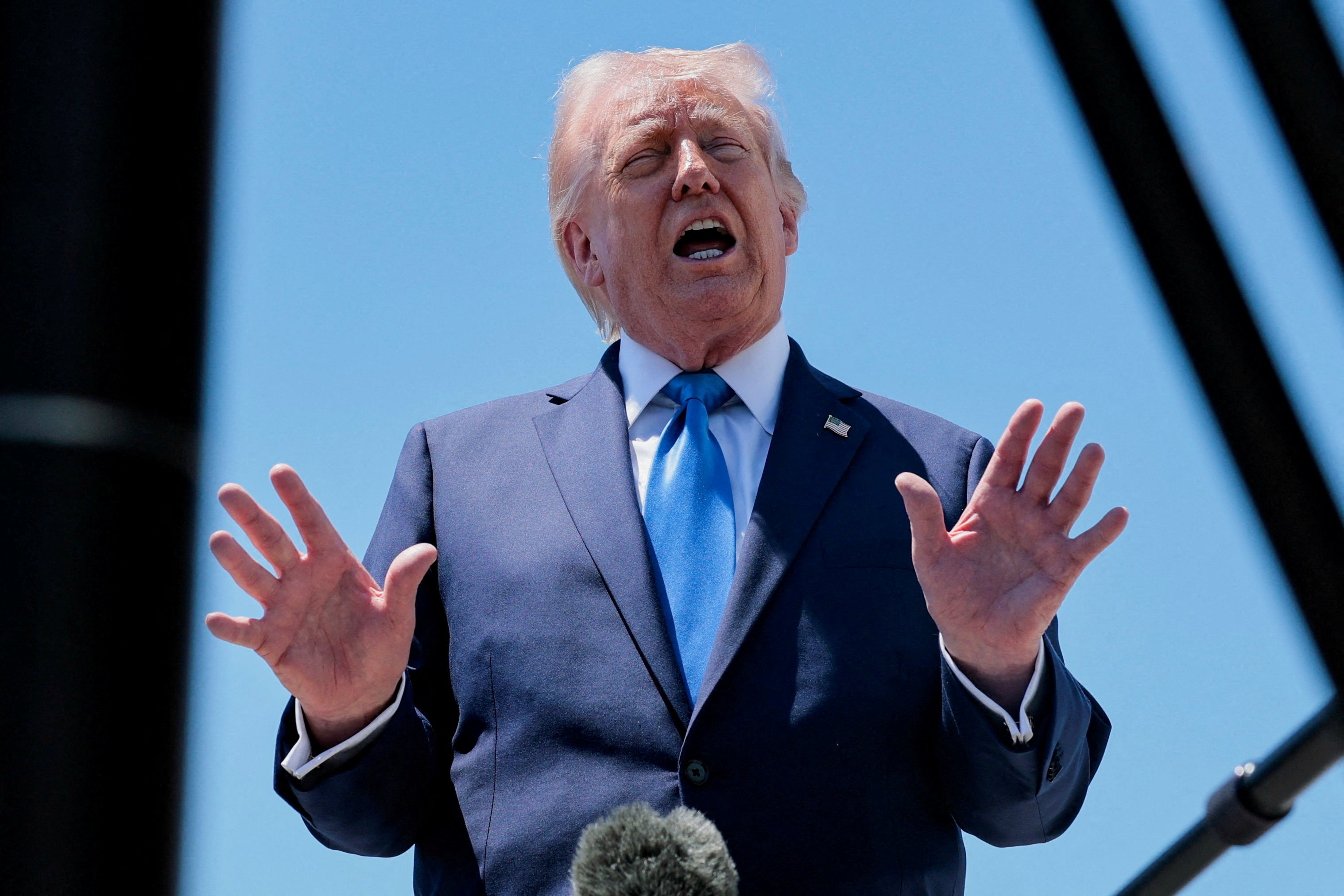
Trump’s appearance at the gala was not open to the public. But he later told reporters that he felt an “obligation” to support the crypto industry.
“As a president, I have to be able to make sure that all of our industries do well,” Trump said before he boarded Air Force One on Saturday afternoon for his return to Washington, D.C. “Crypto is a big industry, it’s actually become somewhat mainstream.”
While many retail buyers who piled into the token around its launch have seen most of their paper gains disappear, the Trump family and affiliated entities have continued to profit from the broader crypto ecosystem.
A Reuters examination found that the family has taken in more than $1 billion from crypto asset sales, including at least $336 million tied to meme-coin sales in the first half of 2025 alone, with potentially billions more in unrealized gains.
“President Trump’s assets are in a trust managed by his children,” White House spokesperson Anna Kelly told Reuters, adding that the president only acts in the best interests of the American public. “There are no conflicts of interest.”
Last year’s meme-coin contest, at his golf club near Washington, D.C., raised similar concerns for ethics experts, as did a February conference at Mar-a-Lago hosted by the president’s sons, Eric and Don Jr., for World Liberty Financial, the Trump family’s most lucrative crypto venture, which drew top figures from Washington, D.C. and Wall Street.
Contest rankings were based not only on holdings of $TRUMP but also on purchases of Trump-branded merchandise – including sneakers, watches and fragrances – between March 12 and April 14. Winners are set to receive Trump-branded items including a commemorative poster, two trading cards, a “Fight Fight Fight Red Beauty” watch and a fragrance.
$Trump token near lows
The $TRUMP token is hovering near its all-time lows and is down steeply from the $75 high hit shortly after it was introduced in January 2025.
Late on Friday, $TRUMP was trading at roughly $3. As Trump spoke it fell to $2.53 amid a flurry of trading on Saturday morning and remained below $2.60 after he left Florida.
The 297 qualifying winners hold roughly $29 million worth of $TRUMP, according to crypto analytics firm Nansen, far below the $148 million Reuters reported they held for the inaugural May 2025 contest.
“The contrast with last year’s launch is stark,” according to a Nansen analysis prepared for Reuters. When it was launched, buyers accumulated and held the token, helping fuel a sustained rally, Nansen said. “The 2026 contest generated a moment of activity, but not the same conviction we saw in 2025. Demand just isn’t sticking.”
Meme coins – a type of crypto with no utility or intrinsic value – are based on online trends and viral cultural phenomena. Most of them exhibit parabolic price curves, with a rise in the early stage often followed by a plunge in value.
Among the top $TRUMP wallets, according to blockchain data, is one linked to crypto billionaire Justin Sun, who finished first in the contest for the second consecutive year.
Sun, one of the largest publicly known investors in World Liberty, sued the company on Tuesday, alleging that it froze his holdings. Investors have grown frustrated with the venture, saying it is opaque, tightly controlled and unresponsive to complaints.
In a social media post, World Liberty co-founder and CEO Zach Witkoff, the son of Trump administration special envoy Steve Witkoff, called the lawsuit “meritless,” and accused Sun of “misconduct that required World Liberty to take action to protect itself and its users.”
Sun did not respond to a request for comment.