

UK TimesUK Times
  • Home
  • News
  • TV & Showbiz
  • Money
  • Health
  • Science
  • Sports
  • Travel
  • More
    • Web Stories
    • Trending
    • Press Release
What's Hot

A36 northbound between A3098 and A361 (south) | Northbound | Congestion

23 April 2026
Sara Cox, the Scott Mills replacement who’ll bring edge and warmth to breakfast radio – UK Times

Sara Cox, the Scott Mills replacement who’ll bring edge and warmth to breakfast radio – UK Times

23 April 2026

A5 northbound between B4100 and A4146 near Bletchley (south) | Northbound | Congestion

23 April 2026
Facebook X (Twitter) Instagram
UK TimesUK Times
Subscribe
  • Home
  • News
  • TV & Showbiz
  • Money
  • Health
  • Science
  • Sports
  • Travel
  • More
    • Web Stories
    • Trending
    • Press Release
UK TimesUK Times
Home » ‘Stonehenge of the Amazon’ reveal clues to who lived in the rainforest before colonisation – UK Times
News

‘Stonehenge of the Amazon’ reveal clues to who lived in the rainforest before colonisation – UK Times

By uk-times.com23 April 2026No Comments5 Mins Read
Facebook Twitter LinkedIn Telegram Pinterest Tumblr Reddit WhatsApp Email
‘Stonehenge of the Amazon’ reveal clues to who lived in the rainforest before colonisation – UK Times
Share
Facebook Twitter LinkedIn Pinterest Email

Sign up for our free Health Check email to receive exclusive analysis on the week in health

Get our free Health Check email

Get our free Health Check email

Health Check

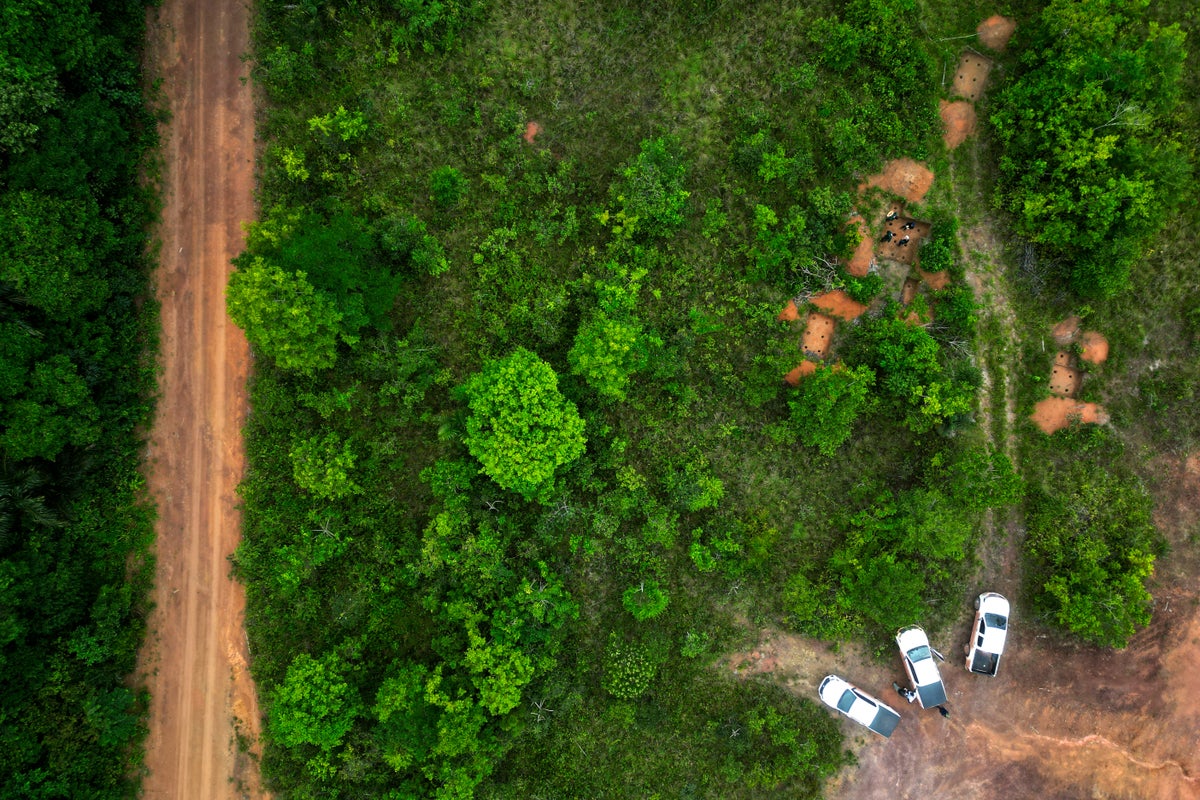
Road construction in the Amazon, a process often linked to deforestation, is also revealing a rich ancient history. Archaeological surveys along the BR-156 highway in Brazil’s northern state of Amapa have unearthed significant discoveries from long before European colonisation.

Among the findings from nine dig sites are pottery vases, potentially serving as funerary urns, alongside small artefacts crafted to resemble human faces. Lúcio Flávio Costa Leite, who manages the Archaeological Research Center at Amapa’s Institute for Scientific and Technological Research, described the complex nature of these projects, stating: “What we now about the region’s past is also tied to the opening created by these projects, which gives our relationship with them a somewhat ambivalent character.” He added this new knowledge compels closer attention and “permanent protection measures.”

These discoveries reinforce a growing understanding that the Amazon was far from a “human desert” before colonisation, but rather a landscape shaped by sophisticated, interconnected societies. The material unearthed along BR-156, for instance, includes pottery exhibiting multiple styles and techniques, reflecting cultural influences stretching from Brazil’s Para state to the Caribbean.

A team for the National Department of Transport Infrastructure meticulously cleaned and analysed the artefacts. Archaeologist Manoel Fabiano da Silva Santos described the excavated layers of Amazonian soil as a historical timeline. He explained that upper strata yielded items such as Portuguese porcelain and nails, indicative of European occupation, while deeper excavations uncovered “pottery and ceramics associated with earlier Indigenous presence, marking the site’s transition before and after the arrival of colonizers.”
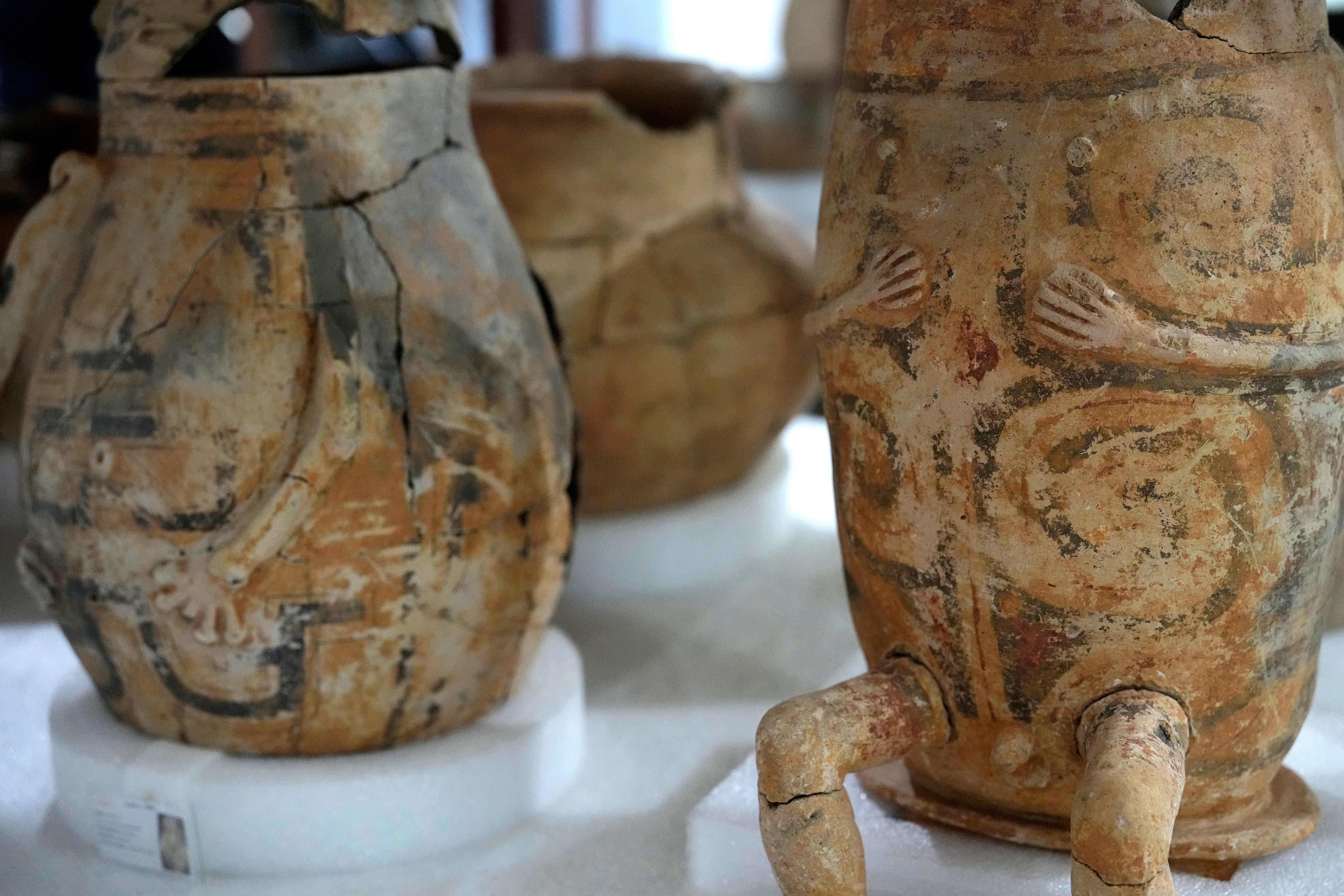
Pottery vessels with anthropomorphic features believed to be urns are displayed at the Institute for Scientific and Technological Research in Macapa, Amapa state, Brazil, Sunday, March 8, 2026. (AP Photo/Eraldo Peres)
Pottery vessels with anthropomorphic features believed to be urns are displayed at the Institute for Scientific and Technological Research in Macapa, Amapa state, Brazil, Sunday, March 8, 2026. (AP Photo/Eraldo Peres) (Copyright 2026 The Associated Press. All rights reserved)

The artifacts will eventually go to Amapa’s state collection, overseen by Costa Leite, which includes about 530,000 pieces. The oldest piece is around 6,140 years old, confirming a long human presence across Amapa, he said.

The artifacts offer insight into how ancient Indigenous societies lived, died and interacted with the rainforest.

“Here is something I often debate with my students — we usually think of technology as computers and microchips,” Costa Leite said, walking through shelves of ancient pottery. “But all of this required careful reading of the landscape and deliberate choices of materials.”
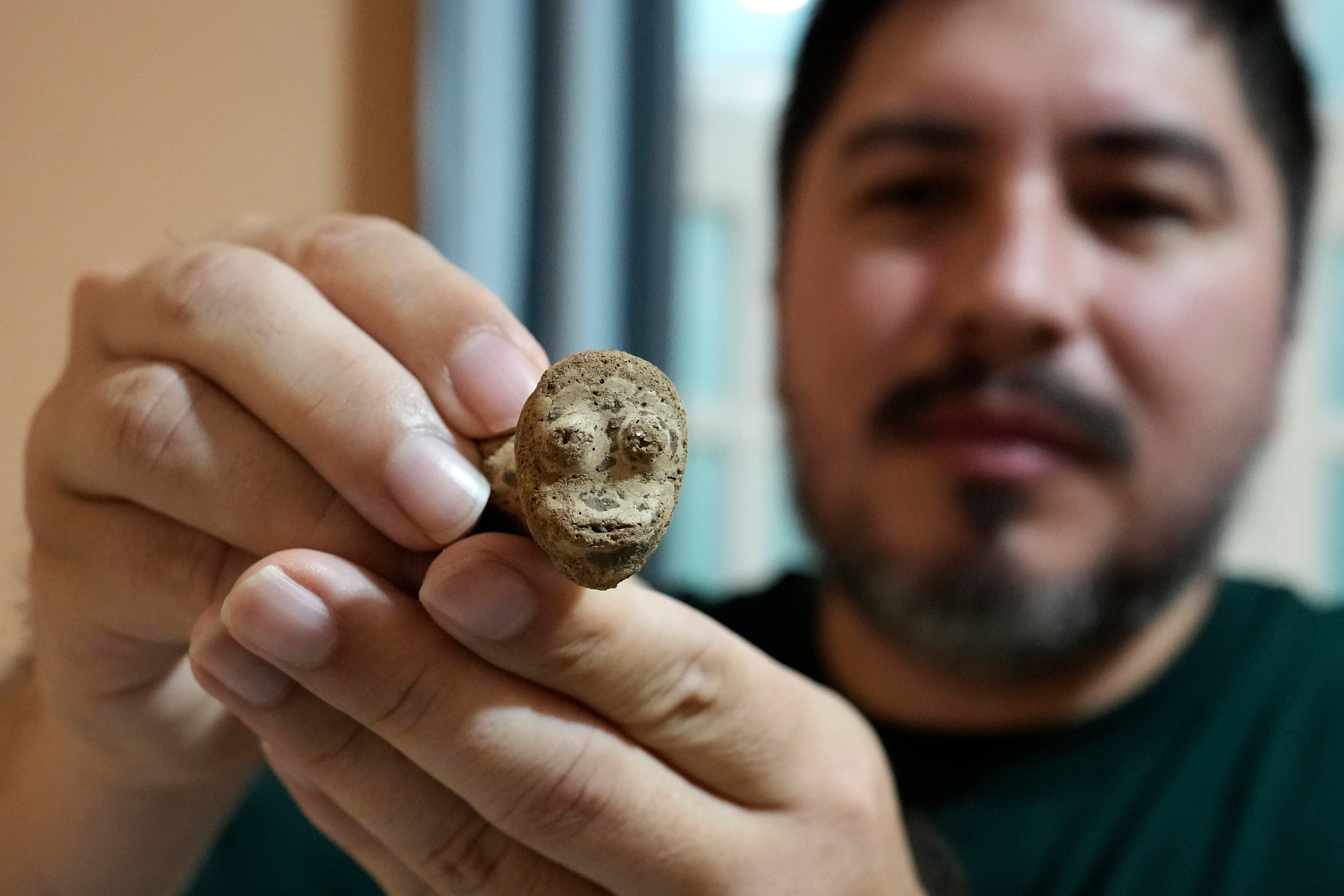
Archaeologist Manoel Fabiano da Silva Santos shows an anthropomorphic artifact found at the Quintela archaeological site at the National Department of Transport Infrastructure in Macapa, Amapa state, Brazil, Saturday, March 14, 2026. (AP Photo/Eraldo Peres)
Archaeologist Manoel Fabiano da Silva Santos shows an anthropomorphic artifact found at the Quintela archaeological site at the National Department of Transport Infrastructure in Macapa, Amapa state, Brazil, Saturday, March 14, 2026. (AP Photo/Eraldo Peres) (Copyright 2026 The Associated Press. All rights reserved)

One of the most impressive historic areas in Amapa is in the city of Calcoene, where a 1,000‑year‑old stone monument made up of 127 carved monoliths arranged in a circle about 30 meters (98 feet) in diameter, set in open grassland amid the rainforest and bordered by a slow river.

Some have dubbed the Archaeological Park of the Solstice the “Stonehenge of the Amazon” for its resemblance to the British monument. Researchers found that the stones were positioned so that during the winter solstice in the Northern Hemisphere they marked the exact point where the sun rises, said archaeologist Mariana Petry Cabral, a professor at the Federal University of Minas Gerais who was part of the team that began digging at the site some two decades ago.

“It’s hard to say exactly what all the stones mean, but what we do know is that they are not from the site itself. They were brought from other nearby locations,” she said.

Subsequent research and excavations found the site also served as a burial ground. Radiocarbon dating showed it was occupied for hundreds of years, beginning around 1,100 years ago, she said.

The site, discovered by scientists in 2005, can be visited with prior approval from Amapa’s Institute for Scientific and Technological Research. At the same time, the site is going through the process to become a national park, which will allow more people to visit.

Such archaeological sites are protected by Brazilian law, which prohibits them being altered. That adds a layer of protection for surrounding rainforest.
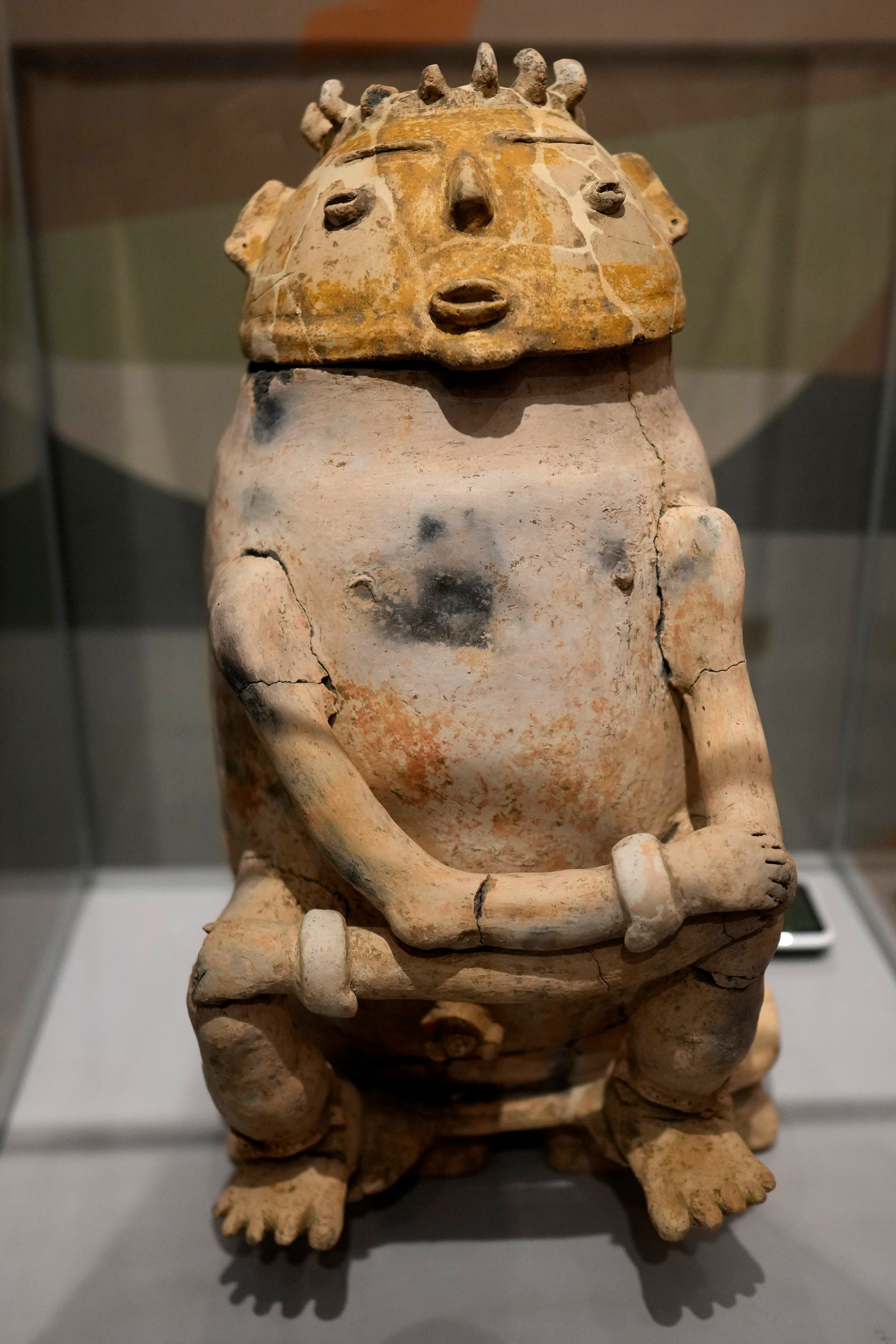
An anthropomorphic ceramic figurine found during archaeological work in a state is displayed at the Institute for Scientific and Technological Research in Macapa, Amapa state, Brazil, Sunday, March 8, 2026. (AP Photo/Eraldo Peres)
An anthropomorphic ceramic figurine found during archaeological work in a state is displayed at the Institute for Scientific and Technological Research in Macapa, Amapa state, Brazil, Sunday, March 8, 2026. (AP Photo/Eraldo Peres) (Copyright 2026 The Associated Press. All rights reserved)

Modern archaeological and historical ecology research shows that Indigenous peoples not only lived in the Amazon for centuries but also shaped it. They managed and cultivated the landscape through long‑term, sustainable practices, said Eduardo Neves, an archaeologist professor at the University of Sao Paulo.

Neves has studied the Amazon rainforest for more than 30 years and, since 2023, has led the Amazon Revealed project, which uses satellite scans to identify archaeological sites hidden beneath the forest canopy.

Scans have revealed roads linking archaeological sites and buried patterns in the rainforest that point to repeated occupation and deliberate landscape modification. Together, Neves said, the features suggest large settlements.
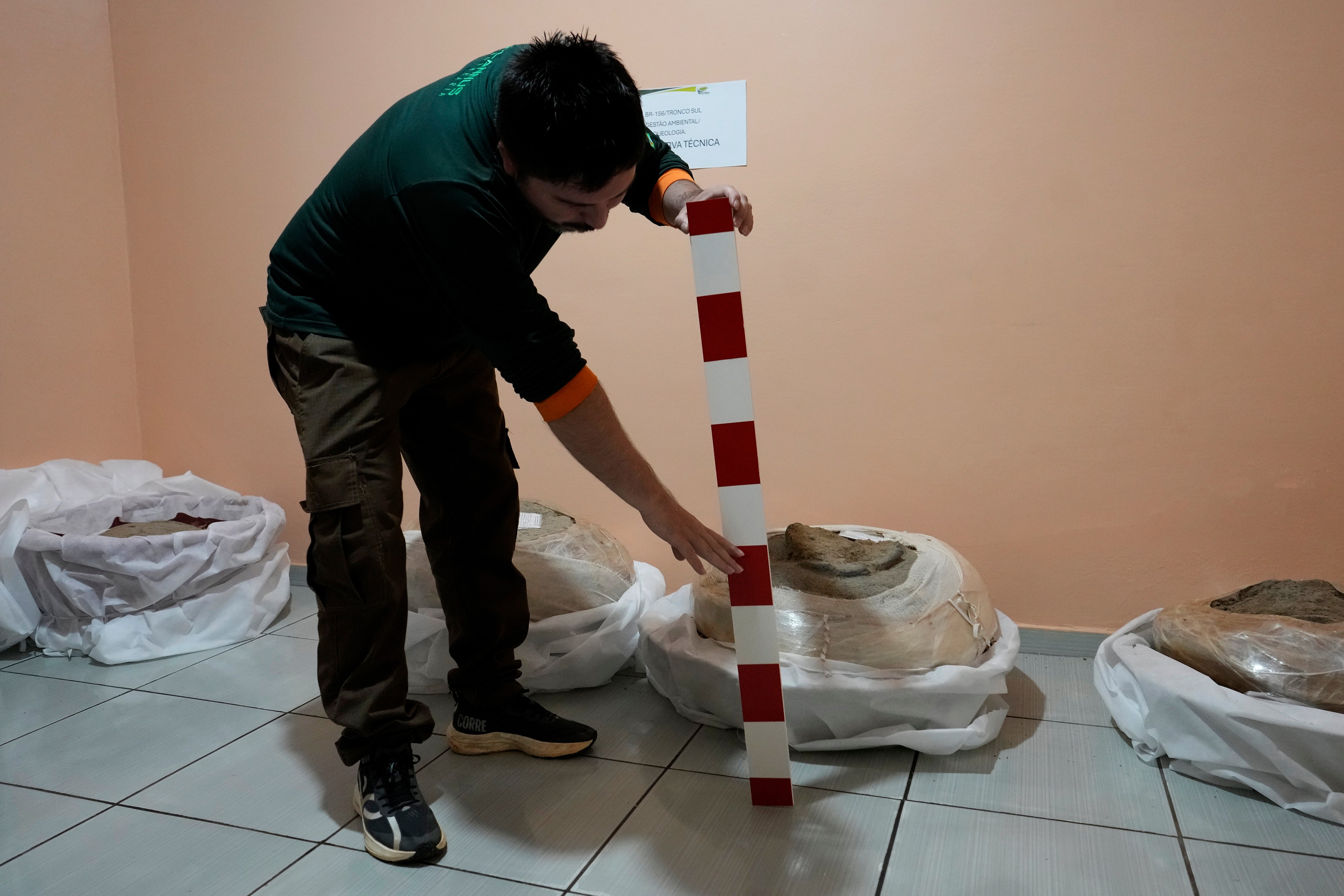
Archaeologist Manoel Fabiano da Silva Santos shows a soil layer scale while explaining the historical timeline at National Department of Transport Infrastructure in Macapa, Amapa state, Brazil, Saturday, March 14, 2026. (AP Photo/Eraldo Peres)
Archaeologist Manoel Fabiano da Silva Santos shows a soil layer scale while explaining the historical timeline at National Department of Transport Infrastructure in Macapa, Amapa state, Brazil, Saturday, March 14, 2026. (AP Photo/Eraldo Peres) (Copyright 2026 The Associated Press. All rights reserved)

Archaeologists had long suspected such connections, Neves added, but technology has made it possible to see their broader geographic reach. The scans show networks of roads connecting clusters of settlements across the forest, most clearly in southern Amazonas state and Acre.

“When people think of an Indigenous tribe, they often imagine a small village isolated in the middle of the forest. But evidence shows a high degree of interconnectivity linking different settlements,” Neves said.

“Amapa is a key piece that helps us see how dynamic and active these populations were, and how they maintained networks of exchange that have been in place for millennia,” Cabral said.
Share. Facebook Twitter Pinterest LinkedIn Tumblr Telegram Email

Related News

A36 northbound between A3098 and A361 (south) | Northbound | Congestion

23 April 2026
Sara Cox, the Scott Mills replacement who’ll bring edge and warmth to breakfast radio – UK Times

Sara Cox, the Scott Mills replacement who’ll bring edge and warmth to breakfast radio – UK Times

23 April 2026

A5 northbound between B4100 and A4146 near Bletchley (south) | Northbound | Congestion

23 April 2026

A282 southbound access from A206 | Clockwise | Broken down vehicle

23 April 2026
Patriots coach Mike Vrabel to miss final day of NFL Draft for counseling after Dianna Russini photo scandal – UK Times

Patriots coach Mike Vrabel to miss final day of NFL Draft for counseling after Dianna Russini photo scandal – UK Times

23 April 2026

A46 northbound between A4184 near Evesham (south) and A44 near Evesham (east) | Northbound | Road Works

23 April 2026
Top News

A36 northbound between A3098 and A361 (south) | Northbound | Congestion

23 April 2026
Sara Cox, the Scott Mills replacement who’ll bring edge and warmth to breakfast radio – UK Times

Sara Cox, the Scott Mills replacement who’ll bring edge and warmth to breakfast radio – UK Times

23 April 2026

A5 northbound between B4100 and A4146 near Bletchley (south) | Northbound | Congestion

23 April 2026

Subscribe to Updates

Get the latest UK news and updates directly to your inbox.

Recent Posts

  • A36 northbound between A3098 and A361 (south) | Northbound | Congestion
  • Sara Cox, the Scott Mills replacement who’ll bring edge and warmth to breakfast radio – UK Times
  • A5 northbound between B4100 and A4146 near Bletchley (south) | Northbound | Congestion
  • Waste carrier fined after depositing tonnes at illegal site
  • Millwall consider legal action against Westminster Council after club badge was depicted on illustration of KKK figure in children’s educational booklet

Recent Comments

No comments to show.
© 2026 UK Times. All Rights Reserved.
  • Privacy Policy
  • Terms of use
  • Advertise
  • Contact Us

Type above and press Enter to search. Press Esc to cancel.

Go to mobile version