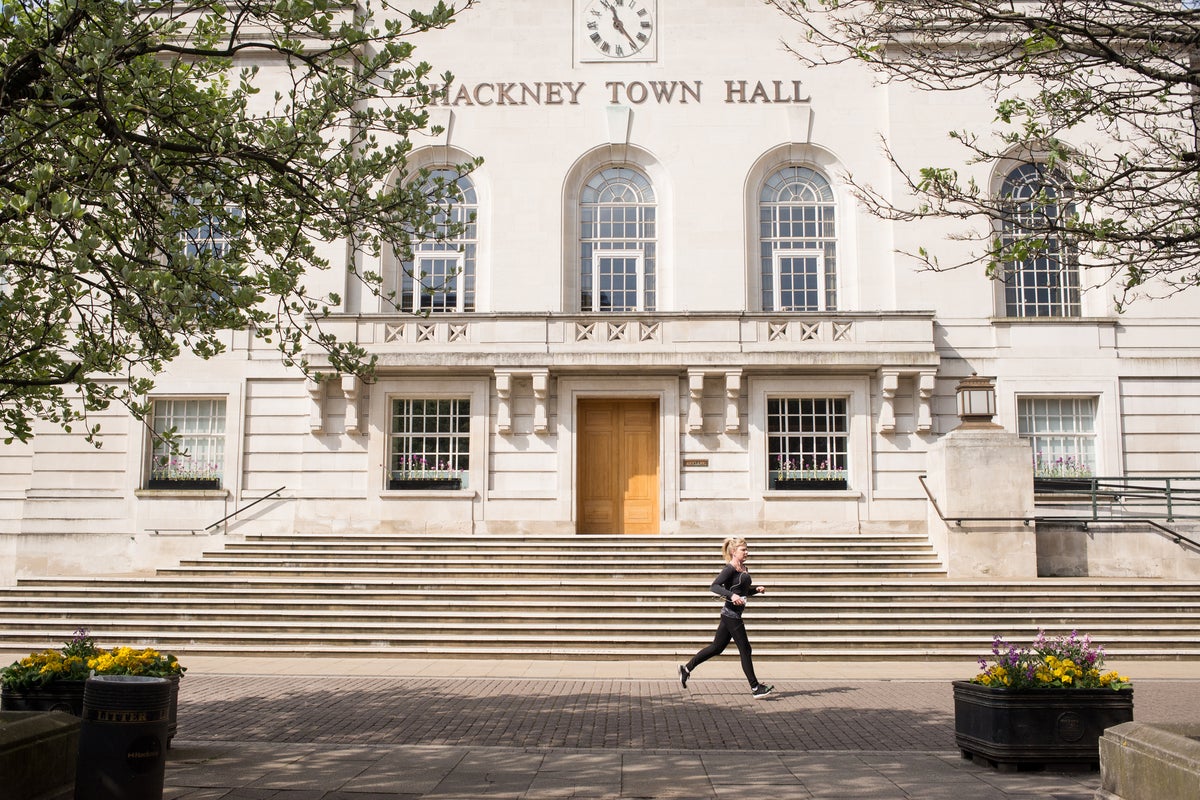
Rain has been pouring relentlessly as a handful of campaigners cluster beneath umbrellas on a high street in Hackney, Green Party leaflets in hand.
The weather has done little to deter them as they prepare to knock on doors across the neighbourhood, where the Greens believe they have the biggest chance of success in London in next month’s high-stakes local elections.
Joining them is Zoë Garbett, the party’s mayoral candidate for Hackney, where local organisers are hoping the Green-wave sweeping across the country could help them snatch the historically Labour council.
The primarily east London borough, home to Greens leader Zack Polanski, is the party’s top target in the capital as pollsters predict “a very bad night for Labour” in London and a new poll shows Sir Keir Starmer’s party is on course for its worst result in the capital in more than four decades.
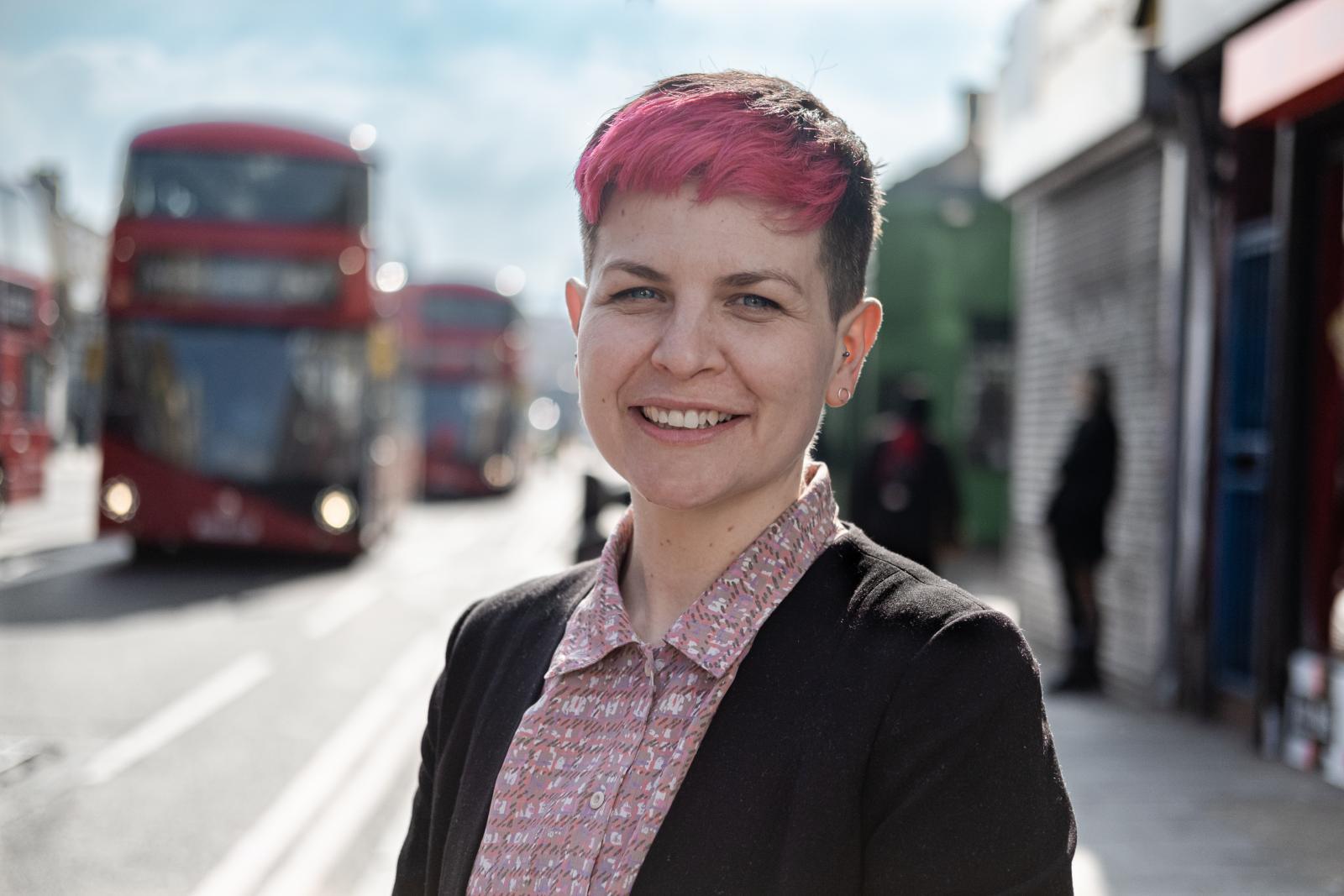
Walking down a residential street between door knocks, Garbett says she is “fairly” confident about her chances in what will be her third attempt at becoming Hackney’s mayor.
She was defeated in the 2023 mayoral by-election by Labour’s Caroline Woodley, but a change in both the national and local mood suggests it could swing the Greens’ way this time.
“I’ve been door-knocking in Dalston, where I’ve been a ward counsellor for six or seven years now,” she says.
“There’s definitely people that we have down as Labour supporters or who are on the fence, who are definitely really supportive of us now.
“It feels like we’re really pushing at an open door.”
She says voters are taking the Greens “more seriously” on positions they hadn’t associated with them previously, with issues such as Gaza, housing, disability support and immigration coming up repeatedly.
“There was a long period of time where you knock on doors and people would think you just want to talk about bins and buses, which obviously, we really care about those things, but we worry about so much more as well,” she tells The Independent. “So I think the biggest change is that it really feels like people know who we are and what we’re about.”
She adds: “There’s also the wider kind of global and national context around what’s been happening with the Labour government, and people feeling like it’s not bringing the change that they promised or that it’s a party that’s moved away from their values.”
While London is currently dominated by red borough councils, Labour is facing a potential obliteration at the polls in May with the dual threat of both the Greens on the left and Nigel Farage’s Reform on the right looming large.
The Greens have now leapfrogged Labour in the national polls, casting doubts over Sir Keir’s continued leadership after Mr Polanski declared his party “could win anywhere” following its landmark by-election win in Gorton and Denton earlier this year.
Meanwhile, Garbett believes Polanski’s election as leader in September was a “real acceleration point”, with data showing a more than 300 per cent increase in local members from January 2025 to 2026.
“I think people have just been suffering for quite a long time and want an alternative and want to try something different and that’s people who are really feeling the pressures of the cost of living and growing inequality,” she says.
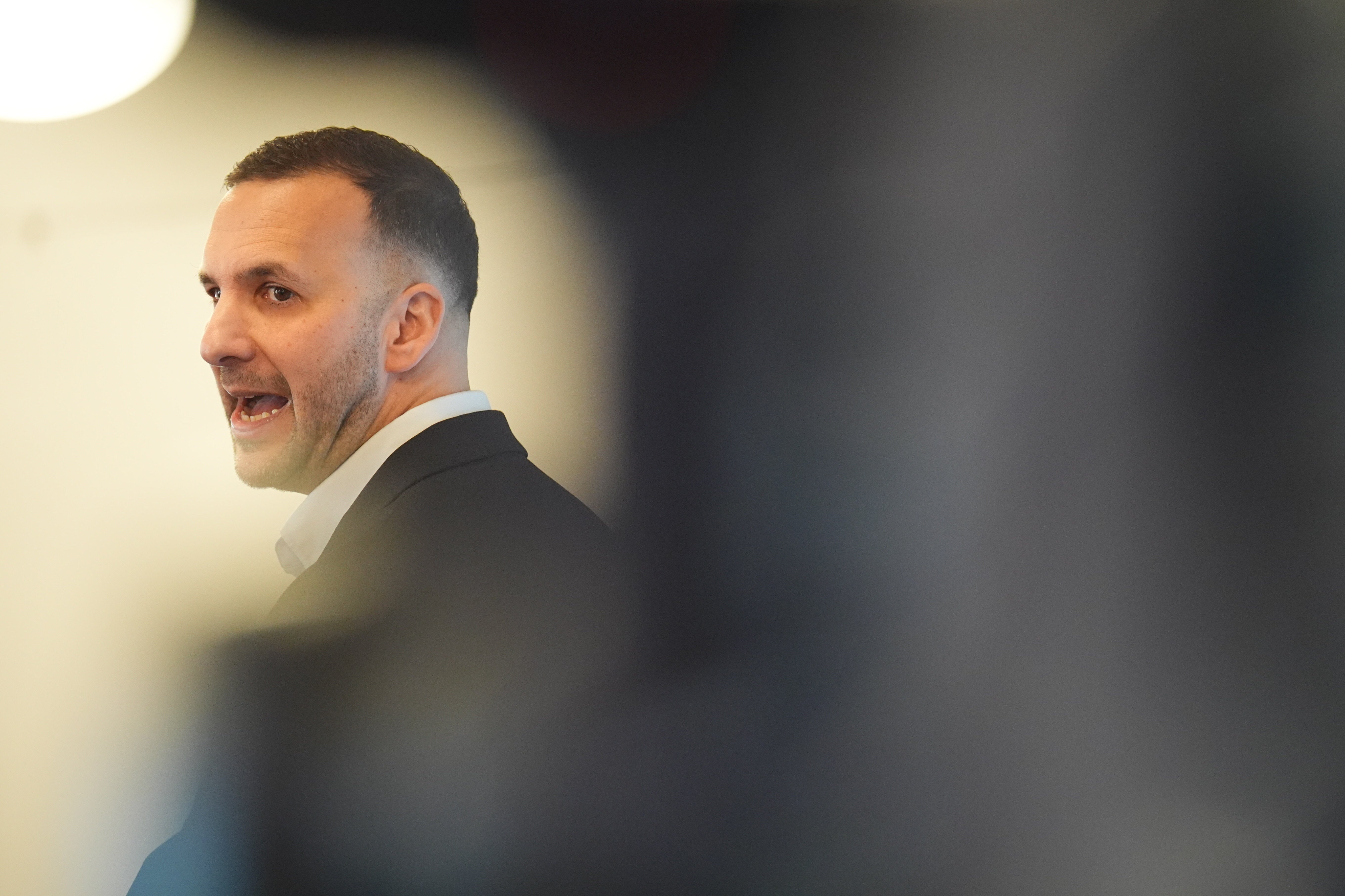
Pollster Chris Annous, of the think tank More in Common, said growing frustration and exasperation about the government’s record is driving many voters away from Labour.
“I can’t stress how disappointed and disillusioned people are with the Labour government,” he says.
“People are so disappointed, and so desperate for change, and they feel like Labour aren’t representing that in many parts of London. It means that there is a real opportunity for quite significant volatility when it comes to voters.”
On the doorstep, Green-leaning voters support these claims as they echo their disappointment with the current government, with residents raising concerns about housing, the cost of living and Labour’s approach to immigration.
“The ‘island of strangers’ speech was a real turning point on the doorstep I found,” Garbett says after speaking to a resident who said he was “disgusted” by Labour’s immigration policies, which are set to make the country’s asylum rules among the toughest in Europe.
“That issue comes up a lot – their indefinite leave to remain policy has caused a lot of anxiety.”
Labour has faced fierce criticism from left-leaning voters on their approach to immigration, with the home secretary Shabana Mahmood having laid out a raft of hardline proposals as part of efforts to quell rising migration figures.
Such measures include doubling the amount of time it takes for migrants to be granted indefinite leave to remain in the UK from five to 10 years, and making it easier to remove those who have no right to remain in the country.
Former deputy prime minister Angela Rayner echoed concerns from some voters, dubbing the reforms as an “un-British” move that would amount to a “breach of trust” to those settled in the country.
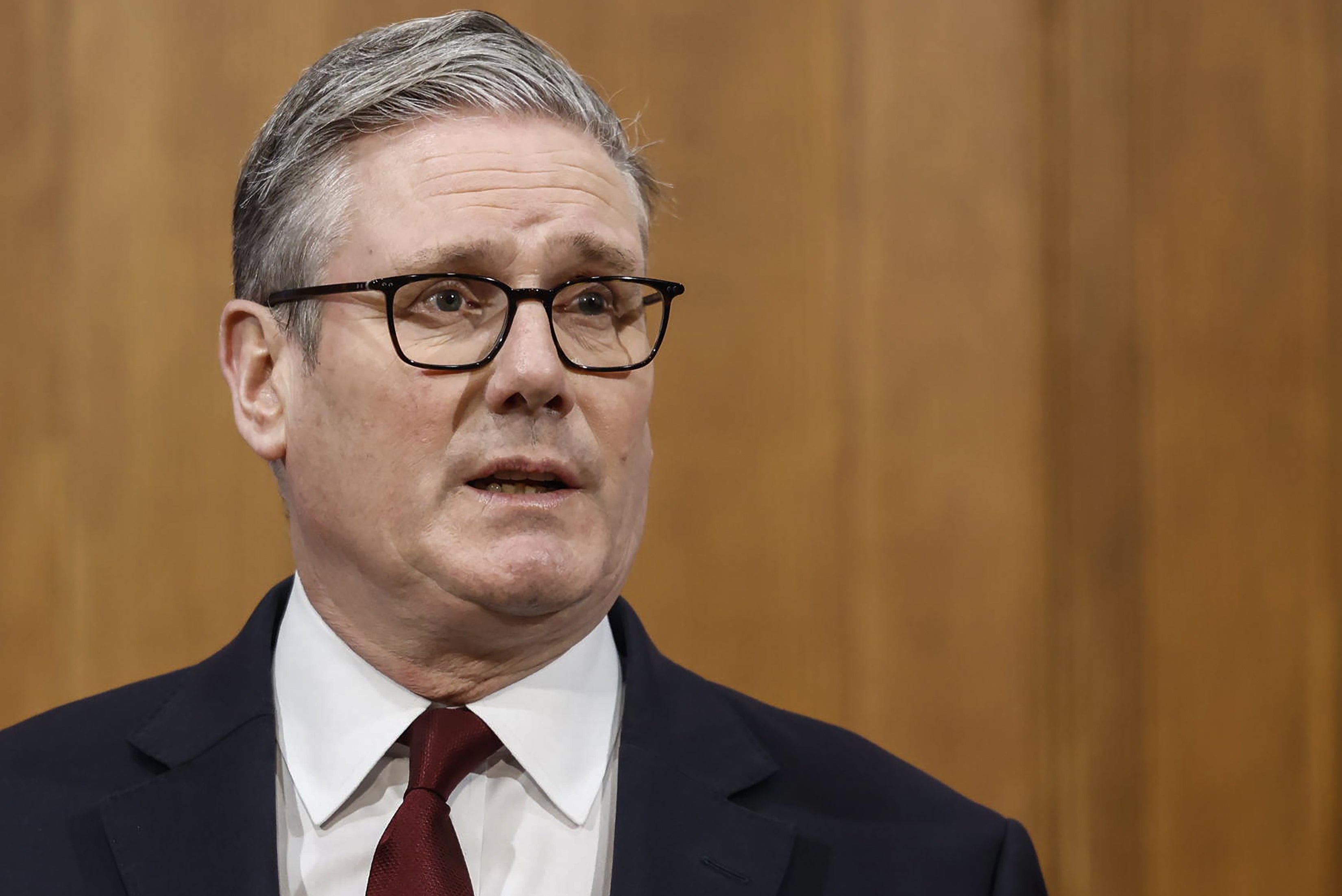
The optimism within the Green Party comes amid warnings from pollsters that May 7 could be a “very bad night” for Labour in London.
More In Common’s Annous said the Green Party was more likely to claim victory in inner areas of London such as Lambeth, Camden, Islington, Hackney, Newham, Lewisham and potentially parts of Greenwich.
“I think it could be a very bad night for Labour in London,” he said, adding they are likely to lose majorities or entirely in several councils.
“[With Labour], we’re talking about complete dominance in parts of London, which I think is going to unravel extensively.”